Today marks the 10th anniversary since David Bowie passed away. I still remember that day clearly. I was in South Africa watching the news on the TV and seeing the wealth of tributes. It was a shock. He kept everything very private. In fact, I was thinking of him just a few months before he died and I was wondering when he would, if ever, decide to go on tour again? His last world tour was more than a decade before that point and I foolishly turned down the chance to see him play at Wembley Arena back in 2003. 2003-4 would be the last time he properly toured and save for a few sporadic and brief live appearances, he would never tour again.
Just a couple of days after he died on January 12th 2016, I wrote a piece entitled, “The Death Of David Bowie, The Future And 3D Printing”. This would also be my very first blog post for my newly established blog website that was originally called The Slider. In this post I not only reflect just on David himself, but also the wider context of the future and new and emerging technological developments. For example, I talk about the concept of The Singularity and the inventor and futurist Ray Kurzweil’s prediction that in 2045 artificial intelligence will surpass human intelligence. Back then the topic of AI was not on everybody’s lips like it is today.
And what has all this got to do with David Bowie, you may ask? For me, it is all very relevant when I think of him. Aside from being a great artist who changed the face of pop music and expanded the parameters regarding the possibilities of what being a mainstream pop artist can be, he also had remarkable prescience. As well as embracing and harassing change (as opposed to fighting it), he had a unique ability to see far into the future and had a pioneering spirit. A great example of this is his interview with Jeremy Paxman from 1999. Back then we were still in its early days of the evolution of the internet. There was a lot of excitement and hype over the internet. Naturally, there were believers and sceptics. The doubting Thomases saw the internet as just a fad whereas the believers saw the net’s huge potential. Bowie was definitely in the latter camp, but he wasn’t a blind and blinkered believer. He was one of the first artists to release his own music online and he saw the great possibilities of the internet and how it would shape our lives. Yet he could also foresee the negative impacts it would have on humanity. In the interview, Paxman remarks that the internet is “just a tool”, although I suspect he may have been playing devil’s advocate and trying to gauge Bowie’s response.
It is a popular theory to say that Bowie planned his death all along and that he checked out at the perfect time before the whole world turned to custard. It is a compelling theory, but I don’t buy it. I don’t buy it, because I firmly believe that Bowie loved life for all its ups and downs. Yes, he may have been highly secretive about his illness and meticulously planned his final album, but if he had the chance he would have given anything to live longer on this planet. In fact, I recall reading somewhere after he died that one of the things that made him the most sad about knowing that he was going to go so soon was knowing that he wouldn’t be around to see his young daughter grow. Moreover, I also seem to remember reading a tweet by his son Duncan, a few years after his death, where he said that if only David had not smoked so much throughout most of his life there would have been a good chance he would still be around. So no, I am not one of those folk who thinks that he “died at the right time”.
On the day he passed away and the days after his death, I watched people who grew up with Bowie as far back as those Ziggy Stardust days being absolutely heartbroken; as if they had lost a beloved soulmate. I was very shocked and saddened when he died. I love his music and spent a lot of time listening to his records. However, I did not grow up with his music from the early days of his career. It was the Ziggy Stardust period that was the tipping point and that finally turned him into a star after several years of struggling and false dawns. Those veteran fans remember when Bowie appeared on Top Of The Pops in the early 70s playing his song Starman with a blue guitar. For them, it was like witnessing some exotic and androgynous extra-terrestrial being. In those days long before the internet, social media and hyperconnectivity, witnessing this on the TV was exciting and a blast of colour in a colourless world. Throughout most of the 70s Bowie was firing on all cylinders creatively and almost every album he released during this period was excellent. He took risks and never rested on his laurels like some of his glam rock contemporaries and he knew when the time was right to wrap up the Ziggy phase of his music career.
Sometimes I ask myself, if Bowie were starting out today would he strive to make it as a pop star or even go into the arts full stop? Personally, I feel that he was more than just a pop star and he didn’t have all his huevos in one basket. I think one of the most important things to deduce about him, as I already explained earlier, is that he had a pioneering spirit. He embraced change and new and emerging landscapes. He was terminally curious and open minded. When Bowie’s career first really took off in the early 70s, the music industry was still growing and there was still a lot of low hanging fruit in terms of creative musical experimentation and what could be achieved. Even though there were wild and unconventional musicians that existed before Bowie first emerged, one could argue that Bowie was the first mainstream pop star who created the template for all future popstars regarding what they could be. Thus in the same way that The Beatles were probably the most influential band of all time, it would not be unreasonable to argue that David Bowie was the most influential pop star of all time.
“A mania first takes out those that bet against it and then those that bet with it” Jim Rodgers
DISCLAIMER: The following article contains just my opinions and thoughts regarding where I think US financial markets may be heading over the next 8 years. I am not a qualified financial adviser so please don’t blindly take my words as gospel. For any financial advice, please seek a qualified financial adviser.
In this article I will be focusing on US financial markets and their trajectory over the coming 8 years until 2033. The USA has the largest economy in the world and over the last 16-17 years since the Global Financial Crisis (GFC), its stock market has been a stellar performer. Back in March 2009, the S&P 500 index (that is the 500 largest US listed stocks by market capitalisation) was trading on a valuation of below 700 points. As I write this, the index is currently trading at over 6,300 points. This is a more than 9-fold gain during that period of time. Even more impressive is the performance of the NASDAQ index (which consists of many of the largest US technology companies) over that same time frame. In March 2009, the NASDAQ index was trading below 1500 points. Today it is trading above 21,000 points. This is a more than 14-fold gain during that period of time. Seriously mindblowing performance.
Yet as impressive as all this has been, several investors and analysts have warned about the US market being very overvalued and priced to perfection. And they are right to be concerned. The US financial markets alone make up just over 70% of the entire global stock market. Back in the 1980s, that share was only around 30% (1).
In addition to this, and more alarming, the current Shiller PE ratio (calculated as the price divided by the average of ten years of earning adjusted for inflation) of the S&P 500 index is at over 38 (2). This is historically very high. Over the last 124 years, the mean Shiller PE rate of the S&P 500 is just over 17. Thus the current ratio is more than double the average. That being said it is not at an all time high. This was reached back in December 1999, close to the peak of the DotCom bubble, when the ratio went above 44.
The AI And Emerging Technologies Tailwind
One big tailwind for the current high valuation of the US stock market is the current Artificial Intelligence (AI) boom. Many listed companies involved in AI have seen their stock prices fly over the last couple of years and this has contributed in a big way to the high overall valuation of the main US stock market indices. All of the so-called Magnificent 7 stocks including Tesla have trillion dollar market caps. The company Nvidia, arguably the poster child of this current AI boom, is now trading on a market cap of $4.4 trillion. This is the highest valuation of all the Mag 7 stocks including Apple and Microsoft. But even outside of the Mag 7, there are many stocks trading on absolutely bonkers valuations with multi-billion dollar market caps. One golden example is the software company Palantir. This stock has a current market cap of over $430bn and is trading on a PE of 587. Now such a PE would not matter if it were some junior small cap stock with a market cap below $100m, but this is a stock with a market cap vastly larger than any company on the London Stock Exchange.
However, even though a lot of investors and financial analysts are concerned about the current valuations of many of these stocks, I actually think that these valuations can get even more elevated in the short to medium term. And the reason for this is almost purely because of the current AI tailwind and narrative. The growth and exponential development of AI is very real and this will only continue to be turbocharged into the coming months and years. In many ways this is far bigger than those mid to late 90s early days of the internet. There is no doubt in anybody’s mind that AI is going to have an absolutely transformational effect on society and the way we all live. We can already see the signs via current AI models like ChatGPT and Google’s Gemini. To a lot of people, the growth and future trajectory of AI has no precedent. There is nothing from the past that one can really compare it to; not the formative growth years of the internet or even the Industrial Revolution. That alone is a very powerful thing.
And although it is AI that is on everyone’s mind right now, I can see other important emerging technologies being on people’s lips. One such technology is Quantum Computing. This is a technology I can see developing very fast and very soon becoming just as talked about as AI. It will not just revolutionise computing, it will also help massively with further speeding up the development of AI. So although the current AI tailwind is very strong, I can see it gaining even more traction as all these other emerging technologies like Quantum Computing enter the public consciousness. And this is what will likely further elevate all those stocks that have already appreciated substantially in value.
A Shiller PE Ratio Of 70
Although the current Shiller PE Ratio of 38 for the S&P 500 is historically high, I can see it going even higher over the next few years and far surpassing its all time high of 44. The last two years have seen AI and AI related stocks soar hugely and I can see the next 3 years being even more crazy. In fact, the next three years will be on mind altering steroids. The current AI tailwind will soon become the “AI and Quantum Computing” tailwind and then later the “AI, Quantum Computing, Robotics, Nanotech and 3D/4D Printing” tailwind. All of this will push valuations for all those already hot darling stocks even further into the stratosphere. So do not be surprised to see Palantir with a $1tn plus market cap and Nvidia exceed a market cap of $10tn. This tailwind and the supercharged positive feedback loops will likely result in this new demented environment. Over the next few years there will be a lot of market volatility and a few mini market corrections (a la Trump tarifs circa April 25) along the way, but all these corrections will be very short lived and the US stock market will keep breaching new all time highs. Meanwhile, incomes will barely increase and the wealth inequality gap will get even more extreme. If this all occurs I think its a real possibility that by 2028, the NASDAQ hits an all time high of close to 50,000 points and the S&P 500 goes to 14-15,000 points. And the Shiller PE Ratio will be at around 70 points; at over 25 points higher than its all time high. Analysts fixated on valuations are already sounding alarm bells about the current high valuation of the US market. Yet over the next few years they will be screaming even more and looking in disbelief as those already high valuations simply further inflate into infinity. Yet I am going to make a prediction and say that at some point in the first half of 2028 the absolute top of the US market will be reached and then what will happen afterwards will be incredibly seismic and dangerous.
The Biggest Financial Crisis In US History
When the S&P 500 and NASDAQ indices both reach their all time highs in the first half of 2028, this will precipitate the biggest financial crash and crisis in the history of the USA. It will far eclipse the 2008-9 Global Financial Crisis and also the 1929 Financial Crash and ensuing Depression. It’s possible that the NASDAQ index will fall sharply by over 50-60% in 2028 alone. There will be a huge stampede-like sell off in all those hot darling tech stops that dominated the zeitgeist for many years. I can see the DJT government, as it approaches the fag end of its current term, being in a state of genuine shock and completely taken aback by the sudden stock market plummeting with no abating in site. It will be a huge humiliation, especially to Trump himself who over the last few years took great pride in the seemingly neverending moonshooting valuations of the US stock market and the most popular tech stocks. It will likely also be the final major blow to his popularity even amongst his most staunch supporters. This major stock market crash will also occur at the same time when the USA has its first major government debt crisis and even defaults on a large portion of its debt. This will only increase the severity of the stock market crash with confidence dropping like a stone. During the 2008-9 GFC, government bailouts were given to companies that faced the real risk of collapsing. Central banks reduced interest rates to near zero and began massive rounds of Quantitative Easing (QE) to stimulate the economy. Such measures will prove deeply unpopular this time around. Public trust in government institutions and politicians is already at a very low level, but by 2028 when the financial crash is in full swing it will hit rock bottom. This will all result in irrevocable damage to the popularity of the DJT government and will pave the way for a stridently left wing leader and government to lead the USA post Trump. The USA may be historically the cradle of capitalism, but I can foresee mass disillusionment in capitalism in the wake of this seismic financial crash. It will hurt and affect so many people and there will be a fervently revolutionary spirit in the air where the new scapegoats will be, aside from the Trump government, all the very wealthy tech entrepreneurs, founders and executives of those company’s whose stock prices were soaring to dizzy heights before crashing back down to earth.
A Parting To The Left And The Scapegoating And Demonisation Of The Uber Wealthy
So when the US elections occur later in the second half of 2028, I predict that the new leader and government of the USA will be radically left wing. And the big reason for such a government coming into power, aside from the financial crash manifesting in a devastating way, will be the fact that despite there being an unbelievable stock market boom over the few preceding years, the levels of wealth inequality in the country reached dangerously high levels and the current DJT government did next to nothing to address this. They got too obsessed and blinded by the stock market boom (“America Is Booming!”) that they neglected and failed to address the concerns of many people.
This new left wing government will be just as extreme as the current DJT government, but in the complete opposite direction politically; like a pendulum swinging violently the other way. Their pre-victory campaign in the few months leading up to the election results day and in those months when the stock market is terminally crashing and the US defaults on its debt, will be focused heavily on the corruption, negligence and incompetence of the DJT government, the sky high levels of wealth inequality and a full on demonisation of the wealthy elite/oligarch class. The left leaning leader of this incoming government will be just as fiery as Trump himself; somebody with teeth and bite who suffers no fools and takes no nonsense. This will not be a puppet leader. However, although this may be seen as a welcome change by many people, it will be equally if not more unstable than the years of the preceding DJT government. By this point in the USA, there will be a huge revolutionary pitchfork movement against “the elite” and those with vast amounts of wealth. It will be almost dangerous to be in that category, especially if you are a high profile figure.
US Financial Markets In An Aggressive Multi-Year Long Bear Market
As the new left wing administration takes over, I can see the financial crash manifesting into a brutal multi-year long bear market with seemingly no end in sight. If 2028 is marked by a 50-70% fall in the major US stock market indices, 2029 will be marked by another chunky 40-50% fall and the same for 2030, 2031 etc. I think the bleeding will continue all the way into 2033. There will be no precedent in this epic multi-year long fall. Not even the years after the 1929 crash. But this is what happens when stock markets get elevated to extremely high levels. A Shiller PE Ratio of 70 for the S&P 500 index is beyond the realms of nuts. The US government debt default along with a new anti-big business/anti oligarch administration will completely crush investor confidence. The US economy will go from being an economic shining star to being an economic basket case.
A Post-Trump Era of Greater Regulatory Scrutiny
One major change that will occur when this new left wing government comes into power is that it will bring in a era of far greater regulatory scrutiny then ever and siding much more with the people than with the wealthy elites. This will be a huge change to the current landscape of very lax financial regulation and instances of financial fraud happening on a regular basis and often going unchecked and unpunished. The investor and infamous short-seller Jim Chanos famously called this period, “The Golden Age Of Fraud” back in 2020 (3). The wheels of the Golden Age Of Fraud continue to turn to this day and will only get even more extreme in the coming months and years all the way up to the 2028 financial crash.
When the previous GFC occurred, only a handful of people were punished and the subsequent years of Zero Interest Rate Policy (ZIRP) and QE planted the seeds for an asset and stock market boom that still continues to this day and has resulted in a level of wealth inequality not seen before the famous 1929 stock market crash. From 2028, I can foresee the new administration passing lots of new laws protecting investors and massively curbing the kinds of excesses that took place in the past. This will also go hand in hand with a program of massive wealth redistribution and a strengthening and overhaul of the existing US Securities and Exchange Commission (SEC).
Investing From 2028-2033
The financial crisis in the USA from 2028 will be brutal. Aside from all the hot darling stocks that will be getting crushed as this unfolds, one asset class I would not want to be anywhere near are US treasuries. When the USA defaults on its government debt, this is not somewhere I would want to put my money.
When the crash occurs everything will go down including more defensive stocks with a low beta that barely rode the wave of the stock market boom of the preceding years. Although their valuations will be much more stable and robust and impervious to the rapid falls many of the golden tech stocks will be experiencing.
I have long been banging the drum for gold in the face of this very possible scenario. Over the last couple of years the price of gold has been creeping up. I find it interesting that during this period of the major US stock market indices hitting new highs, the price of gold has also been breaching new highs. This is quite unusual, but to me it signifies that much of the current stock market boom is artificial and there are real concerns, along with the ever expanding US government debt pile, that it is simply not sustainable. As I already stated, trust in government institutions and politicians is at a very low level and when trust is low this is often a tailwind for something like gold.
I think that as the US stock market continues to boom into the next few years, the gold price will also continue to creep higher. However, I think the period from 2028-2033 will be the period when the gold price will really start to go on an epic tear. Yet this will first manifest during the period when the US defaults on its government debt and faith in the US dollar begins to plummet. The price of gold will be rising massively in US dollars, but what does this mean when faith in the US dollar is declining? It simply means that gold is doing what it is historically always meant to be doing and that is being a store of value. This is not the same function as a hot growth stock. It isn’t about making money. It is about protecting and preserving wealth.
The “Comment Scam Ring” (CSR) is an alarming phenomenon that has become a huge problem on social media. It is most common in the comments section of various popular finance, investing and cryptocurrency related videos on YouTube. Below, I am sharing a random example of one of many such CSRs, which I extracted from the comments section of a video by a popular finance influencer on YouTube who will remain nameless…
Such CSRs prey on unsuspecting and financially inexperienced individuals by creating a false and deceptive narrative of success by luring them into financial schemes that are completely fraudulent. In the case of the above example, a fake non-existent financial expert/adviser called Jessica Dawn Walters is used.
I broached this issue recently with ChatGPT to get some information. The way such a CSR operates is as follows…
Firstly, it starts with “The Setup”, which is the first original comment. In this case…“As an investing enthusiast… I’ve been sitting on over $545K equity…”. This is the “bait comment”. The individual making the comment tries to come across as a genuine investor with a sizeable although not enormous sum of money (In this case $545k to create a false sense of honesty and trust) that they are looking to invest, but are not sure what to do. The goal of this original comment is to be as convincing as possible by targeting individuals in a similar situation.
That first comment is followed by the first reply in the form of “The Helpful Advice”…. “I lack the time… I’ve enlisted the services of a fiduciary…”. The purpose of this reply is to create the “idea” of a trustworthy professional. Many times a “fiduciary” is used that paints a picture of someone responsible and legally bound to work in your interest. This sets the stage for the next step, which is recommending a fake adviser.
But before we get to that stage, there is “The Curious Observer” comment in the second reply….“How can I participate in this?…”. This is the “fake social proof”. Another fake account pretending to be a normal curious person asking for more info. This is simply designed to make the whole comment thread more believable to unsuspecting individuals.
Then we arrive at the fourth stage of this CSR; the third reply in the form of “The Pitch”. This is when the name of the fake financial adviser is dropped…“I’ve stuck with Jessica Dawn Walters for about five years…”. A plain and realistic-sounding name is used to make it all look genuine. However, those who try to research the name via Google will invariably find fake websites and LinkedIn Profiles as well as fake WhatsApp or Telegram numbers.
This is then followed by the final stage in the thread or “The Closer”. In this case in the fourth reply, a fake account comments, “Thank you for this amazing tip…”, further stating that the fake advisor has been contacted and thus adding a deceptive layer of legitimacy to this whole fraudulent operation. Sometimes such a CSR can be on steroids where there are many fake closer comments all endorsing the fake adviser and stating that they have scheduled a call etc.
To many seasoned investors and financial professionals such CSRs instantly appear deceptive and unconvincing. However, there are many individuals who sadly fall for such scams. The relatability, fake sense of trust as well as the triggering of the primal FOMO (Fear Of Missing Out) bug in such people leads them down this shady avenue. Such scams usually result in situations where these victims end up paying up-front “consulting” fees and falling for Ponzi scheme style “high yield” investment offers. In even more severe cases, once one of the victims has engaged in such acts they may be emotionally manipulated via further follow-up contacts and other too-good-to-be-true “returns” schemes to keep them parting with more of their money.
What amazes me is the lack of pro-activity (and action full stop) in dealing with such CSRs by the content moderation teams of the YouTube segment of Alphabet (the parent company of YouTube). It seems that much of YouTube’s content moderation system is automated thus allowing such scams to persist. But sadly such scams are common throughout the entire world wide web, which, since it became mass adopted almost 30 years ago, continues to be a messy wild west space. We can only hope that one day in the future the internet becomes a cleaner and safer space to interact in and where all the harmful and nefarious elements are kept out.
There is seldom a day that passes when I trawl through the feeds of my social media accounts and stumble upon an article or post that laments the current state of affairs for many individuals in the creative/media industry. It is true, especially in the last 15 years, that many writers, journalists, musicians, songwriters etc have had a rough time. The internet, since it’s mainstream adoption almost 30 years ago, has had a colossal effect on this industry.
The emergence of the music file sharing site Napster at the end of the 90s was the first real taste of the seismic effects that the internet would have on the music industry in the coming years since this platform was first unleashed onto the world. Yet, even back then, very few people were able to foresee the long term effects. The internet and technology were moving at an exponential rate and much of the music industry was slow to adapt. In fact, some of the large record labels decided to fight those early disruptive file sharing platforms rather than to evolve and try to stay ahead of the curve.
In the past, bands and artists were able to make a comfortable living on their physical record sales alone. The most successful bands and artists sold records in the millions. Today, the internet has completely taken a sledge hammer to this business model. It is now very easy to listen to most music for free. In the past 10-15 years, streaming platforms such as Spotify have emerged where for a monthly subscription fee one has access to vast libraries of music both old and new. Unfortunately, for the musicians, even a substantial amount of listens does not generate anywhere near the same income like back when people actually bought records. There is the option to purchase or download a song or album, but against options like Spotify and You Tube, nowhere near enough people consume music via this route making it very hard for musicians to make a decent living just via their songs alone.
The internet and digitisation of the printing presses have also had a corrosive effect on the incomes of many writers and journalists. Now many people can create a website and start a blog to share their own articles and written content. Print sales of newspapers have been in decline and the revenues from digital subscription sales falls short of revenue numbers for physical sales from years gone by.
However, I don’t think the current status quo of oceans of free content will continue. In the coming years we will see artificial intelligence (AI) play an increasing role in the way we live our lives. I have been fascinated by the development of AI for over ten years now, yet it’s only been in the last few years that it has really entered the public consciousness and everyone seems to be talking about it. Yet, despite this, most people are understandably very worried about the development of AI and see an almost dystopian future ahead.
I am going to throw my hat in the ring here and say that AI will benefit humanity and lead to a much better world. In the context of the creative industries, I think AI will be on the side of the creators. In my view, I think that as AI continues to improve it will get to the stage where it will be able to do most tasks better than humans can. As the internet further evolves, I can see the net also being policed around the clock by increasingly sophisticated AI. This will be a very good thing as it will lead to a crackdown on all the toxic and nefarious forces of the net. Currently, the internet is a very messy place, but AI will do a remarkable job of cleaning it up and protecting users from the dangerous aspects of it, making it very hard for unsuspecting users to fall victim to fraud, deception, undesirable entities etc.
Ever since the internet first became mainstream, it has, for the most part, been a free wheeling and wild west place and many government bodies and authorities have been slow to keep up with it. However, with AI, I expect in the coming years that the internet will be much more regulated and less of an uncontrolled wild west space. The implications of this will be lots of new legislation created and passed and also applications put into place, which protect internet users.
I think when all this is finally realised, it will have a huge effect on the way we consume content. Suddenly, almost all content will not be free any more. It will not be possible to listen to a song for free or read an article for free like we currently do. To listen to just one song or read just one article, you will have to make a payment in advance. The super strong and sophisticated AI that now controls the internet will mean that there is no other way around those rules. It will be impossible to fight these AI safeguards. Today, free content is taken for granted, but it won’t always be like this and people will eventually have no other choice, but to accept this new reality. I would go as far as saying that people will and with it their values will change. They will begin to fully appreciate what they are consuming and they will be happy to pay for it.
Musicians and writers will be able to make a decent living again through their art. Popular streaming services like Spotify will be doomed if they don’t change their business model. I envisage that if they want to survive they will have to go down the same route as Apple and offer music as a download service where the consumer pays for each downloaded song and album rather than a flat monthly fee for an unlimited tap of music. Furthermore, AI will provide much of the traditional print media with a new financial bonanza. Many news sites have been struggling with the decline of print sales and falling ad revenues. Subscription revenues have been meagre by comparison. However, when people start paying per article I think that there is a good chance that revenues will cease to decline.
Contrary to much of the prevailing narrative that AI will only further increase the hardships of musicians and writers, I think AI will financially enrich them. Back in the beginning of 2022, I wrote an article entitled, ‘The Future Could Be Very Bright For Song Rights’. At the time that the article was written, many musicians were selling the rights to their songs. Some, like Bob Dylan and Bruce Springsteen, for vast sums of money. However, despite all this, I was stressing the importance for musicians to think twice before parting with their song rights – even with lots of money involved. You see, it is very likely that AI will open up many new income streams for song rights. The big labels also foresee this, which is why they have been very active buying up all the song rights they can get their hands on. They see these huge new potential money fountains that AI will give birth to for song rights and they are acting now before it becomes a reality.
It is increasingly likely that at some point over the coming years, many musicians will deeply regret that they sold the rights to their songs. At the time they probably thought that they were making the right decision, especially given the precarious and fragile state of the music industry and their natural concern that it will continue to get worse. Recently, Queen sold it’s entire music catalogue to Sony for over $1 billion. A monumental sum of money. However, there is a good chance that over the next ten years, the value of Queen’s back catalogue swells to $5-10 billion. If this were to happen it would become prohibitively expensive for any of the surviving members of the band or members of their family to buy back those rights. This is something to consider for those tempted to sell their song rights at this stage in their career.
The bay of the historical Cote d’Azur town of Villefranche-sur-Mer has a special place in my heart. I have spent a vast amount of time over the last 12 years in this part of the world and the bay has always been of great importance to me. The bay, coupled with the climate and the light, have been a great source of fuel and inspiration to both my art and my imagination. It has given me so much in this respect.
My painting is a homage and gesture of gratitude to this unique source of inspiration. When I painted the bay of Villefranche-sur-Mer, I did so in my own style with a special emphasis on capturing the spirit and essence of this place. In the same way that Vincent Van Gogh brought alive the spirit, electricity and subtle colours in his famous landscape paintings created in the towns of Arles and Saint-Remy-de-Provence in the south of France, I strove to also achieve this in this painting.
In this painting, I wanted to execute the brilliance, clarity and different hues of blue of the bay with all the myriad of different boats and yachts that seem to have an almost permanent presence in the bay, especially in the summer season. And this brings a new energy and dynamism to the bay. The surrounding hills also have their own special energy. They strongly complement the bay and in the realms of colour alone, have more earthy, rustic and primordial hues. They support and ground the allure and glamour of the bay.
Text by NIcholas Peart
(c)All Rights Reserved
27th July 2024
Image: Nicholas Peart, “The Bay Of Villefranche-sur-Mer”, oil on canvas
I am sharing my artist statement, which I published in August 2019. I think it still holds up well today and is by far the best and clearest analysis of my paintings. To view my paintings, please click on the following link, which will direct you to them on my artist website. I have written and published several art related articles here on Latitude Post, including an earlier piece on my paintings from June 2016 entitled Spiritual Coding And Self Discovery: An Exploration Of My Paintings – Nicholas Peart, 26th July 2024
When I paint, I paint as if I were writing poetry. Yet poetry not restricted by the straitjacket of subject matter. My paintings are not bound by events or issues, especially, those that are social or political in nature. Neither are they limited or boxed by identity. To be clear on the latter, I mean identity confined by race, nation, social class, culture etc. More broadly, they are not bound by time and space. Therefore, I refer to my paintings as visual transcendental poems, since the essence of my paintings is not limited by the fundamental universal boundaries of time and space.
This essence is completely free; like stars, or fragments of matter in the universe. Irrespective of whether it’s alive or dead, visible or invisible. This essence exists eternally, in alternating degrees of energy states. The carcasses of my paintings – the canvases and applied paint – are not eternal, but the essence of my paintings – the underlying spirit – is very much eternal. The paintings themselves are no different to physical living organisms in their permanence. And that’s fine. But at the very least, they are brief records of this eternal and unbreakable essence.
My paintings are mirrors into my soul. Each painting I create is a tangible visual tapestry of my unconscious, or as I prefer to refer to this, the eternal source. And this eternal source pins down more clearly this essence I’ve been trying to explain. When I paint, I paint my feelings that originate from this eternal source. The ritual of painting enables me to materialise all my mental complexities. Each painting is a material, tangible document of these intangible and invisible complexities; whether they are my dreams or nightmares, feelings of happiness or sadness, moments of joy or pain, occasional senses of longing or nostalgia regressions, all my experiences, all my emotional complexities, my idealism, my romanticism, and so forth. The origin of those complexities derives from the true spiritual essence of my being, the eternal source.
When I compose written poems, just as my paintings, their essence originates from the eternal source. My best written poems originate when I am enveloped in a powerful and indescribable realm of magic, as if I am wading consciously through a fleeting secret world. And when I am unexpectedly thrown back down to a more superficial plain, then the written poems lose their power and connection to the eternal source. Whenever I attempt to write poetry in this more mono-dimensional vacuum, the results always feel forced and disconnected.
My paintings share the same essence with my written poems, but written poems are constructed with written words. With words, I can also project this eternal essence, yet when I paint, I can project and translate this essence in a freer and more expansive way. Via my paintings, one is presented with the opportunity to be immersed into this eternal essence of my spiritual being, which is permanent and will outlive the carcass of my physical being.
In my most recent paintings, which I’ve been working on since 2018, I’ve been experimenting more with colour. In my older series of paintings, the eternal source never left me. The composition and energy of my older paintings has always been strongly connected to this eternal source yet there was less sensitivity towards colour. I have always been aware of colour, but not to the same degree as I am currently aware and sensitive to it, so much so that I view it with more innocent and less jaded and tired eyes. My current approach to colour is akin to that of a child seeing the moon for the very first time and trying to seize it.
With my latest paintings I like to view and approach my newfound appreciation of colour as a brand new journey through light and as I paint I hope to continue to crystalize this light on the canvas.
By Nicholas Peart
(c)All Rights Reserved
Originally written and published in August 2019
Image: The Great Feast In The Parallel Cosmos (2019) by Nicholas Peart
By far the most well known of the great Mississippi Delta bluesmen is Robert Johnson. The Paganini of the Blues. The one who was said to have sold his soul to the devil in return for being able to play like no one else. He was truly a one off and isn’t called the King of the Delta Blues for nothing. I first listened to a compilation of his meagre recordings when I was 19 and I was blown away by them; by the magic and the mystic of these rudimentary and raw records as much as by his guitar skills. When Keith Richards from the Rolling Stones first heard one of his songs in the very early 1960s while living in a cold flat with fellow bandmate Brian Jones (before the Stones hit the big time), he famously asked who the other guitar player was? That’s how off the wall his guitar playing was.
Only two photographs survive and certainly no video footage of the man himself, although there are some who claim that there exists a very rare 30 second film footage of him. If anybody wants to know more about the man, especially from those who knew him, I highly recommend trying to track down a copy of the fascinating 1991 documentary produced by the musician John Hammond called The Search For Robert Johnson, which contains interview footage from his former lovers and some of his contemporary Mississippi bluesmen like Johnny Shins and David ‘Honeyboy’ Edwards. The latter is particularly instrumental in the Robert Johnson story especially since he happened to be there on that fateful night when Robert was poisoned by the partner of one of the women he was sleeping around with. His whiskey was laced with strychnine and he died a slow and painful death. Eyewitnesses at the scene including Honeyboy recalled that he was in so much pain he was howling like a dog all night. Raw Wild West stuff. It is difficult to imagine one of Mumfords & Sons getting into such a pickle.
Unlike Robert, Honeyboy went on to live a very long life. He died in 2010 at the age of 95. I was fortunate enough to have watched and met the man on two occasions. Firstly at an Irish Centre in Leeds in 2007 and secondly at the 100 Club in central London in 2008. Within the paradigm of the great original Delta bluesmen he is no Van Gogh or Gaugain like Robert or Son House, but he is a solid, special and integral component of that red hot time. When I watched Honeyboy in 2007, he was 92, but no slouch. When he was not sliding away on the expensive Martin guitar he was playing, he was knocking back bottles of Becks.
Yours truly with David ‘Honeyboy’ Edwardsin 2007
But let’s go back to the roots of that great time of those original Delta blues axemen. Where did it all start? Many blues aficionados point to Charley Patton as the grandfather of that whole original Mississippi Delta blues scene. Patton was born in Hinds County, Mississippi in 1891 (although some claim he could’ve been born as early as 1881). When Charley was a young boy his family moved to the Dockery Plantation cotton farm in the wilder northern part of the Mississippi Delta looking for better work opportunities. While his parents almost broke their backs working on the farm, ol’ Charley boy didn’t care too much for all that gruelling cotton picking. Instead, he dedicated his time to developing the Delta blues and becoming one kick ass guitar player. If he’d have tried to please his parents instead, a great void would have remained. Shit, if everybody tried to please their folks there would be little to no inspiration to draw from and a tremendous cultural poverty would prevail.
Charley Patton
Charley already lived like a rock n roll animal decades before the likes of Jim Morrison. He lived the quintessential hard drinking, hard livin’ rough and tumble life. A serial womaniser too, he married and had affairs about as many times as most people walk into their living rooms to crash on the sofa after a hard day at the office. If you look at the only photo of him that seems to exist, it is not the face of a man you could comfortably introduce to your mum and dad. You don’t need to be a psychic or know anything about the man’s personal history by looking at that photo to deduce that he was one ‘don’t fuck with me’ son of a gun. It also appears that he was an interesting mix of African American and Cherokee (or possibly even Mexican) heritage, which was unusual as most of the Mississippi bluesmen of that time were African American.
Within the whirlwind of his brief 40 years on this planet, he was popular and he played at many parties and events for both a black and white audience. He performed frequently at Dockery Plantation farm where he developed his own style. Even though Patton today is widely seen as the father of the Delta Blues he was highly influenced and tutored by a local musician called Henry Sloan who was one of the very early proto Delta bluesman. He was born in Mississippi in 1870 and died in 1948 leaving behind no recordings. Perhaps one could deduce that what the 13th century Italian artist Cimabue was to the development of the Italian Renaissance, Sloan was to the development of the Mississippi Delta blues. And in the context of the Italian Renaissance, Patton could be compared to Cimabue’s most gifted student Giotto.
As Patton performed at Dockery and other local plantations he got to know the legendary bluesman Willie Brown (more on him later). Patton also knew several younger bluesmen like Robert Johnson, Tommy Johnson and Howlin’ Wolf and just as Henry Sloan taught him, he mentored those younger Turks of the Mississippi Delta Blues. Patton was quite a versatile player and could play old hillbilly and country songs as well as traditional ballads and other styles. He was like a living jukebox who had a natural knack for whacking out almost anything from his battered six string machine. That may also explain why he was such a big draw at various events. He could play his own raw and authentic style of deep blues yet at the same time he could also give the people what they wanted.
My own introduction to Patton came when I was 20. Having spent most of the previous year obsessed with Robert Johnson, I naturally investigated further, checking out other great blues artists. Via a secondhand four CD compilation of miscellaneous blues performers which I purchased from Notting Hill Tape and Exchange for three quid, I discovered the Patton song High Sheriff Blues. I later checked out his other songs, but it was this particular song, which made a big impression on me. His deep gravelly whisky soaked voice hypnotised me. It was so unpolished, almost, dare I say, verging on rank. This was not the voice of an angel. This was the voice of a fucking criminal. If he came back from the dead to perform that song on the X Factor show, he would never have made the stage. He would’ve already been arrested and given a good hiding by one of the burley security guards at the entrance.
Willie Brown was a friend of Charley’s. Yet beyond this friendship he is one of the most mysterious of the early Delta bluesmen as well as one of the most influential. He is mentioned by Robert Johnson in his famous song Cross Road Blues in the line, ‘my friend Willie Brown’. I myself know very little about the man, but I am fascinated by his myth and legend in the history of the Mississippi Delta Blues. I see him more as a Henry Sloan figure, yet unlike Sloan who left behind no recordings, Brown did cut six songs for Paramount Records in 1930, which were released as three separate records on shellac 78rpm discs. Of those three records, only the Paramount 13090 two sided recording “M & O Blues” / “Future Blues” is known to have survived of which only three copies of that record are declared to be in existence (making it one of the rarest records in the entire history of recorded music). The other recordings are rumoured to have been destroyed in a fire. Alan Lomax, the son of the groundbreaking father and son field recording John and Alan Lomax duo, claims to have recorded that same Willie Brown in Arkansas back in 1942. Yet some dispute as to whether the recording he cut for Lomax, “Make Me a Pallet on the Floor”, was actually by that same Willie Brown who cut those early records for Paramount 12 years previously.
What is important though is Brown’s association with Patton, Johnson and the other legendary bluesman Son House. Willie Brown and Son House were very close. They were both born at the turn of the 20th century, both were musical partners who each cut recordings for Paramount (along with Patton) in 1930, and, more importantly, both musicians influenced Robert Johnson. Yet it was Son House, more than Brown, who was probably the biggest influence on Robert.
Eddie James “Son” House Jr was born in 1902 in a small Mississippi hamlet called Lyon situated to the north of Clarksdale, a town deeply rooted in the history of the Delta Blues. It was the birthplace of Willie Brown and John Lee Hooker. 1950’s Rock n Roll pioneer Ike Turner and the legendary early soul singer Sam Cooke also came from Clarksdale as well as numerous other musicians.
Son House
The interesting thing about Son House was that in his early years he hated the blues and was passionate about religion instead. He found that the blues, being the music of the devil and all that, went against his religious beliefs. At the age of 15 he was living in New Orleans and had started to preach sermons. He also married when he was 19 to an older woman called Carrie Martin. They then moved to Carrie’s hometown of Centreville in Louisiana where her father owned a farm. Most of Son House’s time over there was spent with her father working on his farm. It was grilling work under a swampy Deep South sky and after a couple of years, feeling he was being taken advantage of, he split from Centreville leaving behind Carrie, her father and his farm. House remembered of that time, ”I left her hanging on the gatepost, with her father tellin’ me to come back so we could plow some more.”
House, like his blues brother Charley, hated farm work and most forms of manual labour. He found a way out of it by accepting a position as a paid pastor, initially in the Baptist Church and then later in the Colored Methodist Episcopal Church. However during this period he began drinking and womanising. This conflicted greatly with his role as a pastor (no shit!!) and he eventually left the church.
In 1927, when Son House was 25, he threw himself into the Devil’s music he’d long tried to suppress. He began frequenting and playing at local Mississippi juke joints. Juke joints were rough and raw wooden, shack-like barrelhouse dens where music, dancing, drinking and gambling occurred. They were places where cotton plantation workers and other menial labourers could relax and wind down after a hard day’s work. These juke joints, scattered around the Mississippi Delta, were instrumental in the development of the Mississippi Delta Blues. It was at these juke joints that the younger generation of blues musicians like Robert Johnson, Howlin’ Wolf and Muddy Waters would watch Son House and his buddies Willie Brown and Charley Patton perform. Muddy Waters, just as much as Johnson, idolised Son House and he would try to go to almost every juke joint where House was playing.
One night when House was playing at a local juke joint around 1927/8, someone in the crowd brandished a pistol and went on a shooting spree. One of the bullets hit House in the leg. Son House swiftly reacted with his own weapon and shot the man dead on the spot. House was sentenced to 15 years at the Mississippi State Penitentiary. He served only two years of his sentence. His early release was the result of the intervention of an influential high ranking white plantation owner whom his family worked for. After his release, he left Clarksdale and caught a train to the small Mississippi town of Lula, 16 miles north of Clarksdale. Here he hooked up with fellow outcast Charley Patton who had already been kicked off Dockery Plantation, I imagine, for probably spending too much time creating one helluva racket on his six string machine, drinking and chasing women and not enough time being a good diligent cotton picker. Patton was with his partner in crime Willie Brown who by then had both developed quite a reputation on the local Mississippi blues juke joint circuit. All three of them would eventually play together and go on to cut records for Paramount.
This brings us now to Robert Johnson. The most legendary and famous of all the Delta bluesmen. For a long time the little I’d actually read and discovered about his life was either via the scant liner notes in the copies of his recordings I purchased and via well trodden anecdotes. There is so much mythology around the man. This is only fuelled by the fact that aside from the few recordings he left behind and just two confirmed photographs, almost all other information extracted about him has come from people who were associated and close to him. It doesn’t help that he died in 1938, before the second world war and at a time when mass media communications were far less developed than what they are today.
Recently though, I discovered a book called Escaping The Delta: Robert Johnson And The Invention Of The Blues by Elijah Wald. This is probably one of the best books out there on Robert Johnson that does a commendable job on hacking through the dense thickets of myths around his life and getting to some of the more mundane facts. Chapter 6 of Wald’s book, A Life Remembered, contains a lot of this information. Robert Johnson was an illegitimate child born in a small Mississippi town called Hazlehurst (about 30 miles from the capital, Jackson) on May 8th 1911 (although this date may be incorrect). His biological mother was married to a man called Charles Dodds who was a relatively wealthy landowner and furniture maker. Following a clash with some white landowners, Dodds was forced by a lynch mob to leave Hazlehurst. He had now started calling himself Charles Spencer. After leaving Hazlehurst, Robert spent 8-9 years in Memphis. It was in this city that he developed his love for blues music and the popular music of the time. He later returned to Mississippi to a small town on the Mississippi Delta. At school he had a friend named Willie Coffee who remembered Robert from that time for having a knack for playing the harmonica and the jews harp…
“Me and him and lots more of us boys, we played hooky and get up under the church. They had a little stand up there and we’d get up under there…and he’d blow his harp and pick his old jew’s harp for us and sing under there. We’d play hooky until the teacher would find our variety, and she’d make us come in and give us five lashes.”
On February 1929, before Robert had turned 18, he married fourteen year old Virginia Travis, who shortly died in childbirth. Some argue that this tragic incident had a deeply traumatic effect on Robert and was the catalyst for his life of rambling. During this time Robert crossed paths with Son House and Willie Brown who would both have a huge effect on him. I’d already been aware of the influence Son House had on Robert when I purchased some cheap double CD comp of all his recordings. I was also familiar with the name Wille Brown as I heard his name mentioned in his song Cross Road Blues (‘You can run, you can run, tell my friend Willie Brown’). In the scant liner notes of those recordings, there were quotes from Son House directed at Robert. Most of these quotes were from Son House telling Robert to quit making such a racket on that guitar. Even though in those early days he was a talented harmonica player, Robert was a very rudimentary guitar player and would drive people nuts in the juke joints. As Son House recalled…
He (Robert) used to play harmonica when he was ‘round about fifteen, sixteen years old. He could blow harmonica pretty good. Everybody liked it. But he just got the idea that he wanted to play guitar….He used to sit down between me and Willie. See, Willie was my commenter, you know, he’d second all the time, he’d never lead. I’d do the lead. And we’d be sitting about this distance apart, and Robert would come and sit right on the floor, with his legs up like that, between us.
So when we’d get to a rest period or something, we’d set the guitars up and go out – it would be hot in the summertime, so we’d go out and get in the cool, cool off some. While we’re out, Robert, he’d get the guitar and go bamming with it, you know? Just keeping noise, and the people didn’t like that. They’d come out and they’d tell us, “Why don’t you or Willie or one go in there and stop that boy? He’s driving everybody nuts.”
I’d go in there and get to him. I’d say, “Robert,” I’d say, “Don’t do that, you’ll drive the people home.” I’d say, “You can blow the harmonica, they’d like to hear that. Get on that.” He wouldn’t pay me too much attention, but he’d let the guitar alone. I’d say, “You stop that. Supposing if you’d break a string or something? This time of night, we don’t know no place where we can get a string.” I’d say, “Just leave the guitars alone.”
But quick as we’re out there again, and get to laughing and talking and drinking, here we’d hear the guitar again, making all kinds of tunes: “BLOO-WAH, BOOM-WAH” – a dog wouldn’t wanting to hear it!
Then one day Robert disappeared for many months. During that time, he got married to a woman named Callie Craft and performed frequently in various juke joints and lumber camps. When he returned, he persuaded Son House and Willie to let him play at a small joint they were both playing at. Initially, they were both very sceptical but they eventually caved in. When Robert got on the stage he blew everybody away with his playing. As impressed as Son House was, he was concerned that Robert was by that stage accelerating head on into the musician’s life and embracing the liquor, women and drugs that came with it. Whenever Son House tried to warn Robert of the dangers of this lifestyle, Robert would simply shrug and laugh it off.
From 1931 until his death in 1938, he led an almost nomadic existence travelling across the country and leaving all the people he encountered dazzled and spellbound by his off the wall guitar playing. One thing I immediately notice when I study those two photos of Robert are his abnormally long fingers. Johnny Shines, who sometimes travelled with Robert during those final seven years of his life, remembered, ‘His sharp, slender fingers fluttered like a trapped bird.’
The bluesman Robert Lockwood Jr, born just a few years after Robert in 1915, learned to play guitar directly from Robert Johnson. Robert lived with Lockwood’s mother off and on for ten years. Lockwood was born in the same year as Honeyboy Edwards and also lived for a long time into his 90s. On a two week trip to New York City back in September 2006, I discovered that Lockwood was playing one evening at a small venue in the city of Cleveland in Ohio during my stay. He was 91 at the time and along with Honeyboy one of the very few remaining original Mississippi Delta Bluesmen still alive at the time. Unfortunately, I passed on the opportunity to see him on the grounds that I didn’t have enough time on this trip and that the greyhound bus from NYC to Cleveland was both too long and too expensive. I did however make up for this lost opportunity by seeing Honeyboy in concert twice over the following two years.
One of Lockwood’s memories of Robert Johnson was how isolated and restless he was. He never seemed to want to get too close to anyone and would always be on the move;
“Robert was a strange dude. I guess you could say he was a loner and a drifter.”
Johnny Shines, during his time spent with Robert, remembered that in addition to his incredible musical skills, he also had a strong aura and magnetic appeal;
“…Robert was a fellow very well liked by women and men, even though a lot of men resented his power or his influence over women-people. They resented that very much, but, as a human being, they still liked him because they couldn’t help but like him, for Robert just had that power to draw.”
Personally, I can fully believe this. Whenever I look at the photo of Robert looking incredibly dapper and handsome with his guitar and pinstripe suite, there is something striking and hypnotic about him that one just doesn’t easily forget. He was not some rough and tumble Charley Patton or Son House character. There was an elegance and fineness about him. Shines also remembered Robert as being quite a versatile musician who was up to date with all the latest musical styles and sounds. In this sense that is what separated him from the older Delta blues players such as Patton and House. Aside from the blues, Robert was also able to play anything from hillbilly songs to Bing Crosby hits:
“He did anything that he heard over the radio…When I say anything, I mean anything – popular songs, ballads, blues, anything. It didn’t make him no difference what it was. If he liked it, he did it. He’d be sitting there listening to the radio – and you wouldn’t even know he was paying attention to it – and later that evening maybe, he’d walk out on the streets and play the same songs that were played on the radio.”
This was all quite a revelation to me. For a long time, I thought Robert was a pure bluesman and that he didn’t play anything else beyond the small collection of recordings he left behind. That’s how much I fell for this kind of a myth. I could not envisage this other side to him.
However, it is those recordings that he left behind that I prefer to remember him for. As they are an astonishing set of recordings. I think that I would be deeply disappointed to hear Robert hollering some hillbilly tune. The story of these recordings begins in 1936, just two years before he died. At some point during that year, Robert walked into a furniture shop, H. C. Spier, in the city of Jackson. As well as selling furniture, Spier also sold phonographs and records in addition to being a talent scout of note in the area. Most of the Mississippi Delta blues musicians had got their recording deals via him. When Spier first heard Robert he was impressed with his skills and connected him with a guy called Ernie Oertle, who was an agent for the ARC company and who booked Robert in for a session at the Gunter Hotel in San Antonio, Texas in November of that year. The sessions were conducted over three days on November 23, 26 and 27 where he recorded a total of sixteen songs – recording two takes of each song. Of Johnson’s total recorded output left behind, there are several songs that were recorded twice.
The sessions Robert did in November 1936 yielded one modest hit, “Terraplane Blues”, which sold reasonably well. When Son House, who had initially in those earlier days so doubted Robert and his guitar skills, first heard that song he was knocked out by how good it was;
“Believe the first one I heard was ‘Terraplane Blues.’ Jesus, it was good. We all admired it. Said, ‘That boy is really going places.’”
The sales of those recordings from the November sessions were respectable enough, that ARC invited Robert back in June 1937 for another session this time in Dallas. For those sessions Robert recorded a further thirteen songs. Unfortunately, Robert’s life would soon be cut abruptly short. His reputation as a ladies’ man would eventually have grave consequences. As Shines recalled…
“Women, to Robert, were like motel or hotel rooms. Even if he used them repeatedly he left them where he found them. Heaven help him, he was not discriminating. Probably a bit like Christ, he loved them all. He preferred older women in their thirties over the younger ones, because the older ones would pay his way.”
Even though many women were attracted to Robert, it was natural that some men were going to be jealous. As Shines further adds…
“If women pull at a musician, naturally men’s gonna be jealous of it. Because every man wants to be king…and if he’s not king and somebody else seems to be on the throne, then he wants to get him down. It don’t take very much to set people off when you’re being worshipped by women. And so naturally we got into a hell of a lot of trouble.”
This last paragraph from Shines pretty much gets to the heart regarding the reason why Robert was poisoned on that fateful night at a small country joint concert near Three Folks in Greenwood, Mississippi in August 1938, which he was playing with Honeyboy Edwards. According to Edwards, the man who ran the joint was under the impression that Robert was sleeping around with his wife. So, at the show he gave Robert some whiskey to drink laced with strychnine, which he duly accepted. In a sense, Robert was still at this point rather naive. As I mentioned earlier, Son House would invariably warn Robert to be careful regarding the lifestyle he was living. He often told him not to accept any drink that was given to him as he may not know what may be in it. Sometimes House would be very cross with Robert when he behaved like this and would duly push the offered bottle of whiskey away from him. Robert would get angry and say, “Man, don’t ever knock a bottle of whiskey out of my hand.”
But Robert paid a huge price in the end. There was nothing romantic or glamorous about the way he died. He died a very painful and undignified death and was still just a young adult of only 27 – arguably one of the first members to join that club long before Jim, Jimmy, Brian and Kurt. Son House, born almost a decade before Robert, lived well into his 80s passing away in October 1988.
By Nicholas Peart
Published 16th May 2024
(Written 2016/2024)
(c)All Rights Reserved
.
FURTHER READING:
Escaping The Delta: Robert Johnson and the Invention of the Blues by Elijah Wald
Searching For Robert Johnson by Peter Guralnick
VIDEOS:
The Search For Robert Johnson – directed and produced by Chris Hunt and narrated by John Hammond
RECORDINGS:
The Complete Recordings – Robert Johnson
Back To The Crossorads: The Roots Of Robert Johnson
The stock price of the much hyped American technology company Nvidia has been on a truly staggering rise since September 2022 that doesn’t seem to be slowing down anytime soon. In fact, since the company posted its latest financial results yesterday, the company’s stock price is currently trading at close to it’s all time high up nearly 10% during current after hours market trading.
On 1st September 2022, the share price of Nvidia was trading at around $121 a share. A little earlier this month, the share price hit an all time high of $746 a share representing more than 6 times increase in the share price of Nvidia in less than 18 months. When the company stock hit it’s all time high it had a market capitalization of more than $1.8tn. With a current after hours market trading share price of $736, the current market cap is very close to that figure.
The latest results were on the surface very impressive. For the year ending on January 28th 2024, total revenue was $60.922bn. This is more than double the total revenue of $26.974bn for the previous year ending on January 29th 2023. Digging a bit deeper into the breakdown of its latest reported total revenue figure of $60.922bn, $47.525bn of this amount was generated from its Data Center business. This figure represents a more than 200% increase compared with the previous year figure of $15.005bn for this segment of Nvidia. A spectacular increase indeed.
What is interesting though when comparing the revenue breakdown figures for both the year ending on January 28th 2024 and the year ending on January 29th 2023 is how relatively flat the other business segments of Nvidia have been. For example, the revenue generated from its Gaming business grew from $9.067bn to $10.447bn representing a more sober increase of just 15%. In fact, for the year ending January 30th 2022, the revenue from its Gaming business was $12.426bn meaning that the revenue from its Gaming business for the year ending on January 29th 2023 actually decreased by 27%.
Revenue from its Professional Visualisation business increased by just 0.58% from $1.544bn on January 29th 2023 to $1.553bn on January 28th 2024. Interestingly, for the year ending January 30th 2022, revenue from this segment was higher at $2.111bn meaning that the current revenue from this segment is down by more than 25% from two years ago.
Pretty much the vast majority of Nvidia’s revenue growth has come from its Data Centre business. However, the important question is whether the current share price and market cap of Nvidia is justified?
Here is the problem I have. Although it is impressive for any company to more than double revenues in the space of a year, the current total revenue figure of $60.922bn is peanuts next to a market cap of $1.8tn. The share price is trading at close to 30 times total revenue. I used to think that a company trading at 10 times revenues was madness, but this company surely wins Olympic Gold for the utter insanity of its current market cap. And what is even more mind blowing here is that this is a company with a market cap of more than half of the UK’s GDP. This is not some cheeky small cap stock.
Of course, there will be some who push back on my analysis with words along the lines of Nvidia being at ‘the forefront of the AI Revolution’, etc. But none of this matters. We’ve been here before. Bubbles of this scale never end well. In fact, I will leave you with the words of Scott McNealy, the former CEO of Sun Microsystems that was one of the hot stocks during the dotcom boom and bust of the late 1990s and early 2000s…
At 10 times revenues, to give you a 10-year payback, I have to pay you 100% of revenues for 10 straight years in dividends. That assumes I can get that by my shareholders. That assumes I have zero cost of goods sold, which is very hard for a computer company. That assumes zero expenses, which is really hard with 39,000 employees. That assumes I pay no taxes, which is very hard. And that assumes you pay no taxes on your dividends, which is kind of illegal. And that assumes with zero R&D for the next 10 years, I can maintain the current revenue run rate. Now, having done that, would any of you like to buy my stock at $64? Do you realize how ridiculous those basic assumptions are? You don’t need any transparency. You don’t need any footnotes. What were you thinking?
My time spent in Morocco during the months of November and December last year proved to be quite fruitful overall in my search for old vinyl records in this country. This was my sixth trip to Morocco. I have travelled extensively across the country in the past yet I knew very little about the country’s music and musical history.
In the months before I embarked on this trip I tried to look for old Moroccan music on the internet and even created a YouTube playlist of old Moroccan songs I discovered and found interesting. Via the online vinyl records database site Discogs, I also stumbled upon an interesting and esoteric compilation entitled Kassidat: Raw 45s From Morocco released in 2013 on a small label called Parlortone. I loved the songs on that compilation and began to find out more information on the old major Moroccan record labels such as Boussiphone, Casaphone, Koutoubiaphone, etc, and all the many releases on those kinds of labels. I also discovered some very helpful blog posts written a number of years before my trip by travellers who documented their digging adventures and stories across the country. These blog posts were very helpful and gave me in advance a taste of some of the music and artists to look out for, including some unique Moroccan singers and musicians.
My Moroccan crate digging (mis)adventures begin in the old walled medina of the imperial city of Fez. The medina is a veritable never ending labyrinth of narrow and winding passages. It is an awesome and fascinating place yet it’s equally at times an overwhelming, high pressure and high octane experience. Some of the souk sellers are hardcore in their persistence of persuading you to buy stuff from their shops even if you only project a mild glance.
Deep in the medina I find a small bric-a-brac type shop selling miscellaneous junk shop bits. In the corner of the shop, I spot a small pile of 7 inch records (or 7s as I like to refer to them). The records look exactly like the kind of discs I am looking for and superficially tick all the boxes. Alas, on closer inspection some of the records are in very poor condition. I discover cracks and heavy scratches on the surface of some of the records. Also, I notice that many of the records are not in their correct sleeves. I have no intention of buying any of these records even though the shop owner is insistent on giving me a ‘good price’. I reply with a calm but firm ‘La shukran’ and continue down the endless maze of the medina.
The medina of Fez
In a quiet and more sedate part of the medina, I find a nondescript hole-in-the-wall cafe where I pause for a strong pot of pick-me-up the a la menthe with enough sugar to give me some serious dental decay. If I were a careers advisor in Morocco, I would recommend a career in dentistry as you will always find work! But I digress. This is just what I need right now at this moment in time. This brew sustains me in this can’t-stand-the-heat kitchen of Fez’s medina.
On the way back to my riad accommodation, I stumbled upon a small and cosy antiques shop exuding a laid back old bohemian vibe. An old John Lee Hooker song hums from the back of the shop. Situated amongst the pillars and stacks of trinkets smoking on a pipe is the shop’s owner, Omar, who could be a throwback from 1950s Tangier when the city’s residents included the Beat writers William S Burroughs and Allen Ginsberg. Omar is a dude and refreshingly bereft of the characteristics of many of the grade A hustlers in the medina. In his humble little emporium he has a sizable pile of vintage Moroccan 7 inch records unstably resting upon each other like jagged mini Babel towers. Next to the 7s is a stack of dusty LPs, but it is the 7s that interest me. A lot of the records are in tired condition, but there are a number of records that are not too bad and with some thorough cleaning I could probably restore them to a much better condition. My fundamental rule here is to avoid the records that are severely trashed – regardless of how rare they may be. Any records that are cracked or heavily scratched are a no-no for me. Omar has the records I am looking for. On my initial visit to his shop I purchase two old Moroccan 7s that look interesting and are in good condition. The first record is on the Koutoubiaphone label by Rais Hmad Amentag, a traditional Berber singer and musician. And the other 7 is on the Atlassiphone label by Chaab Mohamad Hilali. I have no idea who either of them are but they look intriguing. Omar wants 40 Dirhams for each record, but we agree on 50 for the two.
For the remainder of my stay in Fez, I make a few more visits to Omar’s shop where I purchase more records. I would say that in total I purchased 10 records from him. I found some crackers in his shop including a couple of 7s on the Boussiphone label by Mohamed El Aroussi, who is a jbala style composer and singer from the Taounata Province, as well as a rare 7 by Albert Suissa, a Moroccan Jewish musician from Casablanca. The Suissa 7 was released on the label, Editions N. Sabbah, which was an old label from Casablanca dating back to the 1950s that released many records by Moroccan Jewish musicians. I know very little about the music of Jewish Morocco, but it was thanks to a blogger called Chris Silver and his excellent and revelatory post, Record Digging, Cassette Collecting and Musical Memory In Jewish Morocco, published in 2012, that I was able to learn a bit about it and it was through this post that I first became aware of Albert Suissa and other notable Moroccan Jewish musicians and singers.
Most people who come to Fez will visit the famous medina, but very few venture to the Mellah, the old Jewish quarter of Fez. Morocco used to have a large Jewish community. Before the state of Israel was established in 1948, around 265,000 Jews lived in Morocco making it the country with the biggest Jewish population in the Muslim world. By 2017, that number had been significantly reduced to only a couple of thousand. When Morocco had a sizable Jewish population, the mellahs in the large cities were thriving. Sadly, as the Jewish population diminished over the years, the mellahs fell into a state of neglect. But the mellah of Fez is not a sleepy part of the city. There are some amazing old buildings, albeit in a crumbling and worn state.
The mellah of Fez
There is an energy here, but thankfully it isn’t of the intense and high stress variety that one finds in the medina. Here nobody bothers you or tries to sell you anything. My random mellah wonderings lead me to a small block of antique shops. The first of these shops that I visit has a small pile of vinyl LPs on the floor near the entrance. I have a hurried flick through them. Sadly none of the LPs are of much interest to me and are mostly European landfill records from the 1970s and 1980s. However, in the next shop I visit I spot a stack of vintage Moroccan 7s on a table at the back. They look promising and I dig out two 7s including a rare 7 by Fatima Zehafa, an old aita singer from the town of Settat, on the Ifriquiaphone label. The shop owner wanted 100 Dirhams for both 7s, but we eventually agreed on 60.
Fez crate digging fruits
From Fez, I take the train to the nearby city of Meknes, only an hour away. I stay at the faded French colonial style Hotel Majestic in the pleasant and rather modern nouvelle ville. In the morning of my second day in Meknes, I have breakfast and then take a petit-taxi to the old walled medina part of the city. The medina of Meknes is big with lots of souks, but it is free of the almost constant hassle of the medina of Fez. Walking deeper into the heart of the medina I soon enter a marche brocante area with lots of stalls selling antiques and other miscellaneous items. One stall displaying a dazzling kaleidoscope-like array of old trinkets and bits catches my eye. The elderly owner has a modest stash of old dusty 7s that I dig through. Unfortunately, many of the records are in a sorry state and when I do find a record in reasonable condition it is not in its correct sleeve.
The medina of Meknes
Meknes doesn’t yield much in my digging searches. Fortunately, I have more luck in Rabat, the capital of Morocco and the next city I visit. In the eastern part of the medina of Rabat towards the end of Rue Souika is the old market of Rabat. Here I discover a number of antique and bric-a-brac shops. The first one I visit is run by a bona fide curmudgeon. He brings over a pile of old 7s. It is not a bad stack at all. It’s a mix of vintage Moroccan records with a smattering of records from Egypt and Lebanon. I pick out a nice looking 7 by the Lebanese singer Fairuz. It is however not a Lebanese pressing but a French pressing. The owner wants 100 Dirhams for the record. When I offer 30 for it, the owner snatches the Fairuz record from my hand and slams it down on a nearby table. I never witnessed Omar behaving like this, but to be honest Omar was likely so stoned most of the time that losing his temper must have been too much effort. Omar is a cool dude. This guy, on the other hand, has some serious unchecked aggression. I think about duly getting the fuck out of his shop. But in no time the shop owner cools down, relaxes his composure and points me to a small tray of records on the ground. On first impressions the records don’t excite me, but the owner tells me that they are 25 Dirhams each. Most of the records in the tray are charity shop 70s Euro Pop fodder destined for the bonfire. I do however get lucky and unearth a vintage Moroccan 7 on the Casaphone label in great condition and an immaculate old Egyptian 7 on the Sono Cairo label in its original company sleeve. 25 Dirhams for each of those records is an excellent price and I don’t even haggle with the owner.
The medina of Rabat
I visit a couple more shops in the old market. Both shops have records, but I don’t find any that interest me. The next day, I return to the old market of Rabat and randomly check out a small bookshop. I ask the owner whether he has any records? ‘Arabic?’ he replies. I nod my head and he brings over a modest stack of 7s in varying degrees of condition. I select six of the better records from the pile. The ones I pick are all in playable condition with their original picture sleeves. Initially, the owner asks for 300 Dirhams for the records. I put my hustle muscle to work and we eventually agree on 130 Dirhams. These finds include a record by the Egyptian musician Abdel Halim Hafez on the Lebanese Voix Du Liban label as well as a record by the Moroccan singer Fathallah Lamghari on the Ifriquiaphone label and another record by an old Moroccan singer and songwriter called Brahim El Alami on the Koutoubiaphone label.
From Rabat I continue on the train along the Atlantic coast to nearby Casablanca. Casablanca is huge and a grittier city than Rabat. In contrast to Casablanca, I found Rabat a more relaxed and accessible city. Fortunately, Casablanca has a modern tram system and I am able to reach my hotel without too much bother from Casa Voyageurs train station. From reading the aforementioned Record Digging, Cassette Collecting and Musical Memory In Jewish Morocco blog post by Chris Silver, I learn about two record shops located in Casablanca, which I am excited to visit. The first record shop, Le Comptoir Marocain de Distribution de Disques, looks encouraging. It is located only a few streets away from the Hotel Astrid where I am staying. When I finally reach the shop it looks permanently defunct. I later learn the sad news from the owner of a nearby shop that the shop closed down during the COVID pandemic. And much to my dismay again, the second record shop, Disques Gam, also appears to have ceased trading.
Downtown Casablanca
Casablanca is a spicy city. It is the commerce capital of Morocco and for that reason it is not so reliant on tourism like Marrakech is, for example. I love exploring the streets of Casablanca. There are some amazing old faded French colonial era buildings in the centre of the city. When I walk along the streets close to my hotel I feel as if I could be in Marsaille or the Riquier district of Nice. Yet on the fringes of the city’s enormous old medina I know very well that I am in Africa. The old medina surprisingly disappoints in my search for old records. Casablanca hasn’t delivered the goods. However, one day when I am walking along one of the Parisian style arcade streets close to the Place Mohammed V, I spot a stall selling old records. There is a large pile of LPs on the round along with a few 7s. Most of the LPs are no great shakes, but I do find an original UK edition of the second album by Terry Reid – an English musician from the 1960s-70s, also known for turning down an offer by Jimmy Page to be the singer for his new band Led Zeppelin. The vinyl is in respectable condition, but the sleeve is completely destroyed. The 7s are a different story. I find three 7s that interest me. One of the 7s is a rare Algerian pressing. Sadly, on closer inspection of the vinyl I detect a crack on the surface of the vinyl and end up passing on it. The second record is by an old Moroccan Jewish musician called Haim Botbol released on the Boussiphone label. I later discover that the Botbol record is also quite rare. The third record is by an old Berber musician on the La Voix Du Maghreb label. The record seller is very pleasant and is happy to accept 60 Dirhams for both the Botbol record and the record released on the La Voix Du Maghreb label.
Place Mohammed Vin Casablanca
On my penultimate day in Casablanca I visit the Derb Ghallef market en route to the Museum Of Moroccan Judaism. Derb Ghallef is raw. Located south of the centre of the city, it isn’t for the faint of heart but I recommend a visit for those who want to experience a taste of rough and tumble Casablanca. The markets sells lots of electronic goods as well as furniture and building parts. When I visit I find a couple of antique shops, but alas no luck in finding any old Moroccan records.
From Casablanca, I take the train further south down to Marrakech. Marrakech, one would think, with its abundance of souks in the old medina would be a mecca for crate diggers. Unfortunately, during my stay here this has not proven to be the case at all. That is not to say that there is an absence of places to find records. There are, but I encounter hurdles. The first shop I visit, close to the large Jemaa El Fna square in the medina of Marrakech, sells an assortment of traditional musical instruments. When I discover a small stash of 7s, I have a brisk plough through them and select a few that interest me. The young owner of the shop is a stubborn and temperamental sod and refuses to accept less than 100 Dirhams a record. This is madness as the records are not uber rare and I personally wouldn’t pay more than 30 Dirhams for each one.
The Jemaa El Fna in Marrakech
At another shop I visit in the medina, I ask the owner whether he has any magic Moroccan 7s? He tells me that there is a record shop only a few shops away and that he will take me there. We end up walking for close to ten minutes and, being rather asleep at the wheel here, it dawns on me that I will have to give this guy some form of baksheesh. When we arrive at the record shop he becomes grumpy and predictably demands payment. I hand him a few coins and thankfully he leaves. I have to admit I am underwhelmed by this record shop. Many of the records are in an irrevocably fucked state. He has an original LP by the Egyptian singer Umm Kulthum. Both sides of the vinyl look like the surface of the moon. The owner wants 300 Dirhams for the record, which is a preposterous price. When I put the vinyl on the shop’s record player, it skips all over the place and fails to play properly. The owner remarks that the reason for this is nothing to do with the fact that the record is totally mutilated, but rather because ‘the record player is no good’. After this incident, I come to the conclusion that the main Marrakech medina around the Jemaa El Fna square is not the place for crate digging. And this suits me fine as I find the whole experience of being in this place for too long like being in a medieval free-for-all open prison. I can’t breathe.
But I don’t give up entirely on Marrakech. At a small shop by a rank of grand taxis outside of the medina, the kind owner recommended that I visit a market on the northern outskirts of the medina called Souk El Khemis. A small local bus departing from close to the Jemaa El Fna takes me to this part of the old town in around 20 minutes. The market here is different to the souks around the Jemaa El Fna. Here, there are no other tourists and nobody bothers me. The souks here sell mostly household goods. There is a souk selling large ornate old wooden doors. Another souk sells bed frames and mattresses and others sell mechanical parts and a variety of secondhand home products. The bit of the market that interests me is the souk full of bric-a-brac shops. The first of these shops I enter sells lots of old books and miscellaneous antiques. In the back corner of the shop I find a cardboard box containing a stack of LPs. Most of the LPs are not what I am looking for and I sadly don’t find any old Moroccan LPs. However, I do unearth an original LP from the 70s on the EMI Egypt label by the Egyptian singer and composer Mohamed Abdel Wahab. The sleeve is slightly worn around the edges, but the vinyl is in stunningly pristine condition. I can’t detect a single blemish on either side of the record. What’s more, the owner lets me have the record for only 50 Dirhams. In an adjacent shop I found a 7 in respectable condition with its original picture sleeve by the Syrian-Egyptian singer Farid Al-Atrash released on the Moroccan Casaphone label. The pleasant and easy going owner is happy to accept 30 Dirhams for it.
From El Khemis, I walk a few kilometres on the road leading to Bab Doukkala at the edge of the medina. There are lots of informal sellers selling all kinds of random items and bits of junk. At one point I see a landslide of miscellaneous crap strewn across the side of the road – like a kind of odd homage to Kurt Schwitters.
Outskirts of the medina of Marrakech
After Marrakech, my Moroccan travels take me to Essaouira, Agadir, Tiznit, Sidi Ifni and Taroudant. I find a few more vinyl bits in these places, but all in all I would say that the cities of Fez and Rabat have been the most rewarding for digging. In the attractive coastal town of Essaouira, I visited a shop close to the main square that appeared to be owned by an elderly French chap. The shop sold many old books and a few racks of old records. He had a fantastic collection of old Moroccan records – one of the best I’ve seen on this trip. Unfortunately, as wonderful as the records were, I found the prices a bit too high for my liking.
I find a smattering of old Moroccan records in the souks of the medinas of Taroudant and Tiznit. In the coastal city of Agadir, I visited the Souk El Had – one of the largest souks in Morocco. Sadly, records are quite thin on the ground here, but I do find a small shop with a modest collection of 7s. From this pile I dug out two interesting old Moroccan records on the Casaphone label. I managed to get them both for 50 Dirhams. The record digging highlight of Agadir for me though is a cool little record shop located not too far away from the market called Records Zaman run by a pleasant young man called Amine. It was founded back in 1967. The shop may be small, but there are quite a number of records to dig through. There are a few rare original Moroccan LPs on the display racks on the walls, but alas they are out of my price range. I dig through a crate of LPs that are mainly western Rock and Pop albums. The crate that does interest me contains a couple of rows of old Moroccan 7s. Whilst digging through them I pull out an old record on the Editions N. Sabbah label by the Jewish Moroccan singer Feliz El Maghrebi. Save for a slight edge warp, the record and picture sleeve are in near perfect condition and Amine lets me have it for a good price. I must have spent a good hour chatting with Amine. He is great company. His English is very good and he shows me his own personal collection of LPs containing some very rare and obscure records across the Arabic world. Amine has a deep love of music and I feel that with him at the helm, Records Zaman will become an increasingly popular record shop to visit. I wish him all the best.
In this article I am listing some of the best places I have visited in London to crate dig for vinyl records. Here I will be focusing on old original records. In this case, that would be records mostly from the 50s, 60s, 70s and 80s spanning all music genres across the globe. I am not so much interested in new releases or Record Store Day releases, etc. The places I am listing below tick the following boxes. Firstly, they offer ample opportunities for digging. Secondly, they sell many old original records. And thirdly, their prices are reasonable and the records are graded conservatively.
Flashback Records
Right now, I would argue that the Flashback Records chain of record shops is the best place to dig for records in London. Flashback originally began its life as a single record shop on Essex Road in Islington back in 1997 before expanding and opening two more record shops under the Flashback name in Shoreditch and Crouch End. It has all the ingredients of what a good record shop should be. The shops have a huge selection of old original secondhand records (as well as many new records) across the main music genres. Their prices are very competitive and with the great number of records in their shops and the very reasonable prices, bargains can be found. The shops are all well run and orderly. It is an accessible place and the staff are friendly and helpful. There are no snobby or rude staff at the till a la Barry Judd in The High Fidelity. Although to be honest much of this kind of behaviour is largely now a thing of the past. Flashback is a welcoming place for everyone.
A lot of the records for sale at Flashback are listed on their website. Yet, there are also many records in their shops, which are not. Both the Islington and Shoreditch shops are each set over two floors and are excellent shops for crate digging. The two shops have lots of LPs and 7s across a wide mix of music genres such as punk, rare prog/experimental music from the late 60s-early 70s, collectable 60s-70s rock and pop, indie records from the 80s to present, jazz, reggae, world, soul, folk, dance, etc. In my own experience, I have found Flashback to be a really good place to find original collectable first edition LPs for a decent price as well as some very nice rare 60s psychedelia, beat, reggae and world 7s.
The Crouch End shop is smaller than the other two shops and it is a bit harder to reach, but it is worth the effort to visit this shop as their stock is also very good. If you do visit the Crouch End shop I recommend first taking the train to Hornsey station and then walking there. Close by the station is KONK recording studios. You will see the neon KONK sign above the entrance. KONK was founded by The Kinks (the brothers Ray and Dave Davies are both from nearby Muswell Hill) in the 1970s. They made many albums here and lots of other bands and artists have also recorded at KONK. Nearby is a small record shop called The Little Record Shop. It is an under the radar gem with limited opening times and no online presence, but is very popular with those in the know. Although it may be a small space, it has a large selection of rare and collectable vintage LPs in decent condition. The prices are not cheap, but the stock is very good. However, it is not all high priced rarities here. There are a few bargain areas, which contain some collectable and great records for an affordable price. Even in the bargain sections there are good records to be found. There is no charity shop fodder here. From The Little Record Shop it is only a ten minute walk along Tottenham Lane to the Crouch End branch of Flashback. One last thing I should mention is that all three Flashback shops are equipped with turntables for customers to listen to and test out any records they want to buy.
Music & Video Exchange is one of the oldest and longest running independent record stores in the city first established in 1967. It is also one of the first independent record shops I used to visit on my trips to central London during my early record collecting days more than 20 years ago. I remember my first visit to the flagship Notting Hill store at the turn of the millennium. Back then, I think I remember there being at least 3 Music & Video Exchange record shops in Notting Hill; the main rock and pop shop, a shop that sold soul and dance records and even a shop just for classical music records. There also used to be a separate video/DVD shop as well as a second hand clothes shop on two floors and a couple of books and comics shops. This place used to be huge; a veritable emporium selling all kinds of second hand old records, books, comics, clothes, you name it.
There also used to be Music & Video Exchange shops in Soho and Camden, but they are sadly no longer around. However, the Music & Video Exchange shop in Greenwich is still in operation. Today the Whole Music & Video Exchange business is a smaller affair. The original rock and pop store in Notting Hill set over three floors is still going and is today the sole Music & Video Exchange music shop in Notting Hill. The shop now sells second hand vinyl records of all genres and prices as well as lots of CDs and DVDs. Also, the Music & Video Exchange book shop in Notting Hill is still there and is worth a visit.
Some people say that Music & Video Exchange is not what it used to be, however I don’t agree and I am very happy that this place is still going and that both the Notting Hill and Greenwich shops are still doing business. The Notting Hill shop still holds a special place in my heart and is a unique and surviving example of the old Notting Hill – a part of London that has changed so much over the years.
I recommend visiting both the Notting Hill and Greenwich record shops. Both shops are excellent for digging. There are lots of old collectable LPs to dig through across all genres and prices. One could easily spend an hour or two in either shop. My advice is to go through all the main racks if you can as you don’t know what you might find. Some records can be quite expensive, but then you may also find that record you’ve been searching for ages for a really good price. Thus it pays to dig here.
I have been going to Reckless Records in Soho for almost as long as I’ve been going to the Notting Hill Music & Video Exchange shop. Today I would say that Reckless is one of the best record shops in central London to dig for old and collectable records. The shop has lots of LPs and 7s across most genres and a lot of stock is of high quality and conservatively graded. There is little fodder here except for in the bargain crates, which are worth going through as you may find a classic record for next to nothing. Every time I search through records in the New Arrivals section, I usually find a record I have had on my wantlist for a reasonable price. I have found a good number of collectable and rare LPs in this shop for a good price. Those who extensively dig here are often rewarded. Some of the best LPs I’ve found here have been rare original prog and experimental rock albums from the late 60s – early 70s on labels such as the early green Harvest and pink Island and Charisma labels. I have also found some really rare and hard to find original LPs from countries in West Africa like Nigeria. Reckless is also a great shop to dig for old 7 inch singles (or 7s as I refer to them here). They usually have lots of rare reggae, old jazz and 60s beat and psychedelia singles and sometimes some quite rare and hard to find world music singles as well as original rock and pop 7s pressed in countries like India and Hong Kong.
If you visit Reckless it is also worth visiting nearby Sister Ray records shop. Sister Ray used to have a larger shop on the same street, which I used to frequent regularly many years ago now. The new Sister Ray shop is good and it does have a sizeable number of records to go through, but a lot of the LPs are new editions. If you like high quality new reissues of old classic albums then this is a good shop to visit. Sister Ray also has a large collection of CDs and boxsets with a selection at bargain prices.
Jelly Records, with the exception of the Flashback Records Shoreditch branch, is probably my favourite record shop in East London right now. It is a small place located on the basement floor below a furniture shop not too far from Homerton Overground station. But please don’t be dissuaded by the size as this place is a crate diggers paradise. I would recommend visiting in the middle of the week when it is less busy as it can be too hectic when the shop is full of people. What makes this record shop unique is that it has a very good selection of original world music LPs and 7s – probably one of the best in the city. Furthermore, the prices of these records are very reasonable considering their scarcity and the grading of the records and sleeves is conservative.
Whenever I visit this shop, I often find a number of rare LPs from countries in West Africa like Ghana and Nigeria. I discovered some lovely collectable highlife LPs from Ghana as well as some rare afrobeat and juju records from Nigeria. And sometimes in surprisingly good condition. One has to understand that the covers of many original old African LPs can be quite fragile. I am also impressed by the crates of 7s at the front of the shop. Last time I visited I spotted a handful of rare original 7s from pre-Revolution Iran as well as many 7s from Pakistan and India. There were also some nice 7s from West Africa in addition to a good selection of original rare reggae 7s.
This is an excellent little record shop and the owner is very friendly. There are also some other record shops in this area of East London not too far away and have a good selection of old LPs and 7s. Not far from Jelly Records, there is a small record shop called Kristina Records. And in central Hackney I recommend visiting Tome Records and Atlantis Records. The latter place has lots of records to dig through.
Upside Down Records is a new record shop that opened its doors last year in November that is located in Deptford, South East London. The reason I am listing it here is because the people behind this record shop are the same people who used to run Rat Records in Camberwell, which sadly closed in 2022. Rat Records was a legendary place and one of the best record shops in the city to crate dig for old original records. The best time to visit was on a Saturday when the shop would fill the crates with large stacks of newly arrived records at really good prices. For this reason it was a hugely popular place and those Saturdays could get madly busy, but it was always worth it as I picked up some fabulous records. So I was delighted by the news that the same folk behind Rat have opened this wonderful new record shop. When I recently visited Upside Down I was impressed by the records they had in the racks. The prices are just like there were at Rat and I think this record shop over time will do well and become increasingly popular. I can also see the stock of records in the shop increasing over time and I look forward to making many more visits here.
For many years I used to visit Camden Market to buy records. However, in more recent times, I feel that overall the market doesn’t offer the same experience and value that it did in the past. Music & Video Exchange used to have a great record shop in Camden that was perfect for digging, but alas it is no longer there. There is, however, one record shop in Camden that is a great place for finding old and rare records for a reasonable price and that is Out On The Floor Records. It’s a small shop located close to Camden Town tube station. The racks are full of records of different genres. I find this shop particularly good for original and collectable 60s and 70s rock, prog and punk LPs in addition to old reggae 7s. There is also a large area of bargain records. Most of the time digging through such crates can be a waste of time, but in this shop I have found quite a few original, albeit slightly tired, and collectable LPs for only a few coins.
Crazy Beat Records is located in the Essex town of Upminster at the eastern end of the District Line on the edge of Greater London. Despite its far location, it is well worth the effort to visit this record shop. In fact, I would even recommend a day’s visit here. This shop has many crates of records to dig through. The speciality here is reggae. I would argue that this shop has one of the biggest and best stock of old original reggae 7s in London. It is actually quite mindblowing the amount of reggae records they have. On my last visit here, there were at least 20 boxes of new arrivals to dig through. Lots of rare old 60s soul gems were in the boxes as well as some collectable old 60s and 70s rock and pop 7s. However, most of the records in the boxes were original old reggae 7s from the 60s and 70s in varying states of condition. One could spend at least 2-3 hours just going through those boxes. It can be gruelling at times, but the rewards can be bountiful. I found a handful of lovely original old reggae and ska records on the Trojan and Blue Beat labels as well as a few rare soul 7s from the 60s for a very reasonable price. In addition to these boxes of new arrivals, many more crates await.
After getting all reggae’d out, I walked over to the bargain section of LPs by the entrance. I highly recommend digging through the bargain crates. A lot of the records in this section are no great shakes, but with persistence some seriously good and collectable LPs can be discovered for an amazing price. I will stress though that it is important to always check the condition of the records in this section. I once found an original first pressing of the first album by Emerson Lake and Palmer on the pink Island label for just £4. Alas, on closer inspection, the record had some rather nasty scratches so I passed. However, on my last visit I found an original Bo Diddley LP from the 60s on the Chess label also for only £4 and the vinyl was in much better shape than the ELP record.
There are also crates of original soul, funk, reggae and jazz LPs to dig through plus a huge collection of dance 12 inch records.
Before this record shop, located in Kingston upon Thames, began trading as Shaks’ Stax Of Wax in October 2018, this place used to be known as the Collectors Record Centre. I used to frequent the Collectors Record Centre quite regularly during my early record collecting days. In fact, some of the first LPs in my collection were purchased from this shop. I remember one time almost 25 years ago purchasing an original LP copy of Hatful Of Hollow by The Smiths in decent condition for only a quid. Back then vinyl records were cheap and lots of people were dumping their LPs for CDs. Hard to believe now.
Stax is a great record shop for digging with lots of crates to get stuck into containing a wide range of original records across many different genres. It’s a worthy successor to the Collectors Record Centre record shop and the owner is very friendly. The shop has a good selection of original 60s and 70s rock and pop LPs as well as crates of quite decent original jazz and world music LPs. One of my favourite places to dig are through the crates of 7s at the back of the shop. There are lots of crates in this area of the shop containing some unusual and rare records to discover if you search hard enough.
If you have time, its also worth checking out nearby Banquet Records. Today Banquet sells mostly new releases focusing on new music. I would argue that its probably one of the best independent record shops in the country to buy LPs and CDs by new bands and artists and its been very successful. Before this shop was known as Banquet Records, it was originally known as Beggers Banquet Records. I used to frequent Beggers quite often back in the day.
Banquet Records also puts on a number of live events by established and up and coming bands and artists inside their store and at local venues such as The Hippodrome and The Fighting Cocks.
VIP Record Fairs have been holding record fairs across the country since the 1980s. The VIP Record Fair in London Victoria is one of the biggest record fairs in the city. This is a phenomenal place for crate diggers with more crates to dig through than one can shake a stick at. One can easily spend the whole day here and that’s what I would recommend doing. Give yourself ample time to check out all the stalls. Some stalls sell some very rare and collectable records that are priced accordingly. Sometimes though, one can find highly sought after original records through persistent digging for a good price. It is also possible to bargain on certain records with some sellers so it doesn’t hurt to make an offer, especially on a large or expensive purchase. This record fair is highly worth the £5 entry fee (£10 early entry). Even in the unlikely case that you don’t end up buying anything it is a great experience. This fair has an amazing buzz and there are some interesting characters here. All in all, this is a real mecca for dedicated diggers and not to be missed.
I think I have picked some pretty stellar places in London that are fantastic for crate diggers of old original vintage records. However, I don’t think my list is definitive and I am sure that I have missed some really great places that I haven’t discovered yet. If any of you know of any other places in London that I haven’t already mentioned and that tick most of the boxes of the kind of places that I am looking for then please mention these places in the comments section below. These places could be independent record shops overflowing with stacks of old records or even flea/antique markets and car boot sales in the city where one can dig through crates of records and find some gems for a reasonable price.






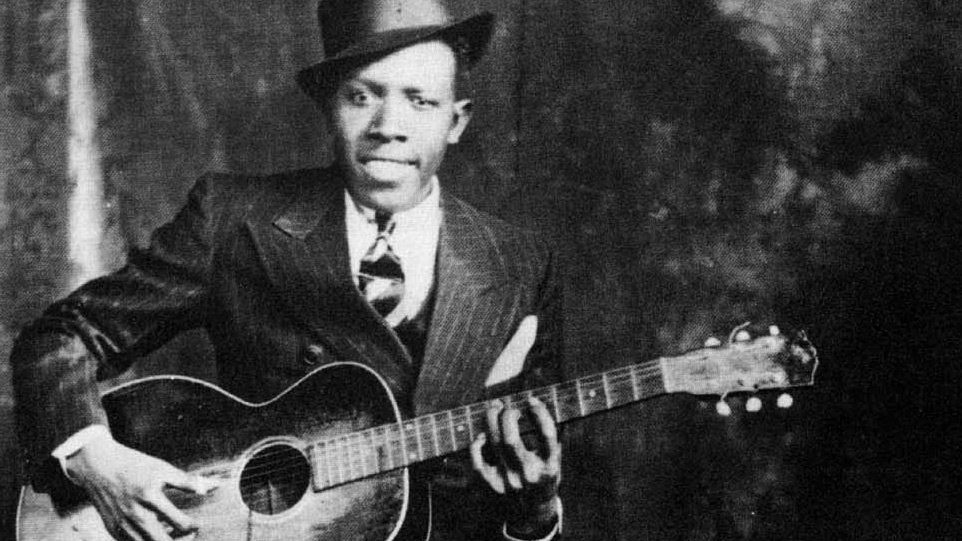


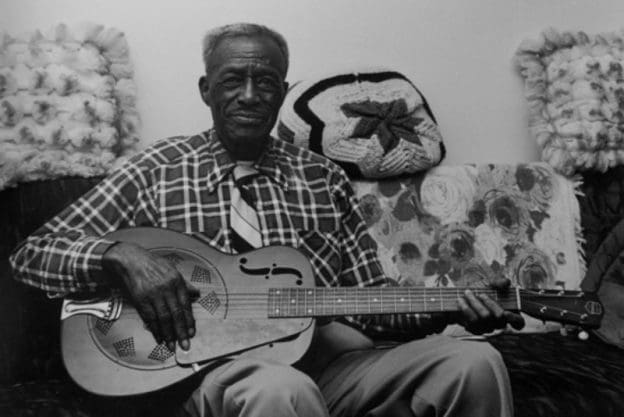




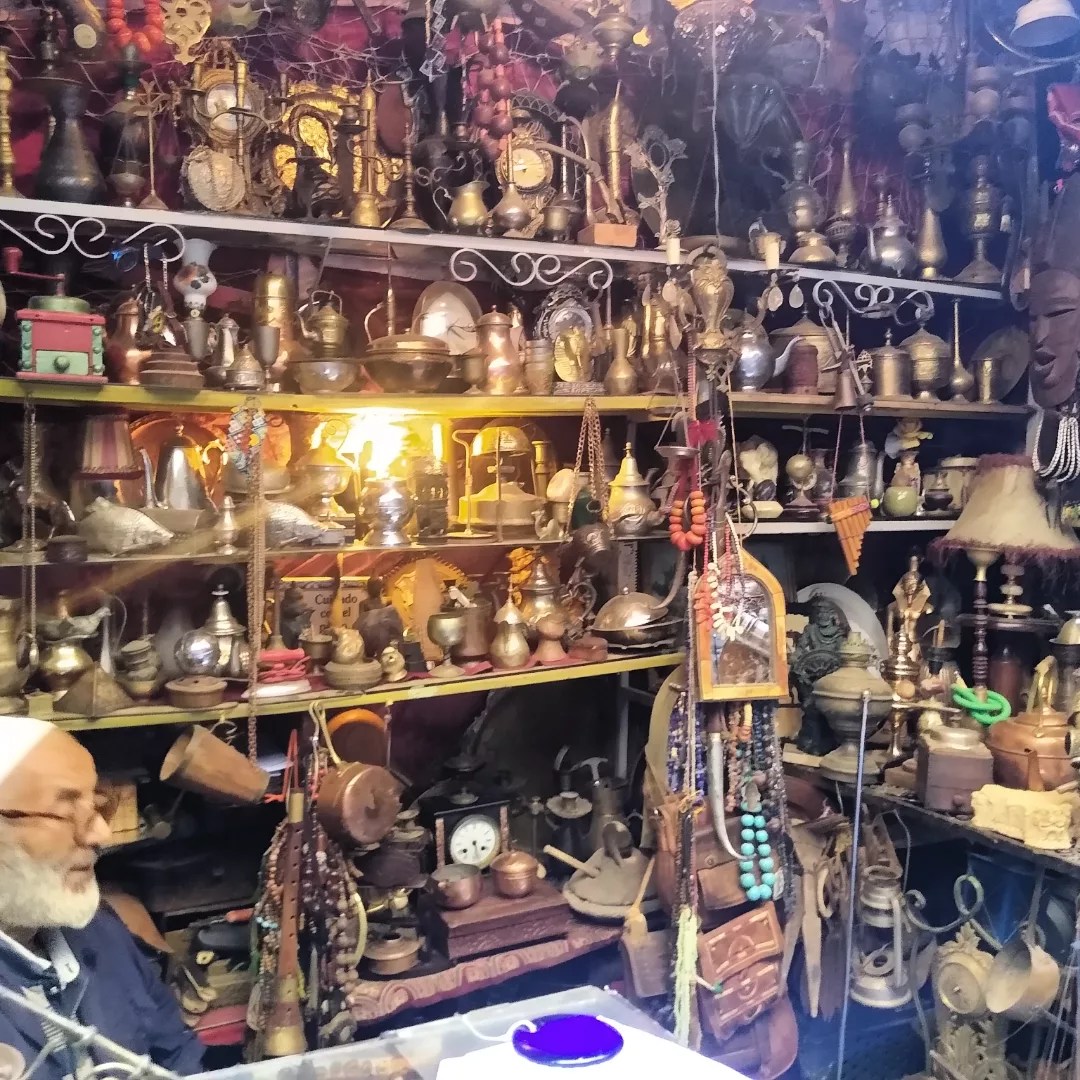



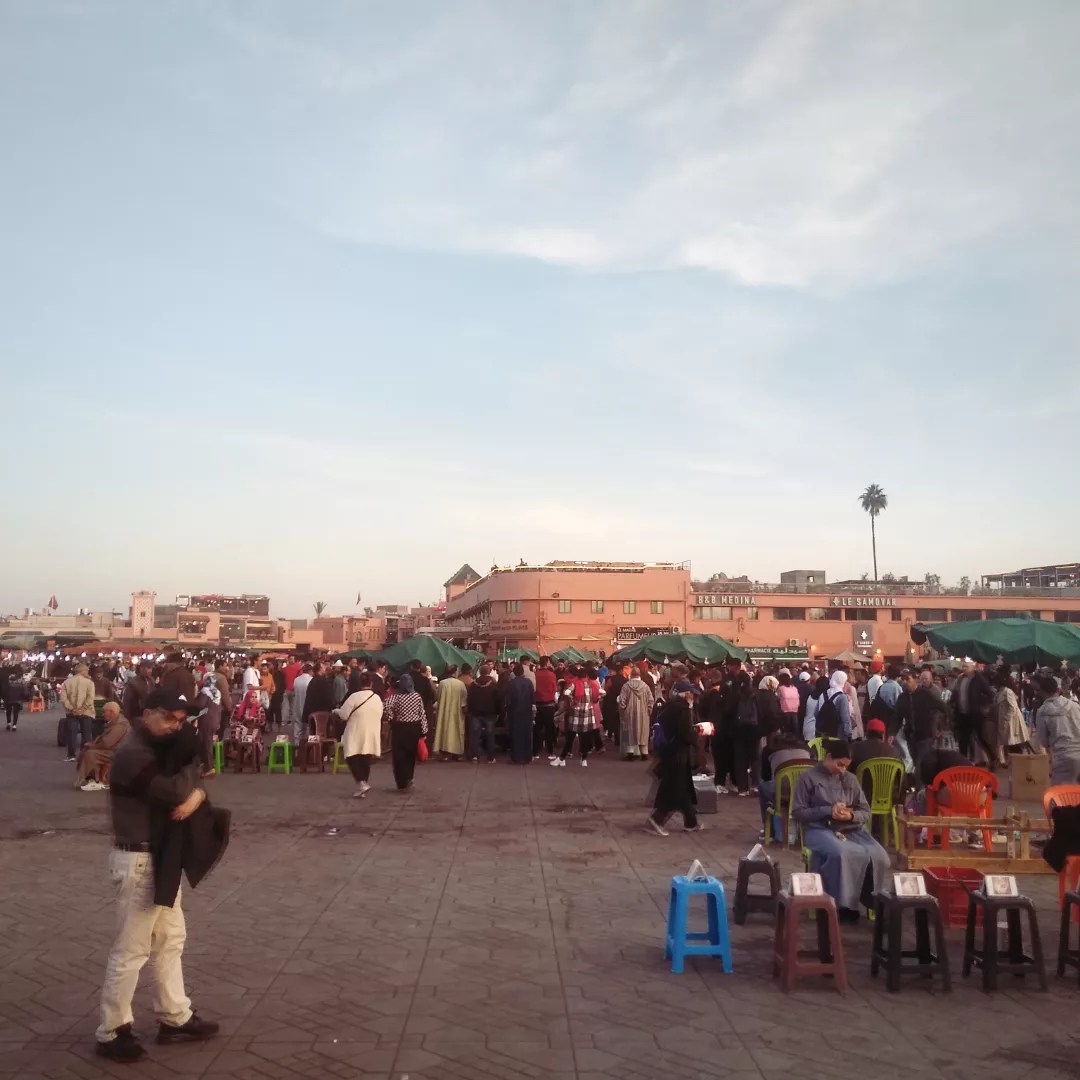
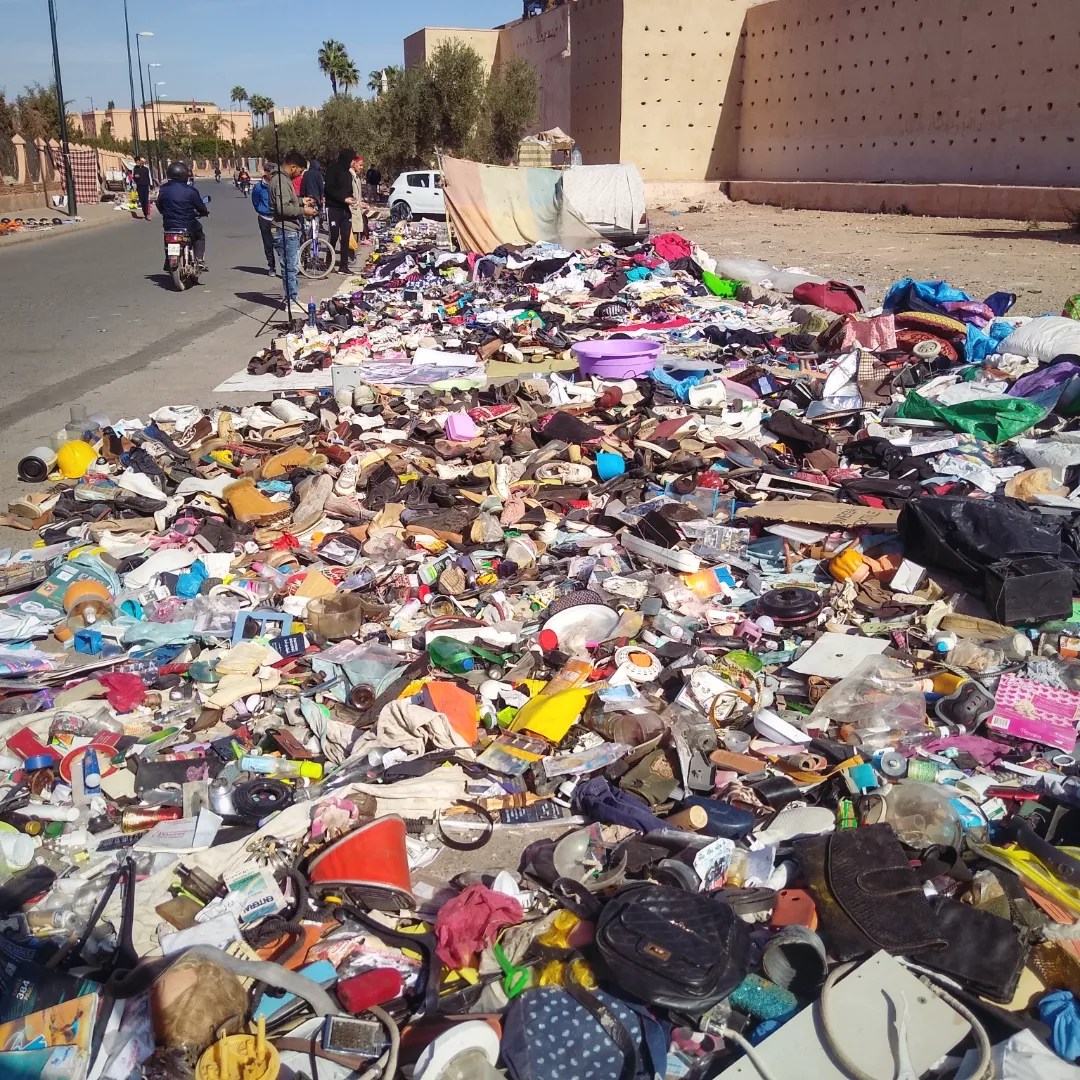

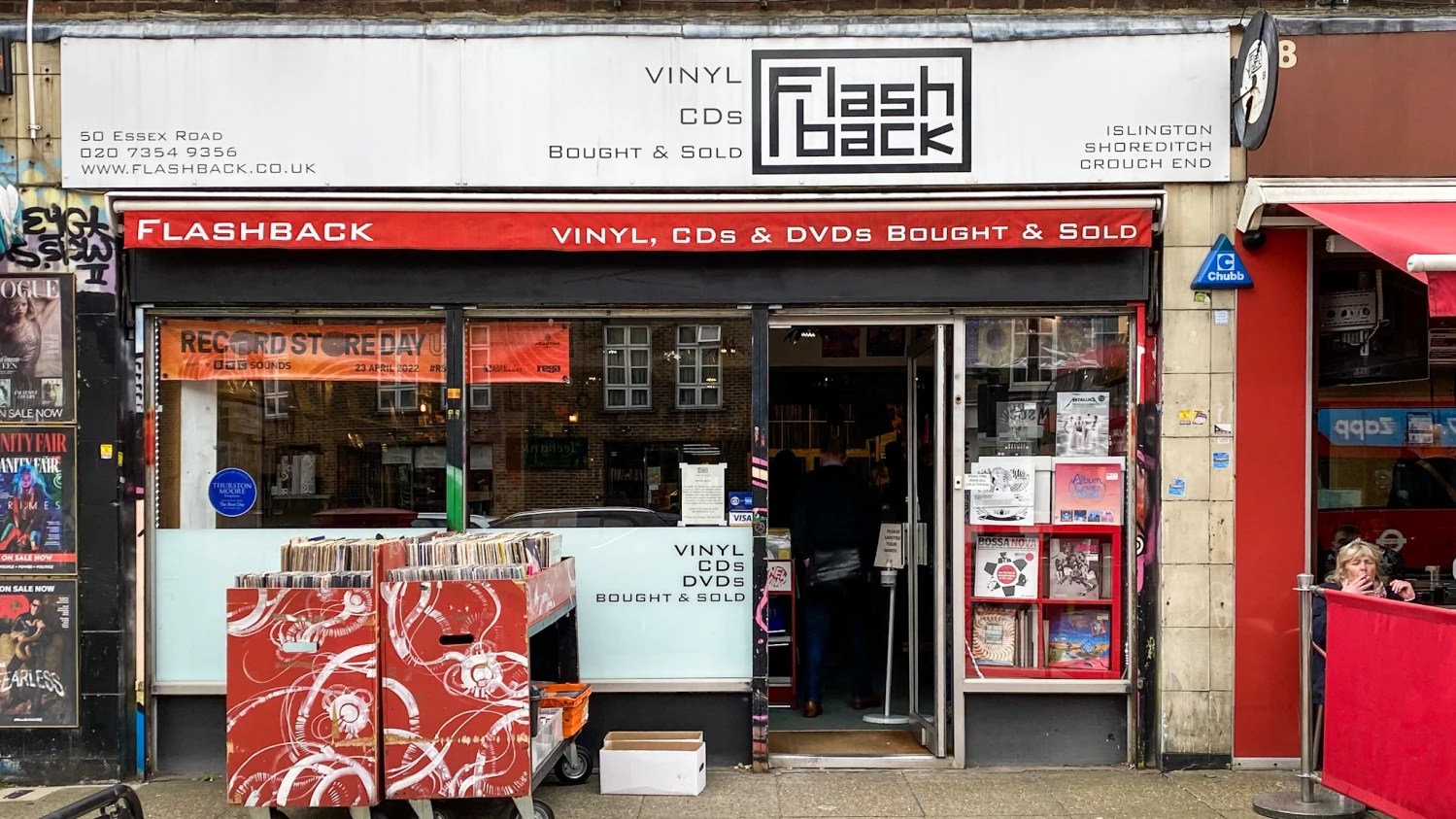

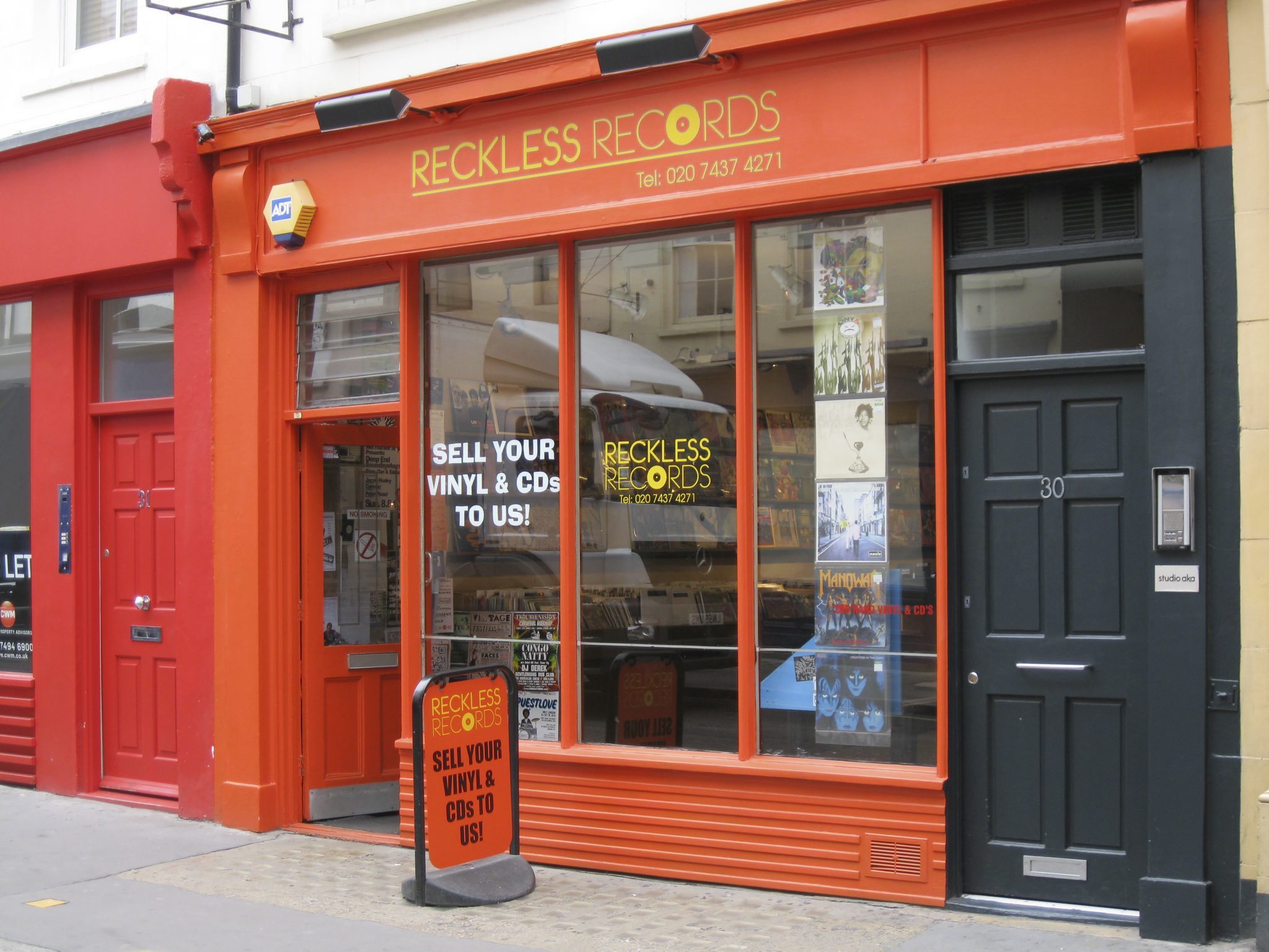


 Latitude Post