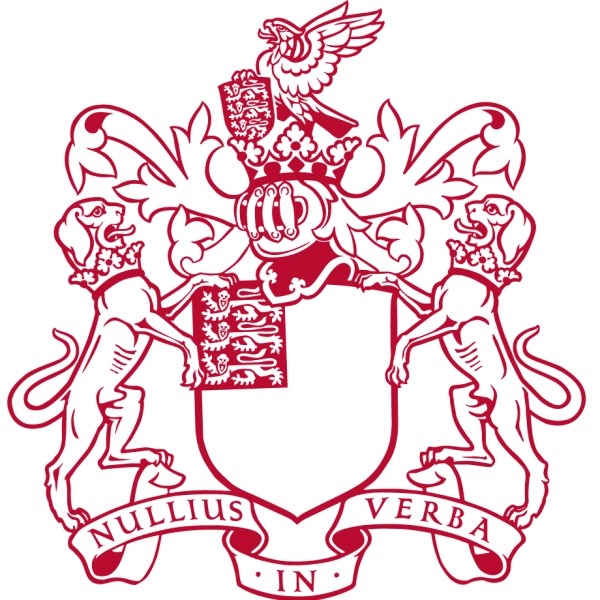
Nullius In Verba

The latin phrase “nullius in verba” means “take no one’s word for it” and is the motto of the Royal Society.

It is important that we don’t take everything we read and hear as gospel and that we verify all information. This is more vital than ever today in the current “post truth” social media age in which we live. But it is not just within the realms of social media and the free for all ocean of misinformation. Whenever we are presented with or discover new information, it is always important that we do our own research.

In a way “nullius in verba” really means “find out for yourself” or “think for yourself”. It is an antidote to groupthink and encourages us to always draw our own conclusions on something regardless of how believable and credible it may seem to us.

The problem we often have as humans is that we are prone to cognitive biases. It is sometimes too much effort to always verify something and thus we sometimes fail to heed these words. Beyond the effort part, there is also a social stigma issue. That is why groupthink is often so popular. Many people don’t want to stand out and be seen as a tall poppy. They would prefer to fit in and not rock the boat.

But taking no one’s word for something and finding out for ourselves is worth the effort. It can be a rewarding path as we discover unique truths or even secrets. This is something I touched on in an earlier post of mine entitled Just Gimme Some Secrets. In this post I explore truths that very few people agree on, whilst simultaneously unpacking truths or statements that many people believe in yet contain lots of holes. However, I certainly do not advocate contrianism willy nilly. Contrarianism can also be a cognitive bias in itself if abused. Not all universal truths are untrue!

But this is something we have to find out for ourselves.

By Nicholas Peart

4th October 2026

(c)All Rights Reserved

The Plato’s Cave Of Identity

identity image

It is so easy for one to become trapped and stand too close to the picture. In this instance one becomes myopic to their greater surroundings. When I think of identity I think of a tangled red tape maze of labelling and a neglect or disconnection to a more meaningful unifying permanency.

An important question one must ask is, ‘Who Am I?’.

Do I define myself by my race, social class, nationality, politics, culture or subculture, my external looks, fashion style etc ?

Or do I transcend any of these superficial identities and connect more with my heart, mind and soul?

In a more universal context, identity has no currency or power. The matter and energy in the universe is bereft of any labels or boxed confinement. It is that and nothing else.

For example, when I refer to myself as an artist, I am already putting myself in a box by creating an identity. I would severely limit and sell myself short if I were to solely think of myself as an artist. With my paintings, I strive to transcend identity. The inspiration for my paintings derives from what I like to refer to as ‘the eternal source’. By this I mean an eternal spirit or consciousness, which is permanent and will outlive me. I find it a challenging task to explain this in words, hence why I create the paintings I create. Through my paintings, I project and get closer to this eternal source much more than I would through words.

I believe focusing on identity creates a great deal of unnecessary anxiety, stress and friction. We become like spread-out and jagged fragments of broken glass; sterile and running on empty.  We become our own worst enemies.

When we drop identity, the concept of something such as likes and dislikes melts away.  We become more in tune, connected and empathic to our greater surroundings. We become more, dare I say, enlightened.

By Nicholas Peart

(c)All Rights Reserved


Image source: Pixabay