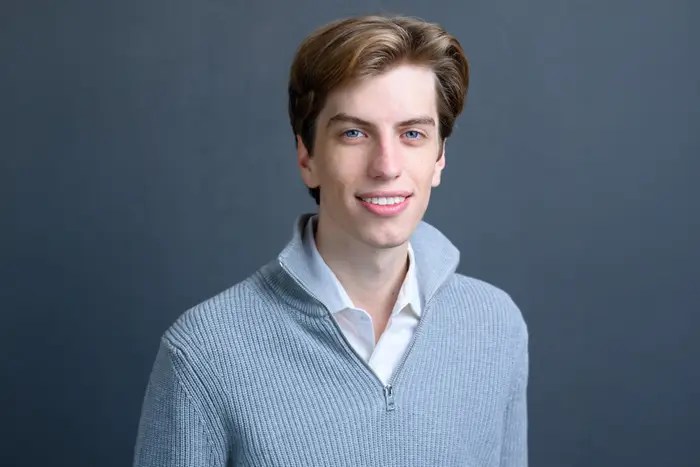
Leopold Aschenbrenner is a young German AI researcher and investor only in his mid 20s. From 2023 to 2024 he worked for Open AI. During his tenure at the company he was part of their “Superalignment” team that made technological breakthroughs with AI systems more complex and intelligent than humans. The team was eventually wound down and Aschenbrenner was fired from the company over an alleged information leak. Not long after his dismissal from the company he authored a 165 page essay entitled “Situational Awareness: The Decade Ahead”, which was published in June 2024. In his essay he outlines the future trajectory and evolution of AI and the risks along the way. His essay received an enormous amount of global attention and raised his profile substantially.
After publishing his essay, he established a hedge fund called Situational Awareness LP (named after his essay and focused on AI), which received backing and funding from a bunch of heavyweight tech entrepreneurs and investors such as Patrick and John Collison (the co-founders of the fintech company Stripe), Daniel Goss and Nat Friedman.
Since the launch of the fund in July 2024 until just a couple of months ago, the fund made gains in excess of 1000%. That is a more than impressive gain in such a relatively short time span. This only cemented observers and investors’ views that the kid was a genius with the midas touch and a unique prescience. Until just last month when the fund collapsed from $45bn of assets to just $10bn. Now you may be thinking how could the value of the fund have collapsed so spectacularly in such a short space of time? Yet you could also ask the opposite question, how could the fund have racked up such spectacular gains in just two years? The answer of course is the L word; leverage. Whilst many investors and observers were drunk on the halo effect and would naturally attribute the past success of the fund to Leopold’s genius, a few actually cared to properly scrutinise the fund. And those that bothered to do any diligence were shocked by what they discovered. Their own research revealed that the company used as much as 400% leverage and thus they were not at all that surprised when the fund crashed hard.
This is not the first time something like this has happened nor I suspect will it be the last. Back in the mid to late 1990s, during the heating up of the dot-com bubble, there was an American hedge fund called Long Term Capital Management. LTCM was founded in 1994 by John Meriwether who had previously been the vice chairman and head of bond trading at Salomon Brothers. The fund’s board of directors included some very distinguished individuals such as Myron Scholes and Robert C Merton who both jointly won the Nobel Prize in Economics in 1997 for their development of the Black-Scholes model; a mathematical model commonly used in derivatives trading. LTCM was initially successful with healthy double digit percentage annual returns. However, in 1998 things started to go badly wrong for the fund. In that year it lost $4.6bn in under four months due to taking on leverage (that L word again!) and exposure to both the 1997 Asian financial crisis and the 1998 Russian financial crisis. The fund was on the cusp of collapse that year and was only saved by a $3.6bn bailout from a group of 14 banks to prevent further contagion. LTCM was eventually dissolved two years later in 2000.
When I reflect on what happened with both Situational Awareness LP and Long Term Capital Management, my key takeaway is that the market doesn’t care how smart you are. It can often be a mistake to automatically conflate intelligence or genius with making good investment decisions. This is where that aforementioned cognitive bias, the halo effect, can be particularly devastating. I think as human beings we can be strongly swayed by narratives and sometimes a strong narrative alone in something is enough to give us conviction in our investment decisions. Yet narratives, especially powerful and red hot ones, can be dangerous. There is no substitute to doing your own research. It can be gruelling and unsexy, but it can also save you.
By Nicholas Peart
6th August 2026
(c)All Rights Reserved
LINKS:
https://www.cnbc.com/2026/07/31/leopold-aschenbrenner-situational-awareness-fund-fire-sale.html

