I’ve been going over some of my older articles that I wrote on new and emerging technologies. Some of these are now almost ten years old. Back in August 2017, I published an article entitled How 3D Printing Could Be The Biggest Thing To Affect Our Lives Since The Internet. In this article, I talk about the great potential that 3D Printing has in transforming different industries. I specifically talk about how it has the power to change the manufacturing, construction and medical industries. Back in 2013/14, there was a lot of excitement around 3D Printing, dare I say almost verging on hype, with all kinds of grand predictions being made regarding its future potential. It was easy to see why there was this fever around this new and innovative technology and all the solutions it could offer. It felt like one was witnessing the very early days of the internet. And I myself was very excited and could see the possibilities. Some people were even saying that by 2020, every household would have a 3D printer. That prediction has sadly not turned out to be true and to this day 3D Printing remains far from mainstream adoption. However, that is not to say this won’t ever happen. It is simply that far from being able to predict the future, there is a tendency to overestimate the speed of technology adoption.
There are people who underestimate new and emerging technologies. Just like there were many people who underestimated the future potential of the internet in its early days. However, it is also easy to fall into the trap of overestimating the speed and development of new and emerging technologies. I think that is what a lot of people got wrong (including myself) with 3D Printing. This is not to say that 3D Printing does not have a future. I think it absolutely does, but getting the timing right regarding when this technology will be adopted en masse is the tricky part. It may be that it happens at some point soon in the future and when it happens it happens very fast. Perhaps the rise and exponential evolution of AI (a topic I also focused on quite a lot during this time) may help speed up the development of 3D Printing and free it from many of the bottlenecks it’s currently facing. Who knows?
Back in 2016 I wrote an article where I focused on Virtual Reality (VR) technology entitled Virtual Reality: Further From The Source where I envisaged the possibilities and growth of this new technology. Similarly, a year later I wrote another article entitled How Virtual Reality And Augmented Reality Technologies Will Transform Education. In that article I foresaw a future of students wearing Augmented Reality (AR) glasses in the classroom to enhance their learning experience. As I write this article almost nine years later we are still not at that stage yet. And VR technology is still far from mainstream adoption even if it has been around for more than a decade now. Facebook (now Meta) acquired the VR company Oculus in 2014. And yet for the vast majority of users of its subsidiary platforms Facebook, Instagram and WhatsApp, the user experience still remains a 2D experience. That’s not to say that one day this could all change, but I guess in this case the speed of technology adoption for VR was overestimated.
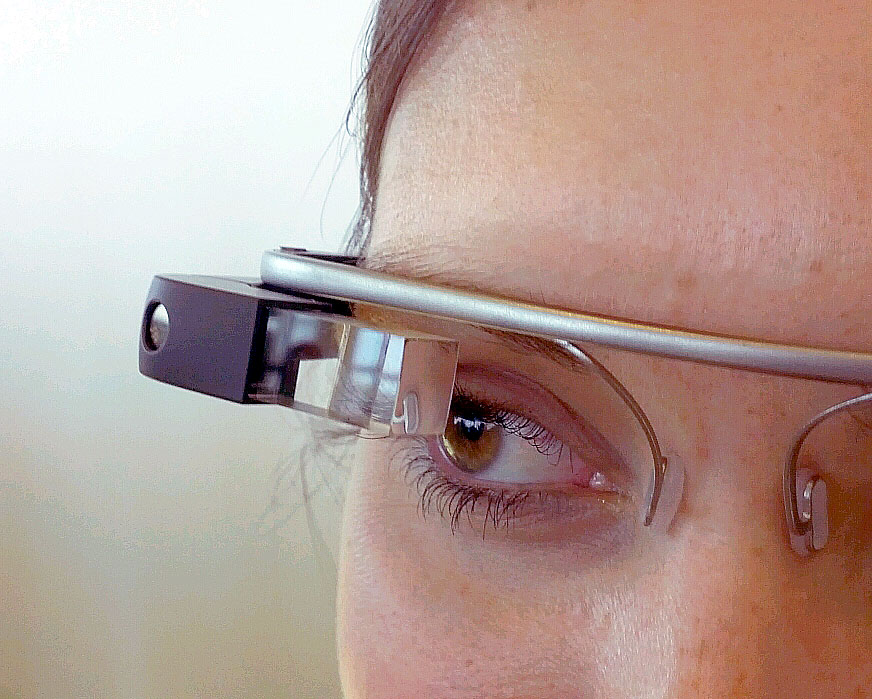
Sometimes one can simply be too early. When Google launched their pioneering Google Glass, a set of smart eyeglasses, back in 2013, it was a flop. This was not because it wasn’t a good product. It was simply that people were not ready for it even if the developers of the product at Google X were perhaps expecting such a game changing product to be widely adopted. Yet it was far too early for mainstream adoption. People had legitimate concerns regarding privacy and safety and thus it was not a success despite its innovation. More recently, there has been controversy over Meta’s Ray Ban smartglasses. The backlash has been pretty strong with some labelling them as “pervert glasses”. What’s interesting is that those specific glasses don’t contain AR technology (although the Meta Orion ones do as well as the Ray Ban Meta Display glasses in a more limited capacity), but they do contain a built in camera with speakers and AI technology. Although these glasses do have many benefits, the privacy concerns continue to be a problem. And this is more than a decade after the launch of Google Glass.
However, just to be clear, this is not an article that does not believe in technological innovation. On the contrary, and as per my previous tech articles, I have often seen the potential with many new and emerging technologies. But what has proved tricky is trying to predict when some of these technologies would reach a tipping point where they become adopted en mass. It could be that with smart glasses, and perhaps more advanced ones with AR and VR technology, that tipping point could happen pretty soon despite all the challenges and setbacks so far.
By Nicholas Peart
13th August 2026
©All Rights Reserved
Image: wikipedia
LINKS:
https://latitudepost.com/2016/05/15/virtual-reality-further-from-the-source/
https://www.theguardian.com/technology/2026/aug/08/ai-smartglasses-camera-film-privacy-consent


