Visiting the Albanian towns of Gjirokaster and Berat

IMG_20171128_134158162

My first visit to Albania was earlier this year in late September when I visited the northern Albanian town of Shkoder en route towards Montenegro after having spent a week in neighbouring Kosovo. Visiting the rest of the country wasn’t on the agenda on that trip but I vowed to return to Albania later in the year. Since the beginning of November I had been based in Athens for almost three weeks. Yet I made sure that I would return to Albania before the end of this trip.

From the northern Greek town of Ioannina, I took an early afternoon bus directly to the southern Albanian mountain town of Gjirokaster. I was the only tourist on the bus. Ioannina is a mountain town located on a plateau of around 500 meters. The entire sky was heavy with thick low lying clouds and I was wearing my warmest garments. During the two hour bus ride we drive through some awesomely stunning mountain landscape. There is no heating on the bus and my feet are turning to ice. The border crossing feels like its located at the same altitude as La Paz in Bolivia. On the Greek side we all have to get off the bus and I make an inward groaning sound. Uniquely for border crossings, the Greek border official is full energy and excellent humour. His English is impeccable…‘So Mr Nicholas Alexander, what the hell are you doing on the Greek-Albanian border?’ When we approach the Albanian side I feel relieved when we don’t have to disembark the bus. Instead the bus driver takes all our passports to give to the Albanian border official before handing them back to us.

IMG_0793

By Lake Pamvotis in the northern Greek town of Ioannina

On arrival in Gjirokaster, the bus stops on the side of the main town boulevard, Bulevardi 18 Shtatori. Multiple red Albanian flags line the middle of the boulevard. I establish my bearings towards my guesthouse via Google Maps. With hindsight, it would have taken an age to find my place without all this digital cutting edge technology at my disposal. From the boulevard, I walk up multiple ascending narrow stone paths. As I get closer to my destination, the older part of town with its old historic Ottoman style houses (some splendidly dilapidated) slowly reveals itself to me. I wish I were wearing my hi tech Merrel brand boots with their tough Vibram grip. My trendy hipster Vans shoes are not made for walking these jagged stone paths. As I walk further up one of the paths, a young man on a donkey with a small cart attached to it passes me by.

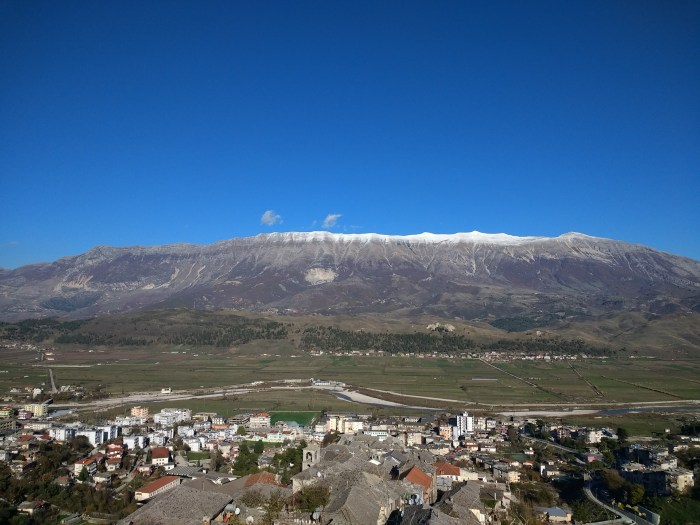
Google Maps is on my side and eventually I reach my final destination, Mele Guesthouse, or at least I think I have? An elderly couple greet me at the gates and take me inside their house. I ask them for the whereabouts of Mele, but neither of them speak a lick of English. We sit down on the sofa in the living room and the lady goes to the kitchen and returns with a tray carrying a bowl of sweats and an oversized shot glass of raki. With weather as cold as this, the raki is like a hot woodfire stove in my belly. I am also presented with a photo album of the couple with two of their children, a son and a daughter, in Venice. I assume that the daughter is Mele. After some time, a man in his late 30s/early 40s appears. I have a giant lemon sweet drop in my mouth disabling me from speaking clearly. Mele, I learn, is the surname of the man who’s name is Edmond. He speaks excellent English and I follow him to his house next door where my room is located. There is a balcony by my room with a tremendous view over the rest of the city and of the dramatic wide snow capped mountain symbolic of this town. My room is not warm but Edmond tells me to use the air conditioning unit on the wall, which doubles up as a radiator during this time of year. Edmond and I sit on the sofa in the heated living room. He makes me a delicious and warm organic tea and mentions that he once lived in Milton Keynes for two years back in 2005. Nowadays he works as a metal welder in town and lives in the house with his partner and their adorable young kid.

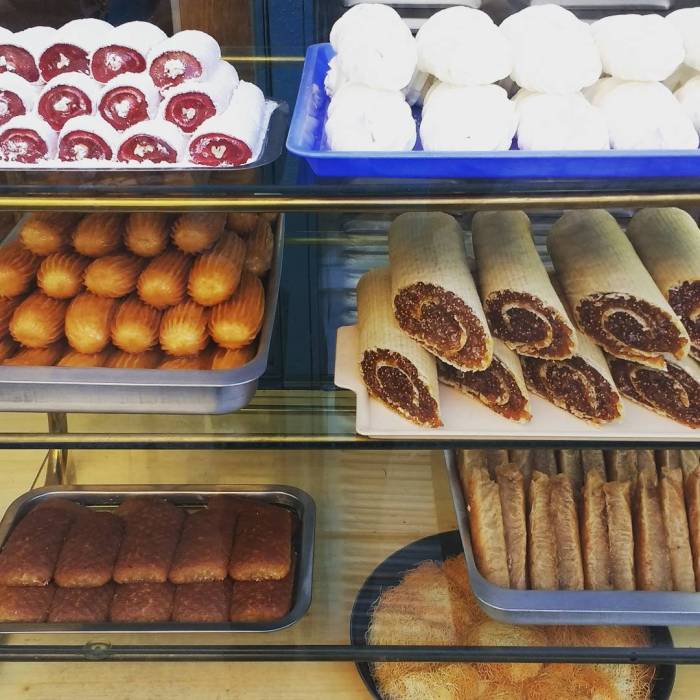
I spend the remainder of the afternoon walking around the old town. I need to withdraw some local cash so I head back towards the new part of town where I originally arrived. Instead of the arduous multiple narrow paths route I earlier in the day, I find a descending stone paved road leading directly into that part of town. After withdrawing my cash, I enter a bakery and order a slice of cheese and spinach pie and a wedge of halva cake. It all comes to about one Euro in the local Leks currency. That same purchase down the road in Ioannina would have cost me three times more. I am served by a young woman of about 20 who speaks passable English. She is so lovely and kindhearted, and admits to me that she cherishes all the opportunities to practice her English. Her name is Ada and she’s a student at a local university.

When I return to the old part of town, I try to find Taverna Kuka, a restaurant recommended to me by Edmond. The wooden taverna is aesthetically very tasteful and well heated. On one wall, there are several framed pencil sketches of assorted areas of the old town by a local artist. My first choice, the moussaka, is unavailable so I settle on a plate of qifqi, a local ball-shaped delicacy made from rice, dhjozme, egg, salt, pepper and milk.

IMG_20171127_171316709

Taverna Kuka


IMG_20171127_172925074

A plate of qifqi and meatballs

At night the temperature drops below zero. The air-con is humming away converted ice cold air into warm air. It’s a cumbersome and electricity wasting process and nothing beats a radiator, whether portable or nailed to the wall. Entering my private bathroom, which is unheated I must add, is like accidentally wading into a winter in Vorkuta. I pee and brush my teeth with haste before exiting back into a warmer vacuum. Edmond has kindly provided me with enough blankets to prevent the entire population of Gjirokaster from developing hypothermia.

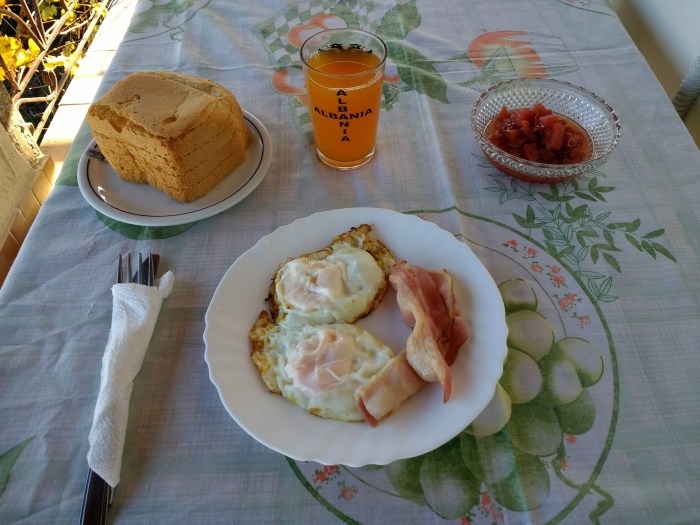
When I wake up at 7am the next day, I roll up the shutters covering the sliding balcony glass doors. I am rewarded with a pristine blue day. The wide mountain and town skyline are majestic. I am served a decent breakfast of bacon, eggs, bread, sweet pickles and a Nutella crêpe. Wolfing down my breakfast, I tell myself Carpe fucking Diem. I am going to live today like its one of my last. I have the energy of James Brown, sans angel dust.

IMG_20171128_084357571_HDR

View of Gjirokaster from the balcony of my guesthouse room
 

IMG_20171128_085811954

Breakfast on the balcony

The first site in town I visit is the former childhood home of the Albanian president-for-life Communist dictator Enver Hoxha. Hoxha ruled the country for over 40 years from 1944 until his death in 1985. During his rule he cut off the country from most of the world. Albanian civilians were not allowed to leave and his regime tortured and killed thousands. Albania was comparable to Fidel Castro’s Cuba or present day North Korea during this period.

IMG_6692

Enver Hoxha 

Hoxha’s childhood home is an old Ottoman style house over 100 years old, which has been converted into the town’s ethnographic museum. Most of the wooden features and designs of the house appear to be original and well preserved. In contrast to this, many of the old historic Ottoman style houses dotted around the old town look neglected and in a decaying state of disrepair. In the vestibule of the first floor of the house, there is a small corner table with two black and white photographs of Hoxha resting on the wall. The living and guest rooms of the house are furnished with long sofas, antique carpets, intricate Ottoman style wooden reliefs on the wall and also some artillery pieces like the two rifles in one of the rooms.
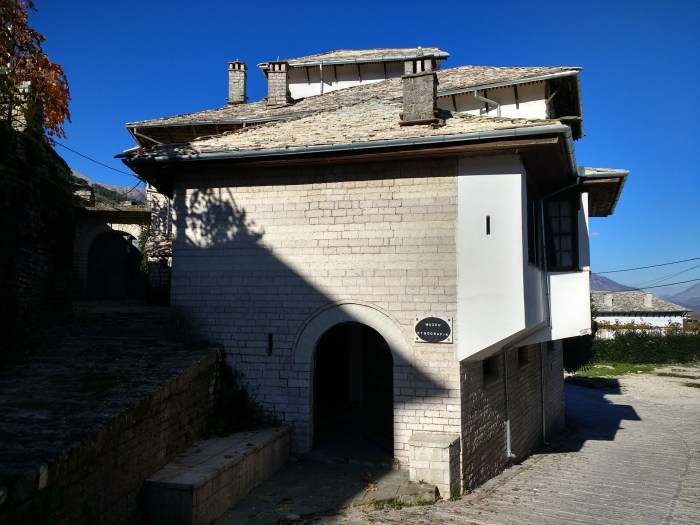
The childhood home of Enver Hoxha now the Ethnographic museum in Gjirokaster
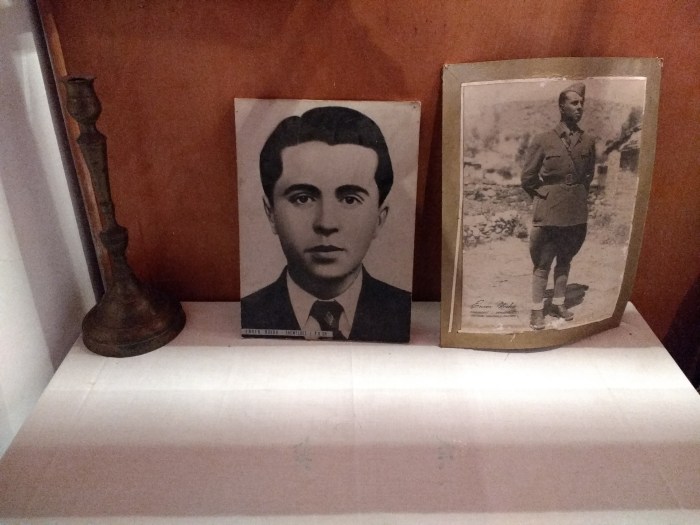
 

IMG_20171128_101402448

IMG_20171128_095936217

IMG_20171128_100545920

IMG_20171128_100456706

Photographs from inside the Ethnographic museum in Gjirokaster

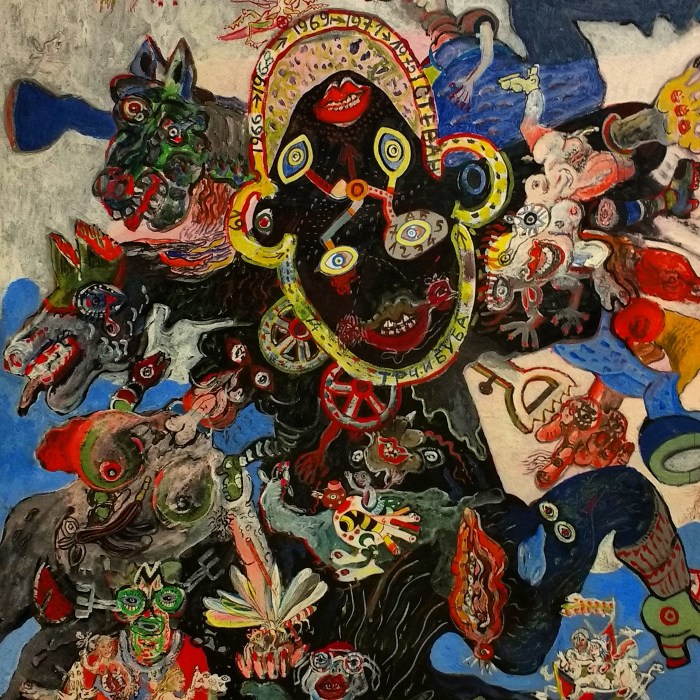
Another figure to come from Gjirokaster is one of Albania’s best known literary figures, Ismail Kadare. I visit his former home, which has been reconstructed after a fire in the 1990s destroyed the original structure and features. It is used as an exhibition space today and when I visited there were a number of Expressionist style oil paintings by a local artist dotted around the home. In one room there is a small table with black and white photographs of Ismail as a young boy, some books, the hat he wore whilst he was a journalist in Vietnam during the war and a certificate honouring Kadare for winning the Jerusalem Prize for the Freedom of the Individual in Society of 2015.

IMG_20171128_105409414

Inside the former home of Albanian writer Ismail Kadare 

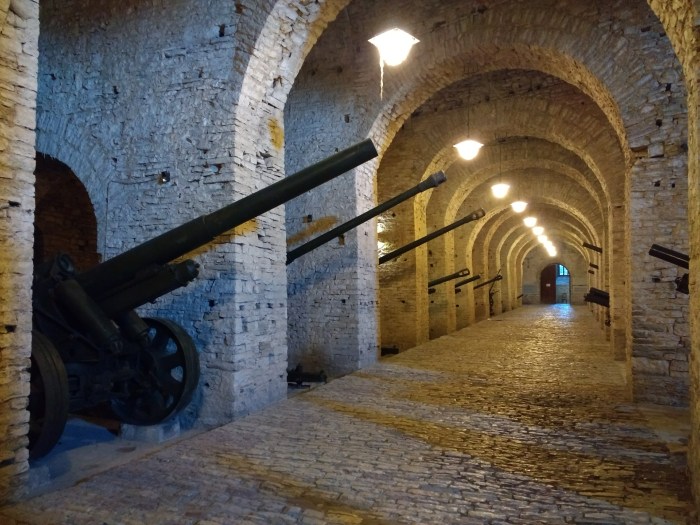
Afterwards I head to the enormous hilltop fortress of Gjirokastra. Just before I walk up the steps towards the fortress, I get lost walking up some of the mazes of surrounding stone pathways. The higher I climb the more awesome a view I have of the fortress and the old bazaar. The wide snow capped mountain in the distance, visible from my balcony, augments the beauty, rawness and authenticity of this historic slice of Albania. When I enter inside the fortress, I arrive at an area with great tall multiple stone arches and a collection of artillery dating back to the Second World War. Most of these weapons belonged to German and Italian forces, which occupied Albania during that time. The fortress is also home to the Museum of Gjirokaster. The museum contains numerous displays and information documenting the history of the city from as far back as pre-historic times. Of most interest to me is the period of history starting from when the Ottoman Empire conquered the Balkans region. In 1417, Gjirokaster became part of this empire. Since that time the town grew immensely and Islam became the dominant religion, although the Ottomans were tolerant towards the existing Christian communities.
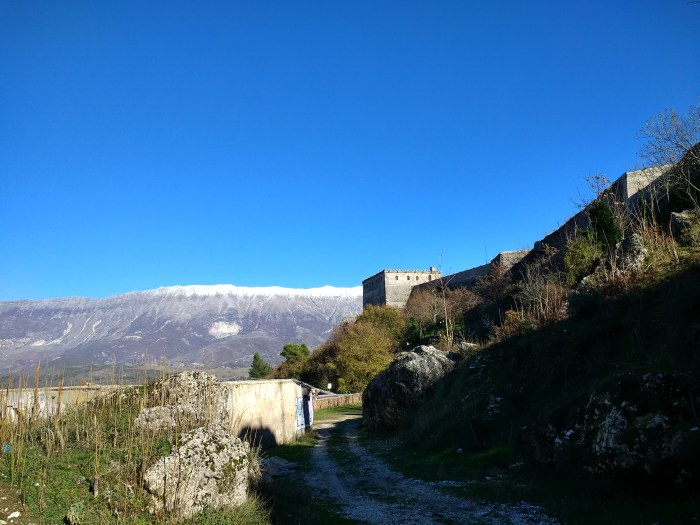
IMG_20171128_123048971_HDR

Fortress of Gjirokaster


IMG_20171128_125256773

The artillery gallery inside the fortress

By the time of the 18th and 19th centuries, Gjirokaster was an important administrative centre for the empire. It was around this time in 1811 when the city was captured by Ali Pasha of Ioannina, the last town I visited before I arrived in Gjirokaster. To say that Pasha was a formidable ruler would be an understatement. From the modest bits and pieces I’ve read up on him, he strikes me as the quintessential larger than life colonial despot; an intimidating and nightmarish version of Louis XIV of France on an eternal cocaine comedown. Or more generously, a PG certificate Ghenghis Khan. Lord Byron famously visited his court in the walled Turkish Kastro in Ioannina in 1809 and had conflicting feelings about the man. On one hand he was impressed by the ruler’s cultural refinement and the opulence of his court yet he was shocked by his propensity for off the charts barbarism as he wrote in a letter to his mother, ‘His Highness is a remorseless tyrant, guilty of the most horrible cruelties, very brave, so good a general that they call him the Mahometan Buonaparte…but as barbarous as he is successful, roasting rebels, etc, etc..’ An example of his brutality include tales of drowning people who rubbed him up the wrong way by bundling them into sacks loaded with stones and then tying up the sacks before proceeding to drop them in Lake Pamvotis below the walls of his court. I recalled walking by that lake close to the Kastro and former court of Ali one cold and overcast day on my way to the bus terminal hellbent on getting to Albania. All the leaves on the trees by the lake were golden autumn brown. Ignorance is bliss and all I can remember is being struck by the beauty of the nature of my surroundings. Ali Pacha of Ioannina back then was just a name and I knew almost nothing about the man and the history of the town I was passing through.

IMG_0796

Ali Pasha

But back to Gjirokaster before I digress any further. The origins of the fortress date back as far as the 12th century but it wasn’t until the time when Ali Pasha first seized the town that major changes occurred. He instigated an enormous building project to expand the fortress with the help of his chief architect, Petro Korçari. His expansion project included new fortifications, the clock tower and an aqueduct to transport water from a mountain spring to fill the huge cisterns in the castle. The fortress was large enough to house up to 5000 soldiers along with their weapons and other supplies. An arsenal of 85 assorted British made state of the art arms were added to further protect the fortress from invasions. Not surprisingly, during Ali Pasha’s rule, the fortress never came under attack.

Some other interesting things I discovered in the museum about Gjirokaster include how fond the English landscape painter and poet, Edward Lear, was of the town. He visited two times in 1848 and 1859 on his travels through the Balkans. There are two black and white photographs which ignite my curiosity. One is a photograph of the old town from 1925 and the other is a photograph of locals hacking away with a hammer at the large town statue of Enver Hoxha after the fall of Communist rule in 1990. Although Gjirokaster is his place of birth and the town where he grew up, during his 41 year rule of Albania from 1944 until his death in 1985, he only visited his hometown a few times. There is also a display of miscellaneous ephemera from the Communist era such as political propaganda papers and identity documents.

IMG_6694

Painting of the fortress and the connecting aqueduct by the 19th century English painter and poet Edward Lear 
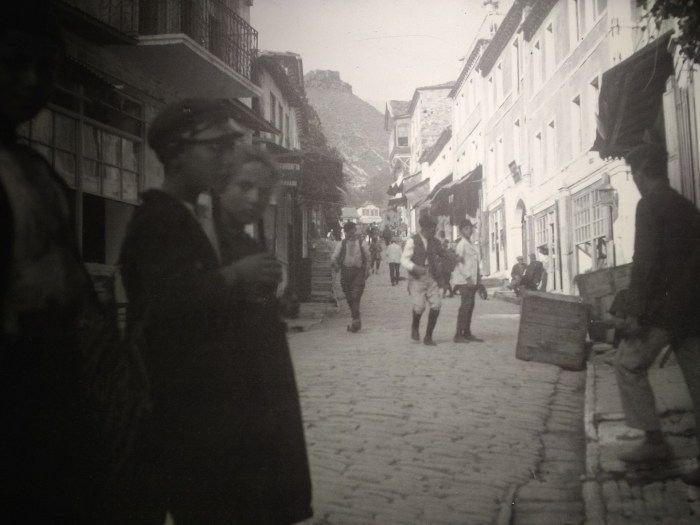
 

IMG_20171128_132136277

The old town of Gjirokaster in 1925


IMG_20171128_130943313

Locals posing by and hacking away at the statue of Enver Hoxha in Gjirokaster after the fall of Communism in the early 1990s
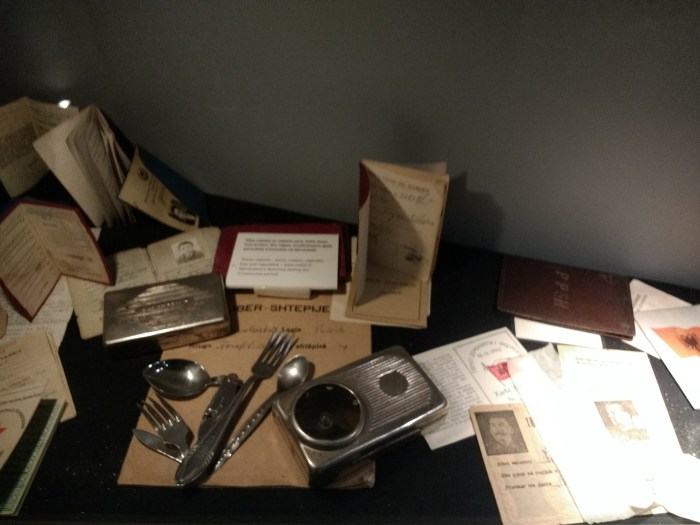
 

IMG_20171128_131326263

Objects and ephemera from the Communist period

From the top of the fortress, one is rewarded with a monumental view of the famous wide mountain of Gjirokaster. Ali Pasha’s clock tower is located near the end beneath the backdrop of the mountain. Elsewhere there is a large metallic dome shaped structure over a circular stage. This is where the National Folk Festival is held every four or five years.

IMG_20171128_133844191

The Ali Pasha built clock tower of the fortress of Gjirokaster

With less than a couple of hours remaining of light on these preciously short days, I make my way towards Zekate House; a grand Ottoman era house and probably the most spectacular of all the grand houses in Gjirokaster. It was built between 1811-12 and was a gift from Ali Pasha to Beqir Zeko (whom the house is named after) who built the house for him. It is located on a high slope over looking the rest of the old town. The view from the top of the house over Gjirokaster is just as epic as the view from the top of the fortress. The house is incredibly well preserved with almost all of its original features. One of the guest rooms comprises of ornate Ottoman style art on the walls and a beautifully designed wooden ceiling in the same style. Some of the windows feature multicoloured glass pains.

IMG_20171128_153759661

The grand Ottoman era Ali Pasha constructed Zekate House 


IMG_20171128_152247367

One of the guest rooms inside Zekate House

In the evening the temperature drops dramatically hovering around the -5/-6 Celsius mark. Even with the aircon unit going into overdrive to pump warm air it isn’t enough and dispite having all the blankets in the world, I consider sleeping in my clothes. All this aside, the guesthouse is very homely and Edmond and his partner did their very best to make my stay as pleasant as possible. Edmond organises his friend to collect me after breakfast the next day to drive me to a part of town from where my bus to the town of Berat, further north of the country before the capital of Tirana, would depart. His friend arrives in a black Mercedes Benz parked at the bottom of the path leading up to Edmond’s home. With hindsight I am glad I opted for a cab. I most likely would have got hopeless lost had I gone it alone. Edmond’s friend doesn’t speak a word of English and the young lady at the office of one of the bus companies is not much better. Fortunately I have my phone so I give Edmond a call and he communicates with both his friend and the lady. I later learn that the bus to Berat will be arriving at a later time. Two minutes later I am bundled into a white mini van destined for the Albanian town of Lushnjë from where I have to catch another bus to Berat. When I enter the van it is close to full capacity and I find a seat in the row of seats right at the back of the van.

Leaving Gjirokaster, we slowly descend to a lower plateau and the temperature becomes noticeably milder, but I am still wrapped up. There is no heating system in the van. Before we reach Lushnjë, the bus driver points to a sign indicating the direction to Berat. The driver speaks zero English yet he directs his hand pointing frantically to a small bay area by the connecting road. I assume a Berat bound bus will be stopping there? Still I am not sure so before disembarking the bus I make an impromptu call out to all the passengers on the bus beginning by asking whether anyone speaks English? Thankfully a young lady with dyed platinum hair comes to the rescue and is able to confirm in modest English that I need to go to the bay area the bus driver keeps relentlessly pointing at. I say the Albanian word for thank you, faliminderit, about a dozen times putting my right hand to my heart.

Like some travelling 1930s Mississippi Delta Bluesman, I trudge with all my stuff over to the other road and the small bay area. Within five minutes a Berat bound battered furgon appears and I nudge myself inside with my suitcase. I am dropped off somewhere outside of Berat from where I board a local bus to the centre. The ticket seller on the bus asks me in broken English what football team I support? I am not a football man but I tell him Tottenham. He looks at me and smiles, exposing a set of truly disgusting broken and jagged nicotine stained teeth; a sight so disturbing I conclude this is someone not suitable to be around young kids. ‘Chelsea!!!’ he howls at me in a voice so piercingly loud all the other passengers stop what they are doing.

IMG_20171202_110447916

Berat

From the centre of town I disembark with my suitcase and walk, via trusty Google Maps, to my guesthouse located in a quiet and desolate location on the margins of the centre of town. It is a small newly built bungalow home with a few rooms. The outside of the house is no great shakes, but the few rooms inside are all in immaculate condition. In spite of this the rooms are very cold and even the air con unit doubling up as a heater doesn’t sufficiently heat up the room. The floor is cold as ice and the bathroom is one big freezer with a wooden door. The owners, an old Albanian couple, have a heart of gold though and the price per night is ridiculously cheap and good value. Too good in fact, especially if you consider that the price included a very generous breakfast of assorted slices of ham, jams, bread, feta cheese slabs and cut pieces of cucumber and tomato. Yet the cold temperature of my room means I sadly have to move on to another place the following day. The second guesthouse I stay at is more expensive, but is closer to town, run by a lovely family and has warmer rooms.

IMG_20171202_120736821_HDR

The old Ottoman Gorica Quarter of Berat

Most of my stay in Berat is handicapped by ferocious torrents of rain. In fact the rain was so severe across most of the country that whenever I watched the national news it was all total mayhem; monumental floods, overflowing rivers, main highway roads blocked by mud and sludge etc. I was even wondering whether I’d make it on to Tirana on time? The entire second day of my stay in Berat was spent inside my room. When on the third day the rain still hadn’t softened, I was so determined not to spend another day bunkered in my room, I decided to brave the deluge. All I had was my small black umbrella I purchased from a vendor in the Omonia district of Athens for a couple of euros.

IMG_20171201_100611492

Castle walls of the old hilltop Kalaja neighbourhood in Berat

I wanted to visit the old Kalaja neighbourhood located on top of a hill within the walls of the old city castle. It is a quite a shlep to get there and with the lashing rain and low hanging clouds even more challenging. About two thirds of the uphill stone path have turned into rapid streams of water. I invariably step into the steams and my busted Vans are already soaked to the bone. Yet I persevere and make the entrance of the castle walls at the top of the hill. From where I am, all of the town below is smothered in substantial puffs of nimbus clouds.
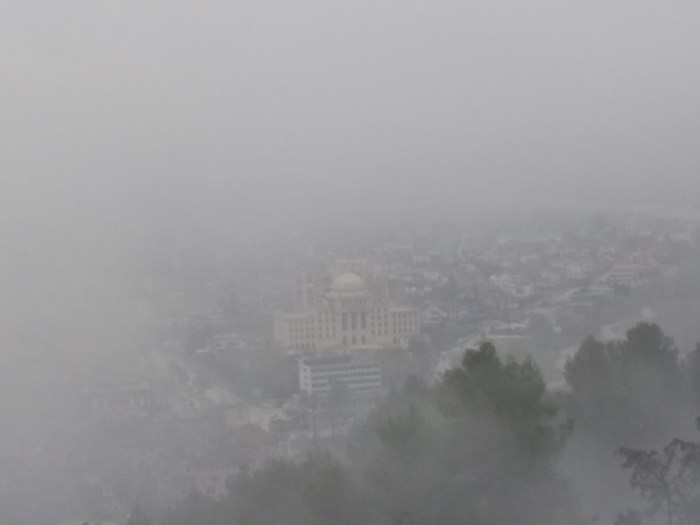
IMG_20171201_112914632_HDR

A cloud smothered view of Berat from the historic hilltop Kalaja neighbourhood

Yet I am glad I made it. The old neighbourhood within the castle walls is a gem of stunning old Ottoman architecture and narrow stone alleys and passages. Walking through this maze evokes mental images of passing though a slice of medieval England with a Turkish twist. It feels very authentic here and this is no museum. It is a living and breathing neighbourhood where locals go about their daily lives.
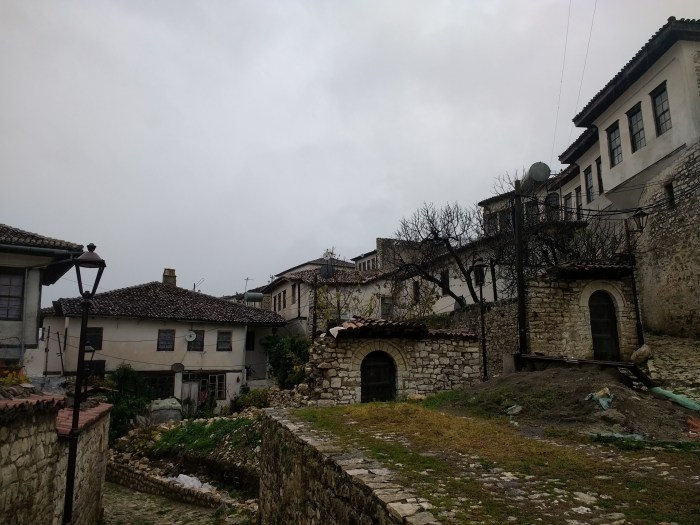
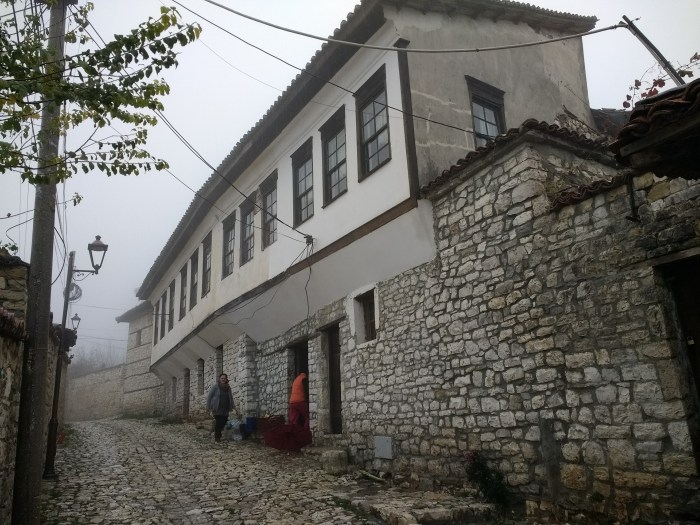
IMG_20171201_112538945

IMG_20171201_102411157

Photographs from the old Kalaja neighbourhood

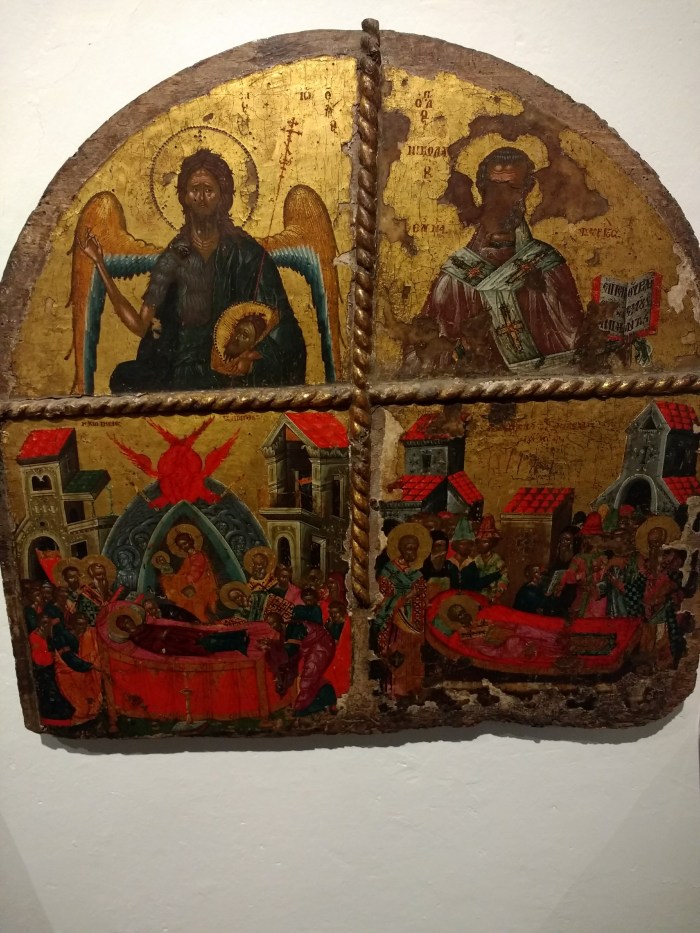
What is interesting is that for a long time Kalaja was a Christian neighbourhood and at one point had around 20 churches. Today there are fewer churches, yet the largest church in the district, the Church of the Dormition of St Mary (Kisha Fjetja e Shën Mërisë), is an old church still in existence dating back to 1797 and was constructed on the base of a church from the 10th century. This church is the site of the Onufri Museum. Onufri was a 16th century Orthodox icon painter and Archpriest priest of the Albanian town of Elbasan. He is considered the most significant icon painter of a group of Albanian icon painters from the 16th century who were instrumental in reviving the style of old sacred religious icon painting which flourished during the pre Ottoman Byzantine period. Some of his panel paintings are featured in the museum along with works by other Albanian Iconographical painters made between the 16th and 20th centuries. The enormous and ornate iconostasis situated inside the church is magnificent and one of the finest creations of the 19th century by the very best Albanian wood-carving masters. The iconostasis features two rows of icon paintings created by the ‘Grabovar’ icon painters from the Çetiri (or Katro) family under the leadership of the master icon painter Johan Çetiri. The carving of the iconostasis is documented to have been constructed by two master craftsmen, Masters Andoni and Stefani. It’s prohibited to take photographs but I am so blown away by the works that I sneak a cheeky pic on my Motorola smartphone.

IMG_20171201_103510533

The elaborate gilded 19th century iconostasis inside the Church of The Dormition of St Mary
 

IMG_20171201_111507667

16th century icon painting on wood by Onufri

Outside the church there is a display of black and white photographs of Berat from the early 20th century. They show scenes of life in the town including a photograph from 1918 of the old Gorica quarter of Berat with its many old Ottoman era houses all grouped together on the side of a hill.

IMG_20171201_110738923

Photograph of the Gorica Quarter from 1918


IMG_20171201_110910050

Photograph of the old bazaar from 1908

The rain is still fierce and by the time I return to my guesthouse my shoes, socks and rucksack are soaked. In the evening I have dinner at a local taverna restaurant called Weldor. I’ve already eaten there a few times and I am always served by a cordial young waiter who speaks faultless English. He’s never been to England but for many years he worked in a hostel run by a guy from Newcastle. The restaurant serves delicious and authentic Italian pizza, pasta and risotto dishes made by an Albanian cook who spent many years in Italy working as a chef. The local staples are also excellent and tonight I order a homemade casserole dish made with aubergines and served with some of the finest bread I have ever tasted.

IMG_20171201_191123663

Traditional Albanian cuisine at Wildor restaurant

By the next morning the rain has stopped and there are even some patches of blue in the sky. I seize this morning before I depart to Tirana to walk and explore the town in a way that was long denied to me. The main pedestrian promenade in the centre of town is covered in sludge. Already there are men at work with shovels and hose pipes trying to remove and wash away all the mud. Watching the people at work is like witnessing the aftermath of some natural disaster. I return to my previous guesthouse where I’d left my pyjamas. The owners greet me with a smile and hand me a plastic bag containing them. I tell them I am staying with a friend.

IMG_20171202_114752327

The aftermath of days of heavy rains, which flooded many parts of Albania

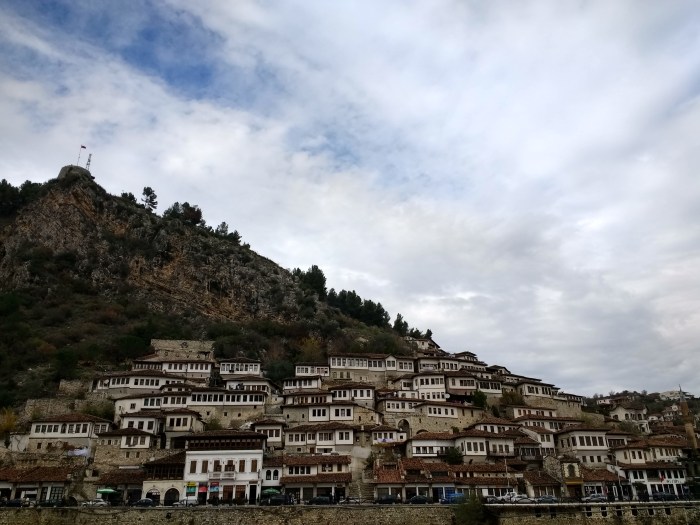
I walk over the river to the old Gorica quarter. Most of the cobbled paths are smothered in sludge with huge puddles making walking a challenge. From Gorica, I have a super view of the old town on the other side. Both this district and the old town are full of old classic Ottoman style houses each side mirroring the other and both responsible for this being known as the Town of 1000 windows.
IMG_20171202_114031789_HDR

The old town of Berat from the other side of the river

The family at my guesthouse arrange for me to go to Tirana via an acquaintance who will be driving there. I spend the remaining couple of hours of my time in the foyer with the family and their two adorable dogs, Spiky and Lucky, before a silver hatchback Golf pulls up to take me to my next destination.


By Nicholas Peart

©All Rights Reserved
Modern And Contemporary Art In Sarajevo

Earlier this year in September, I spent many days in Sarajevo. Whilst exploring the city I made sure that I set aside a decent portion of time to investigate and discover some of the city’s art. The first place I visited was a cultural centre called the Bosniak Institute. When I visited one Saturday afternoon, there were not many visitors, which was a shame as it has so much to offer and the entrance fee is only a few KMs. One wing of the institute over a few floors consists of a permanent collection of paintings from different decades of the 20th century by Bosnian artists. There is a street painting of a corner of the historic Ottoman style Baščarsija district of the city dating back to 1920 by an artist called Doko Mazalić. Elsewhere there are two Expressionist style paintings from the mid 1950s by the artist Rizah Stetić, one of which is of the main square of Baščarsija where the famous wooden Sebilj fountain is located.

IMG_20170917_165243_306

1920 painting of the historic Ottoman style Baščarsija district of the city by Doko Mazalić


IMG_20170917_172703_683IMG_20170917_173140_999

Paintings from the mid 1950s of the Baščarsija district by Rizah Stetić

Two other paintings from the early 1960s catch my eye by the artist Ibrahim Ljubovic. The first painting is of a woman with heavy, tired and anxious eyes. A black half chimp half crow beast clings to her shoulders. The background is sombre and bleak; like a vulture’s playground.

IMG_20170917_170720_135IMG_20170917_165842_516

Paintings from the early 1960s by Ibrahim Ljubovic

In another corner is a Naive Art style painting by an unknown artist likely created sometime around the middle part of the 20th Century and a tapestry on the wall by one of the stairs. Back on the ground floor level at the entrance is a small but powerful temporary exhibition of drawings documenting the 1992-5 Bosnian War by the artist Mevludin Ekmečić.

IMG_20170917_174715_834IMG_20170917_175101_528IMG_20170917_182019_246IMG_20170917_180356_930

Drawings documenting the 1992-5 Bosnian War by Mevludin Ekmečić.

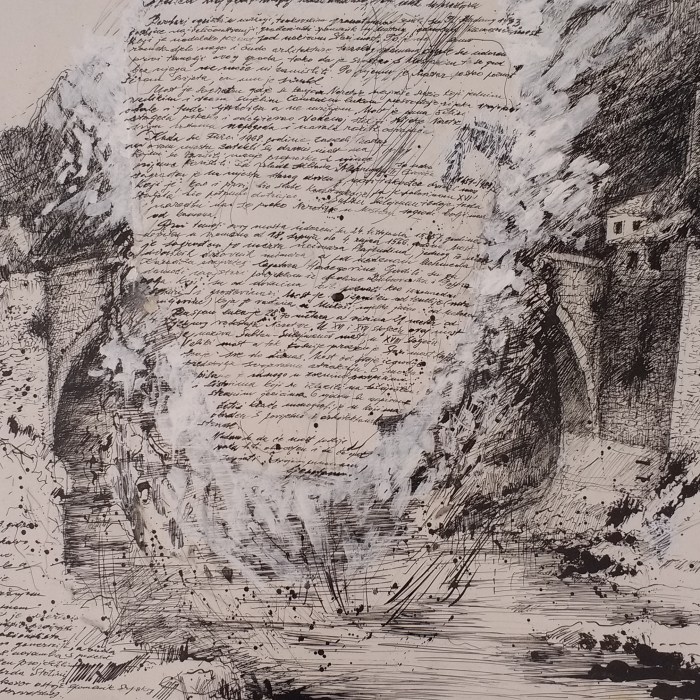
The exhibition, entitled “Drawing the War: Bosnia 1992-1995”, features a selection of barbaric, graphic and nightmarish chronicles of pain, reminiscent of Francisco Goya’s “Disasters of War” drawings he created between 1810-1820 at a time when Spain was struggling with many domestic and global conflicts. Spain is very similar to former Yugoslavia in that both countries are unions of different countries with deep roots. History sadly has a habit of repeating itself and today, with the current push for independence in Catalunya, Spain, in the worst outcome, could face a similar fate to Yugoslavia’s, perish the thought. Examining and studying these drawings in greater detail, they further convey to me the futility and insanity of war. Everybody suffers. There are no winners. In fact life for the so called ‘conquerors’ for me is hell on Earth; I wouldn’t want to be in the shoes of Ratko Mladić or Radovan Karadžić and the rivers of blood on their hands. The drawings show victims tortured, dead bodies on the ground with severed heads, a blood thirsty war general clutching a freshly decapitated head by its hairs and the destruction of the historic bridge in the city of Mostar. Each drawing also has written notes by Ekmečić where he describes the horrific images of the war (which he saw broadcasted on TV and in the newspapers when living in exile in Paris) and would then furiously sketch them with black ink.

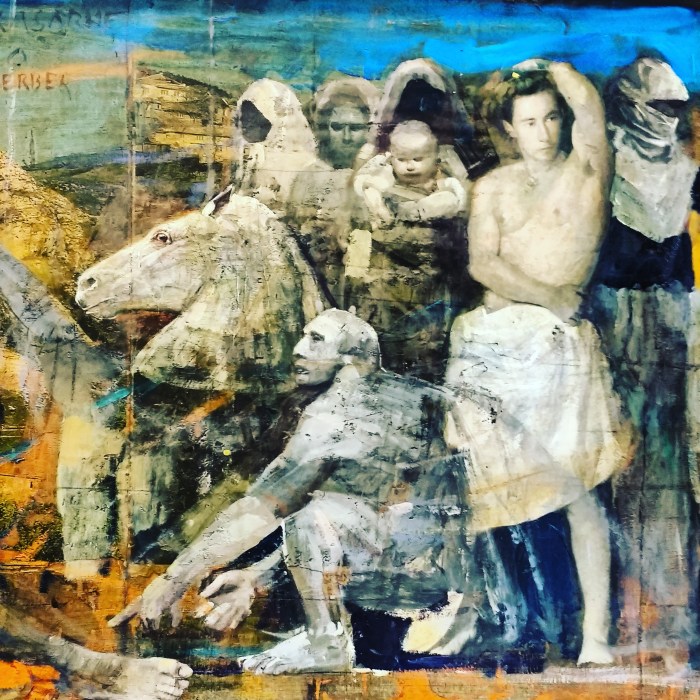
In another area of the institute is the Mersad Berber green salon featuring a permanent display of paintings donated by Berber. Mersad Berber is one of the best known and greatest Bosnian artists of the 20th century and true master artist in the classic sense. His works have an epic and profound quality to them spanning the great periods of art history from the Classical Greek and Roman periods to the Byzantine, Renaissance and Ottoman eras. His paintings are also spiritual, human and timeless. Observing his works in greater detail, he is a descendent of the old masters and there are subtle echoes of some of the greats like Caravaggio, Zurbarán and even Bosch. This broad palette of art history combined with his own mixed media techniques have positioned Berber as a unique artist with a distinct style. From 1978 until his death in 2012 he taught at the Academy of Fine Arts in Sarajevo and his work is featured in London’s Tate Gallery collection.

IMG_20170917_190416_105

The Mersad Berber green salon located inside the Bosniak Institute


IMG_20170918_001333_280IMG_20170917_193920_461

Paintings by Mersad Berber

The Ars Aevi Museum of Contemporary Art, a concrete Brutalist style building in a part of the city reminiscent of the Barbican in London, has a collection of donated works by global contemporary artists. It is a modest space over two floors with plywood interiors and a transient atmosphere, and gave the impression that the museum is lacking in funds and operating on a tight budget.

IMG_20170918_211733_599

The Ars Aevi Museum of Contemporary Art

Yet in spite of this I have read that there are plans to relocate the existing museum and its collection into a new building to be designed by the Italian architect Renzo Piano. There is a work by the legendary German artist Joseph Beuys in the collection of 100 bottles of olive oil. Two Spanish artists, sculptor Juan Muñoz and Txomin Badiola, each have a work in the museum. Muñoz’s piece is a hanging blue sculpture of a man and two smaller suspended white figures touching the right palm of the blue man.

IMG_20170918_213342_197

Joseph Beuys: Ölflasche (100 bottles of olive oil) (1984) 


IMG_20170918_214353_069

Juan Muñoz: L’Appeso (1998)


IMG_20170918_222221_311

Txomin Badiola: Double Trouble 2 (1990)

The Russian-American artist duo Komar & Melamid are featured with their 1995 installation, “50 Proposals for the United Nations”. The historical context of the work is interesting. During the Bosnian War in July 1995, the Bosnian town of Srebrenica fell and experienced the biggest genocide in Europe since the Second World War where over 8,000 civilians were killed. The United Nations had designated Srebrenica a safe zone but failed to protect the town and its civilians from the Bosnian Serb Army. At the time the UN was also approaching its 50th anniversary, yet this anniversary coincided at a time when the UN was experiencing great difficulties and challenges not just with the situation in Bosnia, but also the genocide in Rwanda, which the UN also failed to prevent. The installation features three head busts of Joseph Stalin, George Washington and Jesus Christ.

IMG_20170918_221512_706

Komar & Melamid: 50 Proposals for the United Nations (1995)

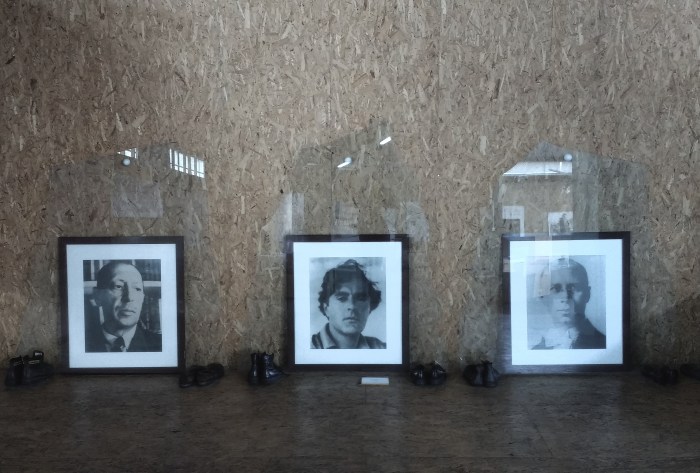
There are works by some notable Bosnian conceptual artists. The artist Braco Dimitrijević has an installation piece comprising of three black and white framed photographs of historical figures alongside six pairs of black shoes each positioned by the left and right sides of each photograph. Dimitrijević was a key figure in the development of conceptual art in former Yugoslavia during the 1970s. His best known work is his Triptychas Post Historicus installation series of works by famous artists in dialogue with everyday objects and fruits and vegetables.

IMG_20170918_215713_069

Braco Dimitrijević: Heralds of Past History (1997)

Two other Bosnian conceptual artists, both contemporaries of Dimitrijević; Edin Numankadić and Dean Jokanović-Toumin, have also donated works to the collection. Numankadić’s installation piece “Yesterday, Today, Tomorrow, Never” has those words each individually written on four framed black stone slabs propped on wooden crates. He is also the director of the 24th Winter Olympics Museum in Sarajevo, which opened on the year of the Winter Olympic Games in the city in 1984 to commemorate them.

IMG_20170918_232036_944

Edin Numandkadić: Yesterday, Today, Tomorrow, Never (1996)

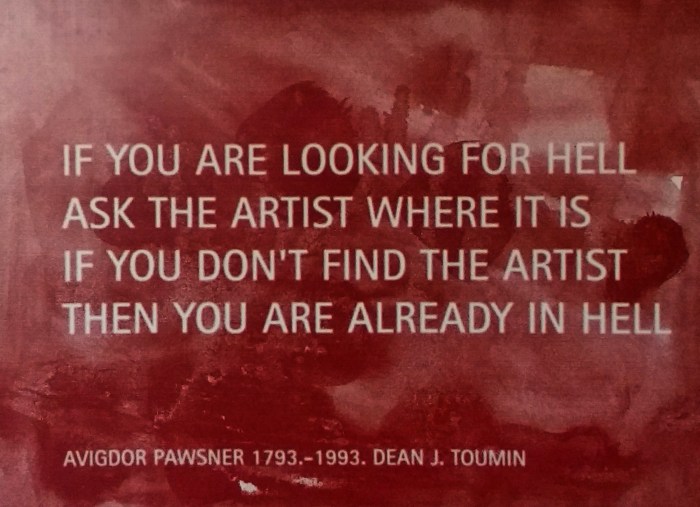
Toumin’s work on display is simply a quote from an 18th century writer called Avigdor Pawsner, “If you are looking for hell, ask the artist where it is. If you don’t find the artist, then you are already in hell”. This quote is also engraved on the wall by the entrance to the museum.

IMG_20170918_231440_679

Dean Jokanović-Toumin: If You Are Looking For Hell… (1993/98)

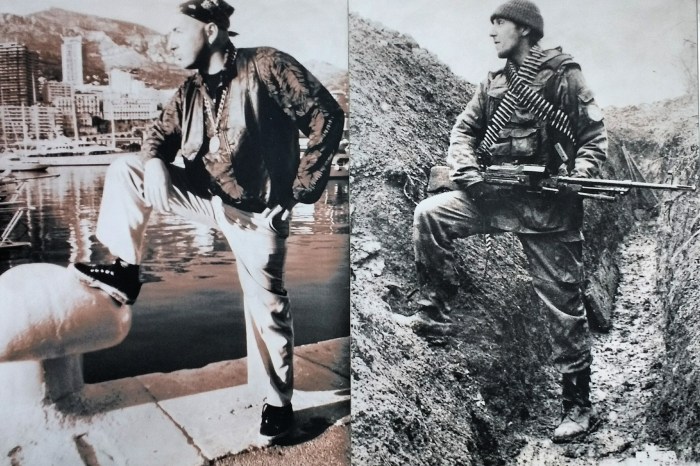
Elsewhere in the museum are two photographs by the Bosnian artist Nebojsa Seric Shoba entitled “Sarajevo-Monte Carlo”. Shoba lived through the 1992-5 Siege of Sarajevo when the city was surrounded by Bosnian Serb Army troops and it was very difficult for civilians to leave the city. In this period Shoba volunteered as a soldier protecting the city and it’s civilians against attacks from the BSA. The photograph on the right shows the artist as a soldier during the siege and the photograph on the left is of the artist in a similar pose in Monte Carlo wearing casual clothes taken after the war. In the first photograph the artist is thinner and in a constant state of tension and uncertainty with no end in sight to the war. In the Monte Carlo photograph, the artist has put on weight and is more relaxed and non defensive wearing funky clothes. Not so long ago he was in a war zone in a constant state of fight or flight and didn’t know whether he would live or die.

IMG_20170918_220447_807

Nebojsa Seric Shoba: Sarajevo – Monte Carlo (1998)

The National Gallery of Bosnia and Herzegovina, located in an old Austrian-Hungarian era building, has a collection of over 6,000 art works. When I visited there were two exhibitions on display that interested me. The first exhibition on the top floor, entitled Intimacies Of Space, is a permanent exhibition of works by modern and contemporary Bosnian artists and artists from other parts of former Yugoslavia. This exhibition is divided into five themes; “Garden”, “Interior”, “Atelier”, “Landscape” and “Window”. The Bosnian artist Behir Misirlic’s painting Small Part of the Garden (1969) is an ethereal and sensitive composition of meta-morphing forms and nuances, subtle colours and light and dark shades; of captured moments of fleeting beauty most naked eyes fail to perceive.

IMG_20170919_230836_241

Bekir Misirlić: Small Part of the Garden (1969)

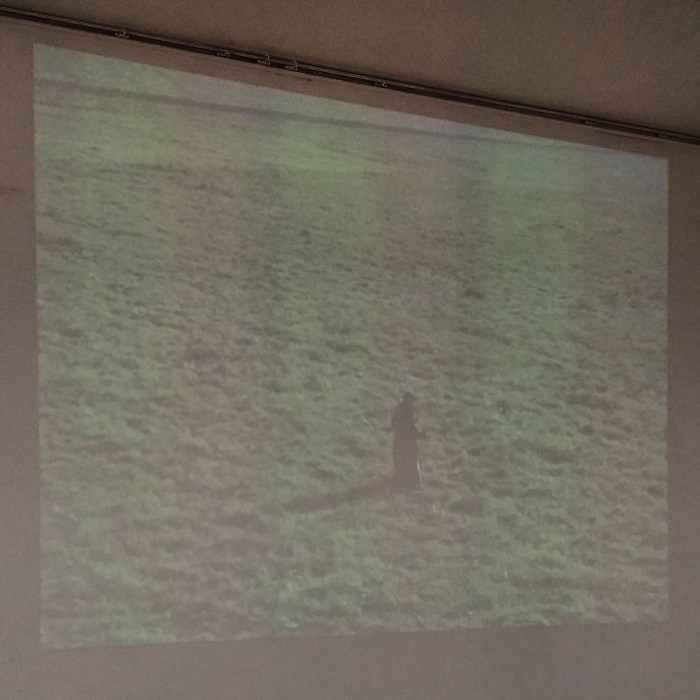
Green, Green Grass of Home (2002) by the Sarajevo born artist Maja Bajević is a video installation with a poignant story around the themes of identity and loss. In the video the artist is walking in a green field describing her apartment in Sarajevo where her grandparents lived and where she subsequently lived before the Bosnian war. Since the war other people have occupied her apartment and have refused to vacate it. All attempts to get it back have been in vain. In the film, as the artist is walking in the field, she tries to remember the flat and all the memories she has of it in as much detail as she can going from one room to the next with just the mental map of her memory to guide her.

IMG_20170919_232552_767

Maja Bajević: Green, Green Grass of Home (2002)

In the “Interior” section of the city exhibition there are three paintings by artists from former Yugoslavia which stand out. Mensur Dervisević’s oil painting “Space” is a desolate vacuum of black, burnt brown umber, pewter, green-brown olive and pale grey hues. In the darkest area of the painting is a lone mirage-like figure; an eternal spirit nailed to its place; stationary and ambiguous. It’s power and presence is augmented by the claustrophobic dark landscape enfolding it.

IMG_20170919_233343_363

Mensur Dervisević: Space

Ordan Petlevski’s oil composition “From the Interior” is similar in spirit to Dervisevic’s painting; a highly introspective work in dialogue with the core of the subconscious. The white, beige, dark and light brown middle area of Petlevski’s painting, for me, represents a process of animal metamorphosis. I see a head forming at the top of this area, like the head of a rabbit. A wing is developing at the bottom of the painting protruding the left side of the figure and at the bottom right, if you study it closely enough, you may be able to decipher a vague face with a fire-red opel eye. In the bottom left of the painting there is a gash of orange-red like a ray of light. Look closely and the face of a woman may appear.

IMG_20170920_113632_486

Ordan Petlevski: From the interior (1957) 

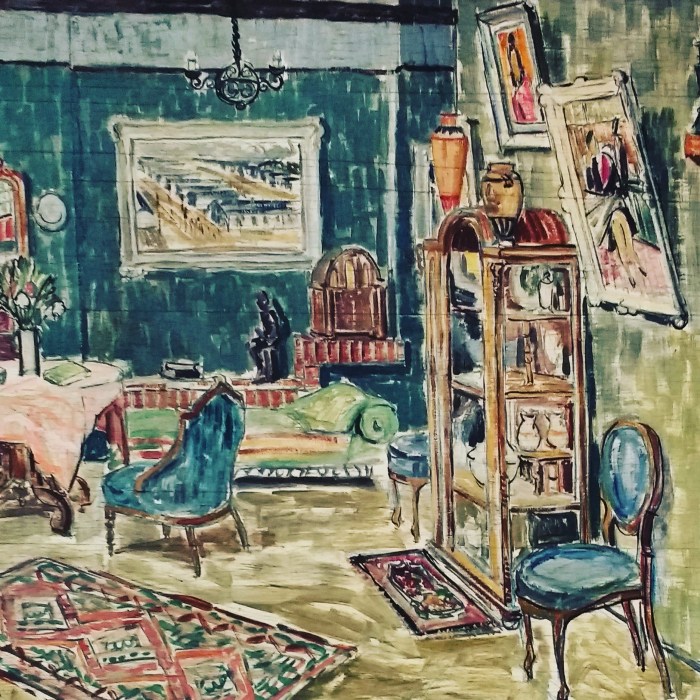
Ljubisa Naumović’s “Interior” oil painting from 1943 represents a well furnished and comfortable living room. It’s painted in a style which reminds me of some of the great early 20th century French painters, especially the Fauvist painters Raoul Dufy and Henri Matisse. “Interior with Open Windows” has a similar loose and free brushwork style and subject matter. Red is the prominent colour in many of Matisse’s interior paintings. In his landmark “The Red Studio” painting, everything is drowning in red. In Naumović’s painting, the dominant colour is green in three different hues; the blue cedar green front wall and three chairs, the olive green floor and right-side wall and the warm spring green bed by the blue cedar green front wall.

IMG_20170920_114743_009

Ljubisa Naumović: Interior (1943)

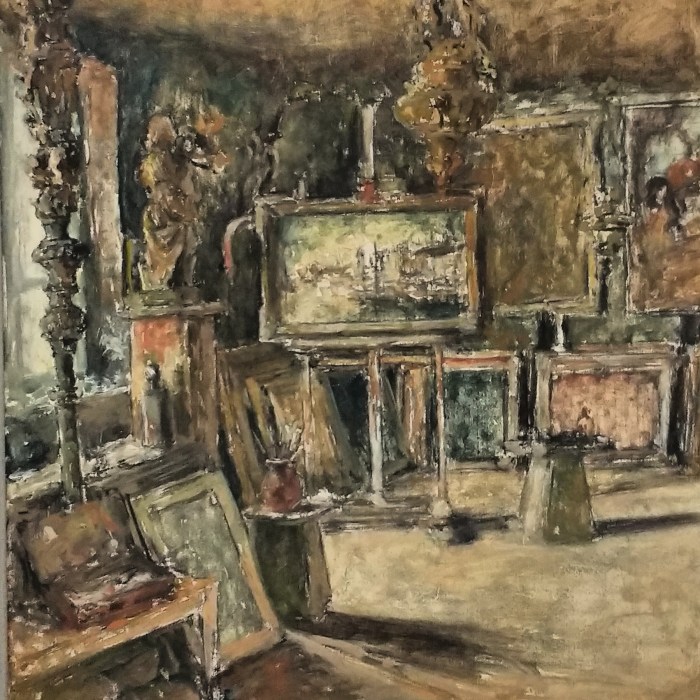
There are three works in the “Atelier” part of the exhibition, which register with me. Two of these works are oil paintings by artists from former Yugoslavia. Antun Sojat’s “From the Studio” is a painting of the artist’s studio with a cold, threadbare, dark and musty tone; a studio with limited to no natural light. Beautiful and tasteful objects such as the vase of flowers or the small grey-green statue and stand of fruits on the desk or the brown painting easel featuring a head bust resting on the bottom are all within a limited framework from which they can shine. There is abundant beauty buts it’s all entrapped and frozen. On the other hand, in Emanuel Vidivić’s “My Old Studio” painting, natural light bathes his studio. He is not kept in darkness. His studio is ample in space with many paintings leaning next to one another by the studio walls. It feels just as much a home than an artist’s studio.

IMG_20170920_115755_334

Antun Sojat: From the Studio


IMG_20170920_120936_702

Emanuel Vidivić: My Old Studio (1936-8)

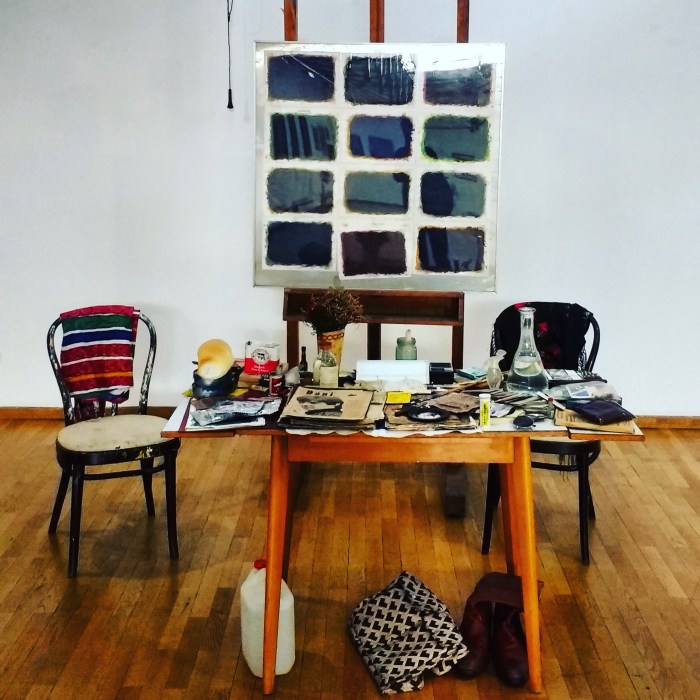
Artist Edin Numankadić features again here. The third work of the “Atelier” segment I am going to focus on is an installation by Numankadić called Traces Of War from 1993. This work is significant since it shows the artist’s studio as it was in Sarajevo when the city was under siege. In the other two works I focused on aesthetics and natural light. In this work, those subjects take a back seat. When you are creating art in a war zone and your city is surrounded, questions such as whether you are going to live or die or when will the war end are always at the fore of the mind’s landscape. There is a perpetual state of tension and anxiety.

IMG_20170920_120344_423

Edin Numankadić: Traces of War (1993)

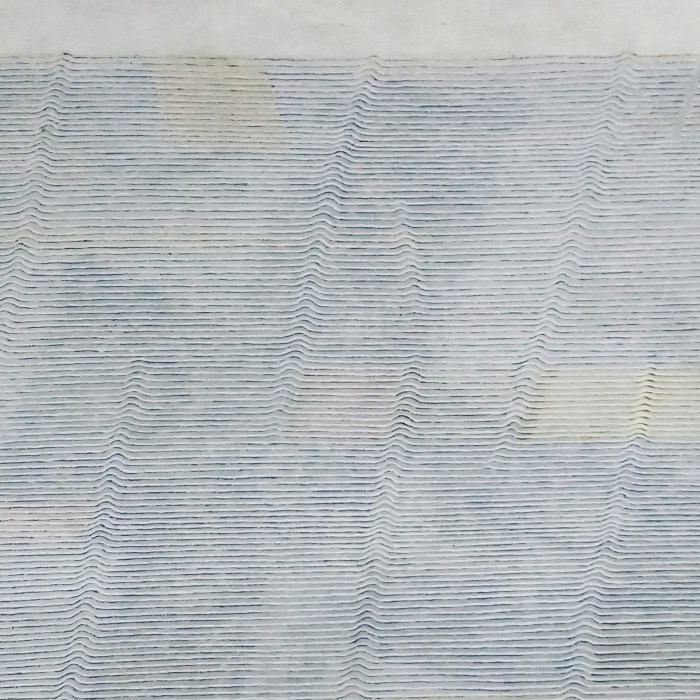
In the “Landscape” theme of the exhibition the Bosnian artist Gabrijel Jurkić’s painting “Blooming Plateau” is an epic wide and open landscape space painting of blooming bright yellow white floors under a pure cloudless ultramarine blue sky. The blooming landscape is punctured with snaking blue streams. Distractions are limited but the space offers one the opportunity to reflect and become connected and in touch with their surroundings; like climbing down from the intellect to the earth. Another painting featured in the same theme is Bosnian artist Bekir Misirlić’s “The White Plateau”. The white minimalism associated with the works of the American artists Robert Ryman and Agnes Martin springs to my mind when I study Misirlić’s painting. The lines on the white background, for me, are the metaphysical counterpart to Jurkić’s “Blooming Plateau” painting. It’s as if Misirlić’s “The White Plateau” is a reading and analysis of the heartbeat and vitality of the blooming plateau field in Jurkić’s work. The lines are rarely disturbed and undulate only at occasional intervals. There is little disturbance and volatility.

IMG_20170920_121908_107

Gabrijel Jurkić: Blooming Plateau (1914)


IMG_20170920_123500_586

Bekir Misirlić: The White Plateau

In the final “Window” section, there is a relief painting by the artist Narcis Kantardzić. Seeing the work from a distance, one could be under the illusion that they are inside one of the traditional old white houses on the Greek island of Santorini. Yet examining the work closer up, the two white buildings on the left and right edges of the painting appear more modern than traditional and the illusion slowly fades away.

IMG_20170920_124249_628

Narcis Kantardzić: Landscape (1986)

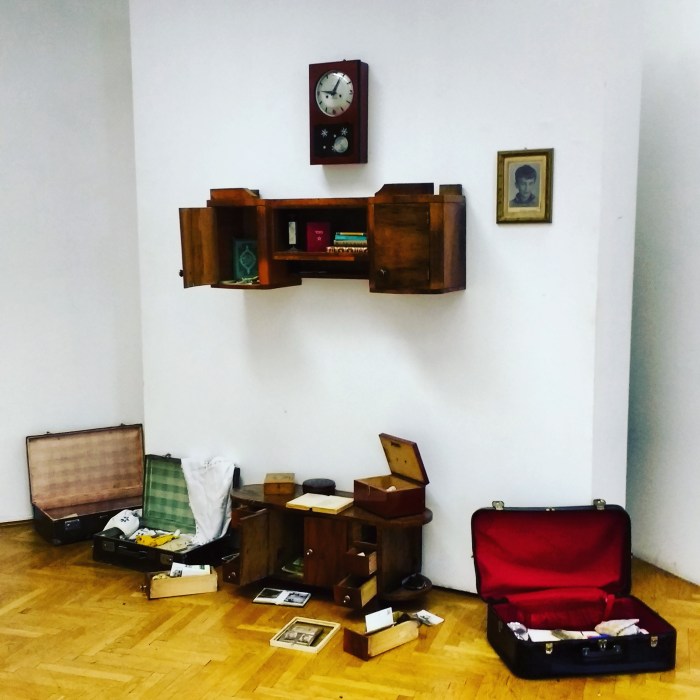
On another floor of the art museum there is a separate temporary exhibition featuring contemporary artists from Sarajevo and Zurich, Switzerland called “Sarajevo-Zurich: Unlimited 2017”. The first work I see on display in the exhibition is an installation entitled “Nostos Algos/Return Suffering” by an artist from Sarajevo called Adela Jusić, who is also a founder of Association for Culture and Art CRVENA, which focuses on various cultural and feminist projects. She is also a graduate of the Academy of Fine Arts in Sarajevo. Her installation recreates a living space comprising of a dated Tito era clock, furniture, a framed black and white photograph of a young boy, and three open suitcases and miscellaneous objects scattered across the floor. The artist lives in a house which she rents from a Bosnian family who fled during the start of the Bosnian war in 1992. The family ended up as refugees in Denmark where they still live. The difference now is that they are not refugees any more but Danish citizens. Once a year the family return to the house they left in Bosnia for a week or two. The objects left behind when they fled the war remain. Even though the family come back for such a short period each year, all these objects which they left behind are firmly connected to their memories. The clock and furniture may remind the family of happy times before the war broke out; of perhaps sitting down to meals together with three generations of family members set around the table. Each object has its own energy and connection to the family and triggers mental pictures of moments and events from the past each time the family return to their former home; returning to what they reluctantly and painfully had to leave behind, due to circumstances beyond their control, and to memories they’d since become detached from as they began their new life in Denmark.

IMG_20170920_125452_896

Adela Jusić: Nostos Algos/Return Suffering (2017)

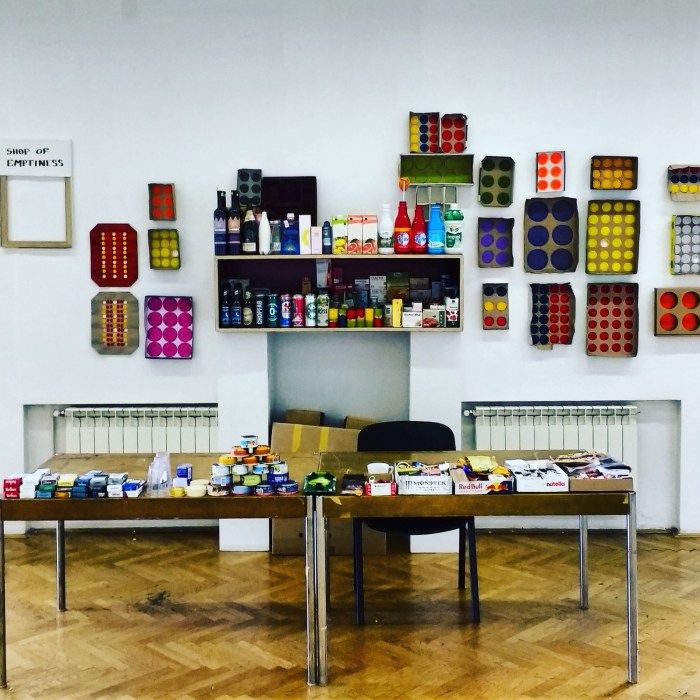
The next work from the exhibition I am drawn to is another installation by the well known Bosnian artist Jusuf Hadzifejzović. His work, “Shop of Emptiness”, features two tables and a shelf with used consumer grocery goods such as empty bottles, tins and cardboard containers (originally used to package these goods) transformed into artworks. Some of Marcel Duchamp’s (arguably the father of Conceptual Art) most well known works are his “readymades”; everyday mass produced consumer objects he appropriated and repositioned, turning them into works of art. Duchamp’s iconic 1917 “Fountain” urinal work is one fine example where he appropriated an everyday nondescript mass produced urinal fountain and signed it “R.Mutt”. In Hadzifejzović’s installation the empty disposable objects he presents are his own little readymades directly connected to his daily life. The curator and writer Jonathan Blackwood describes the displayed objects as “mute witnesses to the life of the artist”. Often when we consume, we consume mindlessly and with no awareness. We take for granted what we are consuming. These mass goods fill a very temporary need or urge and once it has been satisfied we forget about what we consumed and almost automatically dispose of the empty contents with no attachment to them. By retaining the empty objects, at least one can contemplate on them even after, in the words of Blackwood, “their original purpose has been filled”. “Shop of Emptiness” is a mindful report on Hadziferzuvić’s quotidian consumption over a period of time in his life; a meditation on his consumption and the particular memories, feelings and mental pictures each empty object conveys to him when they were consumed during those intervals in time.

IMG_20170920_130458_015

Jusuf Hadzifejzović: Shop of Emptiness (2012-15)

The established young Bosnian artist Bojan Stojčić, who’s also a professor at Sarajevo’s Academy of Fine Arts, has a photographic display series entitled “No Trace Promises The Path”. The photographs are visual extensions of lines from a book of poems of the same name written by Stojčić. Each photograph is a fleeting execution of specific interventions, situations, locations and emotional reactions. Of the montage of different photographs, one photograph is of a border crossing with queueing cars. At the crossing, the artist intervenes with a small vertical slip of paper with the words, “Fear Has No Border”.

IMG_20170920_131338_574IMG_20170920_132117_091

Bojan Stojčić: No Trace Promises The Path (2013-15)

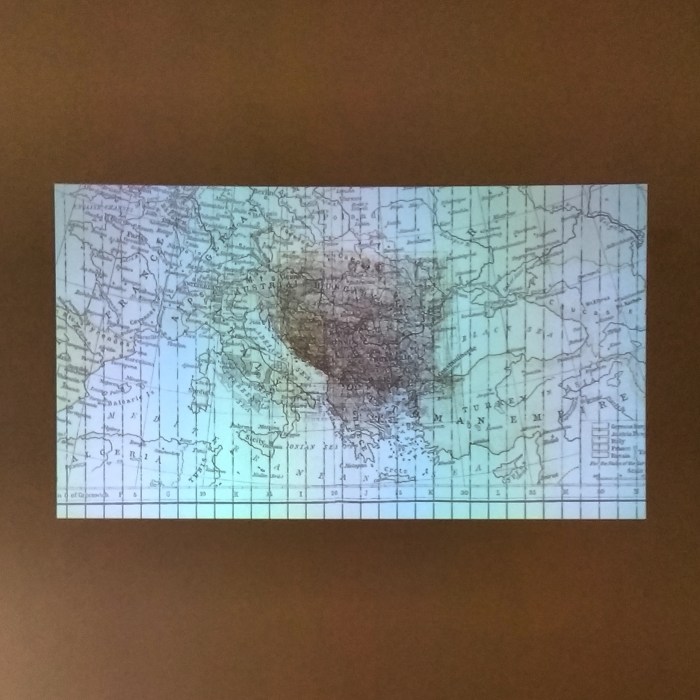
Towards the end of the exhibition, there is a short video installation by the Sarajevo born and Academy of Fine Arts graduate Lana Čmajčanin. Like Adela Jusić, she is also a co-founder and member of the Association for Culture and Art CRVENA. The video, entitled “Geometry of Time”, features 35 different historical maps of the location of Bosnia and Herzegovina from Roman times until the Dayton Peace Agreement of 1995 which ended the war in Bosnia and led to the current formation of Bosnia and Herzegovina. During this time period Bosnia’s borders changed frequently. For over 400 years it was part of the Ottoman Empire, then after it was under the rule of the Austrian-Hungarian Empire before becoming part of Yugoslavia. The fall of Yugoslavia and the ensuing Bosnian war leading to the Dayton Peace Agreement resulted in the current Bosnia and Herzegovina state. The numerous interventions in Bosnia and Herzegovina during its history and the changes in its borders are a reflection on the ambitions and desire for power of its colonisers. Bosnia is a country that has always been colonised, never becoming a colonial power itself. In the video, the country becomes increasingly submerged in blackened marks enfolding all of South Eastern Europe. For a country that has been invaded and colonised throughout its history what do these borders really mean?

IMG_20170920_133026_098

Lana Čmajčanin: Geometry of Time

By the main city cathedral, I one day visited Galerija 11/07/95, a memorial gallery preserving the memory of the Srebrenica massacre of 11th July 1995 where over 8,000 civilians lost their lives. The permanent exhibition on display features a series of powerful black and white photographs by the Bosnian photographer Tarik Samarah, which documents the aftermath of the massacre. His photographs include graphic images of the skulls and dismembered bones and body parts of the victims dug up from multiple unidentified mass graves.

TA6
TA6

Photograph by Tarik Samarah from 2002 documenting the aftermath of the 1995 Srebrenica massacre

In the History Museum of Bosnia and Herzegovina opposite the American Embassy, I visit another photography exhibition, 15 years, of photographs by the Scottish photographer Jim Marshall. The photographs are of specific locations in Sarajevo in 1996, a year after the Bosnian war, and of those same locations 15 years later in 2011. The photographs from 1996 were taken on a modest Nikon 35mm film camera. The effects of the war are very vivid in these photographs; buildings are badly damaged and the city is scarred and mutilated. Yet slowly civilians were beginning to recover from the traumatic and devastating three year siege of the city and could finally experience a level of freedom which they were long denied. They didn’t need to run or hide any more and live under the constant threat of danger. Civilians could at last travel outside of the city. It was during this time that Sarajevo was beginning to heal.

IMG_20170920_143744_690

Photography by Jim Marshall from his solo exhibition 15 Years

When Marshall revisited the city 15 years later in 2011, he revisited those exact same locations and took new photographs with a digital Nikon camera. The differences are very noticeable. There are now few traces of the war and almost all of buildings which had been destroyed have been transformed and reconstructed.


By Nicholas Peart

Written: October – November 2017

©All Rights Reserved


Five Authentic And Good Value Restaurants In Sarajevo

Sarajevo is a fascinating city to explore and get under the skin of. Yet knowing a handful of authentic and inexpensive places to eat at enhances the experience greatly. In this article I am including, of course, a burek and cevapi place, but also a historical eatery serving traditional Bosnian cuisine for a modest splurge (though still very affordable) and a special local patisserie and ice cream parlour for delicious and cheap sweet treats. Let’s begin with the bureks…


1. Buregdžinica ASDŽ

IMG_20170914_204211_765

On a street lined with burekerias, as I like to call them, this small eatery is my pick. The Bosniaks who run it are burek experts with enormous spiral disks of fresh piping hot meat, cheese, potato and spinach bureks ready to go from the morning until the late hours of the evening. I stumbled upon this place by accident on my first night in Sarajevo walking aimlessly in the Baščarsija district. This eatery is a local favourite and for good reason. I settled on a mixture of three not insubstantial spiral slices of meat, potato, and spinach bureks served on a metal plate with lashings of some white yoghurt sauce. And it all came to just 4KMs (2 euros).

IMG_20170916_103135_345

Plate of bureks

Check out the oven. The bureks and other dishes are cooked in giant closed metal pans covered in coals. The meat and chicken with potato dishes are tasty here too but for me this place will always be remembered for its satellite dish sized spiral bureks.

Whilst I was tucking into my bureks, a group of young Bosnians were sitting opposite me. A boy in the group who looked no older than 17/18 fancied himself a homie from Compton. One moment everyone is talking in Bosnian then apropos of nothing the boy riffs in English, ‘I am gonna bust a cap in yo ass n**ga!’. I almost choked on a morsel of spinach burek when I heard that chestnut.


2. Nune

IMG_20170911_131617366

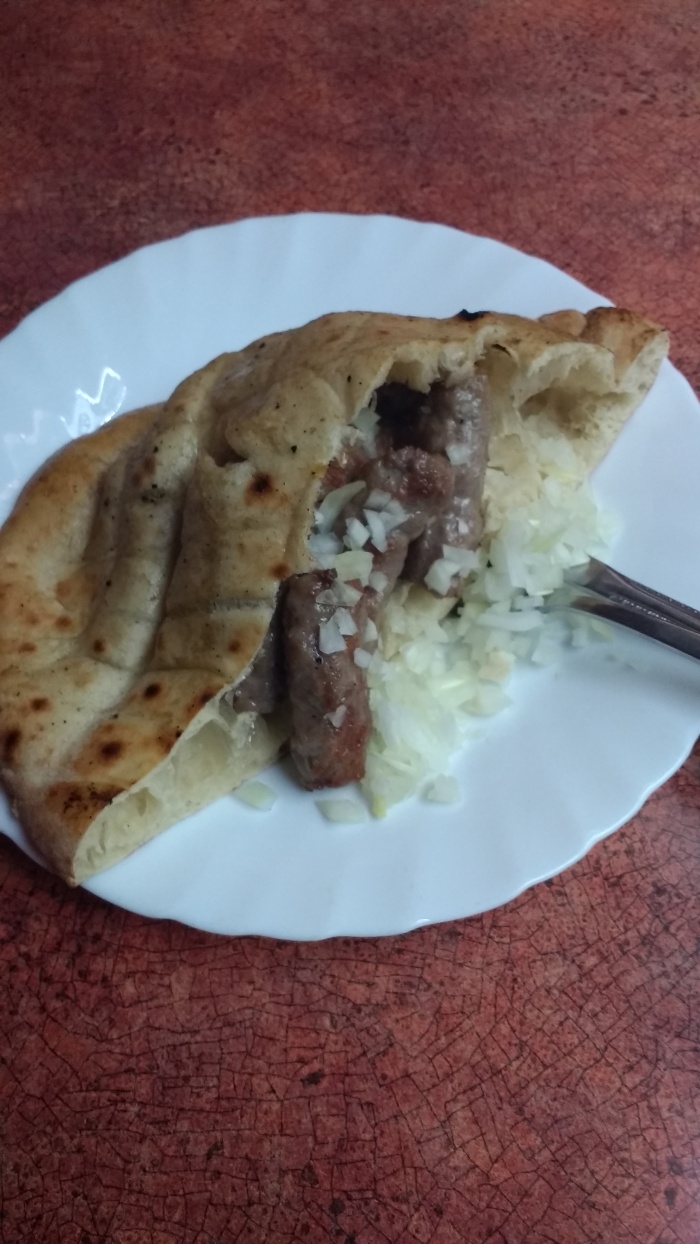
Cevapi at Nune

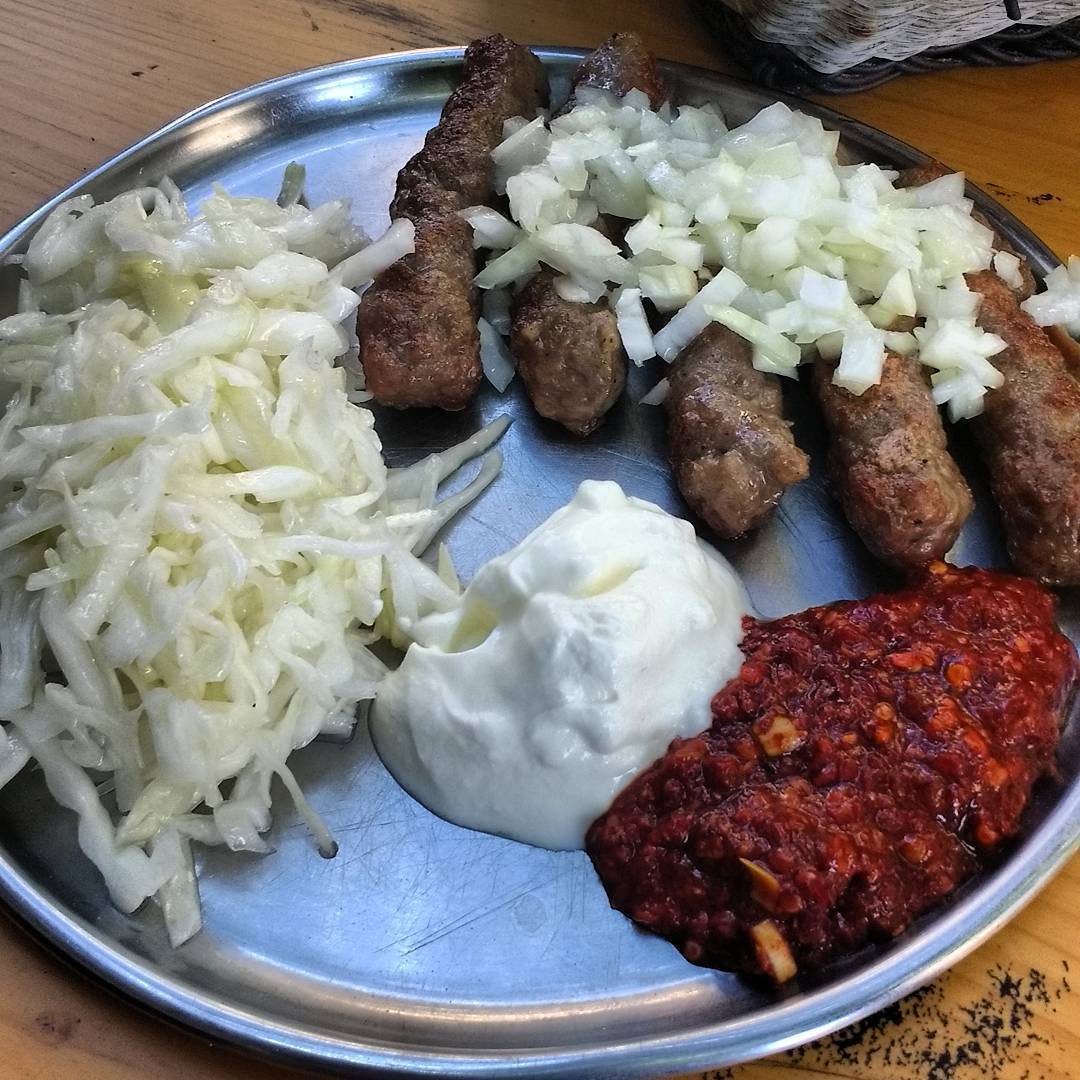
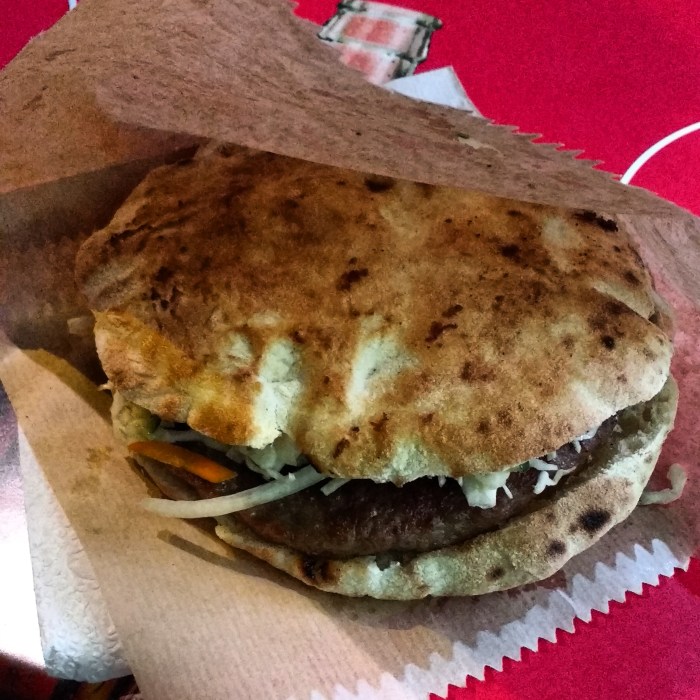
On Ferhadija street past the big cathedral is this small family run cevapi place. It is owned by the father of a young local tour guide named Edin who does superb free daily morning walking tours with the local tour company Meet Bosnia Travel. If you want good and cheap cevapi in a hole in the wall no frills setting this is a good place. For as little as 3KMs (€1.50), you get a plate of small mini cevapi sausages in warm pitta bread and chopped onions.


3. Kod Secka

IMG_20170916_192234_987

This eatery located somewhere in the heart of the Baščarsija district is a solid reference point if you are watching the KMs and have had enough of cevapis and bureks. Kod Secka’s piece de resistance is roast half chicken and potatoes for 5KM (€2.50). It is heavenly. Cheap, tasty and very filling. And a perfect dose of midday rocket fuel for those long walks discovering and unearthing the rich history of Sarajevo.

IMG_0734

Half chicken and potatoes at Kod Secka


4. Inat Kuca

IMG_20170916_190628_985

Inat Kuca restaurant is located in an historic building

This restaurant is located in an old house dating back to 1895 by the main Miljacka river. It serves genuine and tasty traditional Bosnian cuisine. This is a solid restaurant to eat at if you fancy a modest splurge, although compared to similar restaurants in other western countries, the prices are inexpensive.

IMG_20170916_191023_981

“Bosanski lonak”

When I visited, I ordered the “Bosanski lonak”, a delicious traditional Bosnian stew consisting of beef and veal, potatoes, vegetables and spices. It was also beautifully presented in a metal bowl with chopped parsley. For just 10KMs (5 euros) this is a very good deal. Other staples on the menu include the “Sarajevski Sahan” for a few KMs more which is a mix of traditional Bosnian dishes and “Japrak Dolma” which is similar to the Polish dish “Golabki” and consists of minced meat, veg and rice wrapped in cabbage leaves.

IMG_20170916_191447_678

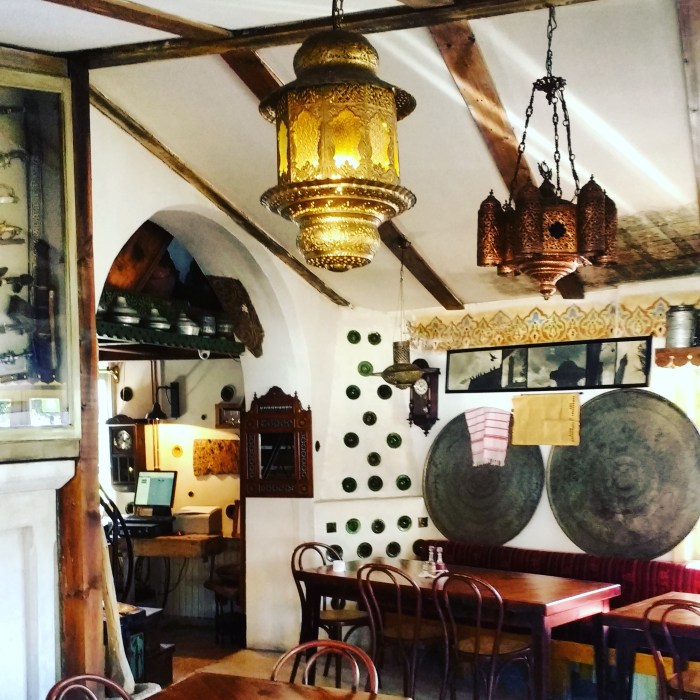
On a blue day it is delightful to sit at a table on the outside terrace facing the river. But inside, the restaurant is aesthetically very tasteful in the old Ottoman era style; beautiful Turkish copper lamps hang from the ceiling and other Ottoman style artefacts and old black and white photographs adorn the walls.


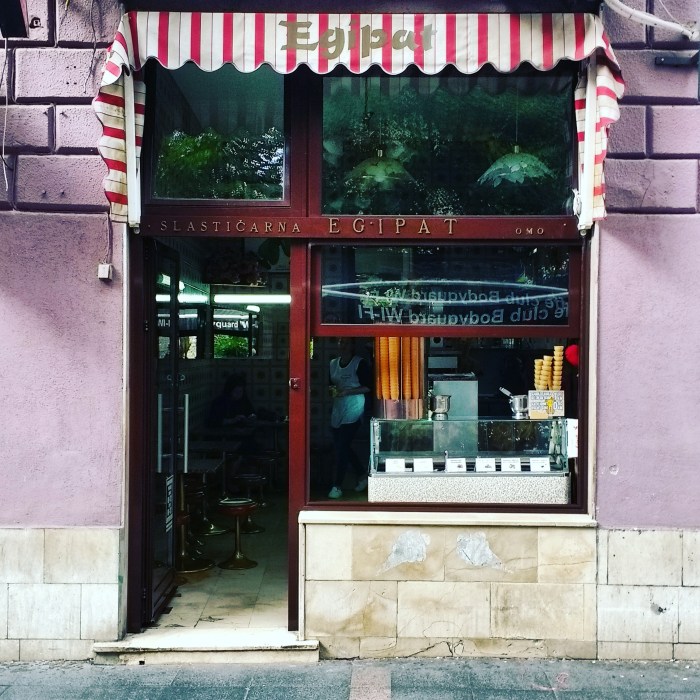
5. Slasticarna Egipat

IMG_20170914_201200_671

This Macedonian owned family patisserie has been serving customers since 1949

Ice cream parlours and sweet shops are plentiful in the city but not many can match the authenticity, quality, spirit, and even prices of this local ice cream parlour and patisserie run by a Macedonian family. Located on Ferhadija Street like Nune, this sweet treats place has a history dating back to 1949. Entering Egipat is like travelling back in time to former Yugoslavia of the Tito era during the 1960s and 70s. The walls are covered in retro tiles and it is a corner of the city unaffected and little changed by rampant globalisation.

IMG_20170911_205934726

The spirit here is purely local and reminds me of the old school Jewish bagel shops on Brick Lane in the East End of London. And like those bagel shops, the service can sometimes be indifferent and abrupt but we wouldn’t want it any other way.

IMG_20170911_210330035

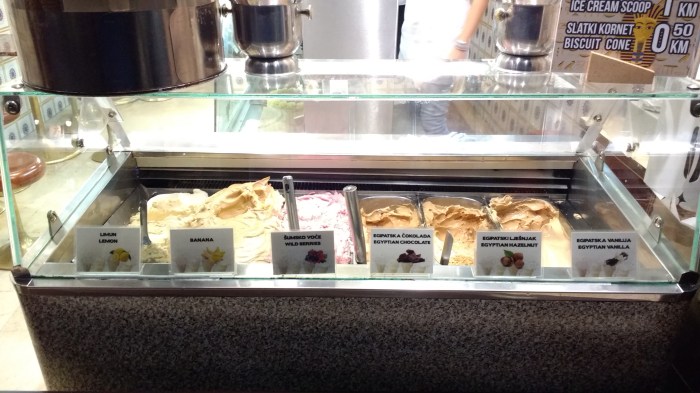
There are six flavours of homemade ice cream. On two occasions I tried the “Egyptian Vanilla” and “Egyptian Chocolate”. Both were excellent and have a flavour and texture that is different to any other kind of ice cream I’ve ever had. But I must warn you the sugar content is off the scales but who cares with ice cream this good. Since tasting their ice cream, I made many repeat visits to sample some of their traditional cakes and other local sweet delights.


Sampita is a very sweet Bosnian white cake, like the French Ile Flotante but much heavier with more texture and flavour and less anaemic; a dangerous sugar bomb. The čokoladni rolat is an irresistibly decadent rich and creamy chocolate roll. I also had some rich and tasty heavy cream and chocolate cake. And they also have the famous traditional Turkish baklava cake, which can be found throughout the country owing to its Ottoman past. A scoop of ice cream like most of the other ice cream parlours of Sarajevo will set you back only 1KM (50 cents) and most of the cakes can be purchased for just half a KM more per slice.


By Nicholas Peart

©All Rights Reserved


Sarajevo History and Wonderings

IMG_20170916_185628_858

Visiting Sarajevo was an enriching and memorable experience. Even though I am a seasoned traveller who has already traversed across a sizeable chunk of this crust, Sarajevo impressed and inspired me. This city gave my accumulated travel experiences another exotic dose of red hot spice. Sarajevo is sometimes referred to as the “Jerusalem of Europe” owing to its rich multi religious and cultural history.

I stayed at a modest but homely and warm family guesthouse located up on a hill in the Bistrik district south of the Miljacka river and only a few minutes walk from the Ottoman era Baščarsija old bazaar district. This historic district was constructed in 1462 by the Ottoman Empire general Isa-beg Ishaković just after the Ottomans arrived. Before they arrived, the biggest settlement then in Sarajevo was a village square called Tornik located today at the junction between Marsala Tita and Relisa Dzemaludina Čauševica streets where the Ali Pasha mosque is situated several blocks west of the Baščarsija district. Ishaković built a mosque named “Careva Džamija” (the Emperor’s Mosque) in 1457, which is the oldest mosque in Sarajevo. The original structure was destroyed by the end of the 15th century before being rebuilt in 1565.

IMG_20170912_225945_504

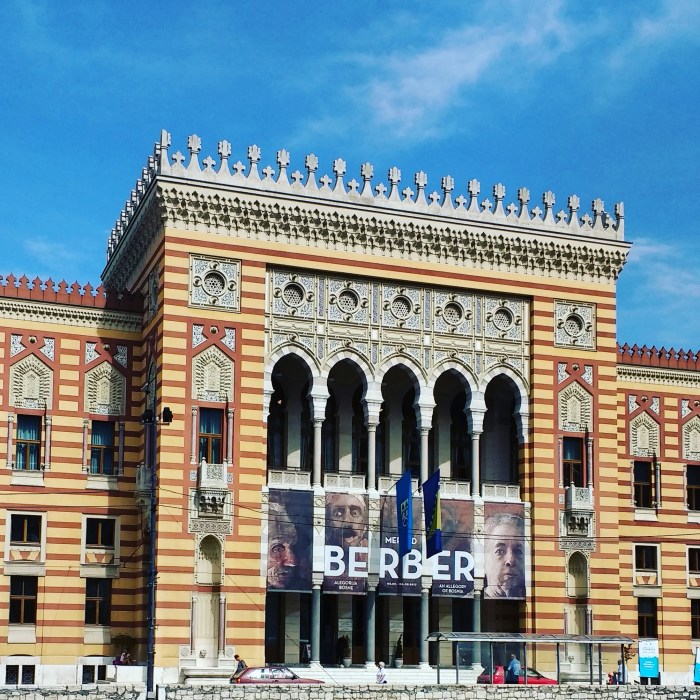
Sarajevo City Hall

Crossing over the Miljacka river and walking past the large Moorish style City Hall building, I commenced my adventure through the old Baščarsija streets. Most of the places along the first street I walked across are small eateries selling bureks; spiral pastry pies filled with potato, meat, cheese, or spinach and even pumpkin. On my first evening in Sarajevo, I took a chance on an authentic looking burek place with a magnificent open coal oven where the bureks and other specialities are cooked in large closed circular pans covered in crushed coals. The bureks here at Buregdžinica Asdž are very good and cheap.

IMG_20170914_204211_765

Buregdžinica Asdž: Great burek eatery in the Baščarsija district 

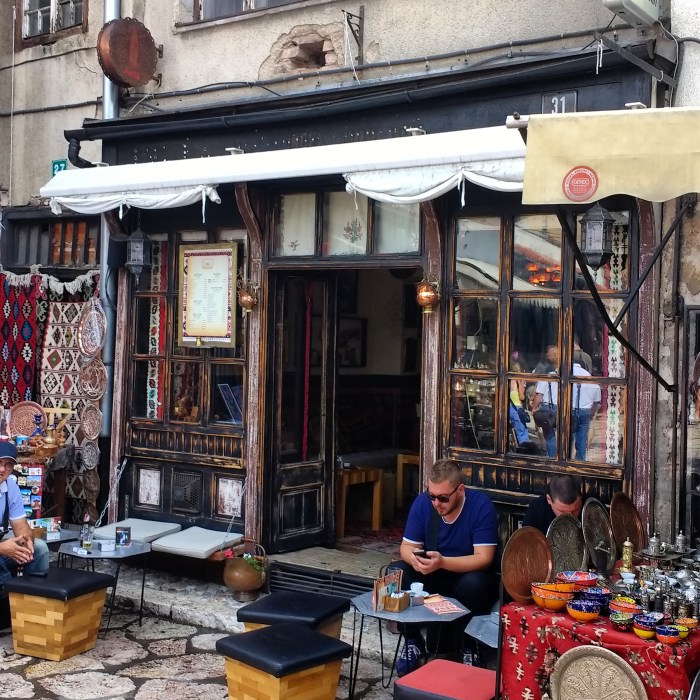
I venture down another smaller street and the oldest street in Baščarsija named Kazandžiluk street, better known as “Coppersmith Street” where small shops sell copper cups, plates, bowls and tankard-like jugs. Walking through this street feels like walking through one of London’s medieval streets around Fleet Street or St Bartholomew’s church with an Arabian tinge. At the end of this street there is an antique wooden coffeehouse where you can drink authentic Bosnian coffee.

IMG_20170912_223935_639

Coppersmith Street: the oldest street in Baščarsija 


IMG_20170912_224223_522

On Coppersmith street


IMG_20170912_225519_706

Wooden coffeehouse on Coppersmith street 

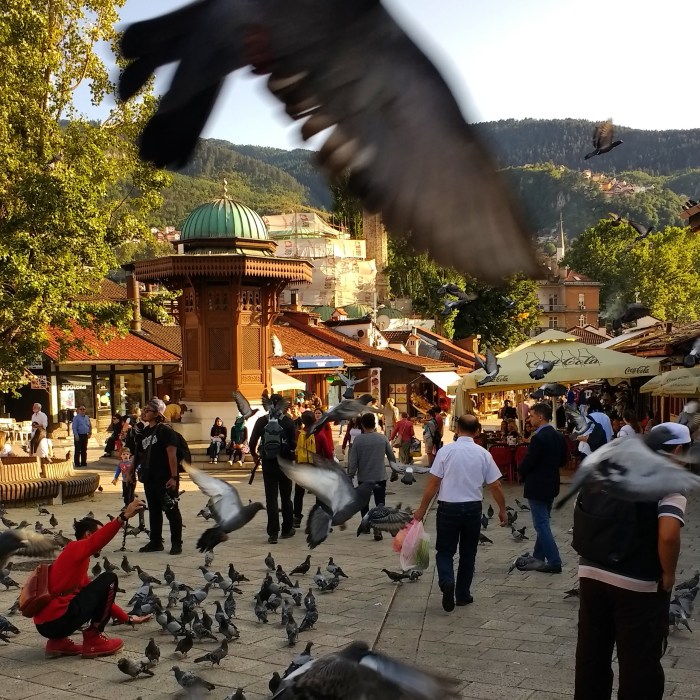
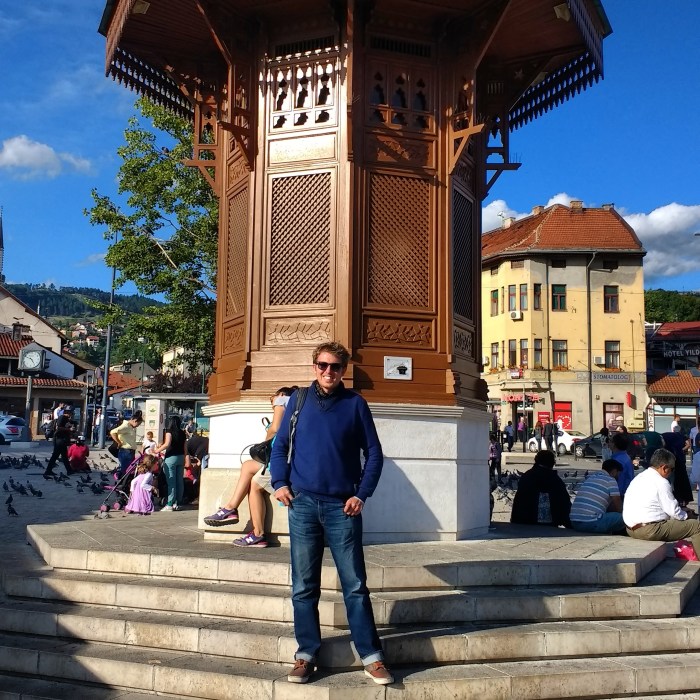
Anyone who visits Baščarsija will unavoidably cross paths with the main square or Pigeon Square as it’s sometimes better known as, because of the large concentration of pigeons at any given moment just like in London’s Trafalgar Square. In the middle of this square is an old Ottoman style wooden fountain called the Sebilj. It was originally built by Mehmed Pasha Kukavica in 1753 and then in 1891, during the Austrian-Hungarian era, it was repositioned by the Austrian architect Alexander Wittek.

IMG_20170914_185348_719

“Pigeon Square”: The main square in Baščarsija 


IMG_20170914_105342_399

By the Sebilj

Close to the Sebilj on Mula Mustafe Baseskije street is the old Orthodox Church of the Holy Archangelo Michael and Gabriel. It is a Serbian Orthodox Church and the oldest church in the city dating back to 1539 (although it’s original structure may date back even earlier).

IMG_20170912_223321_308

Old Serbian Orthodox church: The oldest in the city dating back to 1539

An integral part of my experience in Baščarsija was delving into the area’s history associated with Gazi Husrev-beg. Gazi was born in 1480 in Serres, Greece where his father, Ferhad-beg, was a governor. From 1521 until his death twenty years later in 1541, he was the Ottoman governor of Bosnia and had contributed immensely in the establishment of the city of Sarajevo. By the time of his death, Sarajevo had already developed into a thriving and successful trading center at the crossroads between east and west. He had invested most of his fortune (his endowment or ‘waqf’) towards the development of the city and was a great philanthropist and humanist who cared deeply about the welfare of his people.

IMG_20170914_191230_060

Gazi Husrev Beg mosque: built in 1531 and the largest in the country 

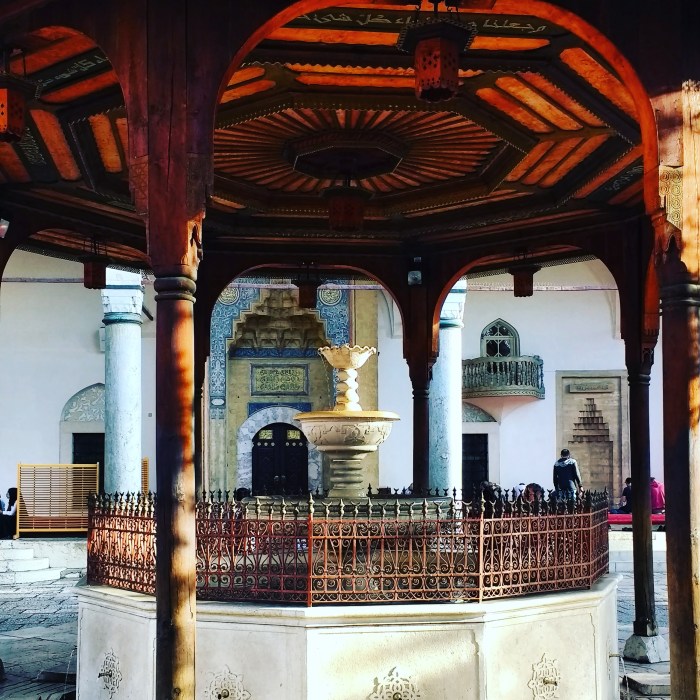
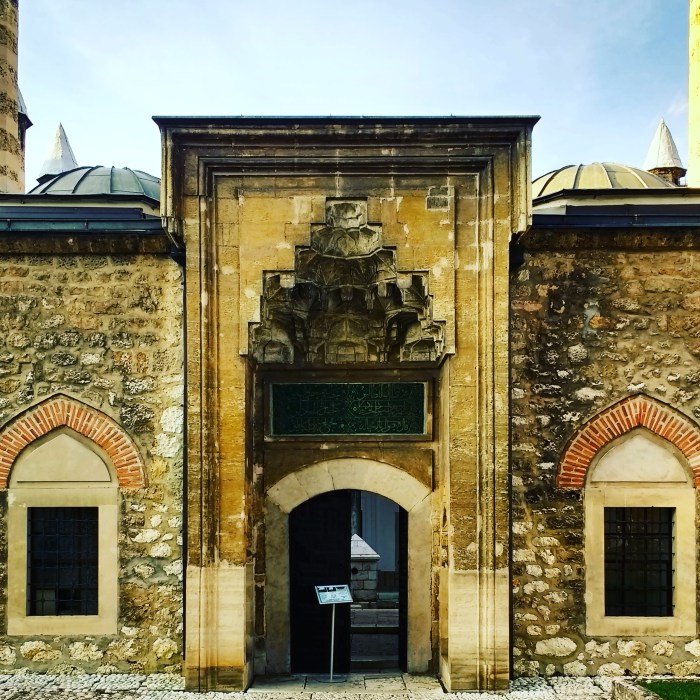
The most notable landmark associated with Husrev beg is the Gazi Husrev beg mosque built in 1531 and located in the heart of Baščarsija. It is the largest mosque in Bosnia and Herzegovina and an outstanding example of Ottoman architecture from that time. Within the mosque compound in the courtyard is an old fountain (‘shadirwan’) similar to the fountain in the main square yet this fountain is over 200 years older dating back to 1530. Situated on the west side of the mosque is the tall stone Sahat Kula clock tower built in the 17th century. It was restored after being damaged in a fire in 1697. The clock shows the lunar time meaning that the day ends at sunset after which a new day begins. Close to the clock tower, there is a water system created by Husrev beg for the city (he also built a public toilet in 1529 which back then was very rare) where the water was transported via ceramic pipes from a wooden aqueduct under the ground. Even today the water system is still in operation and locals (and tourists) continue to come to the fountain to drink the water. I drank from the fountain and I have to say that the water is some of the purest and freshest I’ve ever tasted. Also within the mosque complex is Husrev beg’s mausoleum.

IMG_20170912_230829_607

The Sahat Kula clock tower


IMG_20170914_191451_218

The old ‘Shadirwan’ fountain by the Gazi Husrev Beg mosque dating back to 1530


IMG_20170916_182453_540

The mausoleum of Gazi Husrev Beg


IMG_20170916_184526_891

Drinking from the Gazi Husrev Beg fountain. The water is excellent and comes from the oldest water system in the city dating back to 1529 and engineered by Gazi Husrev Beg

Opposite the mosque is the Ghazi Husrev beg Madrassa (or learning institute) built and established in 1537 for the education of the local population. Husrev beg stated that any money remaining after the madrassa had been built should go towards buying good quality books for the madrassa. Today the collection of those original books is housed in the new modern Gazi Husrev beg library which opened in 2014 and was financed via a $8m grant from Qatar. Within the old madrassa complex is the small Ghazi Husrev beg Museum, which is an excellent place to learn and understand more about him and his unique and generous contribution to the city of Sarajevo.

IMG_20170914_193300_826

By the entrance of the old Gazi Husrev Beg Madrassa which today houses the Gazi Husrev Beg museum 


IMG_20170918_205421_429

Gazi Husrev Beg museum 


IMG_20170918_210358_407

Gazi Husrev Beg library 

Yet the Gazi Husrev Beg journey isn’t over yet. Halfway between the mosque and the Sebilj is the Morića Han which was a ‘caravanserai’ or roadside inn. In its day it was able to accommodate as many as 300 travellers and 70 horses. It was built in 1551, 11 years after Gazi’s death, and funded using his endowment or ‘vakuf’. Since during this time Sarajevo was an important international trading centre, it was important to establish lodging facilities to accommodate travelling traders who travelled long distances via their horses often from other parts of the Ottoman Empire (which around the time the inn had been built had covered all of modern day Turkey and other parts of the Middle East, North Africa and almost all of south Eastern Europe). Today the Morića Han is transformed into a lovely historic courtyard with cafes and a small market bazaar selling textiles and various crafts.

IMG_20170916_185027_927

By the outside of the old Morića Han


IMG_20170914_193658_322

Inside the courtyard of the Morića Han 

Heading towards the western edge of Baščarsija is Gazi Husrev Beg’s Bezistan which is an indoor bazaar. The original structure of the bazaar was likely built around 1540 financed via Gazi’s endowment. During the period of the Ottoman Empire, the shops inside the bazaar traded textiles. Running parallel to the Bezistan is the old goldsmith street (Zlatarska) today known as Gazi Husrev Begova street where goldsmiths and jewellery shops owned by metal workers sold gold and silver jewellery.

IMG_20170916_182955_202

The entrance of Gazi Husrev Beg’s Bezistan 


IMG_20170917_155209_613

Inside Gazi Husrev Beg’s Bezistan


IMG_20170917_160327_441

The old goldsmith street of Baščarsija

The ruins of the original Tašlihan stone inn, constructed around the same time as the Bezistan to accommodate travelling merchant traders like the Morića Han, can be found in the summer garden of the historic Hotel Europe.

IMG_20170917_155827_812

The ruins of the original Tašlihan stone inn

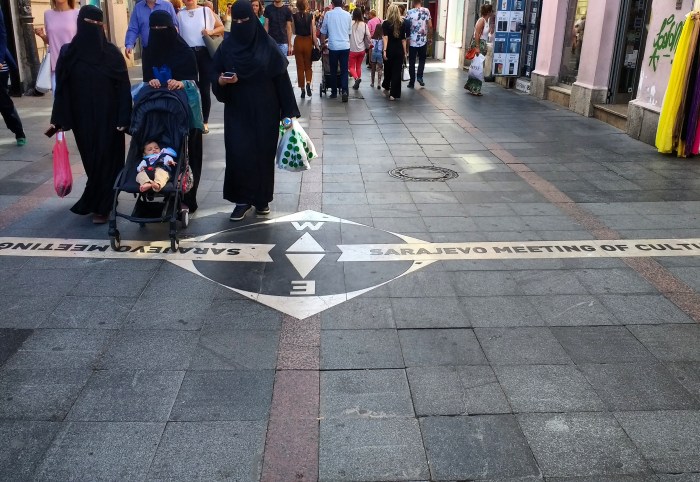
Leaving the Baščarsija and the eastern Ottoman part of the city we literally cross over to the western part of the city over the “East-West: Sarajevo Meeting of Cultures” line.

IMG_20170916_212204_775

The “East-West: Sarajevo Meeting of Cultures” line marking the border between the Ottoman eastern part of the city and the western part of the city  

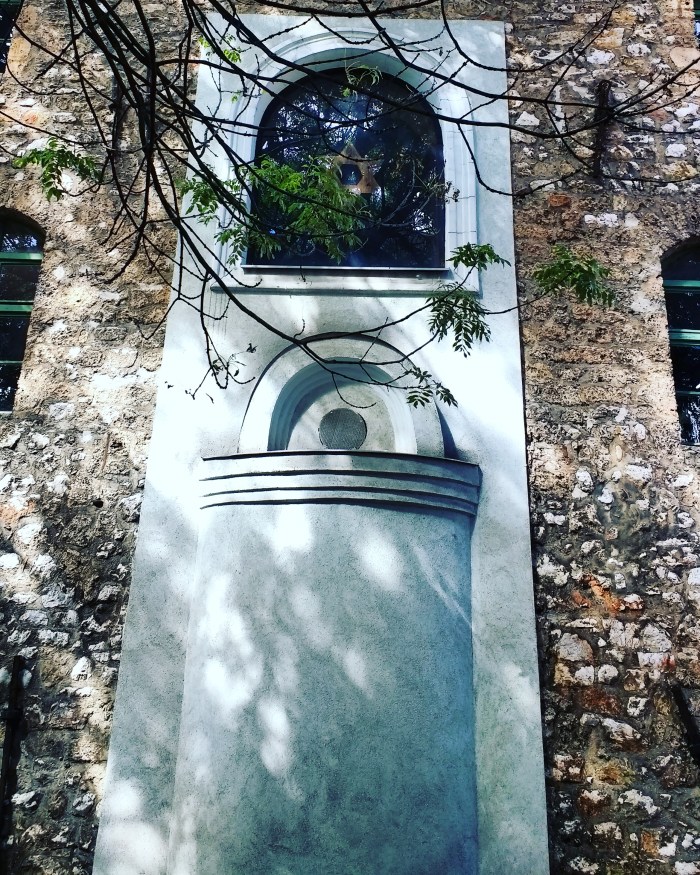
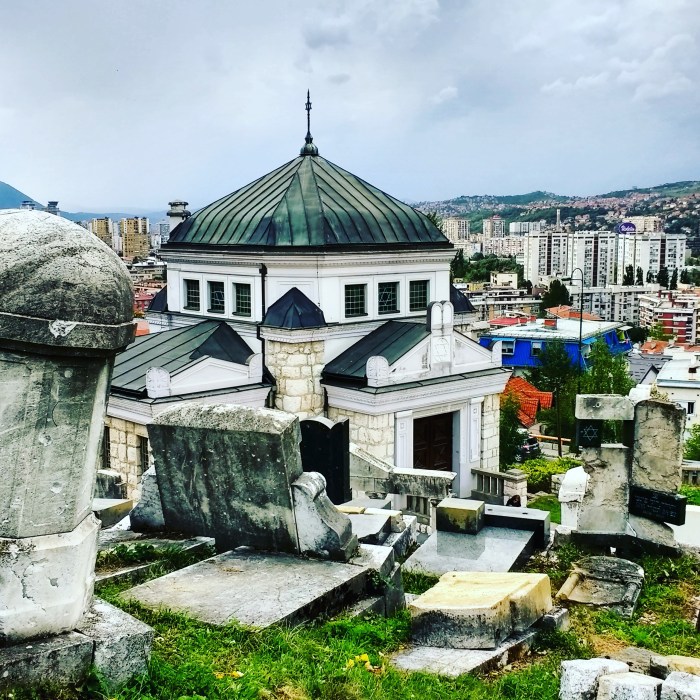
Our first port of call is the old stone Jewish synagogue built sometime towards the end of the 16th century. Since it’s establishment it was damaged several times before being reconstructed again. The current physical structure of the synagogue dates back to 1813. In 1941 it was raided and occupied by the Nazis and subsequently demolished. The Nazis detained Sarajevo’s remaining Jewish community here before they were taken to concentration camps. After enormous reconstruction, in 1966 the synagogue was turned into the Jewish Museum of Bosnia and Herzegovina.

IMG_20170918_202453_405

The old stone Jewish synagogue. In 1966 it was turned into the Jewish Museum of Bosnia and Herzegovina

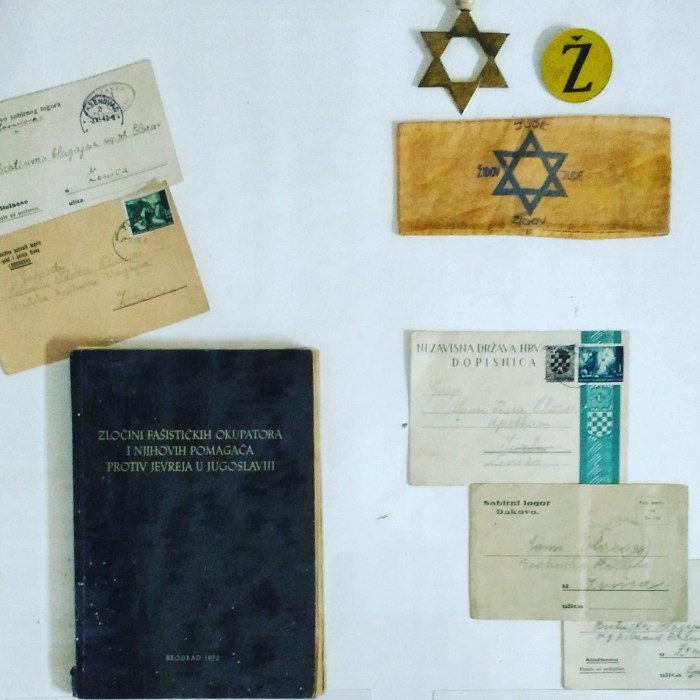
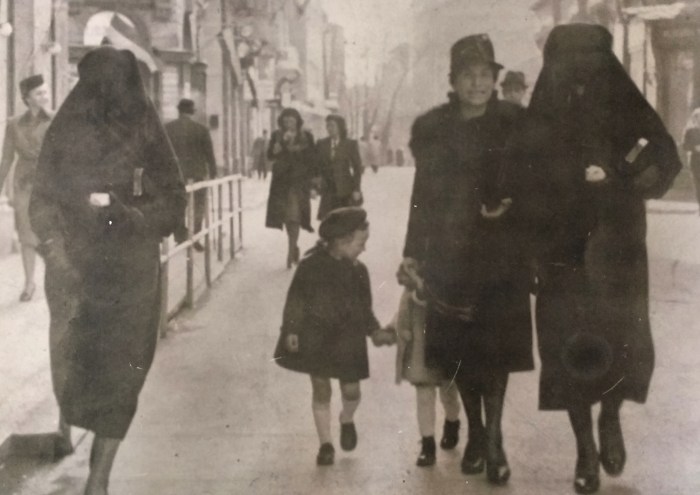
Inside the museum, there are various artefacts and fragments of traditional Jewish life in Sarajevo. There are moving and poignant displays and photographs from the time of the Nazi occupation in Sarajevo. Some of the written displays include stories of gifted Jewish teachers and intellectuals in Sarajevo whose lives were cut short by the Nazis. There is one black and white photograph from 1941, when it was a very dangerous time to be a Jew in Sarajevo (as in many other parts of Europe), showing a Jewish mother and her two children walking alongside two Muslim women. The Muslim woman in the right of the photograph is covering the Jewish woman’s Star of David symbol which she is wearing on her left arm.

IMG_20170918_204615_709

Paraphenalia in Sarajevo’s Jewish museum dating back to WW2 when the Nazis occupied Sarajevo and the city’s Jewish population was rounded up and sent to concentration camps. The postcards in the photograph are postcards from the concentration camps 


IMG_20170918_204955_000

Black and white photographs of captured Sarajevo Jews 


IMG_20170918_203831_130

Photograph dating back to 1941 showing a Jewish mother and her two children walking alongside two Muslim women. The Muslim woman on the right of the photograph is covering the Jewish woman’s Star of David symbol which she is wearing on her left arm

The history of the Jewish community in Sarajevo (and the rest of Bosnia and Herzegovina) dates back to 1492, the year when Christopher Columbus discovered the New World, and also the year when the first wave of Jews arrived in Bosnia escaping the Spanish and Portuguese Inquisitions. They were welcomed by the Ottoman Empire ruler of the time, Sultan Bayezid II. In the time when Bosnia and Herzegovina was part of the Ottoman Empire, the Jewish community prospered and were well-treated living peacefully with the Bosnian muslims. They had a large amount of freedom and rights including the right to buy property and land and establish trade in any part of the Ottoman Empire. By 1856, a law was passed within the Empire granting Jews (and other non muslims) full equality. The Jewish community continued to flourish during the subsequent Austrian-Hungarian Empire rule until the beginning of World War One. The rise of Nazism and the Second World War caused many Jews to flee Sarajevo and Europe. By 1940 there were around 14,000 Jews in Bosnia of which 10,000 were in Sarajevo. When former Yugoslavia was invaded by the Nazis in April 1941 most of the remaining Jewish population were deported to Auschwitz or concentration camps in Croatia. After the war, most of the Jewish survivors emigrated to Israel. Today only about 1000 Jews are living in all of Bosnia and Herzegovina. If you have some time, I recommend a visit to the city’s Jewish cemetery located outside of the city. The local tour agency Funky Tours combine a visit to the Sarajevo Tunnel Museum with a visit to the cemetery.

IMG_20170920_181401_177IMG_20170920_175404_100

Photographs from Sarajevo’s Jewish cemetery. You can see the effects of the 1992-5 Bosnian War from the shelling marks on the gravestones 

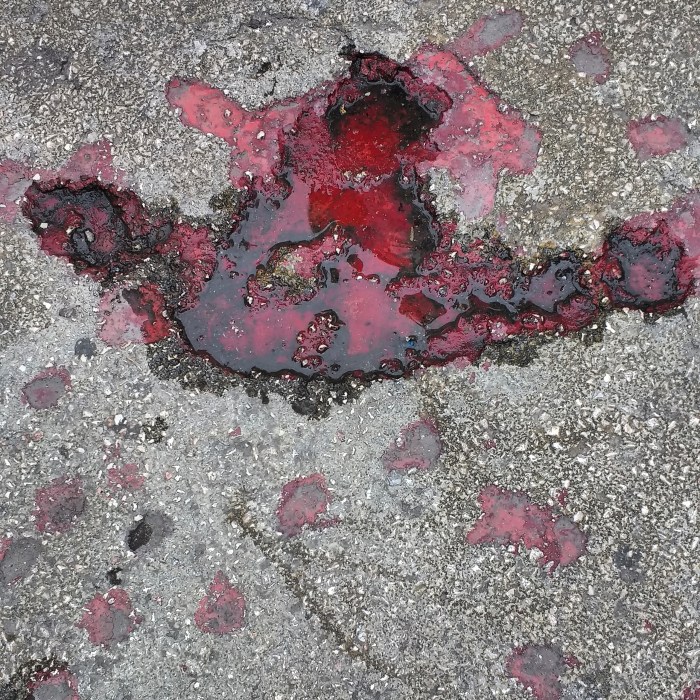
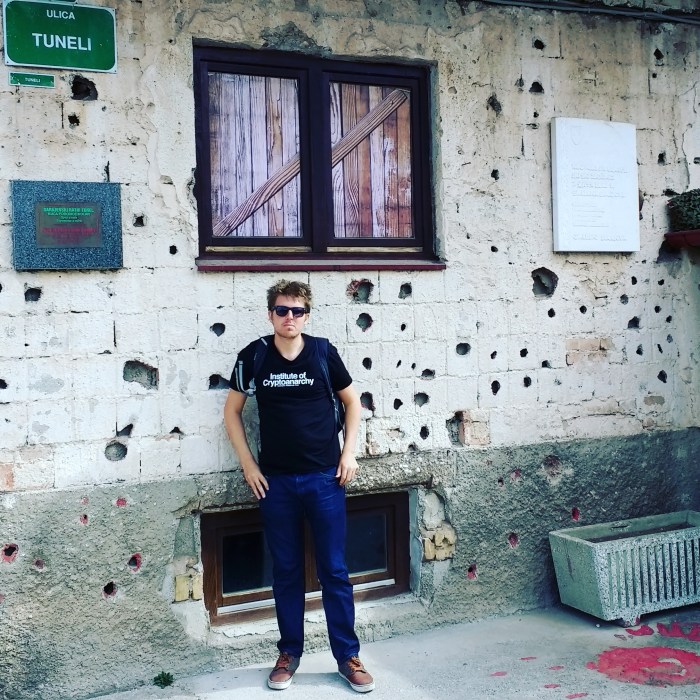
The western part of the city is full of elegant and ornate buildings dating back to the era of the Austrian-Hungarian empire hand in hand with austere, brutalist architecture from the post WW2 communist Tito years. If you look closely, you may notice many buildings still scarred by intense shelling when Sarajevo was under siege during the Bosnian War from 1992-5. You may also see shelling scars on the streets you walk on. Some of these scars are painted red and known as ‘Sarajevo Roses’ marking the location where civilians died from mortar explosions during the war.

IMG_20170916_111920_605

Architecture dating back to the time of the Austrian-Hungarian empire 


IMG_20170916_112711_678

Brutalist architecture in the city 


IMG_20170914_195632_138

Scars from the 1992-5 Bosnian War


IMG_20170916_102041_722

‘Sarajevo Roses’: red painted street scars from the war marking the locations where civilians died from mortar explosions during the war

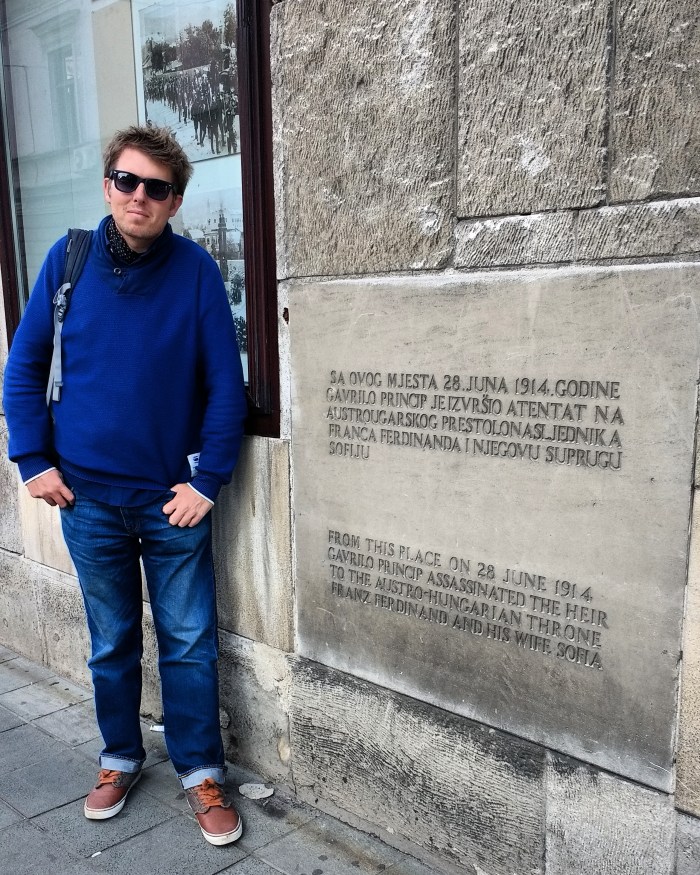
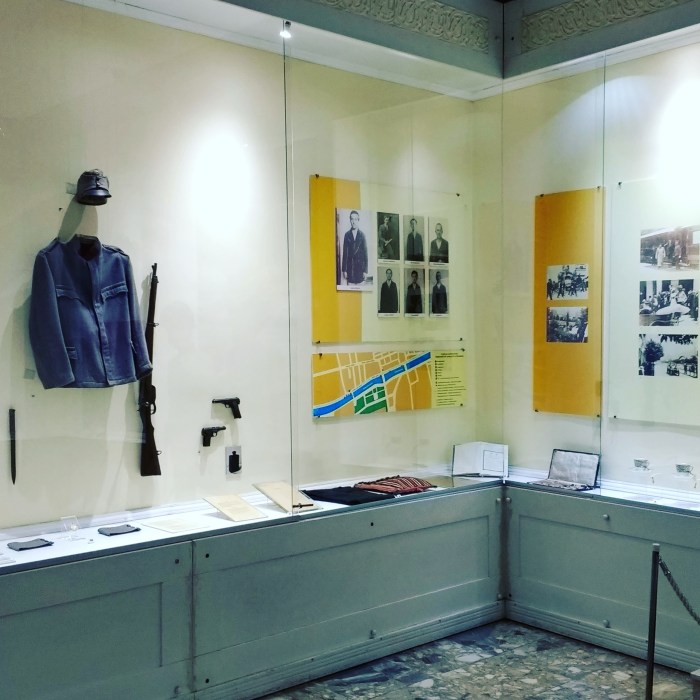
On the corner of Obala Kulina Bana street by the main river and Zelenik Beretki street is the Museum of Sarajevo 1878-1918 and the location from where the young Bosnian revolutionary Gavrilo Princip assassinated Archduke Franz Ferdinand who led the Austrian-Hungarian empire. His assassination was the catalyst for the First World War and the collapse of the empire. The museum documents the period of Austrian-Hungarian rule in Sarajevo as well as the assassination featuring photographs of the Archduke with his wife in their car after they were both shot, and original artefacts like the trousers Gavrilo Princip was wearing and the gun he used to assassinate the archduke.

IMG_20170914_194902_827

At the location from where Gavrilo Princip assassinated Archduke Franz Ferdinand


IMG_20170918_201517_069

Inside the Museum of Sarajevo 1878-1918 which houses the trousers Gavrilo Princip was wearing and the gun he used to assassinate the Archduke


IMG_20170918_201831_563

Original photograph of the Archduke with his wife in their car just after they were both shot

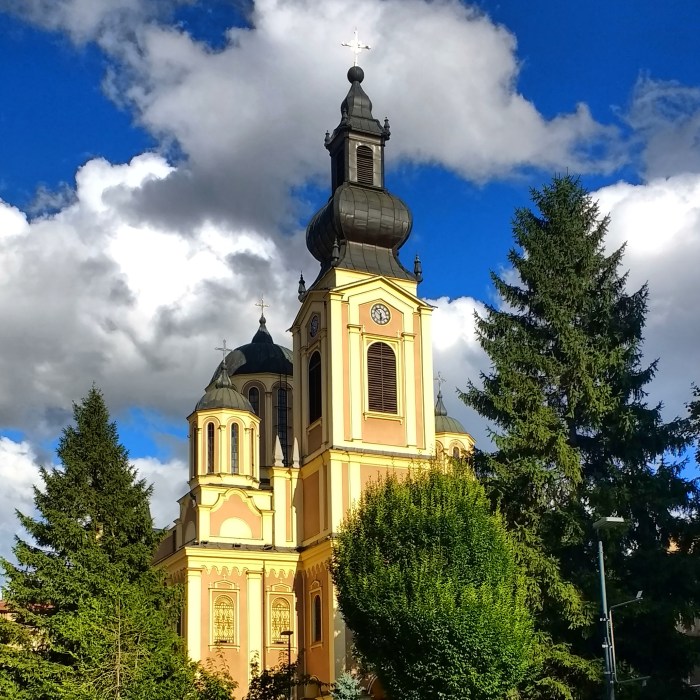
Walking back towards Ferhadija street and west, you will eventually come face to face with the Sacred Heart Cathedral of Sarajevo, which is the largest cathedral in Bosnia and Herzegovina dating back to 1884, only a few years after the city came under Austrian-Hungarian rule. Viennese contractor Baron Karl Schwarz along with supervising architect Josip Vancaš designed the cathedral in a neo-Gothic style.

IMG_20170917_162545_706

The Sacred Heart Cathedral of Sarajevo: the largest cathedral in Bosnia and Herzegovina dating back to 1884

Close to the cathedral is the Orthodox Church of the Most Holy Mother of God, which faces Liberation Square. Here you will see locals playing chess like they have all the time in the world; un-restless and un-hurried.

IMG_20170916_181047_958

Orthodox Church of the Most Holy Mother of God


IMG_20170916_181427_860

Chess on Liberation Square

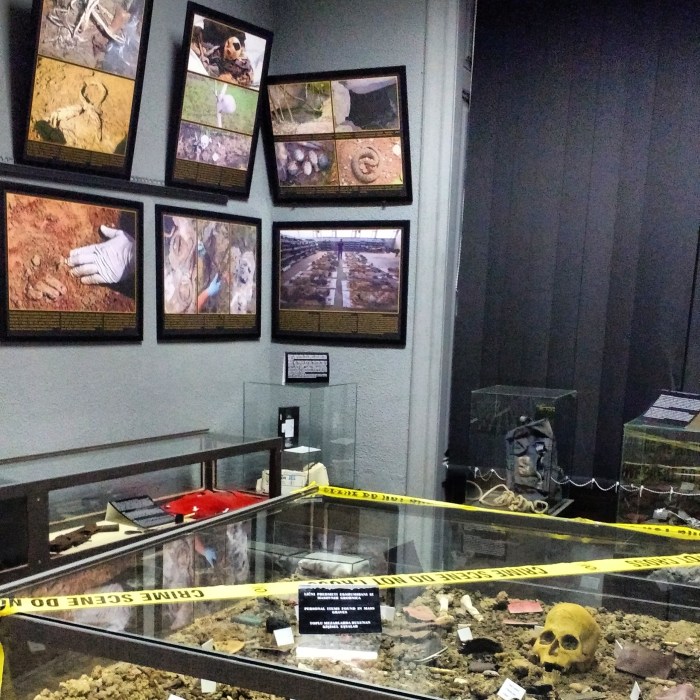
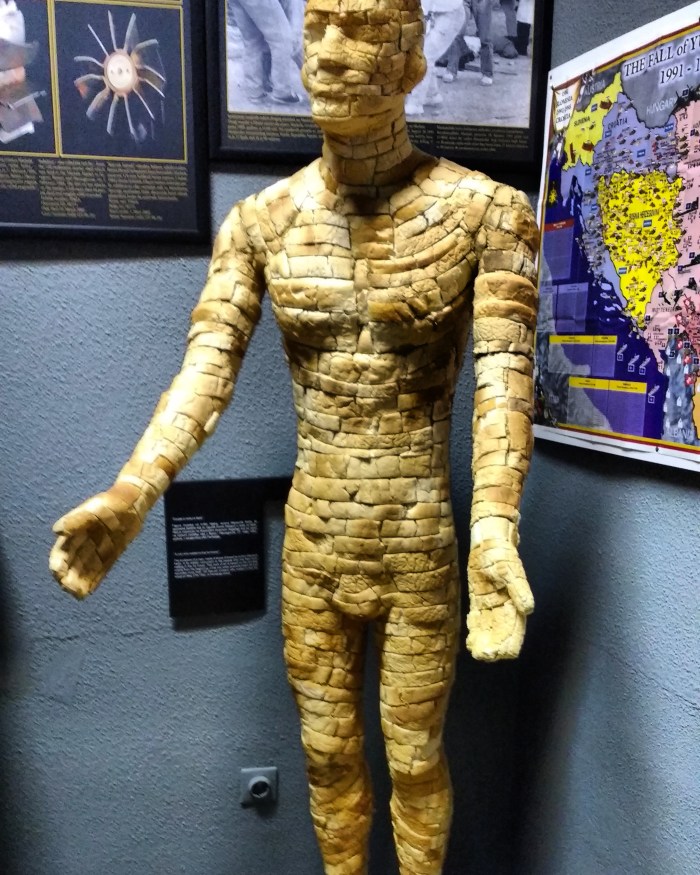
Not far from the square is the Museum of Crimes Against Humanity and Genocide which the documents the 1990s war in Bosnia and Herzegovina. Amongst the many photos documenting this horrific period there is a display of a dug up mass grave where one can see a human skull, bones and miscellaneous scattered personal items. During the war 34,946 civilians went missing in Bosnia and Herzegovina and more than 5,000 locations containing body parts and mass graves have been discovered across the country. Through conventional methods of clothes/items recognition and more advanced DNA analysis, about 23,000 victims have been identified. Yet around 7,000 people as of today are still missing. Elsewhere there is a display of torture methods and devices used on victims during the war. On one wall there are graphic photographs of victims exposing shocking injuries inflicted on various parts of their bodies and photographs of war refugees cramped and lying on the floor of a building in sleeping bags to keep warm. On another wall there is a framed letter from Arnold Schwarzenegger to a Bosnian heavy weights star who lost members of his family in the war. In the letter Arnold tells him, in spite of all the trauma and destruction from the war, to move forward and take care of his mother. He also mentioned enclosing gifts in the letter. As I near the end of the Museum there is a sculpture of a man made from slices of bread by Mensud Kečo dedicated to the victims of the May 27th 1992 bread queue massacre. 26 civilians were killed and over 100 were wounded as they queued for bread on Ferhadija street.

IMG_20170917_163559_353

Mass grave display at the Museum of Crimes Against Humanity and Genocide


IMG_20170917_164007_828

A sculpture of a man made from slices of bread by Mensud Kečo dedicated to the victims of the May 27th 1992 bread queue massacre on Ferhadija street

To gain a good understanding of the Siege of Sarajevo, I embarked on a half day tour with Funky Tours. My guide was a middle aged man named Adnan who experienced and lived through the siege and was injured in his hip by flying shrapnel. With his unique experience he is also a charismatic and engaging guide, and it was riveting to listen to his stories. On this tour we visited the Sarajevo Tunnel located on the outskirts of the city. It was built discreetly by the Bosnian Army to link the neighbourhoods of Butmir and Dobrinja. At the time the entire city was surrounded by the Bosnian Serb army and it was very difficult to escape. Civilians were trapped and the tunnel enabled them to flee and get access to essential humanitarian aid. Today the house whose cellar acted as the entrance to the tunnel has now been transformed into the Sarajevo Tunnel Museum. When we entered the house we walked down the narrow 20 metre length portion of the original tunnel from its entrance. Inside the house there are photographic displays and War artefacts like military uniforms and equipment and also some examples of the humanitarian aid and food staples smuggled via the tunnel.

IMG_20170918_015519_109

By the Sarajevo Tunnel Museum


IMG_20170918_015810_237

Inside the Sarajevo Tunnel

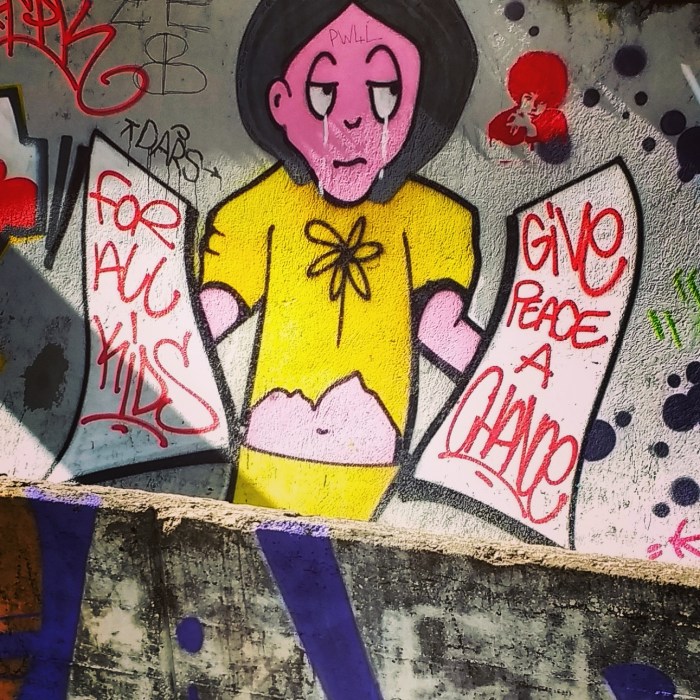
Afterwards, Adnan drove us to the bobsleigh track built for the 1984 Sarajevo Olympics. Eight years later from the start of the Bosnian War, the track was destroyed by the Bosnian Serb Army and also utilised as an artillery position. Today the track is a heavily graffitied relic. One area of the track has been graffitied with the image of a young girl crying wearing a yellow shirt with a flower. She’s holding two signs in each hand. The right sign features the John Lennon and Yoko Ono slogan ‘Give Peace A Chance’ whilst the left sign continues the sentence with ‘For All Kids’.

IMG_20170918_021526_297IMG_20170918_020843_545

Bobsleigh track photographs


IMG_20170918_020305_243

View over Sarajevo 

Close by the track we stopped at the side of a mountain road from where we had an incredible vista of the city of Sarajevo and its surroundings. All of the city is located in a valley surrounded by mountains. As magnificent as the scenery is, the heartbreaking truth is that such as setting made it relatively easy for Bosnian Serb Army troops to almost completely surround and lock the city.


Text and photographs by Nicholas Peart

©All Rights Reserved


Visiting Mokra Gora and Višegrad

IMG_20170907_191723_373

The countryside of Serbia is truly extraordinary. After experiencing Belgrade, I decided to spend a week in the southern Serbian mountain town of Zlatibor. At around a kilometre above sea level, it has a cooler climate and made a welcome change to the melting Satan-hot summer temperatures of Belgrade. It has been said that Zlatibor has some of the cleanest air in all of Europe. Zlatibor is a resort town and is a very popular skiing destination for Serbians in winter. For a week I had my own mini studio-cube apartment at the top level of a warm family home on the outskirts of town.

Zlatibor is also a launchpad from which to visit the region’s surrounding areas of which there are many gems. However without your own vehicle it can be challenging to visit these places. Fortunately I met a very interesting and knowledgeable young man named Bogdan who has his own small tour business. It was already the beginning of September when I arrived in Zlatibor and by then much of the peak August crowds had left meaning the town wasn’t over crowded and finding/extending accommodation was never a problem.


Mokra Gora

One day I embarked on a day tour with Bogdan and a small group of Serbian tourists to the nearby region of Mokra Gora close to the Bosnian border. Mokra Gora is an authentic and traditional slice of the Balkan country with some magnificent vistas. For the first leg of our Mokra Gora excursion, Bogdan drove us from Zlatibor to Mokra Gora railway station, from where we would travel on an old school train on the short but memorable Sargon Eight narrow-gauge railway line. This line was originally built in 1921 just after the First World War. It took four years to build and is over 15km long. The construction of the line was increasingly gruelling and often life threatening. 3,000 – 5,000 workers were involved in its construction and 200 died. As well as laying down the track, 22 tunnels and 5 bridges were built to make way for the line. The longest tunnel has a length of 1669 metres.

IMG_20170906_124317_173

By the Ćira train on the Sargon Eight narrow-gauge railway line

Rather tragically, not long after the railway line was completed, it became abandoned and defunct. It was only in 1999 when it re-opened as a tourist attraction. The classic and vintage narrow gauge train is known as the “Ćira” train. Being on this train brings back happy childhood memories of riding the famous Bluebell Railway train in East Sussex. The spirit of Thomas the Tank Engine throbs. All that is missing is Ringo Starr. I can imagine him being the conductor of that train in another life, taking ample swigs from a cheap bottle of plum rakija in the colder winter months whilst entertaining passengers with off-beat anecdotes via the tannoy.

IMG_20170906_121447_712

Mokra Gora

The landscape and views throughout the train journey are sublime. It is a true joy to ride on this train and simple stare and marvel at the fertile green mountain scenery. All that hard graft to build the railway line was not all in vain. The first station we stop at is called the Ninth Kilometre. It is so-called since there are nine kilometres between the station and the Bosnian border. Then we stop at Jatare Station. Here I take a short hike up a small rocky hill with a young Serbian couple from Belgrade for some lovely vistas. Jatare used to be a water station and resting place and is also known by the fact that not one ticket was ever sold at the station.

IMG_20170906_124656_212

In Jatare with some Serbian friends

We make a few more stops to admire the country scenery before returning to Mokra Gora station where we are reunited with Bogdan. From here we travel to a nearby small village called Bela Voda, which is well known for its natural spring with healing water. The water is known to cure and treat skin diseases. What is also unique about the water here is it is highly alkaline with a pH of 11.5 and is ranked as 5th in the world in terms of its pH level. In addition to treating skin diseases, the water can be drunk in small doses and can cure stomach ulcers and gastritis. It is good for digestion and is also known as ‘eye water’ since it can treat eyelid inflammation.

IMG_20170904_131838946

Bela Voda

Bela Voda is a paradise of a place with an attractive cherry-red stone church by the water stream, which augments the beauty and etherealness of this special village. I fill my empty bottle with some of this water from the well. Nearby there are wooden huts that are available to rent. I think to myself how delightful it would be to spend a long summer here completely forgetting any notions of time and space.

IMG_20170904_153221402

Drvengrad

From Bela Voda, Bogdan drives us to a hillside village not far from Mokra Gora railway station called Drvengrad. This completely wooden village was built by the Serbian filmmaker Emir Kusturica for his 2004 film Life Is A Miracle. It’s a unique, brilliant and unusual place with small streets and squares named after famous filmmakers, writers, visionaries, revolutionaries, sports-stars etc. I’ve written a separate article on the wonders of this magical place in another article which can be viewed here.


Višegrad

Early in the morning the next day, I meet up again with Bogdan for another tour this time visiting the historical Bosnian town of Višegrad. Višegrad is famous for its landmark Ottoman-era Mehmed Paša Sokolović Bridge, which is a UNESCO world heritage site and was the bridge immortalised in the Nobel prize winning writer Ivo Andrić’s novel The Bridge On The Drina. It is also the site of another village complex built by Kusturica called Andrićgrad after Ivo. Unlike Drvengrad, this village is completely made from stone and there is a statue of Andrić.

IMG_20170907_180212_247

Dobrun monastery

Before crossing the Bosnian border, we make a stop at the old monastery of Dobrun, which was constructed in 1343 by Duke Pribil and his sons Stefan and Peter. Originally all of the interior of the monastery was decorated with frescoes. Today, just a fraction of those original frescoes survive. Fortunately the one of Tsar Dušan with his wife Jelena and their son Uros still remains. Tsar Dušan, who was also known as Dušan the Mighty (born in 1308 – died on 20 December 1355), was the King of Serbia from 8 September 1331 and the Emperor of the Serbs and Greeks from 16th April 1346 until his death in 1355. This was the golden age of Serbia and at the time of his death, the Serbian Empire included most of modern day Greece, Albania and large swathes of former Yugoslavia.

IMG_20170907_182332_396

14th century fresco of Tsar Dušan with his wife Jelena and their son Uros inside the monastery 

Unfortunately since the era of Tsar Dušan, the monastery was under attack on several occasions. The first attack came in 1393 when the Ottoman Turks occupied Bosnia. Yet it faced the greatest destruction during the Second World War when it was used by the Germans to store ammunition. On their withdrawal in 1945 at the end of the war, they blew up the monastery. It was restored the following year. In spite of the monastery’s turbulent history, it is a handsome and immaculate building in beautiful surroundings. The decoration of the front facade of the monastery is a work of art.

Afterwards we cross the border and head to Višegrad. In 1454 Višegrad was conquered by the Ottoman Empire headed by Osman Pasha. The town remained under the empire for over four centuries until 1878 when the Austro-Hungarian Empire controlled Bosnia and Herzegovina. More recently, the town suffered greatly during the Bosnian War from 1992-5. Much of the town was bombarded by JNA (Yugoslavian National Army) troops and many houses were destroyed and an estimated 3,000 Bosniaks were killed.

IMG_20170907_191723_373

The landmark Ottoman-era Mehmed Paša Sokolović Bridge in Višegrad

Most of the arches of the famous bridge were badly damaged (and some even completely destroyed) during both world wars. The bridge was also the scene for the killing of hundreds of Bosniaks by Bosnian Serb forces during the Bosnian War.

IMG_20170908_234426_162

In Andrićgrad

Filmmaker Emir Kusturica’s nearby village complex, Andrićgrad (also referred to as Kamengrad or ‘Stonetown’), officially opened on 28th June 2014 to mark the 100th year anniversary of the assassination of Archduke Franz Ferdinand by the young Bosnian revolutionary, Gavrilo Princip. When you enter the complex and walk along the Main Street with cafes, you may notice two large rectangular mosaic murals by the Multiplex Dolly Bell cinema. The first one features Gavrilo Princip with other members of the Young Bosnian movement who wanted to end Austrian-Hungarian rule in Bosnia by assassinating the Archduke. This led to the start of the First World War. In the other mural a group of men featuring Kusturica appear to be engaged in a ‘tug of war’. In a way this mural is a homage to the perseverance and resilience in realising Kusturica’s vision of Andrićgrad. Looking at the mural more closely, you may notice the Serbian tennis star Novak Djokovic in the background.

IMG_20170909_213542_777

Mural of Gavrilo Princip and members of the Young Bosnian movement 


IMG_20170909_212015_197

Mural of Kusturica (with Milorad Dodik, president of the Republika Srpska) and Novak Djokovic in the background 

The town’s style is a mix of Ottoman, Byzantine, Renaissance and Classical periods of architecture which reflect the history of Višegrad. There are statues of Ivo Andric, scientist and visionary Nikola Tesla and Petar II Petrović-Njegoš, who was a Prince-Bishop of Montenegro as well as an important poet and philosopher who’s works are seen as some of the most significant in Montenegrin and Serbian literature. In addition to his literary talents, Njegoš is seen as one of the fathers of the modern Montenegrin state and Kingdom of Montenegro, and for his struggles with the Ottoman Empire as he tried to expand Montenegro’s territory. His poem Gorski Vijenak (The Mountain Wreath) is considered a classic and it became the Montenegrin national epic. It had a big influence on Gavrilo Princip, who knew it off by heart. The poem is significant for many Serbians as its a reminder for them of their solidarity with Montenegro against the Ottoman Empire.

IMG_20170909_211536_267

Statue of the writer Ivo Andrić whom Andrićgrad is named after


IMG_20170909_210830_111

Statue of Petar II Petrović-Njegoš by the Crkva Svetog Cara Lazara orthodox church

Aside from the bridge and Andricgrad, Višegrad is a small but interesting city to explore on foot. If you have the time, walk along the bridge to the other side of the river. From there you can take a walk up one of the hills along a heavily debris laden path. From the top you have an incredible birds eye view over Višegrad.

On the way back down, keep on walking along the other side of the river and very soon you will stumble upon the childhood home of Ivo Andrić. It is a crimson-pink house, but it’s not possible to enter since it is a private residence.

IMG_20170908_231734_974

The childhood home of Ivo Andrić in Višegrad

Just before I left Višegrad for Zlatibor, I was at a small cafe close to the bridge where I had an exceedingly good slice of baklava cake. Oh boy it was so good. If I could remember the name of the place I would tell you, but alas I can’t.


By Nicholas Peart 

©All Rights Reserved


References

Wikipedia

-srbvoz.rs

-panacomp.net

-“The Town That Emir Kusturica Built” : excellent article by Peter Aspden in the Financial Times, where he writes extensively about Andrićgrad and also features an interview with Emir Kusturica

Investigating Belgrade’s Art Scene

21224635_832989996868999_7311805797053235200_n

If anyone had a chance to look at my photographs from Belgrade’s Savamala district one could not unreasonably come to the conclusion that Belgrade is art. It may not be an ostentatiously lovely city like Paris or Prague with its magnificent buildings (although there are many impressive buildings here) but it has an atmosphere that is hard to beat. Many people have compared Belgrade with Berlin and for many years Belgrade has been touted as the ‘new Berlin’. I love Berlin too and there are obvious similarities but comparing the two cities is unhelpful. Yet its unavoidable. For many years Berlin was and still is one of the world’s premier cities for artists to reside. It’s close competitors are London and New York yet unlike those two cities Berlin for a long time was a much more affordable city for artists to live. But recently some artists in Berlin have began to feel the pain of increasing rents in the city and thus are forced to seek out other cities. But I digress. I find Belgrade an atmospheric, raw and, at times, an intense city. These are the perfect ingredients for artistic inspiration. A view over Lake Geneva, as nice as it may be, doesn’t quite cut it for me.

Art is everywhere in Belgrade. Not just in the galleries. But in the mixed and diverse architecture of the city’s buildings, in the wealth of street art, and in the air and rhythms of the city. Handsome and regal-like buildings from the age of the Austrian-Hungarian empire can be easily spotted hand in hand with imposing cigarette ash grey Communist era Brutalist blocks. Despite their wealth and history, many are in slow and crumbling decay. Very few are ‘tarted up’. I particularly admire the old yellow Belgrade railway station building at the edge of the city. In that part of the city the pressure is high and its Belgrade’s very own Gare du Nord; flourishing and radiating with warts and all flowers of life. There are no ‘must do’ sites here but the energy is pulsating and pungent. I think the writers Charles Bukowski and Jean Genet would have fallen in love with this neck of the woods.

IMG_20170826_210058_760

Mural of The Clash lead singer Joe Strummer 

Street art bathes all corners of Belgrade. The Savamala district has the lion’s share and you can see one of my other posts here where I document that area with many photographs. One can find a lot of this kind of art in the Dorcol district. Look out for murals of Morrissey and Joe Strummer. In Savamala there is a mural of the young Bosnian revolutionary and assassinator of Archduke Franz Ferdinand, Gavrilo Princip and probably the most impressive and imposing street art mural in all of Belgrade of a man with his mouth open wide with all his teeth painted as rows of buildings. In his hand is a tree which could pass for a piece of broccoli.

21147841_119685432023977_8638263410850529280_n

Mural of Gavrilo Princip; the young Bosnian revolutionary who assassinated Archduke Franz Ferdinand

Sadly the Museum Of Contemporary Art in Belgrade is currently closed for renovation works. It’s been closed for some years but hopefully it should be reopening its doors soon. What I originally envisaged to be a large setback regarding my plans to tap into the city’s contemporary art scene has not been much of a hindrance at all since during my time in Belgrade I was very fortunate enough to visit many of the city’s galleries and discover the works of a large number of exciting artists.

IMG_20170901_231148_355

Opening at the Remont gallery of a solo exhibition by Serbian artist Goran Stojcetovic

The first gallery I check out in the city is the Remont gallery off Maršala Birjuzova street, which is an important core art gallery in the city for promoting the latest local contemporary art. I am fortunate enough to attend the opening night of an exhibition of works by the Serbian artist Goran Stojcetovic. He is the founder of Art Brut Serbia after the term coined by French artist Jean Dubuffet referring to ‘outsider art’ created by artists working outside of the art world and art institutions. Goran’s signature blue ink works on papers are brilliant, pure and highly idiosyncratic works of art. There are also elements of humour too as can be seen where he ingeniously transforms the front page cover star of some Serbian celebrity gossip magazine into one of his trademark blue Bosch devils. Serbian surrealism at its finest.

IMG_20170901_231901_014

IMG_20170901_235156_548

Works by Goran Stojcetovic

I catch the tail end of a group exhibition of Hispanic artists entitled Chinese Whispers/An Image, A Memory at an experimental art space called U10 close to Terazije street. Peruvian artist Rudolph Castro’s seven charcoal drawings entitled Walls (2017) is a powerful work of art in the context of the history of brutal Latin American dictatorships and the war and violence throughout the 1990s after the fall of former Yugoslavia. Chilean artist Benjamín Altermatt’s video The Land Which Is Not comprises of a series of old photographs taken in Belgrade accompanied by random sounds with the intention of creating a new real or unreal territory debased from its original identity.

IMG_20170831_235340_349

Chinese Whispers group exhibition at the U10 gallery

IMG_20170901_001535_925

Walls (2017) by Rudolph Castro

IMG_20170901_000729_193

The Land Which Is Not by Benjamín Altermatt

A little further up Terazije towards the city centre, I visit Gallery SULUJ where there is group exhibition of sculpture and installation works entitled Soft Sculpture – Hard Thoughts. Myrsini Artakianou’s Zero Past, Infinite Future is a collection of fragile and organic life forms disjointed but brought together to make their desolation alive. Bleak close up, but as beautiful as the rarest of pearls from a distance. Sonja Hillen’s Thoughttorture is a ‘knitted brain’ in a knitted grey/blue puddle. The third work to catch my vision is a participatory installation entitled Shaping by Danica Bićanić. It is a soft rubber ball-like sculpture which she invites viewers to reshape and remould from its original form.

IMG_20170901_011715_475

Zero Past, Infinite Future by Myrsini Artakianou

IMG_20170901_013753_641

Thoughttorture by Sonja Hillen

IMG_20170901_013010_634

Shaping by Danica Bićanić

South of Terazije off Kralja Milana street is the SKC or Student’s Cultural Centre. Historically this was a very significant institution as this is where Serbian and Yugoslavian conceptual art was born at the start of the 1970s. The famous Serbian performance artist Marina Abramovic was a key artist in that original scene (as was her former pre Ulay partner; the noted Serbian conceptual artist Nesa Paripovic). One of her early landmark and legendary performance art pieces, Rhythm 5, was performed here. For this performance she made a five-pointed star from wood and dowsed it in 100 litres of petrol. She then walked around it, cutting her hair and nails and throwing them into the flames. Whilst it was on fire she proceeded to lie down in the middle of the burning star.. The iconic German artist Joseph Beuys was in the audience and it’s rumoured that he saved her from the growing flames when she lost consciousness. All this awesome history aside, I had very little luck here. There seemed to be nothing happening. The two people at the reception of the centre resonated apathy and indifference, like I was wasting my time coming here.

IMG_20170831_233903_342

The SKC (Student’s Cultural Centre)

IMG_0731

Rhythm 5 by Marina Abramović

The Savamala district which I’ve mention in another post, has many art spaces (many temporary pop-up spaces it feels) and studios. The creative nexus of the area is the KC GRAD. As well as being a bar and a space for interesting live music and experimental events, there is an exhibition space upstairs. When I visited there was no exhibition on display but the KC Grad is a good place to frequent to meet creative people and establish connections in the area. I haven’t been to the following but from what I’ve read, art spaces to check in the area include Magacin, Gallery KM 8 and Zavod. Although the Savamala is one of the main creative hubs and exciting ‘up and coming’ districts in the city, I had a hard time trying to find some of the galleries I wanted to visit. That’s why I recommend maybe spending some quality time at KC Grad and networking there for insider info and where it’s all at.

IMG_20170901_153508_795

The KC Grad

On the outskirts of the city is the Museum of Yugoslavia, which also houses Tito’s mausoleum. When I visited there was a temporary exhibition of black and white photographs documenting Tito’s many trips to Africa. In one photograph a group of young black Africans all in white shirts hold up in the air a placard saying ‘Long Live Tito Man Of Peace’. In another photo Tito’s wife Jovanka is pictured in Ghana dressed in local attire by a group of Ghanaian women. The next photograph to catch my eye shows Tito with the Gaddafi family in Libya sometime in the 1970s. Colonel Gaddafi is kneeling down and smiling on the left whilst Tito is sitting down on the sofa with two of Gaddafi’s sons by his sides.

IMG_20170903_173525_258

The Museum of Yugoslavia

IMG_20170902_154632_170IMG_20170902_160239_425IMG_20170902_155658_387

Photographs from the Tito In Africa exhibition at the Museum of Yugoslavia 

If you ever do make it to the museum, try to allocate some free time to visit the nearby former home of the important Serbian/Montenegrin painter Petar Lubarda. His home has been immaculately restored and contains a solid collection of some of his most significant paintings. Some of his paintings were in very bad condition and even missing after he passed away but they have been restored very well. Lubarda was well known in his lifetime but over time seemed to have faded into almost obscurity. But this museum does a fantastic job in preserving his legacy. The first room I enter contains his striking red paintings. When you enter that room you immediately come face to face with his enormous rectangular painting entitled Man and Beasts from 1964. It is a magnificent painting. Like the Bayeux tapestry blended with the most nightmarish paintings by Goya and the English Romantic painter John Martin. I am in awe of this painting and it would look phenomenal in any spanking blue chip modern art museum. Another brilliant painting by Lubarda on display in another room is a large painting entitled The Battle of Kosovo from 1953. This is probably his most well known painting. The 1389 Battle of Kosovo was a very big influence on much of his work.

IMG_20170902_004502_239

Man and Beasts (1964) by Petar Lubarda

IMG_20170902_004838_834

Close-up of Man and Beasts

IMG_20170902_112904_167

The Battle of Kosovo (1953) by Petar Lubarda

By the Studentski Square park in the centre of the city is a small gallery called Gallery KNU where there is a solo exhibition of paintings entitled Swimmers by Ivana Živić. In her realist and surreal dreamlike paintings, the interior of opulent palatial art museums are flooded in water. In the painting Museum (2017), a young lady in red (yes like the Chris de Burgh song) appears either lifeless like Orphelia in the iconic mid 19th century painting by pre Raphaelite artist John Everett Millais or in a blissful cosmic dream, like the kind of dreams you never want to wake up from. In another painting entitled Red Room (2014), the lines between dreams and reality are increasingly blurred to the point where the subject appears to be leaving her body and the physical world becoming at one with the metaphysical invisible world. It is a profoundly spiritual and powerful painting.

IMG_20170901_180956_668

Museum (2017) by Ivana Živić

IMG_20170901_175752_469

Red Room (2014) by Ivana Živić

On Belgrade’s main Knez Mihailova high street are a few interesting art spaces. My first port of call is the Zepter Museum. This is an excellent art museum with three floors of modern and contemporary paintings, photography, sculptures and installations by artists from former Yugoslavia. Look out for artist Ljubomir Ljuba Popovic’s epic and ethereal masterpiece Les Signes Du Déluge (2007). Other delights include Steven Knezevic’s off the wall (but firmly on the wall) painting Jitterbug (1966/74) and Vera Bozickovic Popovic’s Horizontal Composition II (1960) painting.

IMG_20170903_174754_114

Les Signes Du Déluge (2007) by Ljubomir Ljuba Popovic

IMG_20170903_210737_754

Jitterbug (1966/74) by Steven Knezevic

IMG_20170903_220211_448

Horizontal Composition II (1960) by Vera Bozickovic Popovic

Afterwards I visit a smaller commercial art gallery on the Knez called Gallery ULUS. There was a solo exhibition of paintings by the artist Marko Antonovic when I visited. His paintings are bold, energetic with hard lashes of hot and cold rays and are reminiscent of the German Expressionist paintings of the Die Brucke movement artists such as Ernst Ludwig Kirchner.

IMG_20170901_182536_714IMG_20170901_184718_047

Paintings by Marko Antonovic

One evening I attended the opening of an exhibition of black and white photographs by the American film director David Lynch entitled Small Stories at the small art gallery of the Cultural Centre of Belgrade on Trg Republike just off the main Knez thoroughfare. His photographs are dense multi dimensional works with several overlapping narratives. Like interpretations of our wildest and most disjointed and unexplainable dreams, these photographs make them tangible. The opening of the exhibition is heaving with people and it’s only later in the night just before the gallery closes and there are less people around that I can freely walk around and look at the photographs undisturbed.

IMG_20170906_102914_119IMG_20170906_103242_456

At the opening of the David Lynch photography exhibition Small Stories at the Cultural Center of Belgrade

IMG_20170906_104016_052

Hello My Name Is Fred by David Lynch 

On the same night there is another opening of a joint exhibition called In The Same Space at the Salon of the Museum of Contemporary Art featuring the artists Selman Trtovac and Vladimir Frelih. Both artists exhibit challenging and ambitious works.

IMG_20170906_112609_162

Kat. No 13 041 664 (2005-17) by Vladimir Frelih

Frelih’s Kat. No 13 041 664 (2005-17) is an ongoing project comprising of 183 photos where each photo is a different shade of red. All the photos are individually framed and were developed in different photo studios across Europe over a 12 year time period.

IMG_20170906_110921_803

Consequences – Magnetic Brain Stimulation (2017) by Selman Trtovac

Trtovac’s Consequences – Magnetic Brain Stimulation (2017) is a project documenting the artist undergoing a non-invasive magnetic brain stimulation, whilst creating a series of drawings, used to treat people with dementia and also used on pilots of the US army during training to help them improve the speed of their reflexes and reactions. Trtovac’s aim with undergoing this procedure was to tap more acutely into his mind and mental faculties and understand better the relationship between the mind and the creative process. These drawings creating during the procedure, entitled Spiritus Movens (2014), are also featured in the show.

By Nicholas Peart

12th September 2017

©All Rights Reserved

.

The Village That Emir Built

21435972_336129863477420_273343486927831040_n

The wooden village of Drvengrad is a unique creation nestled in the mountains by the border between Bosnia and Serbia. It was built by the Serbian film director and all round maverick Emir Kusterica originally for the setting of his film Life Is A Miracle. But this place is more than just a film set, this is a white hot design for life. A place of hope and positivity, where one can spiritually flourish and be inspired. It almost sounds like the self sustainable community of Auroville in India. But not quite. Auroville is an enormous place with a substantial international community in the thousands. Drvengrad is a floating micro galaxy with its own idiosyncratic vibes and charms.

The landscape around Drvengrad in the Serbian region of Mokra Gora is breathtaking. And even if this awesome village didn’t exist, the scenery alone is a paradise of the highest level for anyone simple wanting to relax, re-energise, unwind, tune out, drop out etc. If the world ever got too much, this part of the world would be on my list of places to disappear to. Rimbaud went to Harar in Ethiopia. I will come here to Mokra Gora.

When one enters Drvengrad, the first thing one most likely notices is the Russian style wooden church at the end of the main square. It is dedicated to St Sava who was the founder of the Serbian autocephalous christian Orthodox Church (as well as the founder of Serbian law). All the squares and streets (more like paths) are named after various famous people. The main wooden square at the entrance is named after the highly revered visionary, humanist and pioneer of Alternating Current Nikola Tesla. Diego Maradona also has his square by the Latin quarter of the village which houses the Damned Yard bar. This bar is full of black and white photographs of Latin American revolutionaries like Che Guevara, Fidel Castro and Emiliano Zapata. On one side of the bar is a montage of photographs of Emir Kusterica with Johnny Depp, Jim Jarmusch, Maradona, Mike Tyson and others. Cuban music plays on the stereo and I feel like I am back in San Cristobal de Las Casas in the Mexican state of Chiapas. Adjacent to the bar is a large indoor swimming pool and an underground gym and cinema.

The nearby Visconti restaurant is more sedate and formal than the Damned Yard bar. Aesthetically there are shades of the architect Le Corbusier in the internal design. It houses a substantial collection of books and a large collection of wines. Close-by is a children’s playground and an art gallery, which was unfortunately closed when I was there. But fortunately there is the Van Gogh hut, inside where there are murials and recreations from his famous paintings. There is also a tiny market square where one can buy local artisan crafts, oils and honeys. When I visited this market corner there was an old lady sitting down by one of the stalls knitting.

On the side of one wooden hut is a large mural of the Russian writer Dostoevsky. At both ends of the mural are a clutch of super sized colouring pencils ingeniously created from tree trucks.

Serbian tennis superstar Novak Djokovic has his own street with a couple of outdoor tennis courts at the end. Film directors Frederick Fellini and Igmar Bergman also have streets named after them as does the Nobel prize winning Balkan writer Ivo Andric. Stanley Kubrick’s name is also stamped into this village in the form of the Stanley Kubrick Theatre.

Each year Drvengrad hosts the international Kustendorf film festival, also founded by Kusturica. Johnny Depp, the Mexican actor Gael Garcia Bernal and the directors Jim Jarmusch and Abbas Kiarostami are some of a handful of well known faces to have visited.

Below I am sharing some of my photographs of this awesome village.

21435445_1906780262918699_1567878348275712000_n

21371946_823290654499630_1063955758195933184_n

21436218_116123282428217_6446753393129029632_n

21435710_472726389764359_1236882995642630144_n

21436128_498481867170524_7254550541512998912_n

21435427_116502405687677_6018818588515762176_n

IMG_20170906_134228_868

IMG_20170906_131246_018IMG_20170906_131826_746IMG_20170906_141517_577IMG_20170906_183228_375IMG_20170906_183743_072IMG_20170906_184034_987IMG_20170906_185605_484IMG_20170906_135430_370IMG_20170906_184736_272IMG_20170906_184527_099IMG_20170906_190157_402IMG_20170906_190513_350IMG_20170906_190856_065IMG_20170906_185817_315IMG_20170906_185202_135

Text and photography by Nicholas Peart

©All Rights Reserved
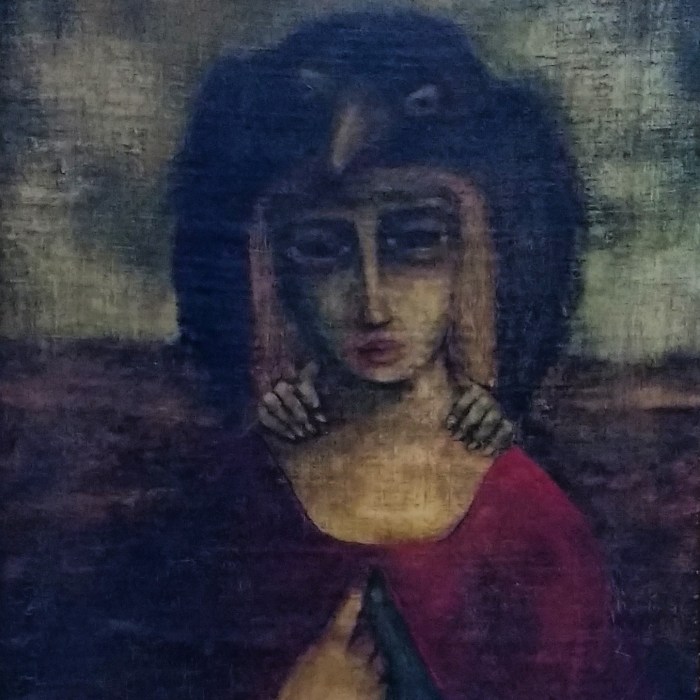
Photographs From Belgrade’s Savamala District

21147807_1927405347498394_695216941635207168_n

Belgrade’s Savamala district is one of the most interesting parts of the Serbian capital city to explore. It stretches from the main railway and bus station up until the Kalenegdan fort complex. Walking around this area one is rewarded with a mess of different styles and periods of architecture. There are some splendidly ornate buildings in perpetual decay and many more Brutalist structures. In fact, walking around Belgrade for the most part feels like being in an odd blended bubble of Vienna and the Barbican district in London.

Savamala was badly destroyed in both World Wars. For many decades since the end of WW2, it was a very run down place and had a negative reputation. However in the last few years it has developed as the creative hub of Belgrade and many bars and art spaces keep popping up. To get a good and accessible taste of the area’s scene, head to Braće Krsmanović street by the Sava river. The beginning of the street is marked by a disused shell of an old antique crumbling building. Further on is the KC Grad cultural centre. This is an indispensable cultural landmark with live music and happenings. Upstairs there’s an art exhibition space. Further along the street is a clutch of bars.

Architectural delights aside, there is some magnificent street art if you look hard enough. The area around Zeleni Venac market is a hive of activity and an interesting place to explore. Lots of cheap snacks and street venders selling anything from books to football t-shirts and some t shirts with the face of Vladimir Putin on them.

Below I am sharing my photographs accumulated from my wonderings around this fascinating part of Belgrade

21224203_757546017739828_761511479835885568_n

21147755_360362011043806_5135320348027256832_n

21107476_118035852254256_5009966633662283776_n

21107493_1653271874746619_6716810508520914944_n

21042594_1621162187908166_2157378934822404096_n

21149320_1391413594311125_5179758218565386240_n

21107168_342306229540502_8387930048002260992_n

21107226_1819068508405233_1964536548204478464_n

21107401_708993529299666_5396275912322842624_n

21224338_114650735900700_3499742444604358656_n

21107169_1980143332270721_7781824937500606464_n

21149518_815189668662455_1199123515781939200_n

21107233_342516679535641_3588759511579492352_n

21148122_139302033341336_7084834792847441920_n

21148972_1237253709714268_269641255183450112_n

21224464_1216131325200137_1622765792640630784_n

21149539_705839419603764_3814601665235910656_n

21107951_115379915863015_3950314570135896064_n

21107778_135996850346893_2467930599608811520_n

21224769_259061641271347_2370649848052449280_n

21107636_2177722482454618_6996814136810143744_n

21108023_1889444804476411_4734104371753648128_n

21147807_1927405347498394_695216941635207168_n

21227737_870557186441792_6313472556410077184_n

21149422_1815404225417609_8392437070718566400_n

21147816_409231822812123_87173027061563392_n

21227504_336788500108412_193016002080931840_n

21224635_832989996868999_7311805797053235200_n

21148959_276292199530522_9183619511780114432_n

21224339_362635617490199_3059867261541023744_n

Text and photography by Nicholas Peart

©All Rights Reserved

Munching Your Way Through Belgrade

Belgrade is a fantastic and great value city to eat your way around and a fabulous food destination in its own right. It is a cosmopolitan city and you can find good international food outlets in addition to more traditional places. Anyone’s who’s travelled across Serbia may be familiar with the countries pekaras, which are traditional bakeries often open 24/7. At these eateries you can pick up a late night sandwich or pastry for only a few coins. Often the ladies who work at these places are delightful and very patient with my bad to non existent Serbian. In fact, quite a few of them speak very good English.

In Belgrade, like the rest of Serbia and most of former Yugoslavia, there are plenty of places selling traditional foods such as Cevapi (Balken sausages), Bureks (Balken pies) and pljeskavicas (hamburgers done the Serbian way) etc. I had my first taste of a burek at some hole in the wall place by Dolac market in Zagreb and I was dying for a bowl of vegetables and water after just a few morsels. My mouth was a cave of low-grade grease. A pljeskavica, on the other hand, is a wonderful thing. I don’t think I’ve ever, in all my time in Serbia, had a substandard pljeskavica.

The Best Cevapi in Belgrade: Drama Cevapi

21107790_1788509177843020_4083004505254264832_n

Cevapi places, or Cevaperias as I like to call them with a Latino tinge, are ten a penny around most of former Yugoslavia. Yet I’ve never tasted Cevapi as divine as the ones I was served here at Drama Cevapi. They are so tender and almost melt in your mouth. For less than $3 you get a metal plate with five Cevapi topped with a handful of chopped onion accompanied with shredded cabbage, a dollop of clotted cream and chilli sauce and some bread. There are other items on the menu but this is the signature dish and what this place does best

Pljeskavicas in Belgrade

IMG_20170823_120816_619

It’s hard to pick one place in Belgrade as there are a few places which all do equally good pljeskavicas. Depending on where you are based in the city there are three places which do mean pljeskavicas and they are all open til late so perfect and very convenient after a night out thrashing the rakija and Jelen. I have to admit I probably had the best pljeskavica when I was in Novi Sad, but I was so smashed I can’t for the life of me remember the name of the place. If you are in the centre of the city, at the corner of Kolarčeva and Makedonska, is the eatery chain Gyros In City. They do very filling pljeskavicas as well as excellent and cheap Greek style kebabs. I also love the people that work there; jokers of the highest order who always brighten up my day.

Nearby on Maršala Birjuzova is Mikan Restaurant, which serves local food. Adjacent to the main restaurant they have a smaller eatery where you can get Cevapis, pljeskavicas, hamburgers, hotdogs etc. I was served a very generous pljeskavica here by an old lady who spoke no English for 200 Diners. The board menu was all in Cyrillic, which I can read, even if I speak almost no Serbian. A wee tip; if you ever go to Russia (or any country which uses the Cyrillic alphabet), your life will be far less painful if you can decode Cyrillic. Doesn’t matter if you speak little to no Russian. If you can’t decipher Cyrillic you may as well be gallivanting on the moon.

Finally in the Dorćol neighbourhood on Gospodar Jovanova is the small eatery Loki. They are the pljeskavicas specialists and they don’t mess about. There are many cool bars in this neighbourhood and this is a great place to go for a late night pljeskavica.

The Bakeries That Never Sleep

Serbia is famous for its 24/7 bakeries. In almost all cities in Serbia you will stumble upon a bakery or pekara, which never closes. Super convenience aside, some serve serve a dazzling range of treats and are very inexpensive. I have two favourite pekaras in Belgrade. The first one is called Skroz Dobra Pekara and located right next to the king of pljeskavicas, Loki, in the Dorćol neighbourhood. You can find filling sandwiches for less than 200 Diners and strudels, pies, cakes and other assorted pastries for less than 100 Diners. What’s more, the ladies who work here are super nice.

21107636_2177722482454618_6996814136810143744_n (1)

In the centre of town and right by the queen of pljeskavicas, Gyros In City, is another outstanding 24/7 bakery called Pekara Tomo. It is almost identical to Skroz and equally excellent and well stocked with cheap sandwiches and pastries as well as a small side pizza parlour.

Znak Pitanja (also called ‘ ? ‘)

21042852_509987276000936_4088481202736988160_n

If you ever fancy having a proper slap up traditional Balkan meal with all the trimmings Znak Pitanja is a top notch choice. This restaurant also has the unique distinction of being the oldest tavern or kafana in the city at over 200 years old. I chose the 1kg pork knuckle. It arrived on a large glass tray accompanied with an ample supply of baked potatoes and a side of homemade horseradish sauce. I am not kidding, when the thing arrived it was enough to feed the entire population of Novi Sad. It was perfectly good no nonsense Balkan food.

21147197_1964466147126482_7856965265790074880_n

I hear they also have traditional live music here so may be worth reserving a table here for a Balkan feast with plenty of pivo and rakija when there is. I think great fun can be had.

Vegetarians and vegans in Belgrade: Radost Fina Kuhinjica

21371967_124818664836696_689731031447633920_n

I feel your pain. With the mammoth non stop cevapi/pljeskavica meat feast assault, travelling in Serbia can be a veritable drag. But once in the capital things brighten pretty quickly. I know there are a few veg establishments in the city and that will only grow as more and more people become vegetarian or vegan. In fact in both the cities of Belgrade and Novi Sad you will notice quite a number of ‘Go Vegan’ slogans graffitied throughout both cities. If this keeps up maybe I’ll be eating vegan cevapis and pljeskavicas when I return in five years or so.

I can’t just live on cevapis and pljeskavicas for the rest of my life. Even the most rampant of carnivores need something green from time to time. I read glowing things about a veg restaurant called Radost Fina Kuhinjica so one day I decided to investigate. Aesthetically this restaurant gets full marks. It’s a stylish and trendy place and all the menu booklets are enclosed in old hardback books. There is a backyard area where you can eat. When it’s dark all the tables have lit candles in old school metal candle holders. Instead of local music, I detect The Smiths, Coldplay, Lana Del Ray and The Strokes on the sound system.

21373206_184919848732826_996211458079457280_n

I order the veg burger consisting of tofu and red kidney beans. For the price I was expecting one large juicy veg burger. Instead I got two miniature burgers accompanied with a salad. All the ingredients were no doubt fresh and organic and the salad was perfectly good yet I was a little disappointed with the burgers. They were too plain. There was not enough zing or omph. This is not a bad restaurant and is certainly a cut above many ‘hipster cool’ vegan eateries which are a triumph of style over substance. Perhaps the veg burgers are not where it’s at? Maybe if I had the veg lasagna I would be raving about the place. Either way, as I mentioned before, with the passing of time, the veg scene here in Belgrade will only grow and maybe when I return a few years from now I may find a dazzling of choice of new and great no nonsense veg eateries.

By Nicholas Peart

©All Rights Reserved
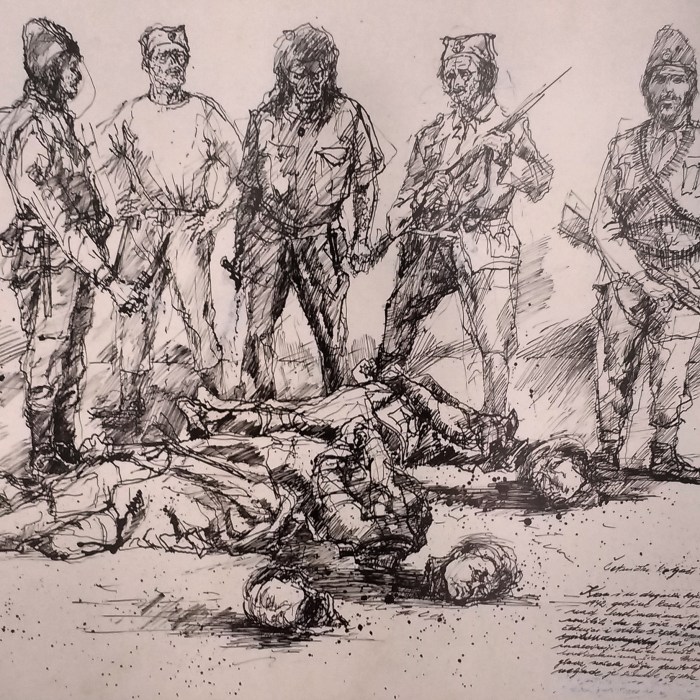
Photographs From Novi Sad

Arriving in the city of Novi Sad was my first taste of Serbia; a country I’ve always wanted to visit. After four days in this city, it certainly has not disappointed. In fact I had a real blast. Serbia’s second biggest city, after the capital Belgrade, has been a joy to explore and get to know. The attractive city centre around the main square is full of handsome buildings dating back to the time of the Austrian-Hungarian empire. There are lots of cafes to have a cheap cappuccino or bottle of Jelen beer along with a slice of Sachertorte or a couple of scoops of delicious ice cream. And all for just a few coins. Paris also has nice cafes and are great way to pass the day…..if you have deep pockets.
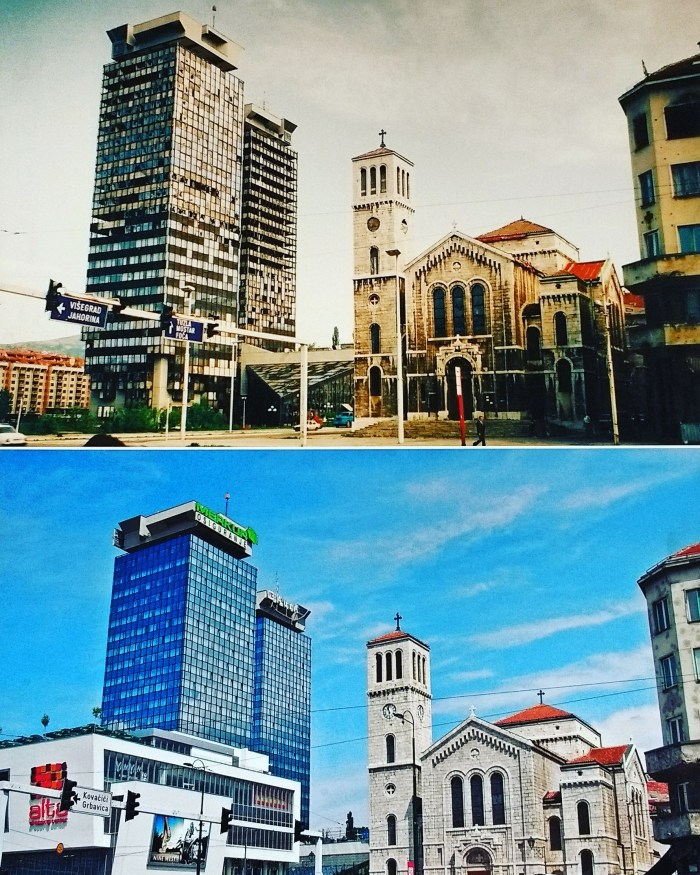
There are a plethora of sites to see in Novi Sad, but I recommend simply walking around this city. One great walk you can do is to walk towards the main bridge over the Danube river and on to the old Petrovaradin fortress. On sunny Summer days you will see locals bathing on the banks of the river. Once over on the other side, you are in the old part of town full of old buildings; many of them in splendid dilapidation. I seldom go to the gym but the walk up to the fortress more than compensated for that! When you’ve reached the top, you are rewarded with an amazing vista of the city and the Danube. There are also a couple of bars at the summit.

There is a small but interesting space which holds temporary art exhibitions at the Museum of Contemporary Art of Novi Sad, which is part of the larger Museum of Vojvodina on Dunavska street. When I visited, there was an interesting exhibition by a Bosnian artist called Igor Bosnjak entitled Projekat EUtopija. Next to the space there is a small display about the history of the Vojvodina region (of which Novi Sad is the capital) from before the start of the First World War until the end of the Second World War. It providing a very interesting understanding regarding what sowed the seeds for the First World War and the conflicts between the Austrian-Hungarian empire and Serbia. Directly opposite the museum is Dunavski park, which is a lovely spot to relax and have a walk. Look out for the statue of the Serbian poet and painter Djura Jaksic. He is sitting down and wearing a hat, looking uncannily like Don Quixote.

In the evening head to Cafe Veliki (one of the best and most authentic restaurants in the city) and order the Goulash. You won’t regret it! In the evening there are lots of bars to choose from. I had the good fortune to meet an interesting Anglo-Serbian guy from Manchester and a friend of his who took me on a tour of the city. We wound up the day in some bar, which I can’t recall the name of, where we had a few Jelens and some rakija. Rakija is a fruit brandy popular throughout south eastern Europe and comes in different flavours. At the end of night we went to a snack place for a pljeskavica; one of the national dishes of Serbia. You gotta have a pljeskavica if you ever come to Serbia! And it is perfect post-drinking food. There are also a smattering of bakeries open 24/7 where you can pick up a cherry strudel whenever you are feeling peckish.

There are many places to stay in Novi Sad. I stayed at the Hostel Podbara located outside of the city centre, but only a 10-15 minute walk away. It is a very tranquil and quiet place and almost feels like you are in the middle of the countryside. What’s more, the rooms are very comfortable and it’s incredibly good value for money; especially if you are on a budget. And the family who run the hostel are very kind and welcoming.

So, walk around and get stuck in! Don’t feel like you have to “do” Novi Sad. Grab a cafe and some cake. Have a Jelen and a pjeskavica. And just have fun!

Živeli!!!

20969003_143858632872707_8327567001371279360_n

Novi Sad’s main square Trg Slobode

IMG_20170822_135502_097

By the main city centre church 

IMG_20170823_091932_659

Statue of the Serbian poet and physicist Jovan Jovanović Zmaj (1833-1904)

IMG_20170823_105903_332

Old town of Novi Sad

IMG_20170823_111832_575

Old town of Novi Sad

IMG_20170823_112039_416

Petrovaradin Fortress

IMG_20170823_110631_921

View of the old town from the fortress 

IMG_20170823_111435_762

The river Danube

20969209_1569779229756034_8766650574717321216_n

Novi Sad train and bus station

20905443_1595060097212861_6908385738052599808_n

Outside Novi Sad train and bus station 

20987266_469372196751744_7793700736822411264_n

Street art in Novi Sad

20987143_1535672023166564_3733733405351739392_n

Street art in Novi Sad

20987465_1636654156354259_1034937138078023680_n

Goulash at Cafe Veliki

20987346_164106884140087_915426765373964288_n

Projekat EUtopija exhibition by Bosnian artist Igor Bosnjak at the Museum Of Contemporary Art 

20987042_522309034770478_435694539206819840_n

Outside the Museum Of Contemporary Art

IMG_20170823_104152_145

In Dunavski park posing by a statue of the Serbian poet and painter Djura Jakšić

IMG_20170823_120016_642

Jelen beer and rakija on a night out

IMG_20170823_120816_619

A pljeskavica

IMG_20170823_113852_743

Novi Sad Synagogue

IMG_20170823_112652_471

Novi Sad in the early evening

Photographs and text by Nicholas Peart

©All Rights Reserved