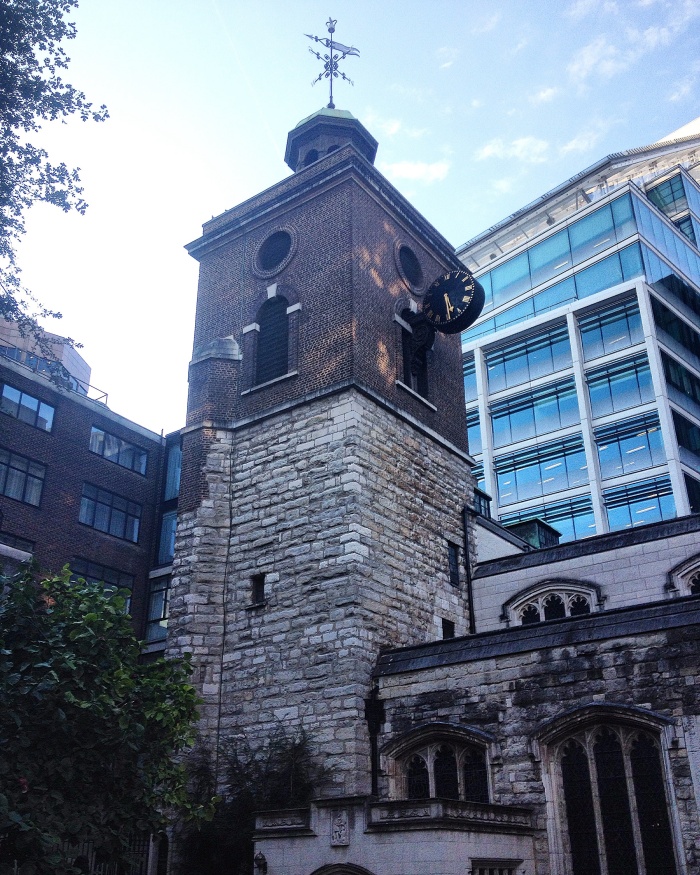
The Village That Emir Built

21435972_336129863477420_273343486927831040_n

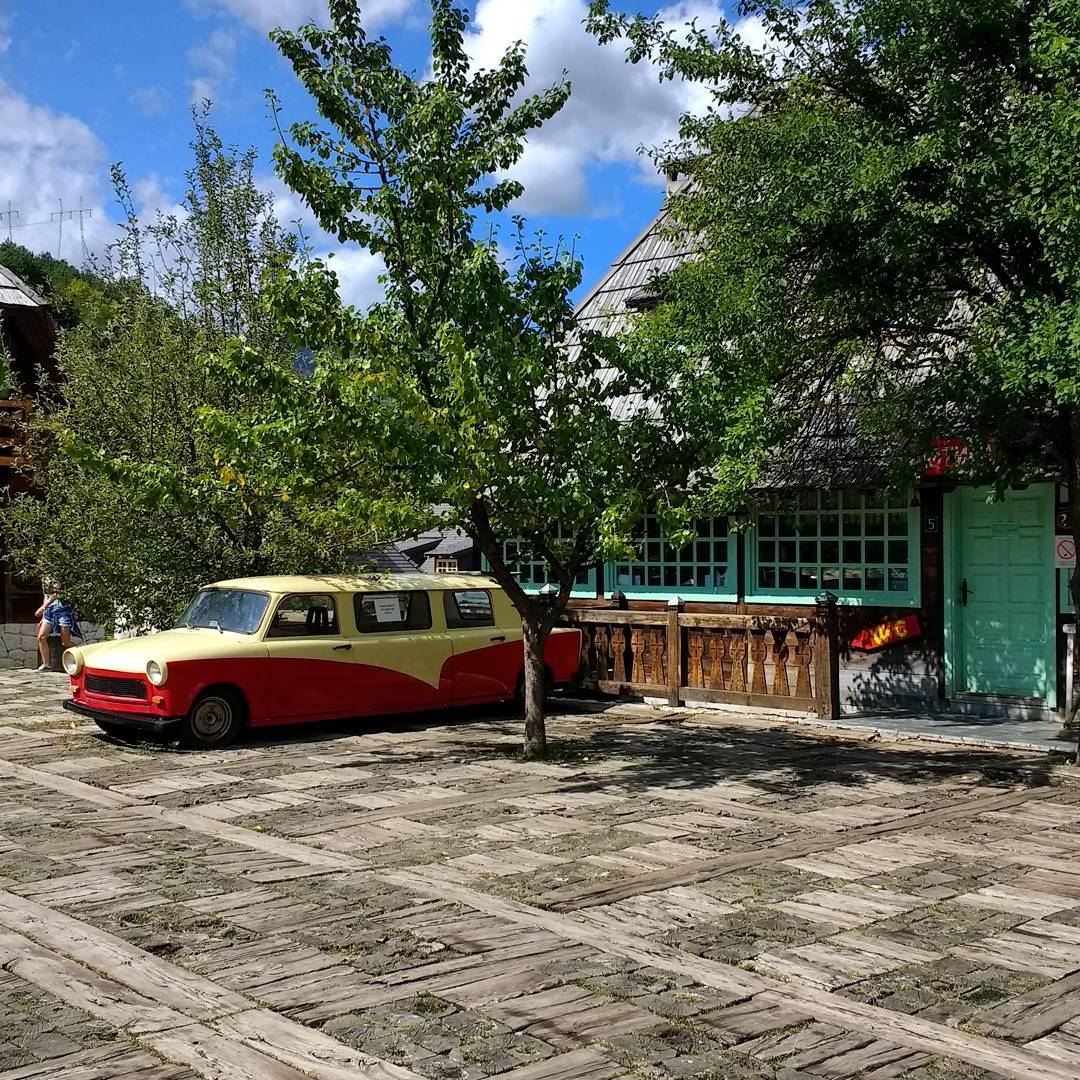
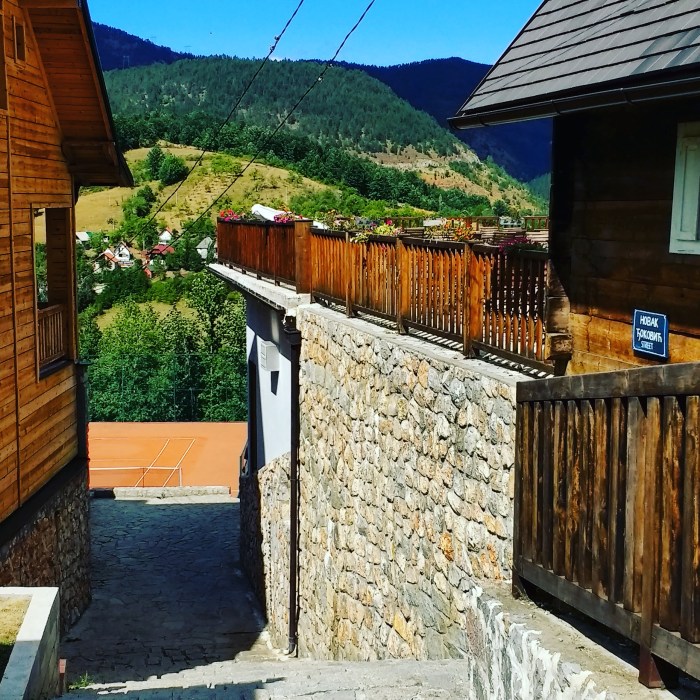
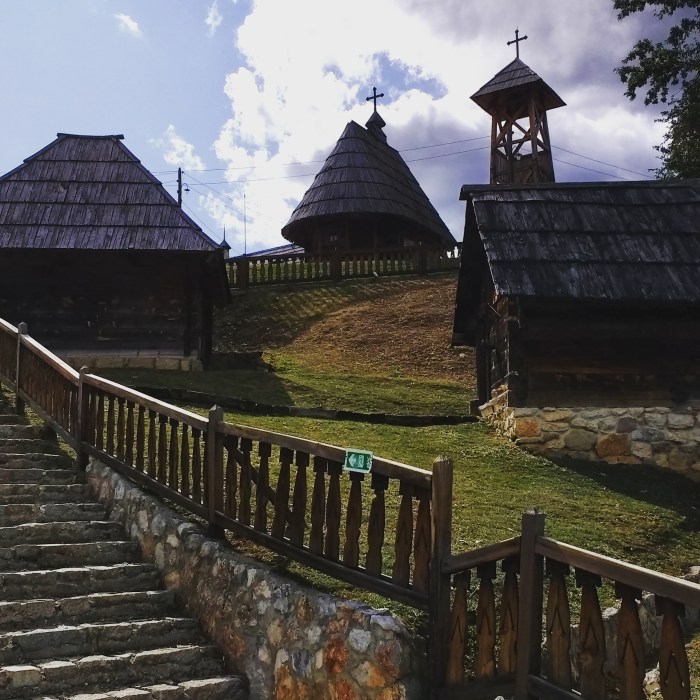
The wooden village of Drvengrad is a unique creation nestled in the mountains by the border between Bosnia and Serbia. It was built by the Serbian film director and all round maverick Emir Kusterica originally for the setting of his film Life Is A Miracle. But this place is more than just a film set, this is a white hot design for life. A place of hope and positivity, where one can spiritually flourish and be inspired. It almost sounds like the self sustainable community of Auroville in India. But not quite. Auroville is an enormous place with a substantial international community in the thousands. Drvengrad is a floating micro galaxy with its own idiosyncratic vibes and charms.

The landscape around Drvengrad in the Serbian region of Mokra Gora is breathtaking. And even if this awesome village didn’t exist, the scenery alone is a paradise of the highest level for anyone simple wanting to relax, re-energise, unwind, tune out, drop out etc. If the world ever got too much, this part of the world would be on my list of places to disappear to. Rimbaud went to Harar in Ethiopia. I will come here to Mokra Gora.

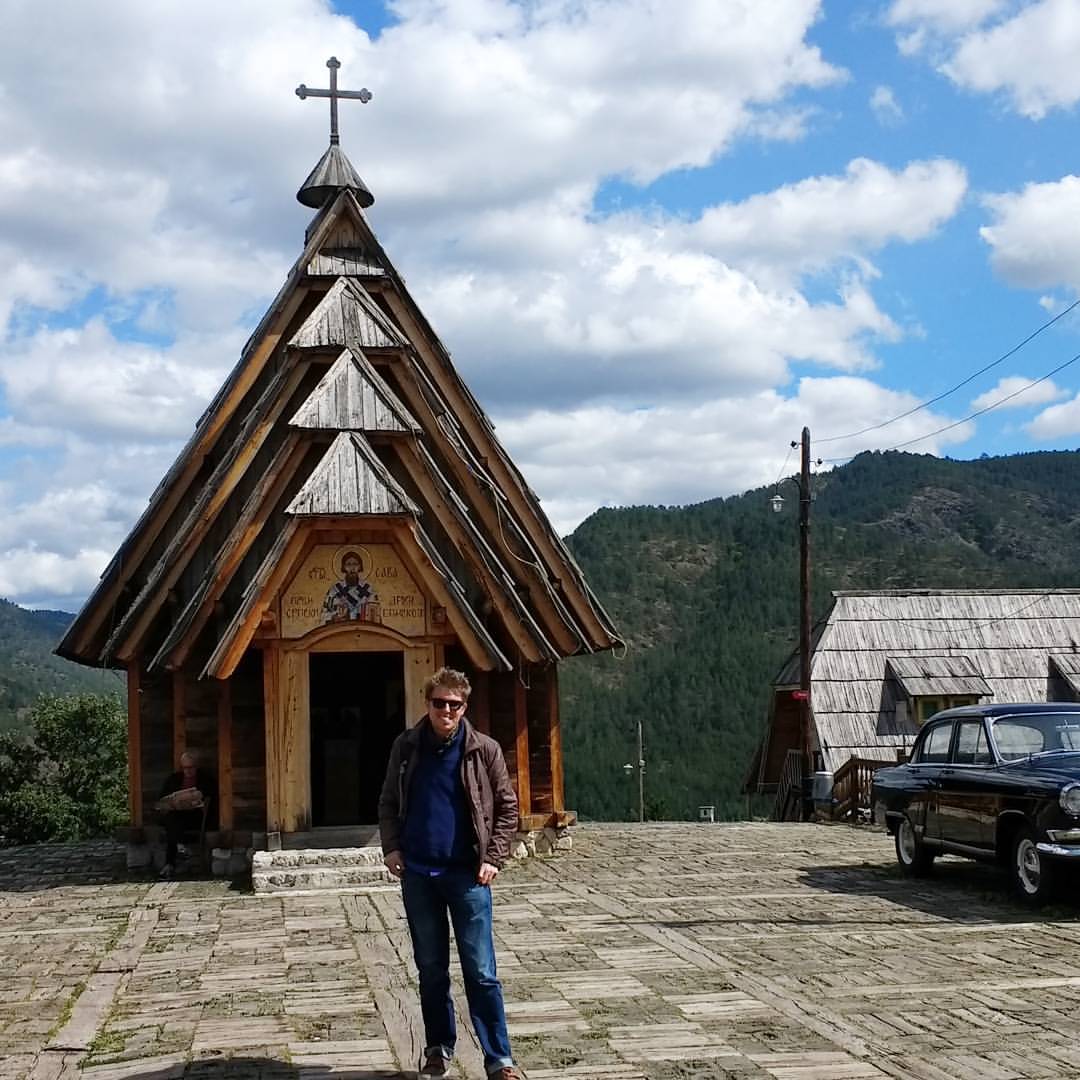
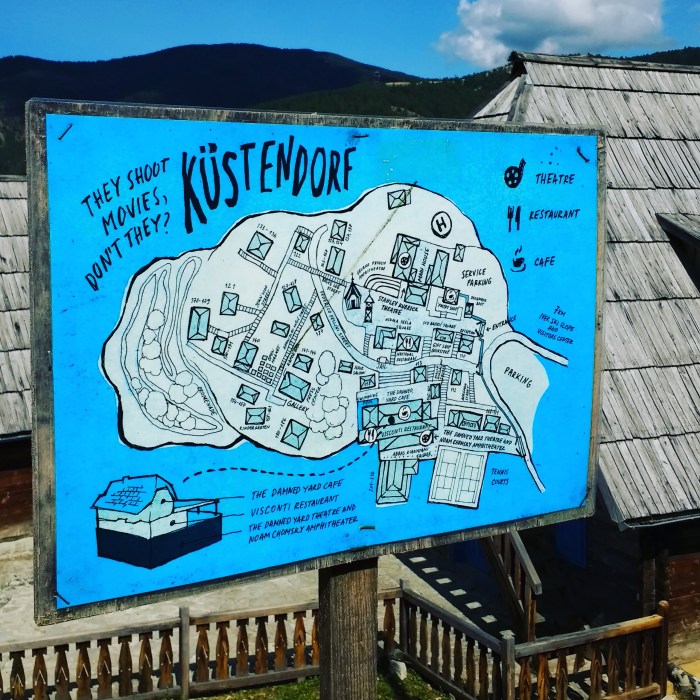
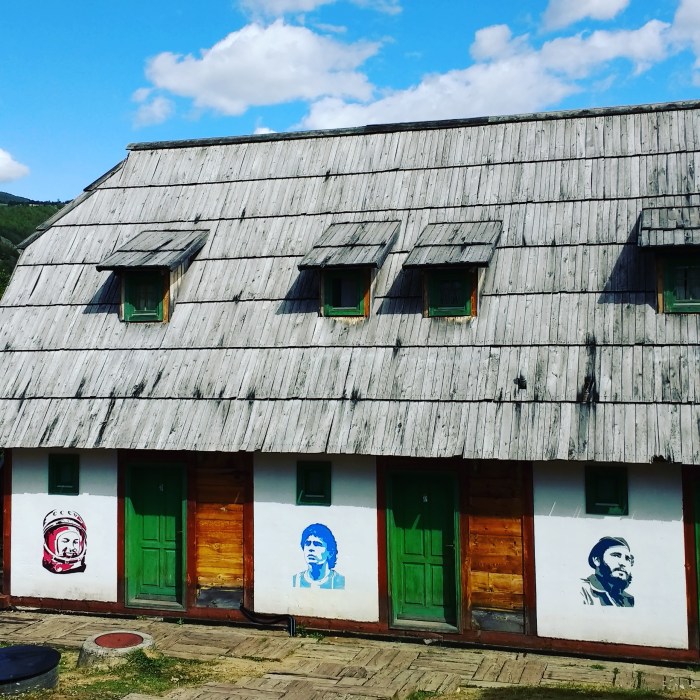
When one enters Drvengrad, the first thing one most likely notices is the Russian style wooden church at the end of the main square. It is dedicated to St Sava who was the founder of the Serbian autocephalous christian Orthodox Church (as well as the founder of Serbian law). All the squares and streets (more like paths) are named after various famous people. The main wooden square at the entrance is named after the highly revered visionary, humanist and pioneer of Alternating Current Nikola Tesla. Diego Maradona also has his square by the Latin quarter of the village which houses the Damned Yard bar. This bar is full of black and white photographs of Latin American revolutionaries like Che Guevara, Fidel Castro and Emiliano Zapata. On one side of the bar is a montage of photographs of Emir Kusterica with Johnny Depp, Jim Jarmusch, Maradona, Mike Tyson and others. Cuban music plays on the stereo and I feel like I am back in San Cristobal de Las Casas in the Mexican state of Chiapas. Adjacent to the bar is a large indoor swimming pool and an underground gym and cinema.

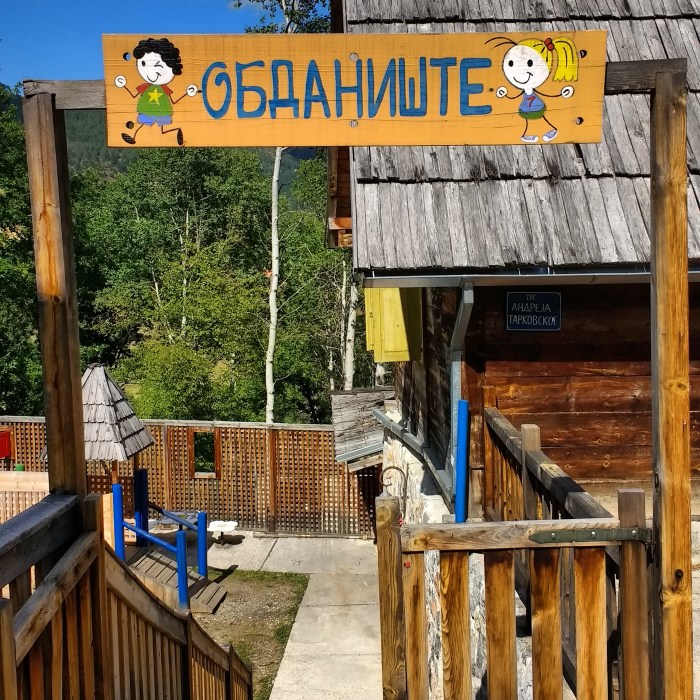
The nearby Visconti restaurant is more sedate and formal than the Damned Yard bar. Aesthetically there are shades of the architect Le Corbusier in the internal design. It houses a substantial collection of books and a large collection of wines. Close-by is a children’s playground and an art gallery, which was unfortunately closed when I was there. But fortunately there is the Van Gogh hut, inside where there are murials and recreations from his famous paintings. There is also a tiny market square where one can buy local artisan crafts, oils and honeys. When I visited this market corner there was an old lady sitting down by one of the stalls knitting.

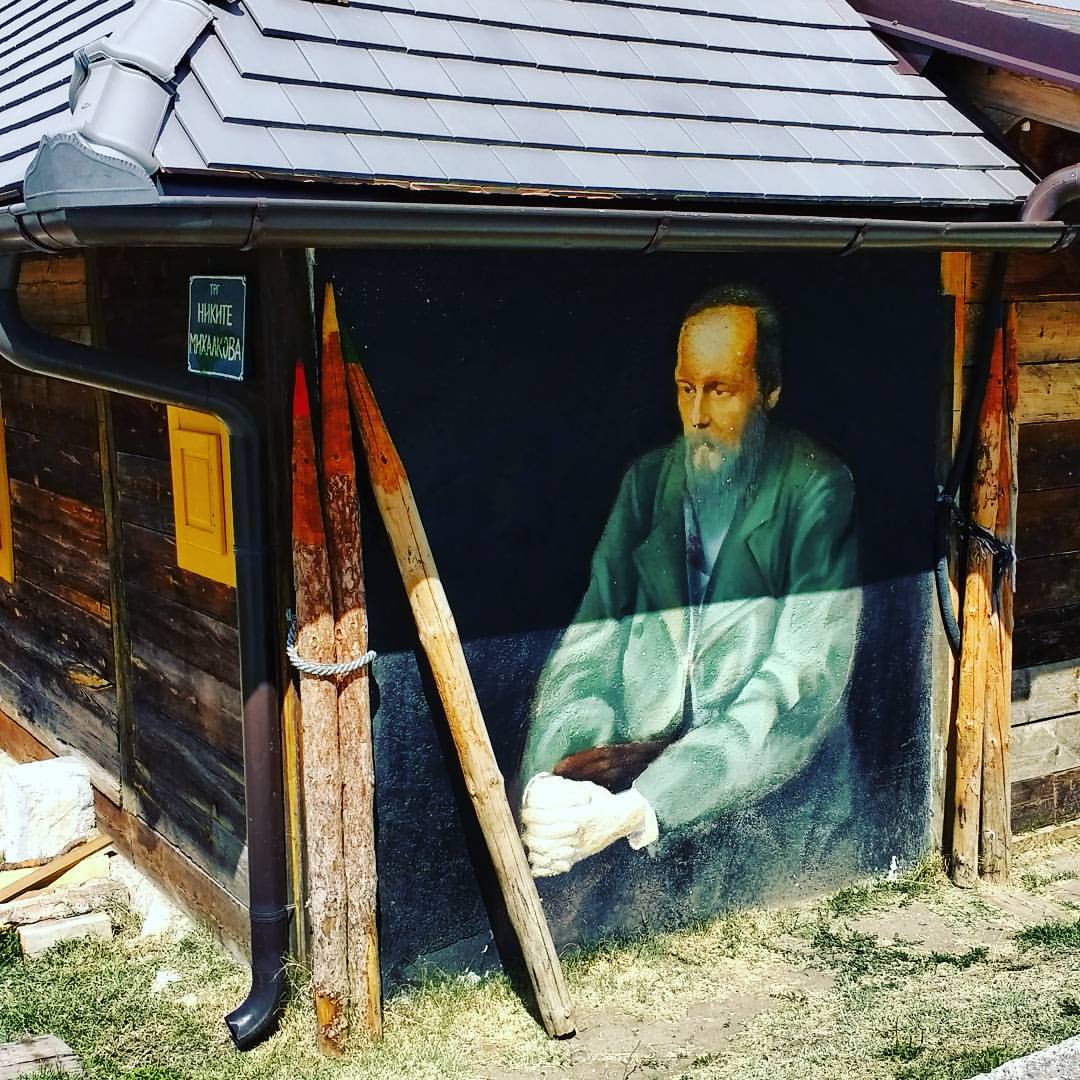
On the side of one wooden hut is a large mural of the Russian writer Dostoevsky. At both ends of the mural are a clutch of super sized colouring pencils ingeniously created from tree trucks.

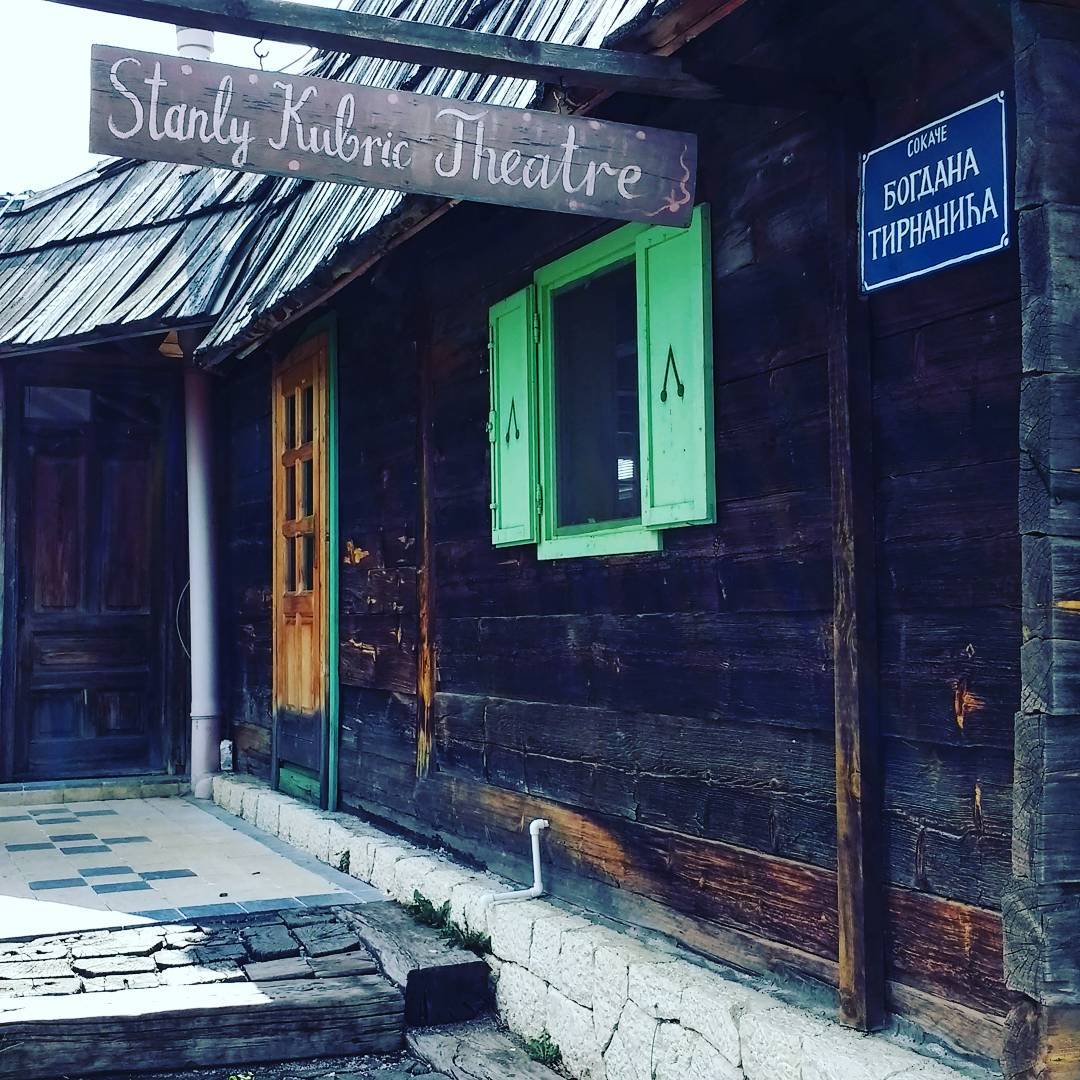
Serbian tennis superstar Novak Djokovic has his own street with a couple of outdoor tennis courts at the end. Film directors Frederick Fellini and Igmar Bergman also have streets named after them as does the Nobel prize winning Balkan writer Ivo Andric. Stanley Kubrick’s name is also stamped into this village in the form of the Stanley Kubrick Theatre.

Each year Drvengrad hosts the international Kustendorf film festival, also founded by Kusturica. Johnny Depp, the Mexican actor Gael Garcia Bernal and the directors Jim Jarmusch and Abbas Kiarostami are some of a handful of well known faces to have visited.

Below I am sharing some of my photographs of this awesome village.

21435445_1906780262918699_1567878348275712000_n

21371946_823290654499630_1063955758195933184_n

21436218_116123282428217_6446753393129029632_n

21435710_472726389764359_1236882995642630144_n

21436128_498481867170524_7254550541512998912_n

21435427_116502405687677_6018818588515762176_n

IMG_20170906_134228_868

IMG_20170906_131246_018IMG_20170906_131826_746IMG_20170906_141517_577IMG_20170906_183228_375IMG_20170906_183743_072IMG_20170906_184034_987IMG_20170906_185605_484IMG_20170906_135430_370IMG_20170906_184736_272IMG_20170906_184527_099IMG_20170906_190157_402IMG_20170906_190513_350IMG_20170906_190856_065IMG_20170906_185817_315IMG_20170906_185202_135

Text and photography by Nicholas Peart

©All Rights Reserved

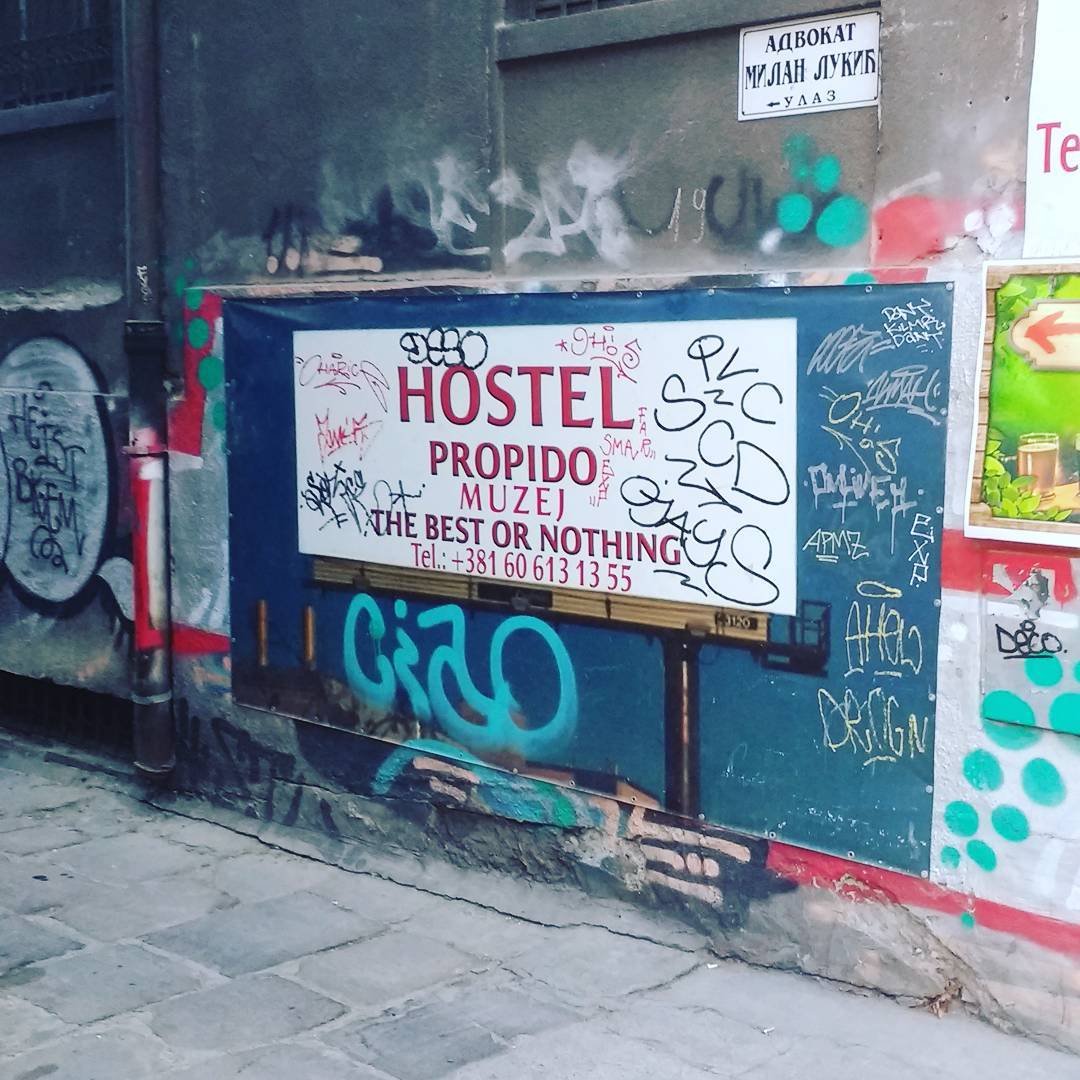
Photographs From Belgrade’s Savamala District

21147807_1927405347498394_695216941635207168_n

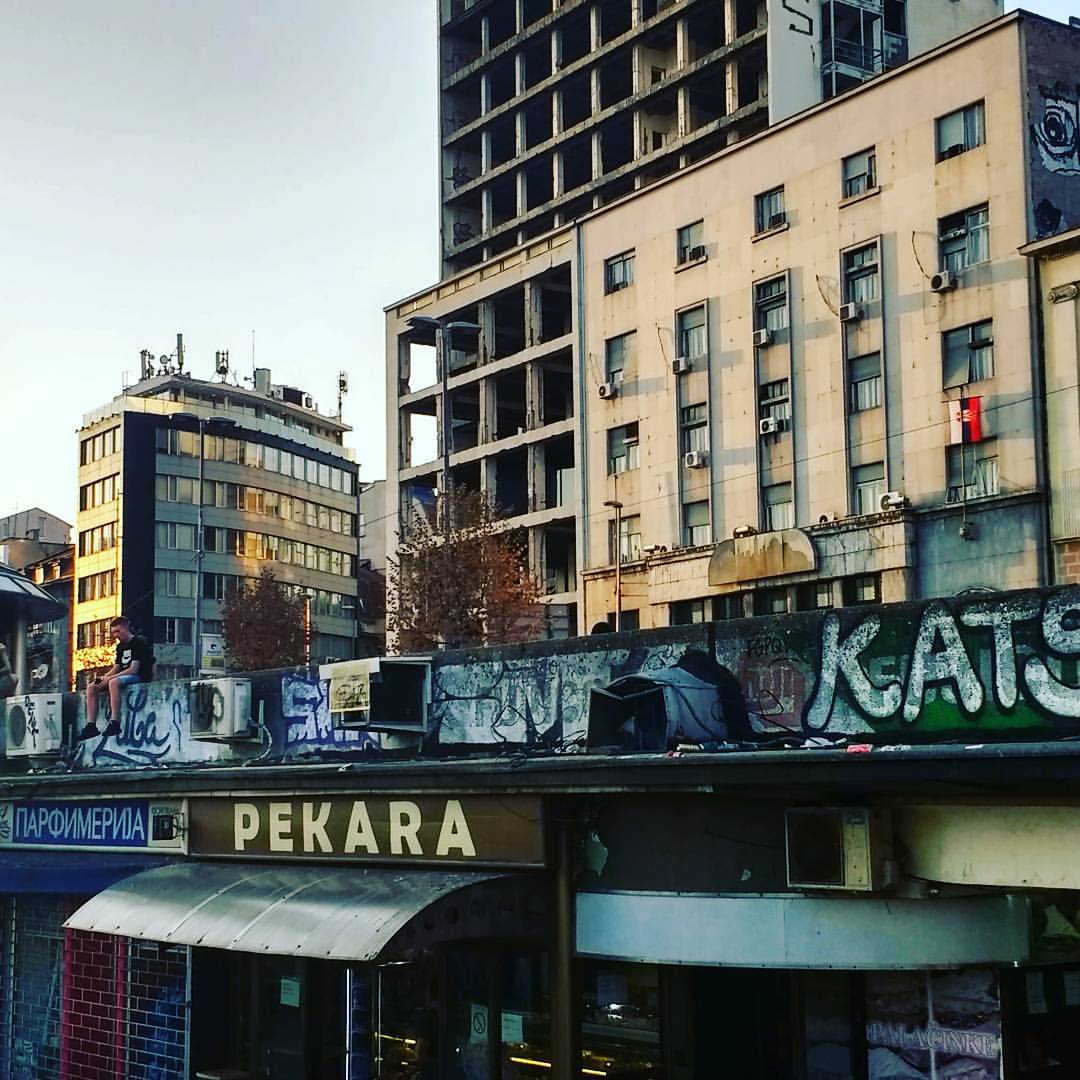
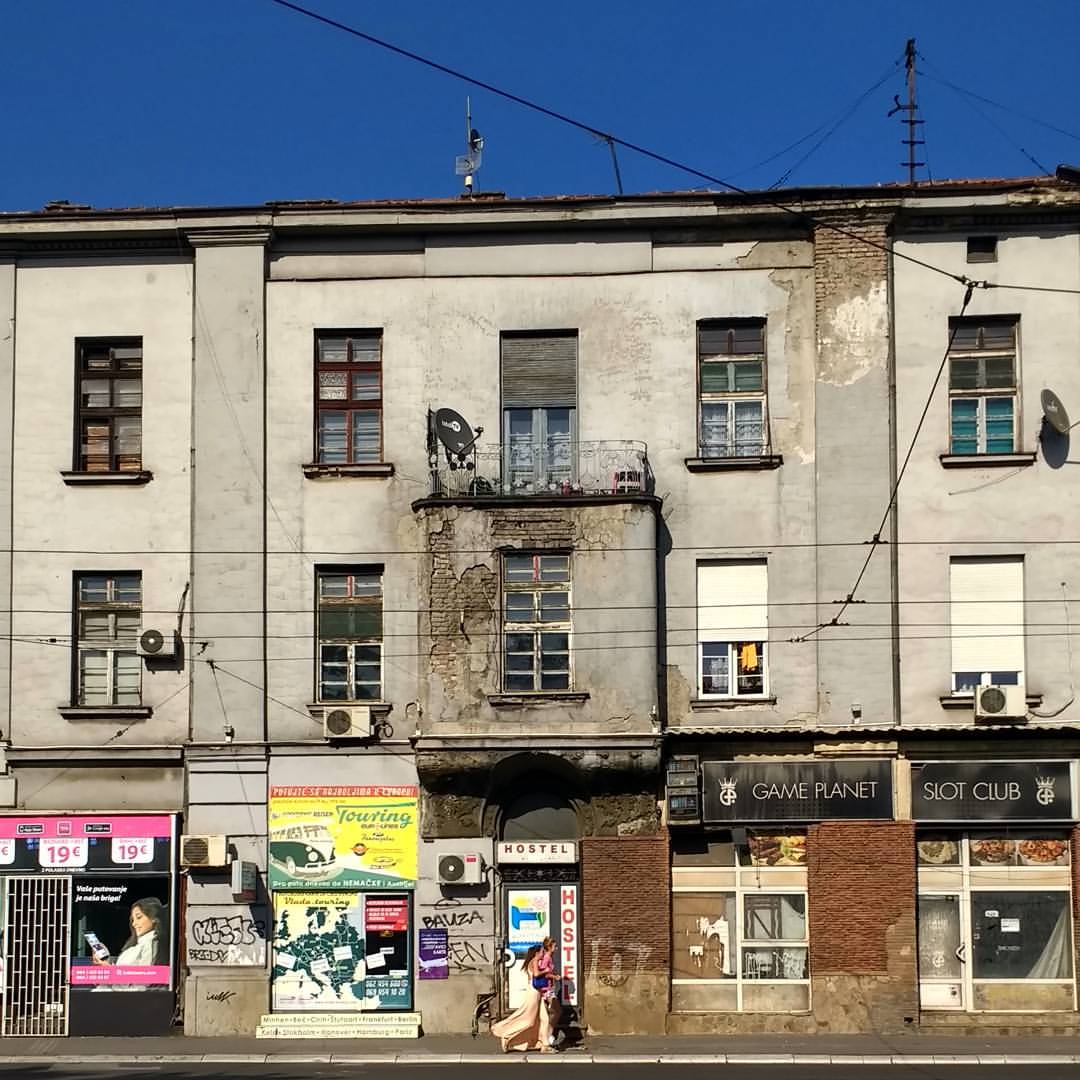
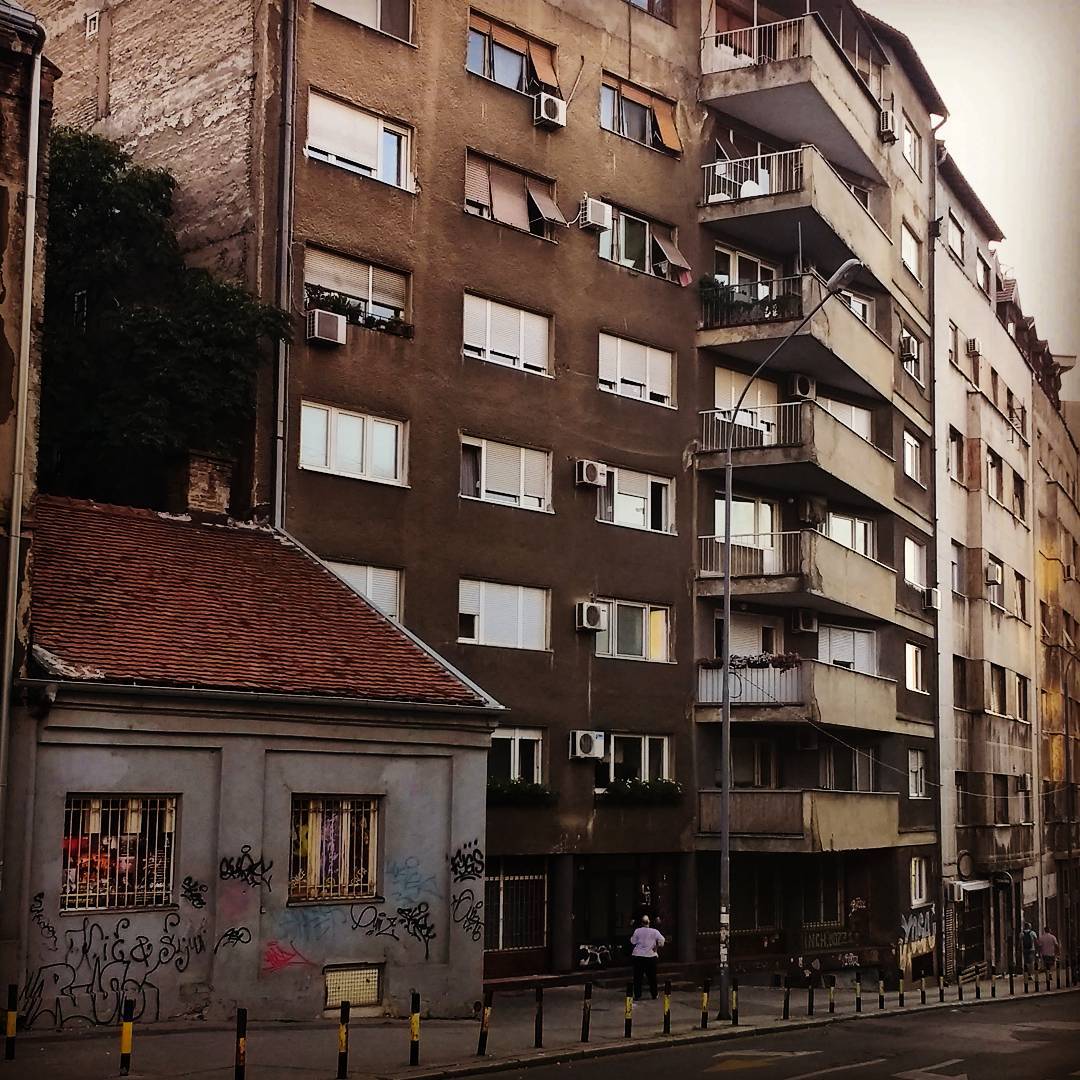
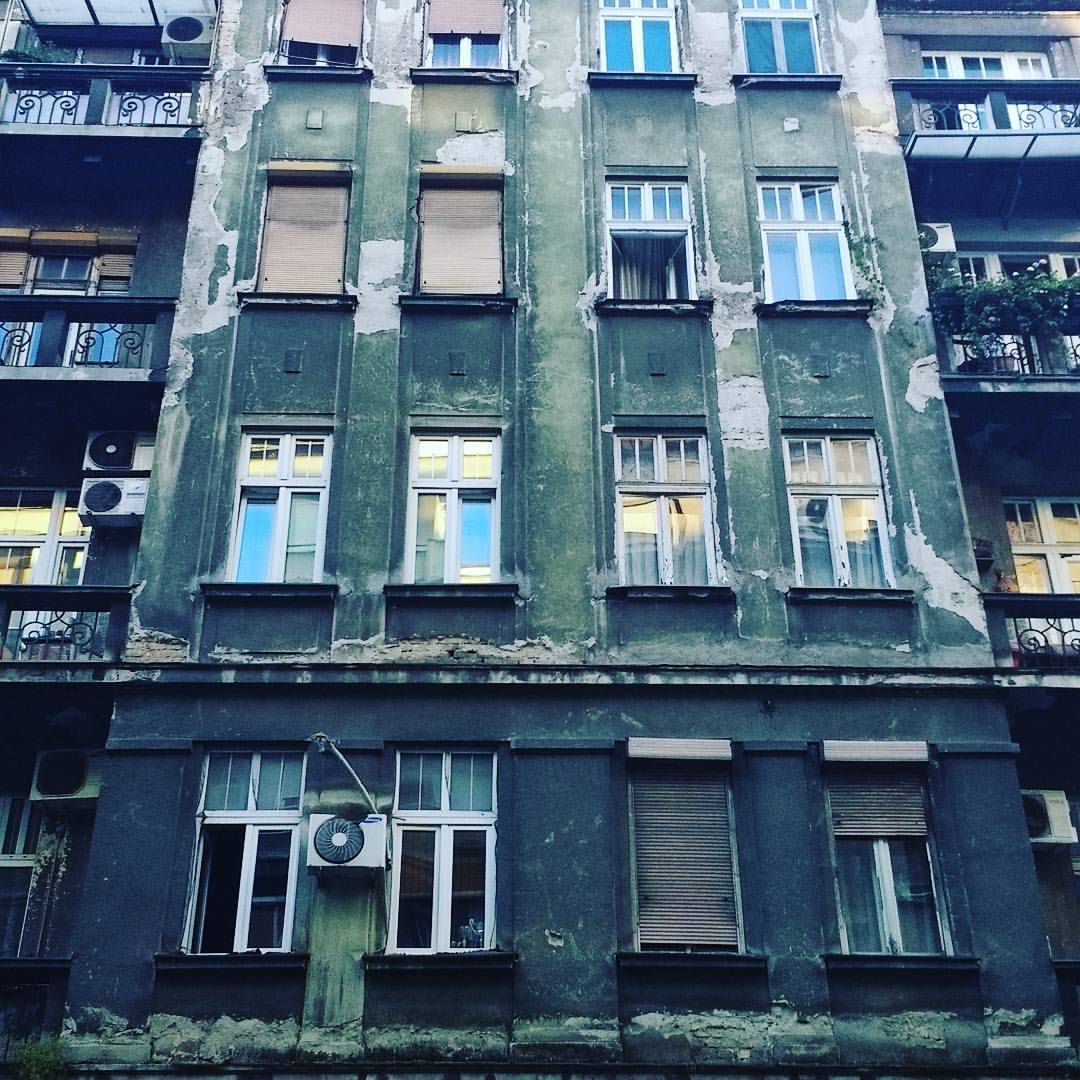
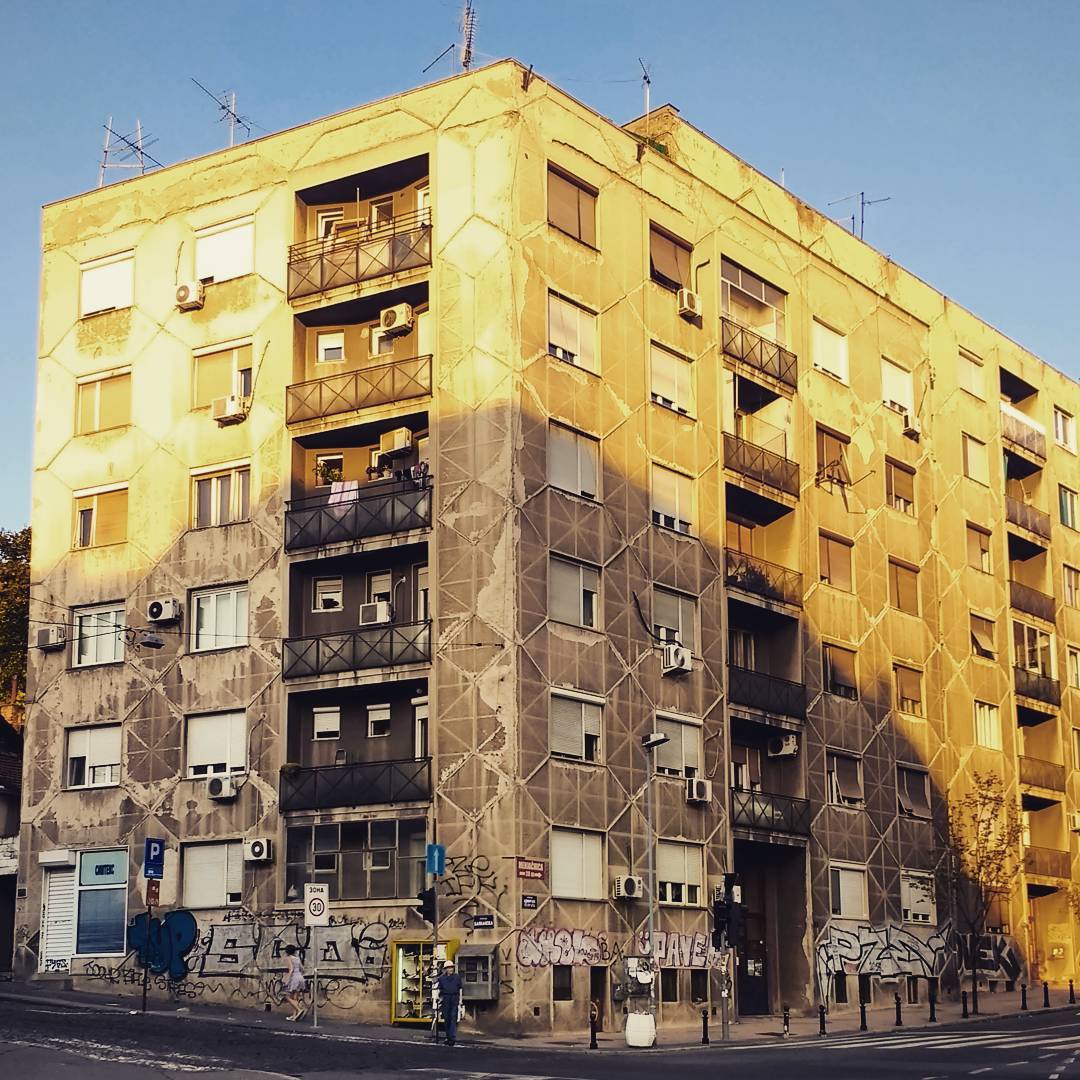
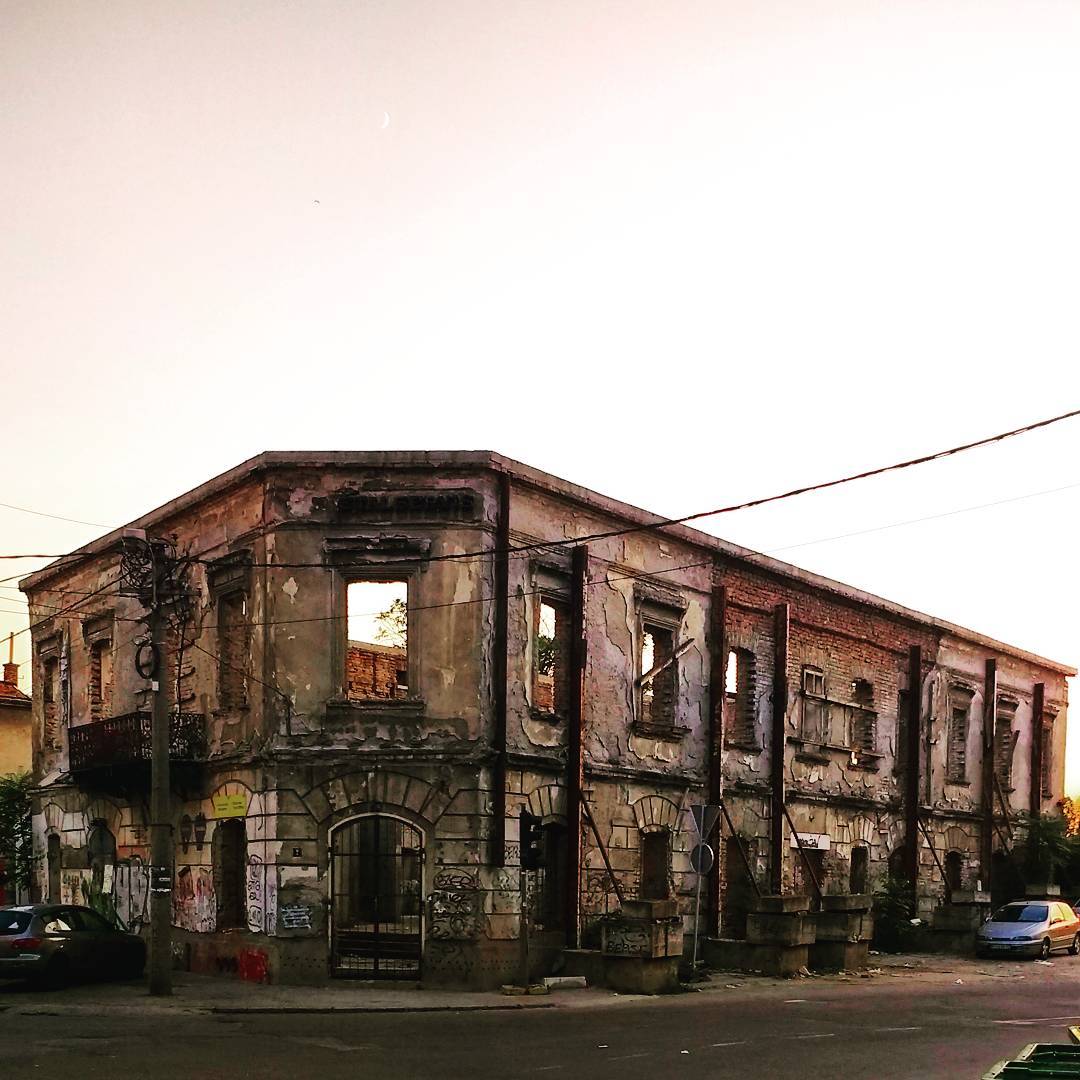
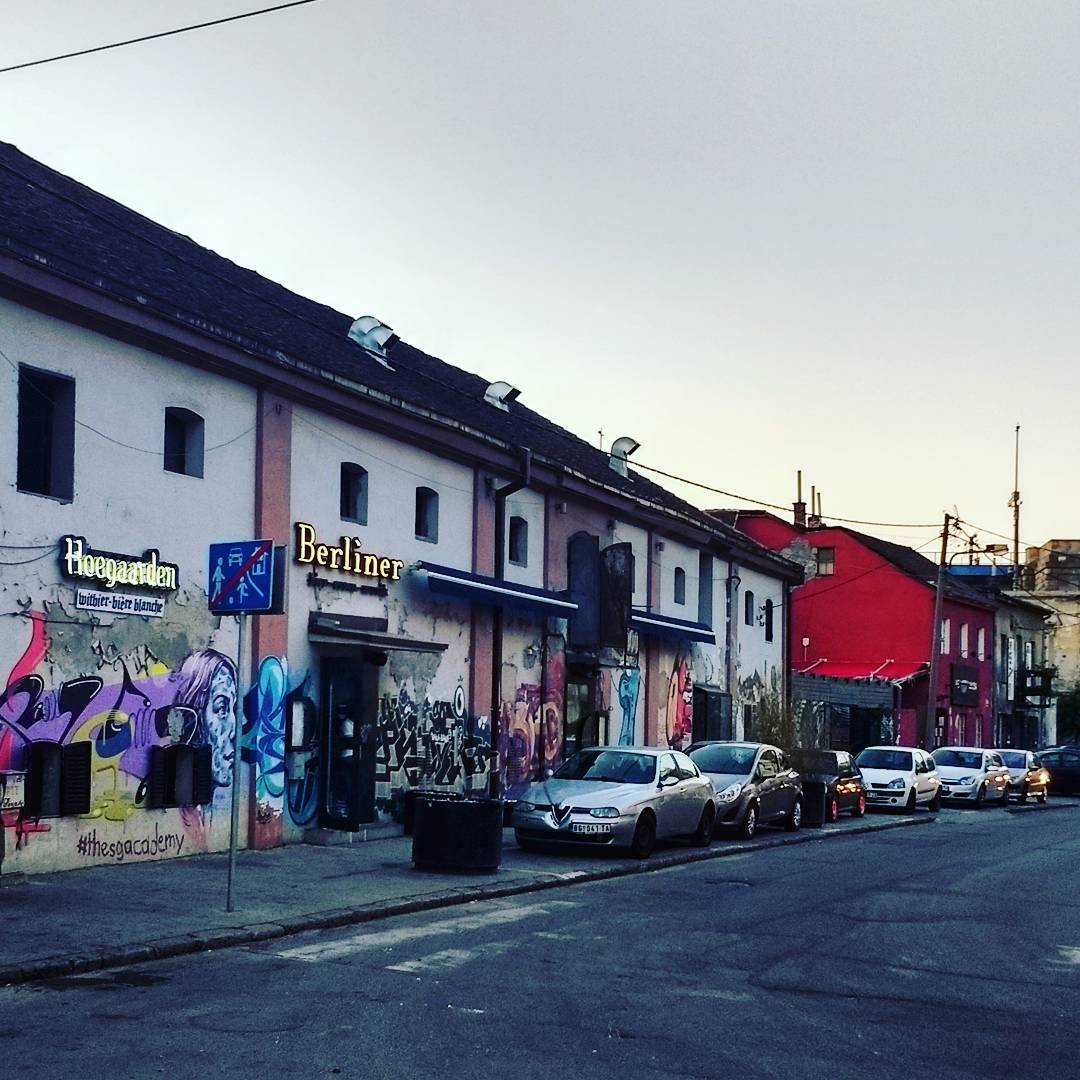
Belgrade’s Savamala district is one of the most interesting parts of the Serbian capital city to explore. It stretches from the main railway and bus station up until the Kalenegdan fort complex. Walking around this area one is rewarded with a mess of different styles and periods of architecture. There are some splendidly ornate buildings in perpetual decay and many more Brutalist structures. In fact, walking around Belgrade for the most part feels like being in an odd blended bubble of Vienna and the Barbican district in London.

Savamala was badly destroyed in both World Wars. For many decades since the end of WW2, it was a very run down place and had a negative reputation. However in the last few years it has developed as the creative hub of Belgrade and many bars and art spaces keep popping up. To get a good and accessible taste of the area’s scene, head to Braće Krsmanović street by the Sava river. The beginning of the street is marked by a disused shell of an old antique crumbling building. Further on is the KC Grad cultural centre. This is an indispensable cultural landmark with live music and happenings. Upstairs there’s an art exhibition space. Further along the street is a clutch of bars.

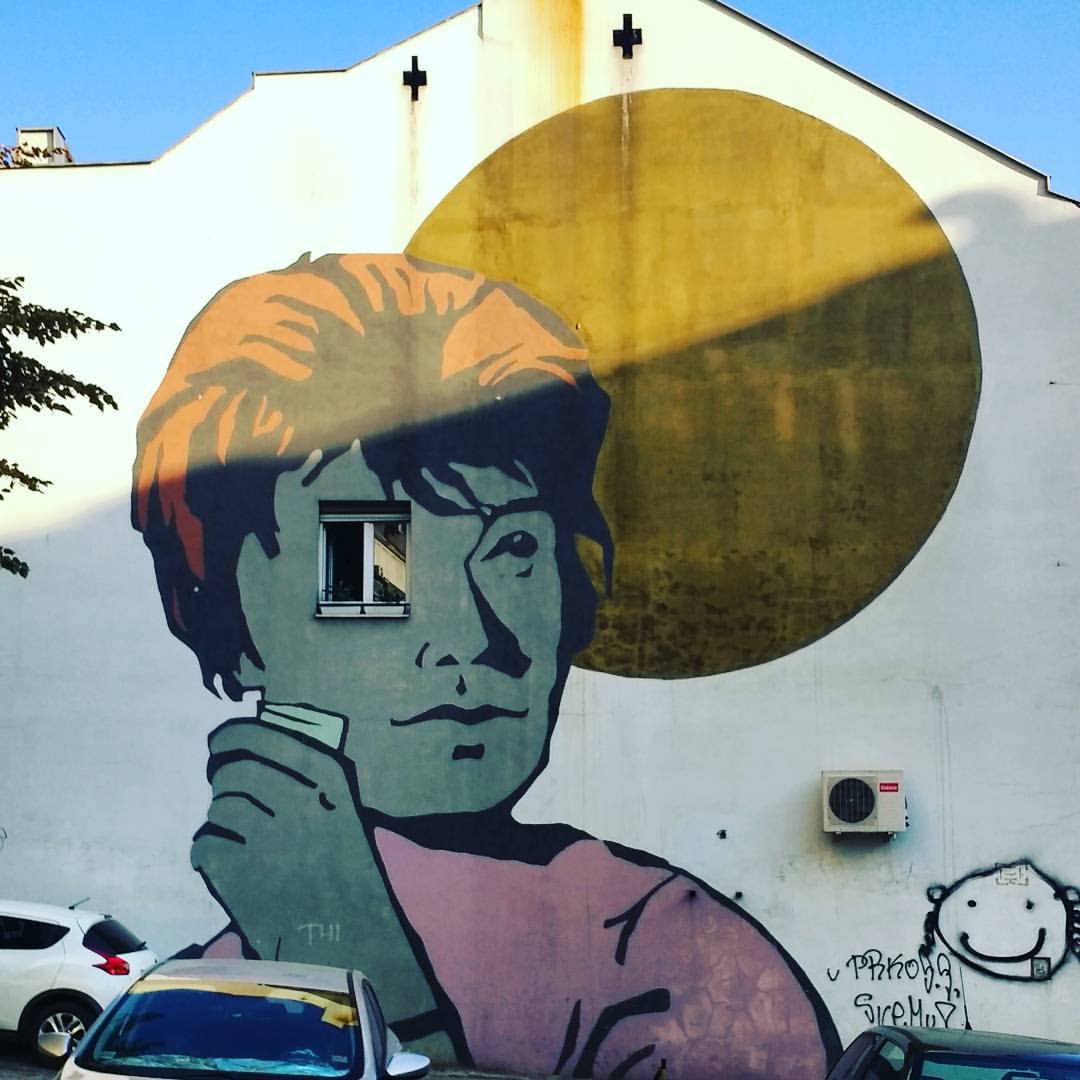
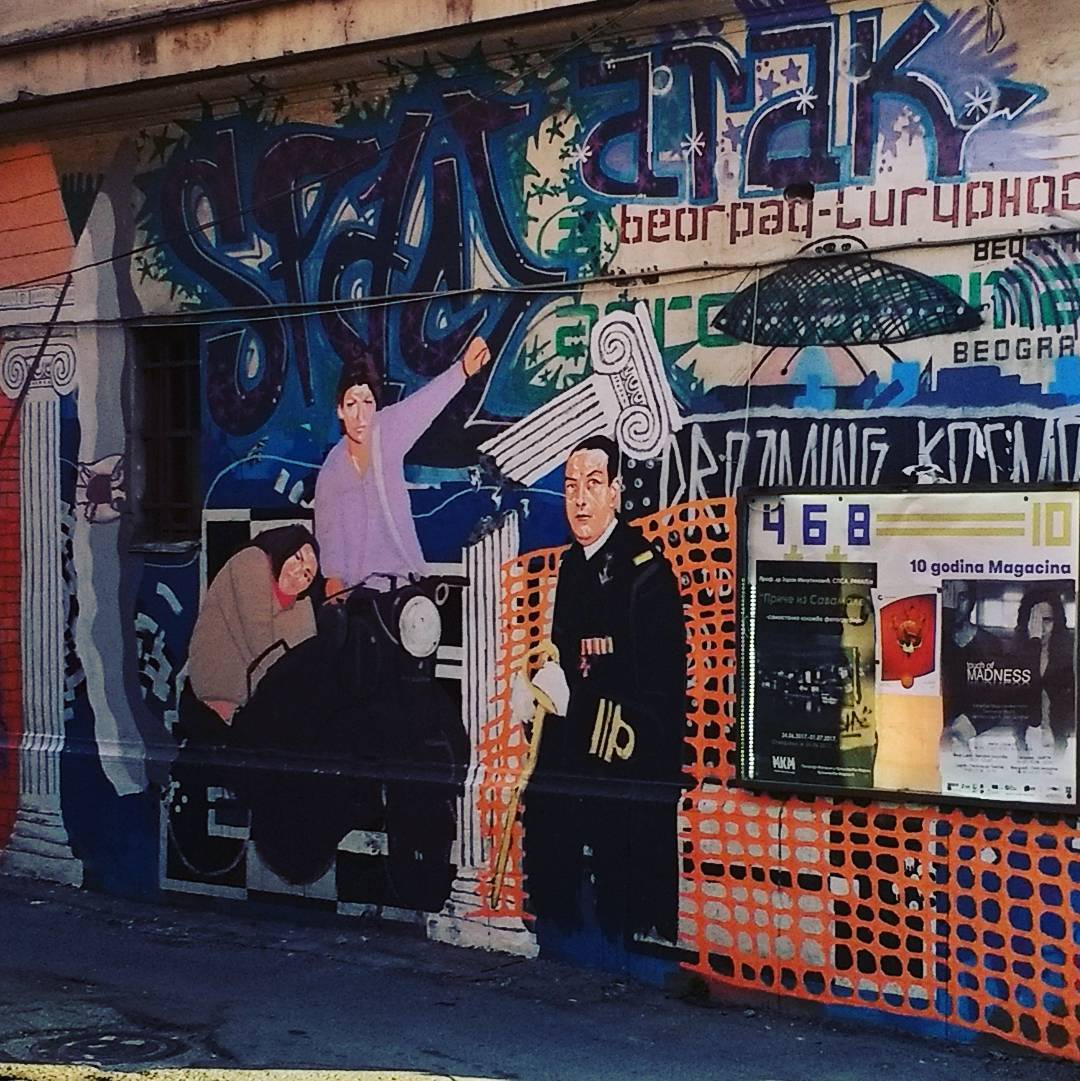
Architectural delights aside, there is some magnificent street art if you look hard enough. The area around Zeleni Venac market is a hive of activity and an interesting place to explore. Lots of cheap snacks and street venders selling anything from books to football t-shirts and some t shirts with the face of Vladimir Putin on them.

Below I am sharing my photographs accumulated from my wonderings around this fascinating part of Belgrade

21224203_757546017739828_761511479835885568_n

21147755_360362011043806_5135320348027256832_n

21107476_118035852254256_5009966633662283776_n

21107493_1653271874746619_6716810508520914944_n

21042594_1621162187908166_2157378934822404096_n

21149320_1391413594311125_5179758218565386240_n

21107168_342306229540502_8387930048002260992_n

21107226_1819068508405233_1964536548204478464_n

21107401_708993529299666_5396275912322842624_n

21224338_114650735900700_3499742444604358656_n

21107169_1980143332270721_7781824937500606464_n

21149518_815189668662455_1199123515781939200_n

21107233_342516679535641_3588759511579492352_n

21148122_139302033341336_7084834792847441920_n

21148972_1237253709714268_269641255183450112_n

21224464_1216131325200137_1622765792640630784_n

21149539_705839419603764_3814601665235910656_n

21107951_115379915863015_3950314570135896064_n

21107778_135996850346893_2467930599608811520_n

21224769_259061641271347_2370649848052449280_n

21107636_2177722482454618_6996814136810143744_n

21108023_1889444804476411_4734104371753648128_n

21147807_1927405347498394_695216941635207168_n

21227737_870557186441792_6313472556410077184_n

21149422_1815404225417609_8392437070718566400_n

21147816_409231822812123_87173027061563392_n

21227504_336788500108412_193016002080931840_n

21224635_832989996868999_7311805797053235200_n

21148959_276292199530522_9183619511780114432_n

21224339_362635617490199_3059867261541023744_n

Text and photography by Nicholas Peart

©All Rights Reserved

Munching Your Way Through Belgrade

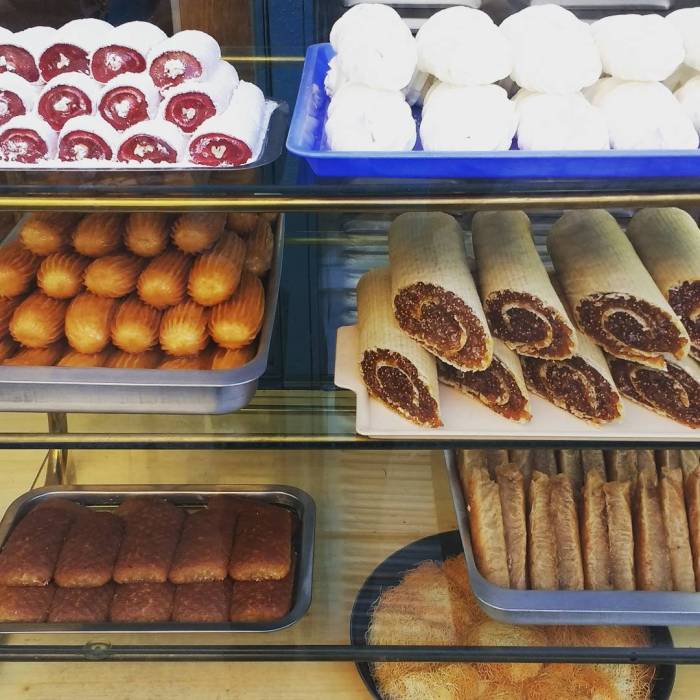
Belgrade is a fantastic and great value city to eat your way around and a fabulous food destination in its own right. It is a cosmopolitan city and you can find good international food outlets in addition to more traditional places. Anyone’s who’s travelled across Serbia may be familiar with the countries pekaras, which are traditional bakeries often open 24/7. At these eateries you can pick up a late night sandwich or pastry for only a few coins. Often the ladies who work at these places are delightful and very patient with my bad to non existent Serbian. In fact, quite a few of them speak very good English.

In Belgrade, like the rest of Serbia and most of former Yugoslavia, there are plenty of places selling traditional foods such as Cevapi (Balken sausages), Bureks (Balken pies) and pljeskavicas (hamburgers done the Serbian way) etc. I had my first taste of a burek at some hole in the wall place by Dolac market in Zagreb and I was dying for a bowl of vegetables and water after just a few morsels. My mouth was a cave of low-grade grease. A pljeskavica, on the other hand, is a wonderful thing. I don’t think I’ve ever, in all my time in Serbia, had a substandard pljeskavica.

The Best Cevapi in Belgrade: Drama Cevapi

21107790_1788509177843020_4083004505254264832_n

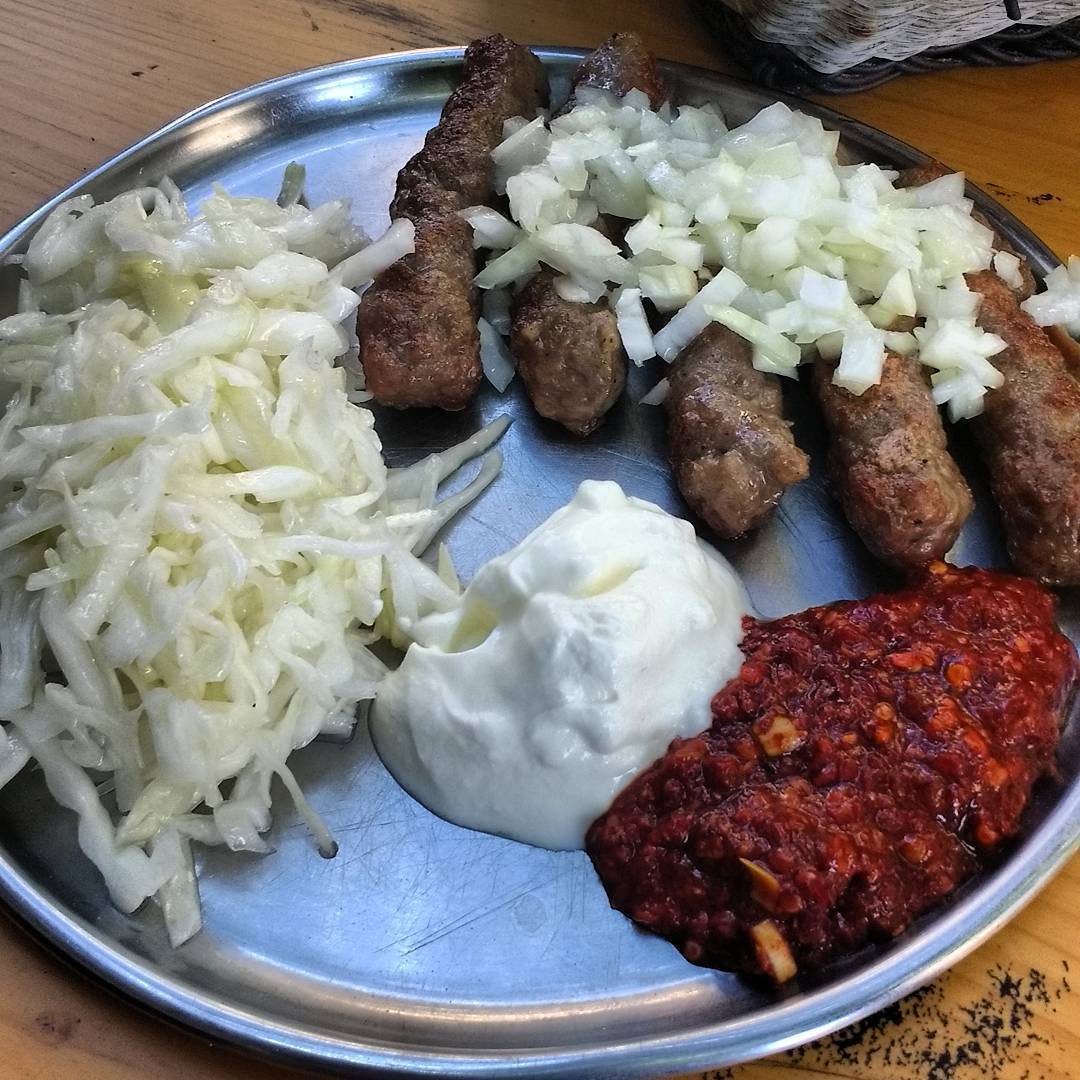
Cevapi places, or Cevaperias as I like to call them with a Latino tinge, are ten a penny around most of former Yugoslavia. Yet I’ve never tasted Cevapi as divine as the ones I was served here at Drama Cevapi. They are so tender and almost melt in your mouth. For less than $3 you get a metal plate with five Cevapi topped with a handful of chopped onion accompanied with shredded cabbage, a dollop of clotted cream and chilli sauce and some bread. There are other items on the menu but this is the signature dish and what this place does best

Pljeskavicas in Belgrade

IMG_20170823_120816_619

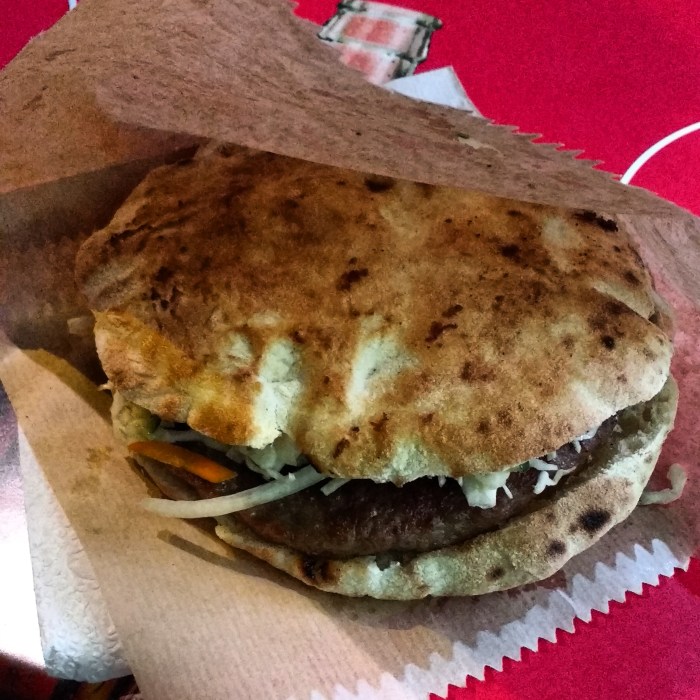
It’s hard to pick one place in Belgrade as there are a few places which all do equally good pljeskavicas. Depending on where you are based in the city there are three places which do mean pljeskavicas and they are all open til late so perfect and very convenient after a night out thrashing the rakija and Jelen. I have to admit I probably had the best pljeskavica when I was in Novi Sad, but I was so smashed I can’t for the life of me remember the name of the place. If you are in the centre of the city, at the corner of Kolarčeva and Makedonska, is the eatery chain Gyros In City. They do very filling pljeskavicas as well as excellent and cheap Greek style kebabs. I also love the people that work there; jokers of the highest order who always brighten up my day.

Nearby on Maršala Birjuzova is Mikan Restaurant, which serves local food. Adjacent to the main restaurant they have a smaller eatery where you can get Cevapis, pljeskavicas, hamburgers, hotdogs etc. I was served a very generous pljeskavica here by an old lady who spoke no English for 200 Diners. The board menu was all in Cyrillic, which I can read, even if I speak almost no Serbian. A wee tip; if you ever go to Russia (or any country which uses the Cyrillic alphabet), your life will be far less painful if you can decode Cyrillic. Doesn’t matter if you speak little to no Russian. If you can’t decipher Cyrillic you may as well be gallivanting on the moon.

Finally in the Dorćol neighbourhood on Gospodar Jovanova is the small eatery Loki. They are the pljeskavicas specialists and they don’t mess about. There are many cool bars in this neighbourhood and this is a great place to go for a late night pljeskavica.

The Bakeries That Never Sleep

Serbia is famous for its 24/7 bakeries. In almost all cities in Serbia you will stumble upon a bakery or pekara, which never closes. Super convenience aside, some serve serve a dazzling range of treats and are very inexpensive. I have two favourite pekaras in Belgrade. The first one is called Skroz Dobra Pekara and located right next to the king of pljeskavicas, Loki, in the Dorćol neighbourhood. You can find filling sandwiches for less than 200 Diners and strudels, pies, cakes and other assorted pastries for less than 100 Diners. What’s more, the ladies who work here are super nice.

21107636_2177722482454618_6996814136810143744_n (1)

In the centre of town and right by the queen of pljeskavicas, Gyros In City, is another outstanding 24/7 bakery called Pekara Tomo. It is almost identical to Skroz and equally excellent and well stocked with cheap sandwiches and pastries as well as a small side pizza parlour.

Znak Pitanja (also called ‘ ? ‘)

21042852_509987276000936_4088481202736988160_n

If you ever fancy having a proper slap up traditional Balkan meal with all the trimmings Znak Pitanja is a top notch choice. This restaurant also has the unique distinction of being the oldest tavern or kafana in the city at over 200 years old. I chose the 1kg pork knuckle. It arrived on a large glass tray accompanied with an ample supply of baked potatoes and a side of homemade horseradish sauce. I am not kidding, when the thing arrived it was enough to feed the entire population of Novi Sad. It was perfectly good no nonsense Balkan food.

21147197_1964466147126482_7856965265790074880_n

I hear they also have traditional live music here so may be worth reserving a table here for a Balkan feast with plenty of pivo and rakija when there is. I think great fun can be had.

Vegetarians and vegans in Belgrade: Radost Fina Kuhinjica

21371967_124818664836696_689731031447633920_n

I feel your pain. With the mammoth non stop cevapi/pljeskavica meat feast assault, travelling in Serbia can be a veritable drag. But once in the capital things brighten pretty quickly. I know there are a few veg establishments in the city and that will only grow as more and more people become vegetarian or vegan. In fact in both the cities of Belgrade and Novi Sad you will notice quite a number of ‘Go Vegan’ slogans graffitied throughout both cities. If this keeps up maybe I’ll be eating vegan cevapis and pljeskavicas when I return in five years or so.

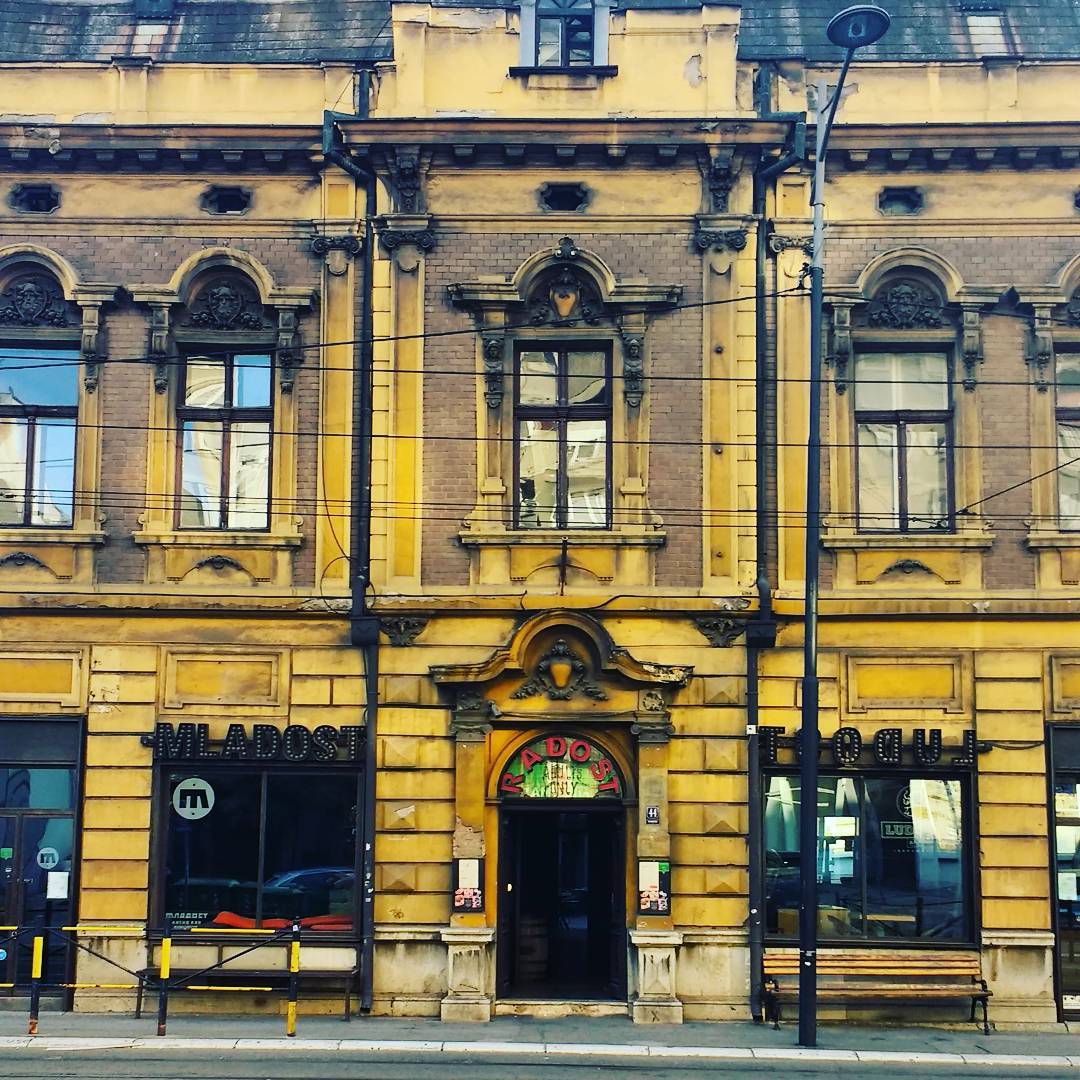
I can’t just live on cevapis and pljeskavicas for the rest of my life. Even the most rampant of carnivores need something green from time to time. I read glowing things about a veg restaurant called Radost Fina Kuhinjica so one day I decided to investigate. Aesthetically this restaurant gets full marks. It’s a stylish and trendy place and all the menu booklets are enclosed in old hardback books. There is a backyard area where you can eat. When it’s dark all the tables have lit candles in old school metal candle holders. Instead of local music, I detect The Smiths, Coldplay, Lana Del Ray and The Strokes on the sound system.

21373206_184919848732826_996211458079457280_n

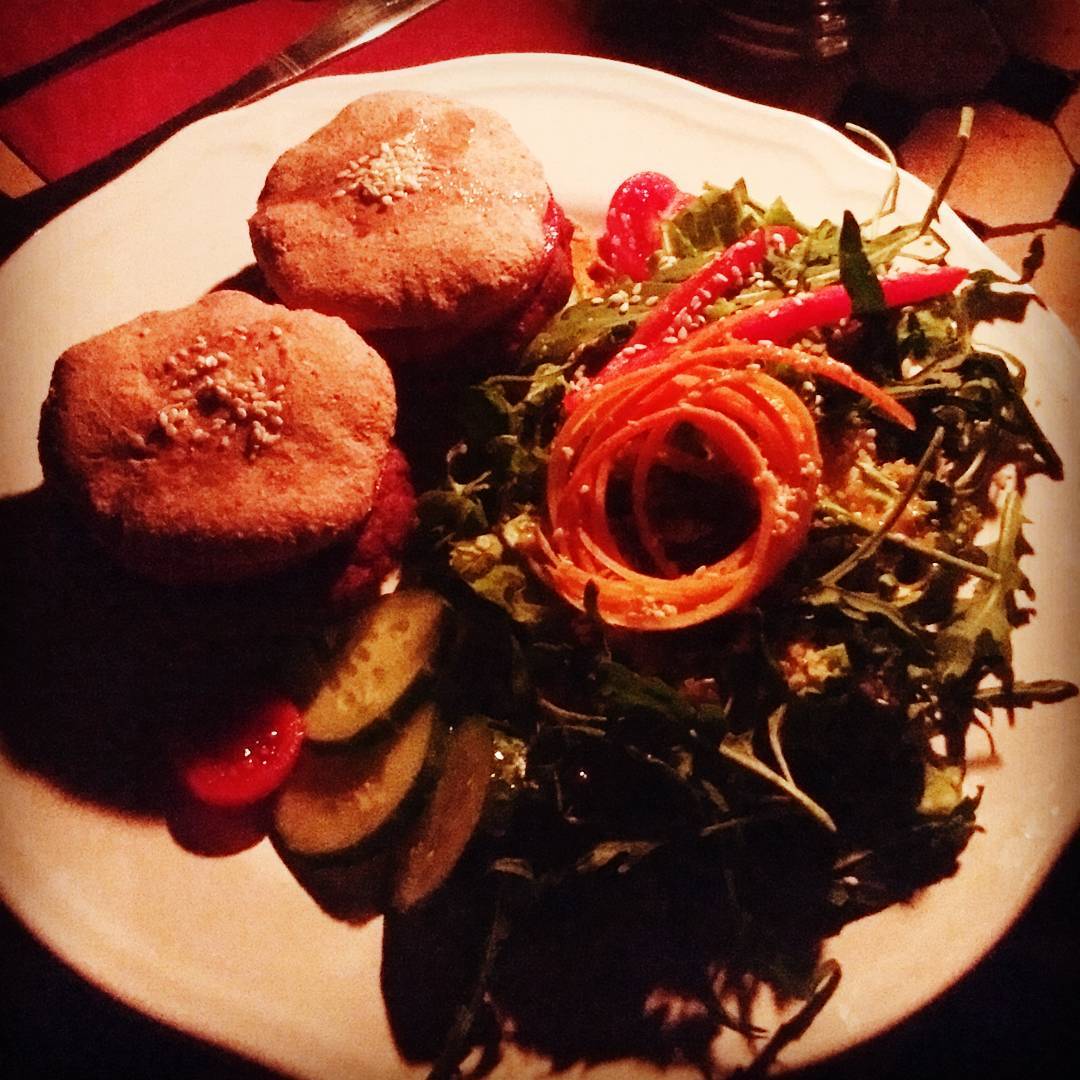
I order the veg burger consisting of tofu and red kidney beans. For the price I was expecting one large juicy veg burger. Instead I got two miniature burgers accompanied with a salad. All the ingredients were no doubt fresh and organic and the salad was perfectly good yet I was a little disappointed with the burgers. They were too plain. There was not enough zing or omph. This is not a bad restaurant and is certainly a cut above many ‘hipster cool’ vegan eateries which are a triumph of style over substance. Perhaps the veg burgers are not where it’s at? Maybe if I had the veg lasagna I would be raving about the place. Either way, as I mentioned before, with the passing of time, the veg scene here in Belgrade will only grow and maybe when I return a few years from now I may find a dazzling of choice of new and great no nonsense veg eateries.

By Nicholas Peart

©All Rights Reserved

Photographs From Novi Sad

Arriving in the city of Novi Sad was my first taste of Serbia; a country I’ve always wanted to visit. After four days in this city, it certainly has not disappointed. In fact I had a real blast. Serbia’s second biggest city, after the capital Belgrade, has been a joy to explore and get to know. The attractive city centre around the main square is full of handsome buildings dating back to the time of the Austrian-Hungarian empire. There are lots of cafes to have a cheap cappuccino or bottle of Jelen beer along with a slice of Sachertorte or a couple of scoops of delicious ice cream. And all for just a few coins. Paris also has nice cafes and are great way to pass the day…..if you have deep pockets.

There are a plethora of sites to see in Novi Sad, but I recommend simply walking around this city. One great walk you can do is to walk towards the main bridge over the Danube river and on to the old Petrovaradin fortress. On sunny Summer days you will see locals bathing on the banks of the river. Once over on the other side, you are in the old part of town full of old buildings; many of them in splendid dilapidation. I seldom go to the gym but the walk up to the fortress more than compensated for that! When you’ve reached the top, you are rewarded with an amazing vista of the city and the Danube. There are also a couple of bars at the summit.

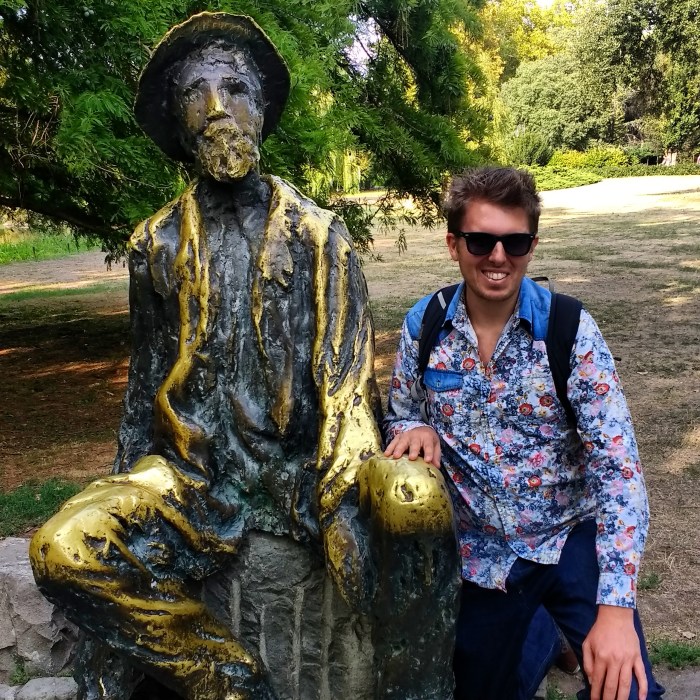
There is a small but interesting space which holds temporary art exhibitions at the Museum of Contemporary Art of Novi Sad, which is part of the larger Museum of Vojvodina on Dunavska street. When I visited, there was an interesting exhibition by a Bosnian artist called Igor Bosnjak entitled Projekat EUtopija. Next to the space there is a small display about the history of the Vojvodina region (of which Novi Sad is the capital) from before the start of the First World War until the end of the Second World War. It providing a very interesting understanding regarding what sowed the seeds for the First World War and the conflicts between the Austrian-Hungarian empire and Serbia. Directly opposite the museum is Dunavski park, which is a lovely spot to relax and have a walk. Look out for the statue of the Serbian poet and painter Djura Jaksic. He is sitting down and wearing a hat, looking uncannily like Don Quixote.

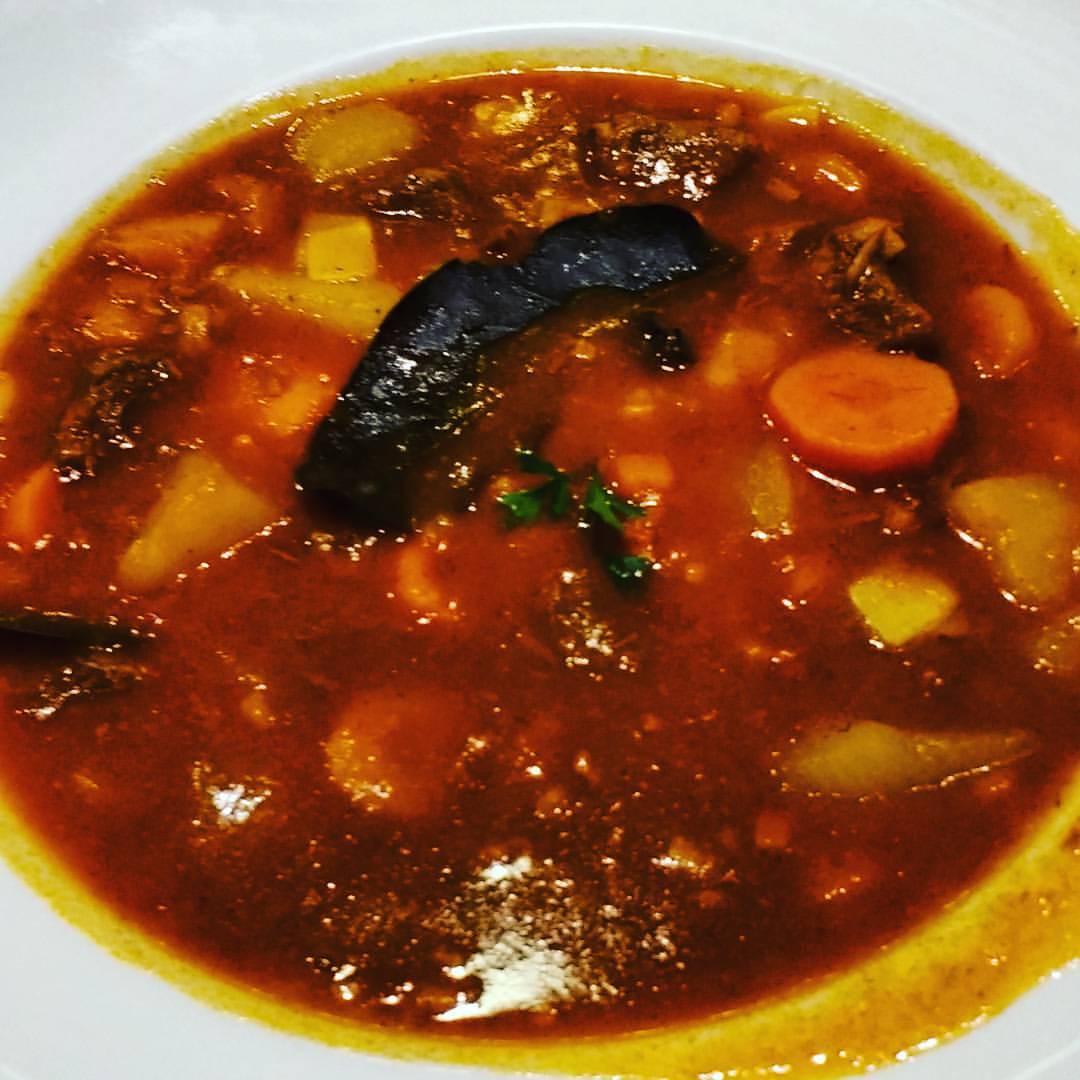
In the evening head to Cafe Veliki (one of the best and most authentic restaurants in the city) and order the Goulash. You won’t regret it! In the evening there are lots of bars to choose from. I had the good fortune to meet an interesting Anglo-Serbian guy from Manchester and a friend of his who took me on a tour of the city. We wound up the day in some bar, which I can’t recall the name of, where we had a few Jelens and some rakija. Rakija is a fruit brandy popular throughout south eastern Europe and comes in different flavours. At the end of night we went to a snack place for a pljeskavica; one of the national dishes of Serbia. You gotta have a pljeskavica if you ever come to Serbia! And it is perfect post-drinking food. There are also a smattering of bakeries open 24/7 where you can pick up a cherry strudel whenever you are feeling peckish.

There are many places to stay in Novi Sad. I stayed at the Hostel Podbara located outside of the city centre, but only a 10-15 minute walk away. It is a very tranquil and quiet place and almost feels like you are in the middle of the countryside. What’s more, the rooms are very comfortable and it’s incredibly good value for money; especially if you are on a budget. And the family who run the hostel are very kind and welcoming.

So, walk around and get stuck in! Don’t feel like you have to “do” Novi Sad. Grab a cafe and some cake. Have a Jelen and a pjeskavica. And just have fun!

Živeli!!!

20969003_143858632872707_8327567001371279360_n

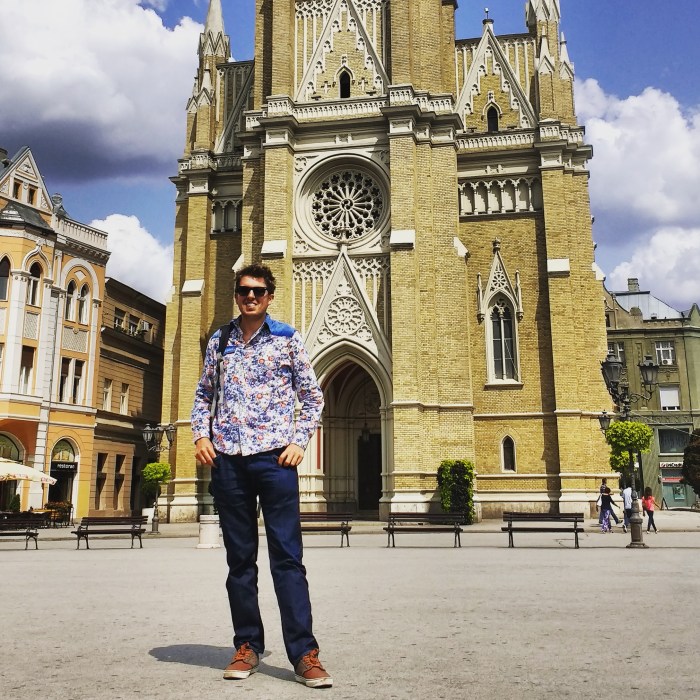
Novi Sad’s main square Trg Slobode

IMG_20170822_135502_097

By the main city centre church 

IMG_20170823_091932_659

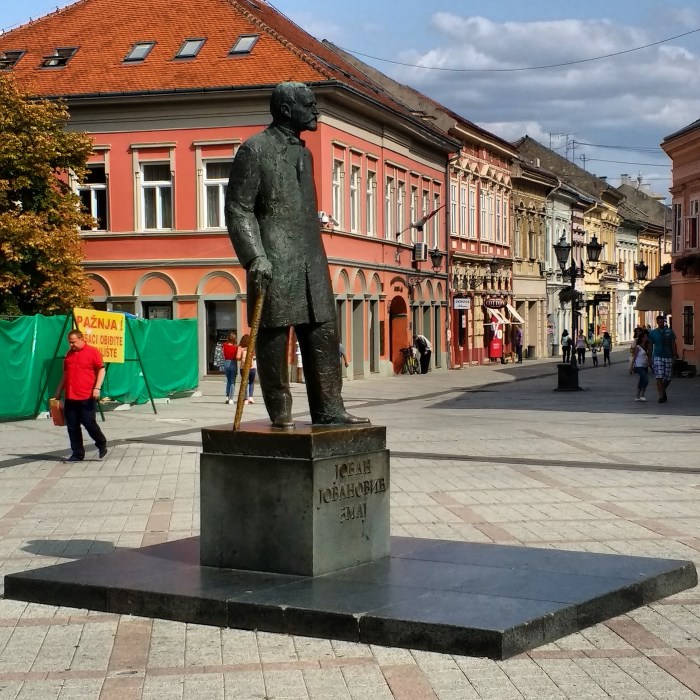
Statue of the Serbian poet and physicist Jovan Jovanović Zmaj (1833-1904)

IMG_20170823_105903_332

Old town of Novi Sad

IMG_20170823_111832_575

Old town of Novi Sad

IMG_20170823_112039_416

Petrovaradin Fortress

IMG_20170823_110631_921

View of the old town from the fortress 

IMG_20170823_111435_762

The river Danube

20969209_1569779229756034_8766650574717321216_n

Novi Sad train and bus station

20905443_1595060097212861_6908385738052599808_n

Outside Novi Sad train and bus station 

20987266_469372196751744_7793700736822411264_n

Street art in Novi Sad

20987143_1535672023166564_3733733405351739392_n

Street art in Novi Sad

20987465_1636654156354259_1034937138078023680_n

Goulash at Cafe Veliki

20987346_164106884140087_915426765373964288_n

Projekat EUtopija exhibition by Bosnian artist Igor Bosnjak at the Museum Of Contemporary Art 

20987042_522309034770478_435694539206819840_n

Outside the Museum Of Contemporary Art

IMG_20170823_104152_145

In Dunavski park posing by a statue of the Serbian poet and painter Djura Jakšić

IMG_20170823_120016_642

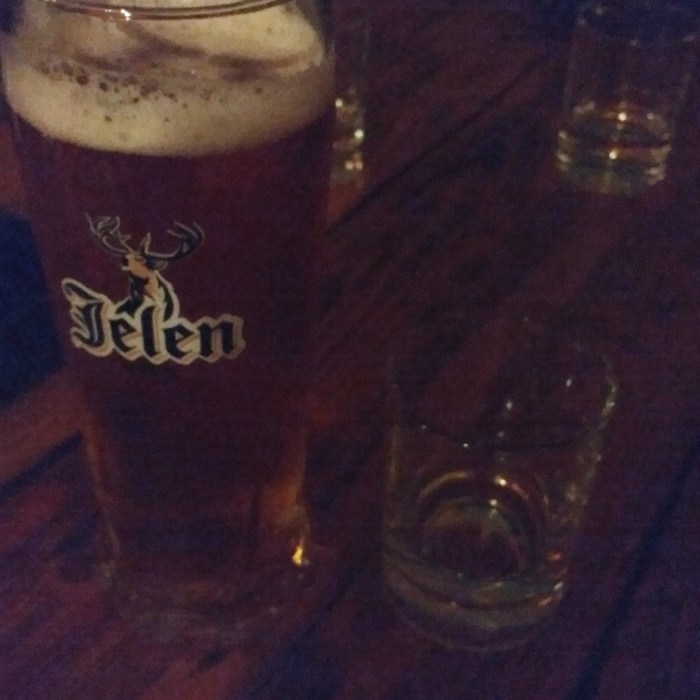
Jelen beer and rakija on a night out

IMG_20170823_120816_619

A pljeskavica

IMG_20170823_113852_743

Novi Sad Synagogue

IMG_20170823_112652_471

Novi Sad in the early evening

Photographs and text by Nicholas Peart

©All Rights Reserved

Inside The Croatian Museum Of Naive Art

This art museum was one of the highlights of my trip to Zagreb. Naive Art as an art form was very fashionable during the 1960s and 1970s. Personally I don’t like the term very much as I think it degrades art and implies that it’s not very good. Some art of that genre can be very kitsch but it can also be very brilliant, full of heart and soul. The best work of this genre is up there with many of the greatest works from the Art Brut movement where artists, with no formal art education, created work, often of a very raw nature, outside of the confines of the ‘Art World’ and other established institutions.

IMG_6591

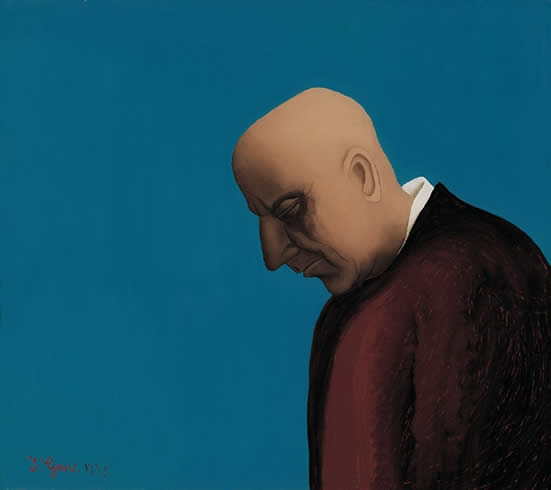
Self-Portrait (1975) by Ivan Generalić

Most of the work on display at this museum is by noted Croatian artists of the Hlebine School. Hebline is a small village in the north of Croatia which from the 1920s was the place where a small group of self taught peasants began to develop a new style of painting. The artist Ivan Generalić (1914-1992) was the father of this movement. When I enter the first room of the museum, his Self-Portrait (1975) painting is the first painting to catch my eye. The prominent blue background of the painting is unmissable and I am immediately reminded of the Italian Renaissance painter Giovanni Bellini’s Portrait Of Doge Leonardo Loredan.

IMG_6592

Harvest (1938) by Mirko Virius 

In the same room, there are also paintings by another artist of the first generation of Hebline school artists called Mirko Virius (1889-1943) who’s paintings are of traditional rural people. His painting Harvest (1938) reminds me of the rural paintings of everyday peasant life by the pre Impressionist French painter Jean-Francois Millet. Millet was also a huge influence on Vincent Van Gogh who at the beginning of his painting career wanted to paint rural peasant life in its purest form from the source. Many of Van Gogh’s early paintings and drawings capture this very beautifully.

IMG_6593

The Evangelists On Calvary (1996) by Ivan Večenaj

Then there is another painting in that same called The Evangelists On Calvary (1996) by one of the second generation of Hlebine School artists called Ivan Večenaj (1920-2013). This is probably the most powerful painting in the room. The intricate mess of destruction, decay and dehumanisation makes me hark back to the most nightmarish paintings by the legendary and light-years-ahead-of-his-time Dutch colossus Hieronymus Bosch. Out of all the art works in the museum, it is those paintings by Večenaj, which resonate most deeply with me. Another painting of his entitled Gaitery Juna (1962) features a peasant lady with a deformed face. A third painting depicts Moses by the Red Sea.

0DA2122B-51BF-414C-A634-14297573F70C-3076-0000045A34E3AC30

Martin Mehkek

In another room, a series of portraits by Martin Mehkek (1936-2014) stop me in my tracks. The portraits are very human and Mehkek seems to have a unique ability to empathise with his subjects and put himself in their shoes. He paints his subjects in a way which executes their emotions and traits. And many of his subjects seem to be local villagers and they appear to be painted in a way where all their quirks, bizarreness and insularity are masterfully captured.

IMG_6598

Emerik Feješ

The paintings of Emerik Feješ (1904-1969) are of colourful, childlike, ethereal and joyful buildings in a style that is his own. Like ornate Venetian buildings turned into multi coloured, energetic Mississippi and New Orleans juke joints. Observing his paintings fill me with hope and positivity, which is very vital in a pungent age of anxiety.

IMG_6599

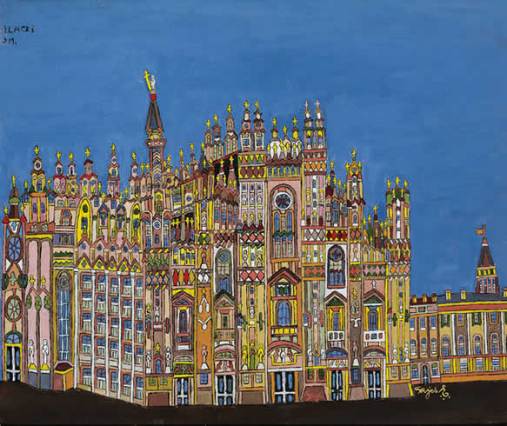
Luxary Ship (1974) by Drago Jurak

The final piece of work in the museum to make an impression on me is a painting by Drago Jurak (1911-1994) called Luxary Ship (1974). It is a extraordinary painting and I immediately think of the impossibly insane Swiss artist Adolf Wölfi, a key artist from the Art Brut movement. His paintings are of an overly complex, obsessive and deranged nature. Like a shockingly talented Persian miniature painter on acid. Some artists are just happy to knock up bland landscape pastiches. Yet painters like Jurak and Wölfi are forever hellbent on rocking the boat and driving the square community mad.


By Nicholas Peart

©All Rights Reserved


FLOATING IN SPACE IN ZAGREB: Review of the Subspace Hostel

IMG_20170820_150842_805

Most hostels have the same standard model of rooms with bunkbeds of varying degrees of quality. I am a private person and rarely tend to stay in dormitory rooms. Yet in some cities which are prohibitively expensive, they are still the best way to save money. Dorm guests stumbling intoxicated into the rooms during the small hours of the night, sometimes turning on the lights, and rummaging noisily through plastic bags are some of the common complaints of staying in a dorm room.

The ingenious hostel setup at the Subspace Hostel in the Croatian capital of Zagreb is inspired by the model used in various hostels throughout Japan and China, which comprise of having ‘space capsules’ for guests to sleep in rather than standard dorm bunks. In a way it doesn’t matter whether a room has 4 or 40 of these space pods, since one has their own space (pun most intended!!). I simply climbed up into my intergalactic pod and was able to completely shut the door and fully withdraw inside. I felt I had almost the same level of privacy that I would have had by having my own room in a hotel or guesthouse and at an affordable price. Yet hotels and guest houses, unlike hostels, are not best places to be if you want to meet other travellers.

IMG_20170820_151203_161

Whilst inside, there was a TV screen with multiple channels, a couple of remote controls, four lights, a safe, plug and USB sockets, a small ventilation pocket and even a fire extinguisher. My bed was very comfortable and my pod also came with an additional head rest. In these increasingly virtual times, where the chasm between the physical and virtual worlds is forever shrinking, it is just too easy to get lost in virtual bliss and forget that there is a historically interesting city to be physically exploring and getting under the skin of.

IMG_20170820_151427_084

The showers and toilets, instead of being in separate rooms, are constructed within the rooms as funky neon-turquoise cylinder cubicles. The only cumbersome thing about the toilets and showers is that they lack proper locks. They can only be locked via a dangling thin piece of metal where the end is inserted through a circular metal hole, which is often located a little too far out. That would not cut the mustard on Apollo 11! But I am being a pedantic jackass here.

IMG_20170820_222325_820

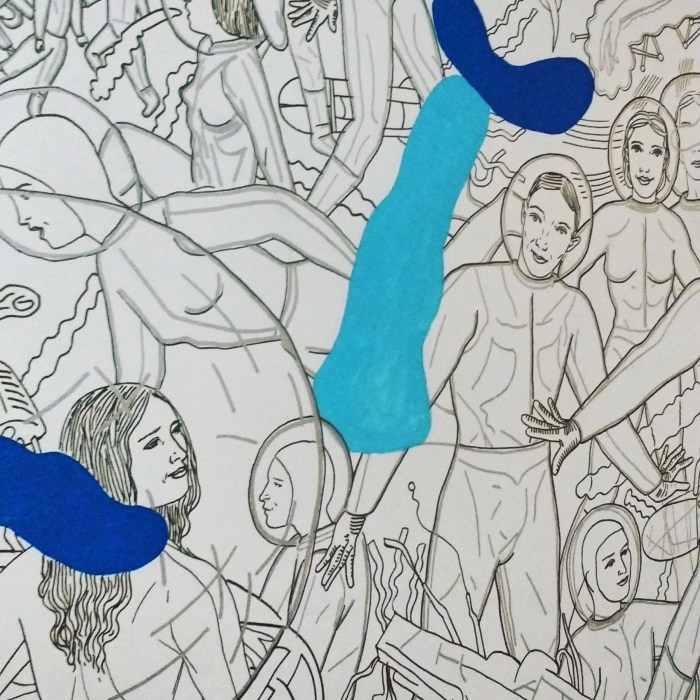
Artwork by Tomislav Buntak

As well as this wonderful hostel set up, the other thing that makes this hostel unique is the exquisite artwork on all the walls and ceilings created by a gifted notable local artist called Tomislav Buntak. There is a large hardback book with many photographs of his work by the reception, which I highly recommend you have a look at.

The last time I stayed in an equally special place was at the Santos Express Lodge in Mossel Bay, South Africa. You can read my review of it here


By Nicholas Peart

©All Rights Reserved

Architecture and Design Photographs From The Streets Of Zagreb

My favourite thing to do in any city I visit is to simply walk it’s streets both within and outside of the city centre. There are, of course, specific sites to see and an overload of information on the internet regarding all the things there are to do. But nothing beats putting the guidebook away, turning off the wi-fi on the smartphone, and just getting lost randomly walking around a city. With this mind sight and limitless doses of curiosity and imagination one is bound to bump into unexpected and spontaneous treats.

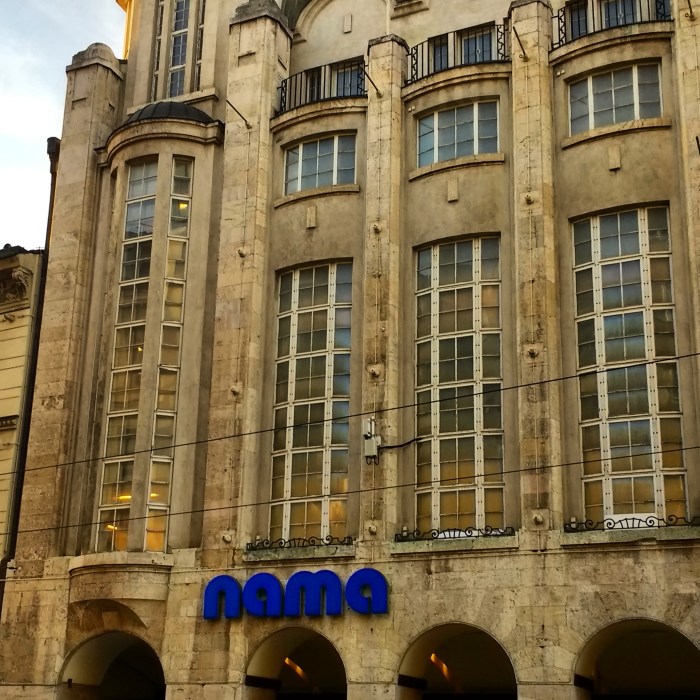
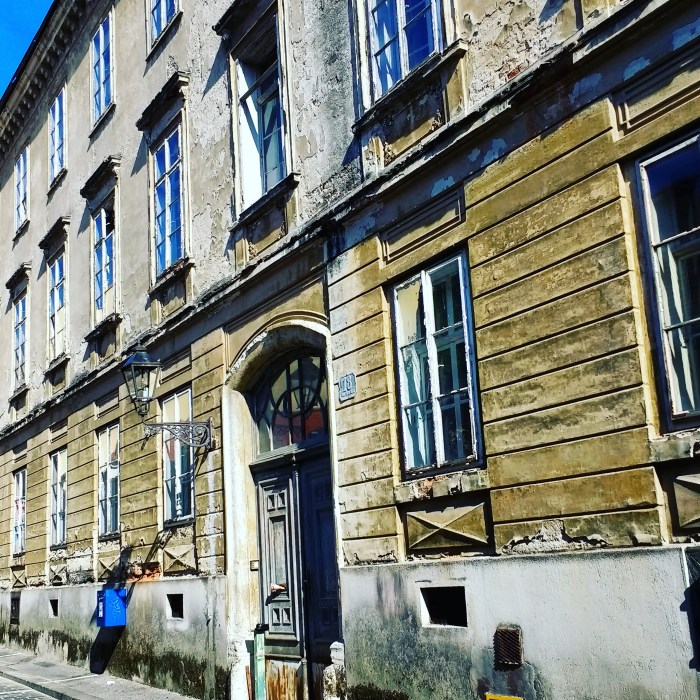
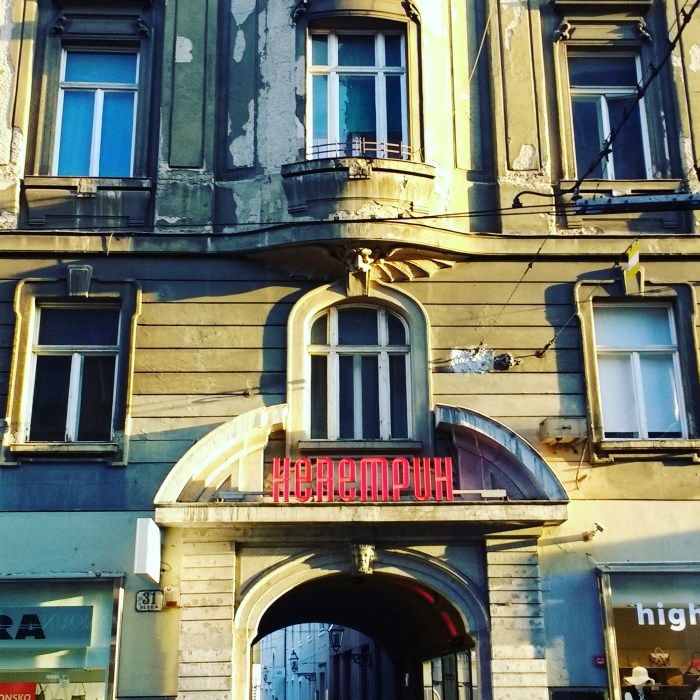
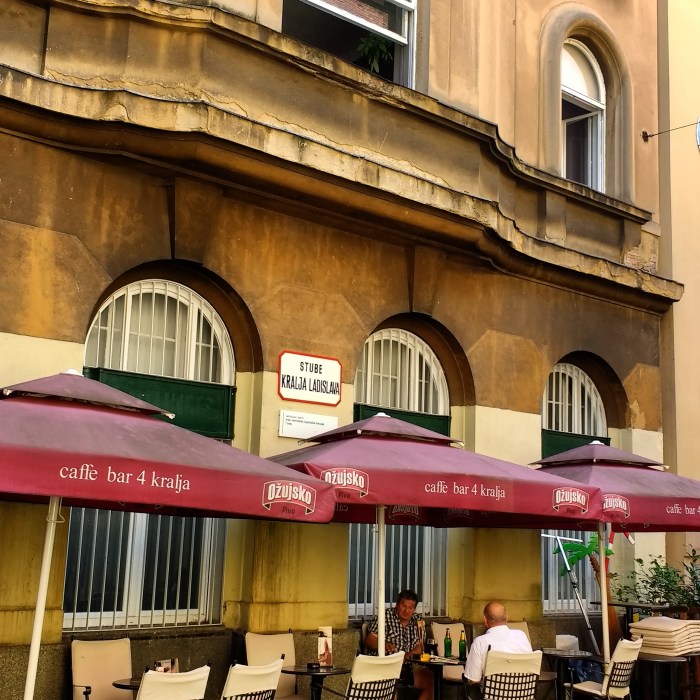
Zagreb, the capital of Croatia, has been a very generous city to me. The architecture and designs of the city’s buildings are a glorious mess of luxurious and elegant Austro-Hungarian empire grandeur and sophisticated Art Nouveau to Bauhaus and more austere Brutalism. Some buildings, especially in the city centre, have been renovated and look pristine and beautified whereas other buildings, many outside the centre, look more neglected and derelict.

IMG_20170818_002754_441

IMG_20170818_003844_440

IMG_20170818_002443_027

IMG_20170818_001503_593

IMG_20170818_000456_739

IMG_20170818_000219_203

IMG_20170818_001646_910

IMG_20170818_001312_877

IMG_20170818_004753_843

IMG_20170818_001824_910

IMG_20170818_000713_187

IMG_20170820_120821_178

IMG_20170820_121103_149

IMG_20170820_114914_998

IMG_20170818_001958_604

IMG_20170818_084905_543

IMG_20170820_114601_824

IMG_20170820_114731_896

IMG_20170820_114432_892

IMG_20170820_115439_636

IMG_20170820_115231_245


Photographs and text by Nicholas Peart

©️All Rights Reserved

How 3D Printing Could Be The Biggest Thing To Affect Our Lives Since The Internet

IMG_0685


I’ve been very interested in 3D Printing for a few years now. What fascinates me the most about this technology is the awesome and unlimited potential it has. Currently it is still at a very embryonic stage in terms of its development but, like the internet before it, its potential is enormous. 3D Printing has the power to transform and effect many different industries. I am listing a few of these industries below.


The Manufacturing Industry

This is the industry which I think will be most affected by 3D Printing. Already large segments of the global mass manufacturing industry are automated via Robotics and AI. As 3D Printing develops and evolves more and more, it will be able to greatly increase the productivity of this industry and even contribute towards automating it to even greater levels than robotics. In fact, 3D Printing may even have the power to completely disrupt the entire mass manufacturing industry. This is especially true after this technology has become truly mainstream and every home not just has a basic 3D printer, but one that is capable of printing almost any kind of 3D object imaginable using just the basic raw materials. Once 3D Printing has got to this stage of development and has matured as an important consumer technology, then one could say that every household is a factory. People would be able to create and customise any physical good they want through simply taking the designs of the products and applying them to the 3D printer. This could severely disrupt businesses whose business model is based mostly on manufacturing goods, especially at the mass level.


The Construction Industry

The construction industry is the next obvious industry to be affected by 3D Printing after the manufacturing industry. As with the manufacturing industry, it has the potential to increase efficiency and productivity as well as save costs and time. The construction industry is also a potentially dangerous industry for human labour and any building physically constructed by humans will always be vulnerable to flaws and errors. Yet 3D Printing with a double dose of robotics and strong AI has the potential to create buildings more robust and in less time than humans can and without the labour costs involved. And as these technologies develop further, it will be possible to 3D print entire cities. And why stop at building on dry land? Perhaps one day in the distant future when these technologies are at a level far greater than our comprehension, it may even be possible to 3D print domed cities under water. A crazy notion but with out of this world technology anything is possible.


The Medical Industry

The medical industry and our lives and health have the power to be greatly augmented by 3D printing. Already the technology has the ability to print prosthetic arms and legs. Yet 3D printed bones and organs are a real possibility. 3D printed organs will already reduce the enormous waiting list of patients waiting for organ transplants, especially for kidneys and livers. And what if the 3D printed organs were more developed and healthy than the healthiest of donated organs? 3D Printing combined with other groundbreaking emerging technologies in the biotech sector like stem cell technology, genetic engineering and nanotechnology have the power to achieve this.


I am looking forward to experiencing how 3D Printing will further develop and more importantly how it will greatly assist and make our lives easier as well as being an amazing resource to make our lives more efficient and aid us in reaching greater heights. Already there are a number of growing 3D Printing start ups and businesses all trying to further develop this amazing technology.

What is becoming increasingly clear with the way emerging technologies are developing, and will develop, is that our ideas and creativity will be our greatest assets. These technologies will help us expand our ideas and creativity and realise them to the greatest levels possible.


By Nicholas Peart

©All Rights Reserved

Greetings From Delhi

dscn7101

Back in Delhi

Last Monday night, I flew from London Heathrow to Delhi via Jet Airways. I took a random punt on this airline and it was a pretty lackluster experience. The aircraft was quite old and backdated. I had an aisle seat in the middle aisle row of seats. The two seats of the four in the middle were vacant. On the other end of my row was an old Sikh who got very drunk and disorderly and later incurred the wrath of the airline staff who refused to serve him more whisky. There sadly was nothing entertaining, charming or witty about him and he was a constant pain and drone for most of the flight. I spent the majority of my flight either taking advantage of the in-flight entertainment system or listening to my iPod.

Delhi was just as I had envisaged it to be when the plane landed at Delhi airport. The entire landscape from the runway was blurred by thick blinding smog. As everybody began to disembark from the plane, I realized that I couldn’t find my navy blue retro cotton scarf. Amongst the mess of used airline blankets and headphones, I couldn’t see it. I again looked in my bag. No luck. I broached this to the airline staff but it was a futile quest. Ah fuck it, I concluded. Lets get out of here.

I waited over an hour just to change £30 into Indian Rupees at the Thomas Cook bureau de change at Delhi airport. The recent demonetization events in the country involving the sudden withdrawal of all R500 and R1000 notes, representing over 80% of the country’s money supply, compounded with the tough restrictions on how much money one could withdraw or exchange meant that one was by law not supposed to exchange more than R5000 a week. I was with a group of other fellow travelers including a group of Peruvian tourists who’d just flown in from Hyderabad and they were equally dejected by the whole thing.

I decided to take the modern metro airport express direct to New Delhi station instead of haggling with a cab driver. At the entrance to the station there was a security check with austere Indian police in charge. The express train blazed through vacant and baron swathes of outer Delhi. The heavy smog made all the surrounding scenery translucent and vague. Many trees were either dead, dying or suffocating by the smog, pleading desperately with the gods in vain for rain. They would have to wait until at least June next year. At the top of the smogged skyline was the sun, heavily veiled to resemble one of those glowing white coated energy saving lightbulbs rather than a piercing brilliant white hot glow. People had to have lungs of steel to live in this city.

Arriving at and exiting New Delhi metro station gave me my first official taste of India since the last time I arrived here almost 10 years ago. All the famed filth and fury slowly began to unravel and reveal itself to me. As I made my way towards the entrance of the main bazaar thoroughfare of the legendary tourist ghetto of the Paharganj district via the hectic and high pressure New Delhi Railway station, I bump into two long-term travelling backpackers. Both look like they’ve allowed India to get under their skin and truly connect and flow with the rhythms and current of this fascinating, multi-faceted, mind blowing, full power wild soup. Peter is from Germany and his partner Olga is from Russia. They both met in Rishikesh. Peter had in fact traveled to India by bicycle from Germany. In Iran he was involved in a road accident and this delayed his trip as he recovered in a Tehran hospital.

dscn7054

The Paharganj district of Delhi

We all walk together through the mess of the main Paharganj bazaar as Peter tries to find a Post Office and I try to find the Hotel Vivek. Not much has changed along this main thoroughfare of mayhem since I last graced this road as a fresh faced 23 year old backpacker. Back then I foolishly didn’t book accommodation for my first night. Furthermore, I got overcharged by my taxi driver from the airport with hardly any past travel experience under my belt. I had thrown myself in the proverbial deep end. Arriving in the Paharganj all those years ago was like arriving in the middle of some bombed out extra-terrestrial mess on another planet in another galaxy. I was always getting harassed by unsavory touts and constantly trying to avoid being hit by a passing motorbike or rickshaw. I carried my heavy backpack with no reservation, not knowing which hotels to enter or avoid. I remember settling on a veritable fleabag of a place which had these soulless dirty busted rooms for around the R200 mark a night. My current room at the Vivek is no great shakes and the mattress is pancake-thin but this is like the Best Western compared to that place. Before I check into the Vivek, I say goodbye to Peter and Olga. Perhaps I’ll bump into them next at a temple somewhere in Sri Lanka? Who knows.

dscn7052

Back in the Paharganj after an almost 10 year absence 

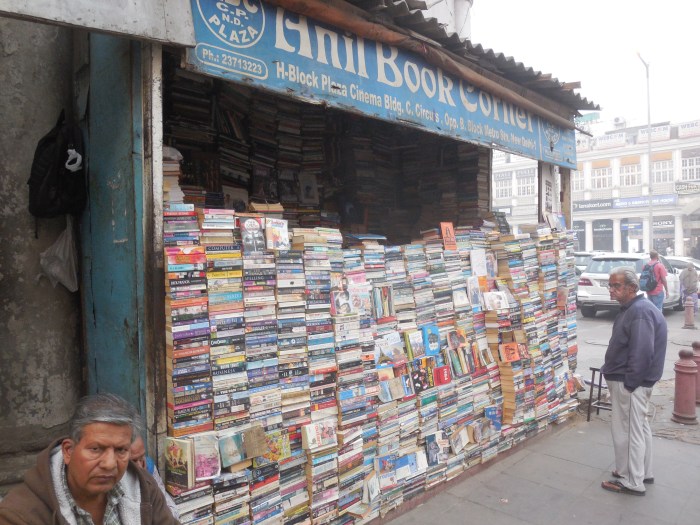
Instead of going to bed, I dump my things in my room and re-enter the Main Bazaar. I walk back towards New Delhi station and onward towards Connaught Place. It is here where I discover a marvelous open air secondhand book stall. Mountains of books are piled on top of each other like mini towers of Babel. By now I find myself feeling the undesirable effects of Delhi’s air pollution. Its not only my mouth which feels like one great field of ash and dust. My eyes are stinging like I am walking through clouds of sulfuric acid. I need a bottle of water sharpish and some vitamin C tablets to phase out the carcinogenic mess of free radicals manifesting inside of me. What I’d give for an incubator of premium quality South Pacific air!
dscn7059

A great secondhand bookstall by Connaught Place 

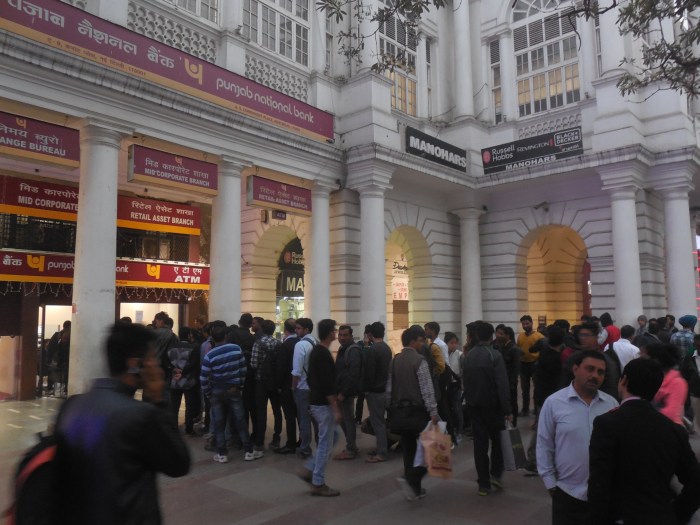
As I trudge around Connaught Place, the sun has already gone down. There are impossibly long lines of people outside every functioning ATM hoping to withdraw some limited Rupees. It doesn’t matter that the current daily limit has recently been increased from R2000 to R2500, I can see more chance of pigs flying than achieving a successful and hassle-free ATM withdrawal. Yet I fortunately have another option for getting cash in the form of my scarce supply of hard currency. I genuinely feel sorry for the locals who have been affected by this.
dscn7060

People queuing up outside an ATM in Connaught Place hoping to withdraw some scarce Rupees 

I look for a street vendor selling bottled water. I find one offering me R20 for a liter bottle. He even says that he has change for a R2000 note as he palms me nineteen R100 notes along with the rest of my change. I am extremely grateful to him. For the most part, carrying around one of the recently issued R2000 notes is like carrying around a King Cobra. I can’t take it everywhere.

I chat to some random locals in Connaught Place. The people I speak to genuinely want to chat and the conversations never turn to money. For dinner I pay a visit to Hotel Saravana Bhavan for some delicious South Indian food. There are already people waiting outside with their names on the waiting list. I sign myself up and wait around 20 minutes before I am allocated a seat. I am seated opposite a middle aged Delhiite. When the time comes to order I go for the Thali Special. All this glorious food hits the spot. Afterwards I take a rickshaw back to my hotel to rejuvenate.

dscn7063

Outside Hotel Saravana Bhavan


dscn7064

The Thali Special at Hotel Saravana Bhavan

The next day I wake up at 11am after over 12 hours of sleep. I exit the hotel just before noon. A secondhand book shop catches my eye in the Paharganj. The owner even has another larger shop around the back bursting with books. I conclude that this must be the best stocked book shop at least here in the Paharganj. I purchase a secondhand copy of a book of teachings by the great Indian sage Ramana Maharshi.

For me the heart and soul of Delhi is its old city around the high pressure Chandhi Chowk. I took a metro train over there. It is a monumental sight, like nothing I’d ever experienced before. When I was last here, it was a mind-blowing and overwhelming experience. As soon as I exit Chandhi Chowk metro station, a bicycle rickshaw driver decides to stick himself to me like glue. He becomes a magnificent liability. On the other hand, I wouldn’t want it any other way. I’ve missed this chaos. I finally manage to break free of him by very diligently crossing the carnage of Chandi Chowk traffic where there is something resembling a pavement on the other side. I spot a peanut wallah and purchase a small bag for 10 Rupees.

dscn7070

Chandhi Chowk

At the end of the main Chandhi Chowk thoroughfare is the monumental Red Fort. This exotic clay-red juggernaut of a fort was constructed during the height of the Mughal period. I enter the outside grounds but I do not go inside as I’d already visited the fort during my last trip to Delhi. Soon I get chatting with an affable local named Satish and we have our photo taken together by the entrance.

dscn7073

In Chandhi Chowk


dscn7076

With Satish outside the Red Fort

Chandi Chowk may be hectic but for an even more glorious, full powered and disheveled experience, nothing beats the labyrinth of bazaars, streets and hidden alleyways around the nearby Jama Masjid, India’s largest mosque.

dscn7078

Old Delhi street scene 

Like the Red Fort (and the Taj Mahaj in Agra), it was designed by Shah Jahan, a famous Mughal emperor whose reign was often said to be the golden age of Mughal architecture.

dscn7088

The magnificent Jama Masjid

The streets and bazaars around this jewel of a mosque are special to me. We may be living in the digital age, but walking these streets I feel very much connected to the past lives, energy and spirits of this part of the city. This is ancient Delhi at its finest.

dscn7099

One of the streets surrounding the Jama Masjid

One particular memory of this area which never escapes me are the reams and reams of black electricity wires tangled and coiled like snakes everywhere and hanging by the most fragile of threads. Seeing these wires so naked and exposed is like seeing my body with much of my skin removed and all my arteries transporting blood around my body for all to see; I am still alive and going but mess around or damage them in any shape or form, and it’s curtains.

dscn7098

Notice the mess of electricity wires

I spend a long time sat down on the steps at the top of the Jama Masjid watching this fascinating maze of life. I simply observe it and don’t attempt to make any sense of it. I am so happy to be here and the longer I sit here watching it all unfold in front of my eyes, is the moment I know that I am truly in India. It’s marvelous to be back.


By Nicholas Peart

12th December 2016

(All rights reserved)
Original Relics Of Medieval London

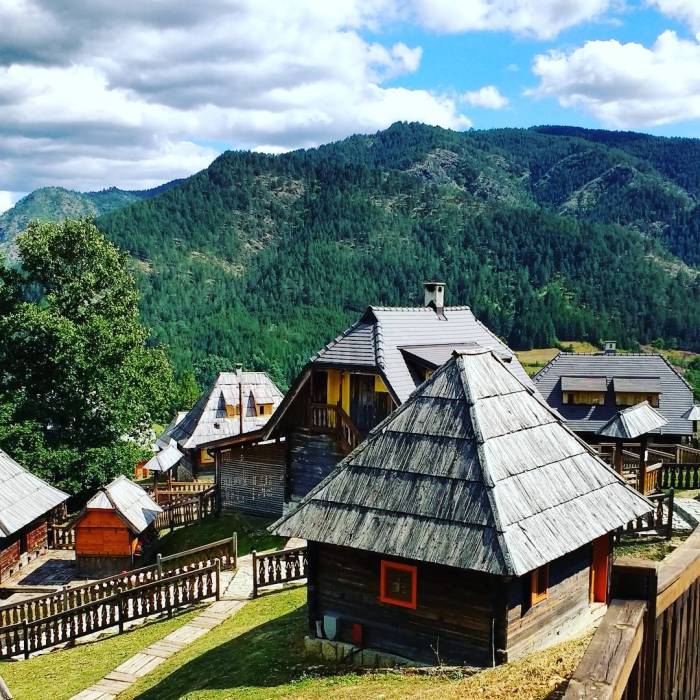
The history of London goes back to 43 AD when this city was first founded by Roman settlers and orginally christened Londinium. Yet when one visits London today, one could argue that the year zero of this city begins with the renowned architect Sir Christopher Wren who was responsible for rebuilding the city after most of it was devastated by the Great Fire Of 1666.

Today very little of old medieval London exists. Yet it is there! Mostly in the form of the few churches which survived the Great Fire and of course the mighty Tower Of London and Tower Bridge. One of the principle reasons why most of London was destroyed by the Fire was due to the fact that the majority of the city’s houses and buildings were made out of wood. The fact that the Tower of London was made of good old hard stone speaks volumes about how its bacon was saved.

To experience a decent slice of medieval London, I personally like to head to EC1 and the Cloth Court/Cloth Fair area of narrow medieval alleyways and of course the magnificent St Bartholomew’s church. Nearby you have the legendary Smithfields Market and a little further up is the Barbican. By the jungle of Brutalist architecture one can find St Giles church and surviving relics of the original London Wall. For a definitive and comprehensive history of this city, the Museum of London is right round the corner. Currently there is an excellent exhibition on there commemorating the 350th anniversary of the Great Fire of 1666. It is a very thorough exhibition with lots of information and even some original artifacts from that time. The exhibition is on display until April 2017.

Below I am featuring some photographs from my wonderings exploring another side to this city and unearthing some of these original relics of London, which were unaffected by the Great Fire…


image

A portion of the original London Wall in the Barbican area


image

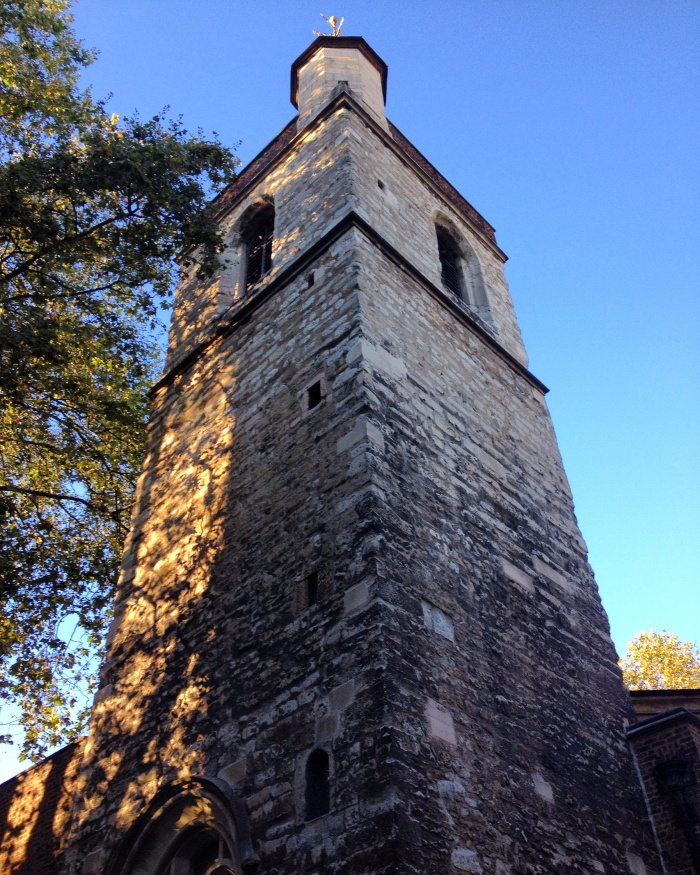
St Giles-without-Cripplegate church


image

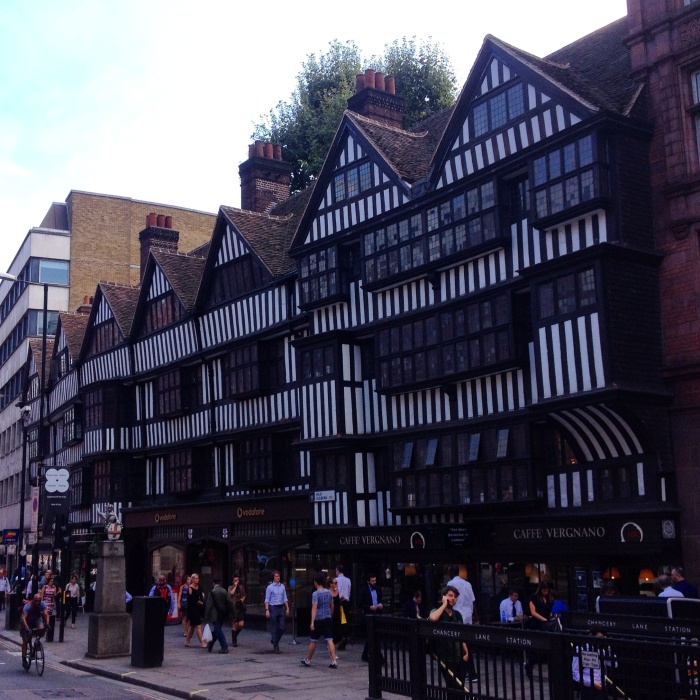
The Staple Inn: This enourmous medieval building was built in 1585 and narrowally escaped the Great Fire by only a few metres


image

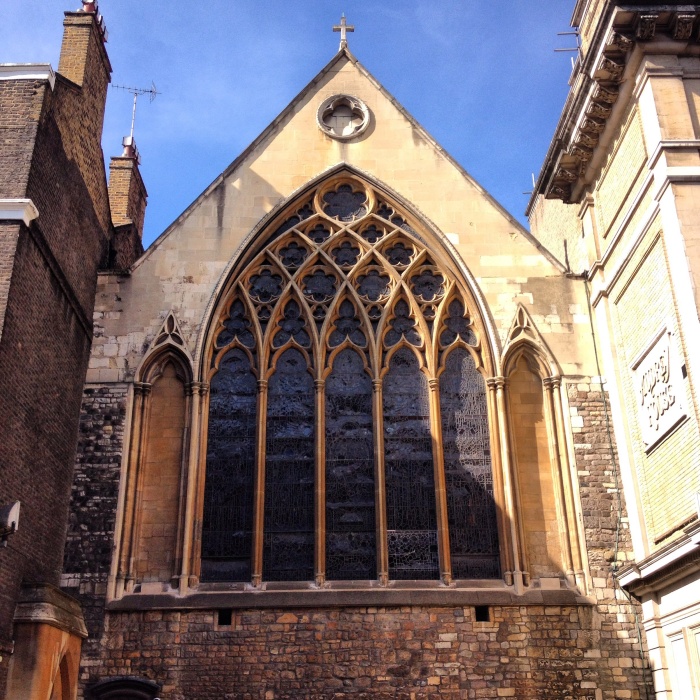
St Etheldredas Church: this church was built in the latter half of the 13th century. It is one of the oldest Roman Catholic churches in England.


image

For me, this area close to Smithfields market is a fabulous slice of medieval London around the junction of Cloth Court alley and Cloth Fair. Notice the entrance to the iconic St Bartholomew’s church in the background


img_3697

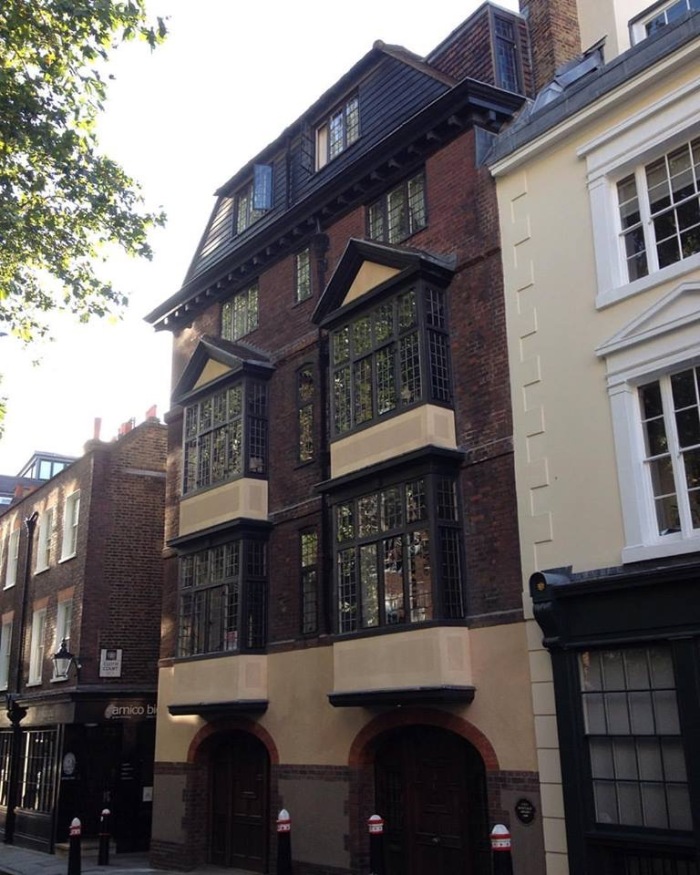
41 Cloth Fair: This is the oldest house in the City Of London orginally constructed between 1597-1614


img_3698

St Bartholomew Gatehouse: this was constructed in 1595


img_3696

Priory Church of St Bartholomew-the-great: close up


img_3695

St Bartholomew-the-great church: this magnificent church was first founded in 1123 by Rahere (a prebendary of St Paul’s Cathedral). It is adjacent to St Bartholomew’s hospital which was also founded by Rahere in that same year and is one of the oldest hospitals in the U.K.


image

St Bartholomew-the-less church


image

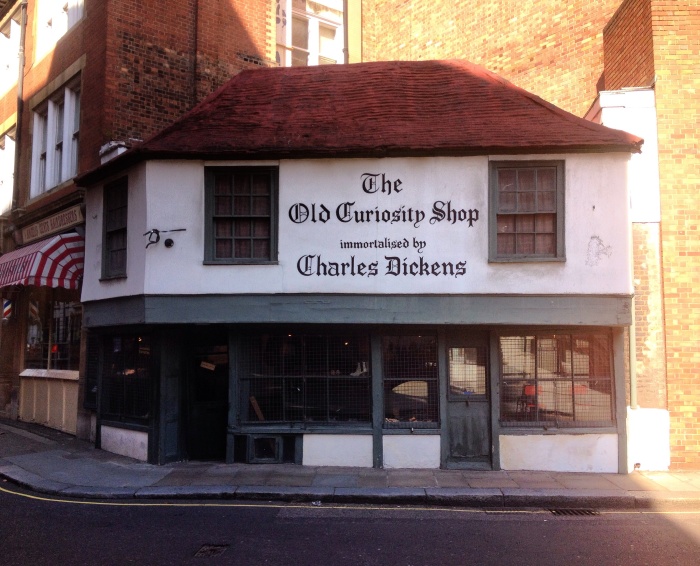
This shop built in 1567 was featured in Charles Dickens’ ‘The Old Curiosity Shop’


image

The Seven Stars pub: This unique and charming pub first opened its doors in 1602. It is one of London’s few remaining independent pub and remains little change since it’s early days


image

The Olde Wine Shades: first opened its doors in 1663


image

This handsome medieval building on Fleet Street called Prince Henry’s Room survived the Fire. It was a former tavern where the London diarist Samuel Pepys liked to hang out


image

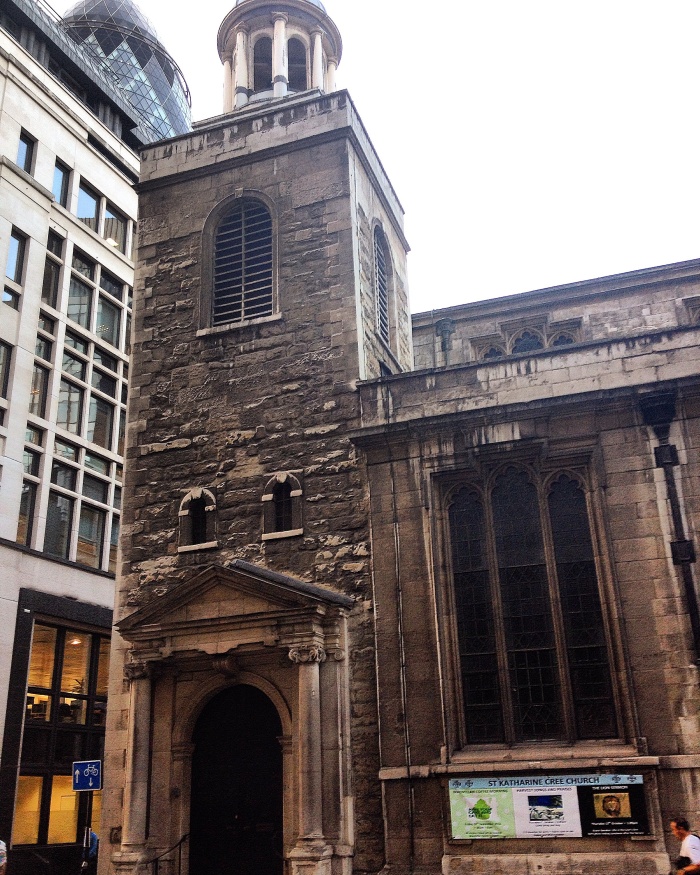
St Katherine Cree Church


image

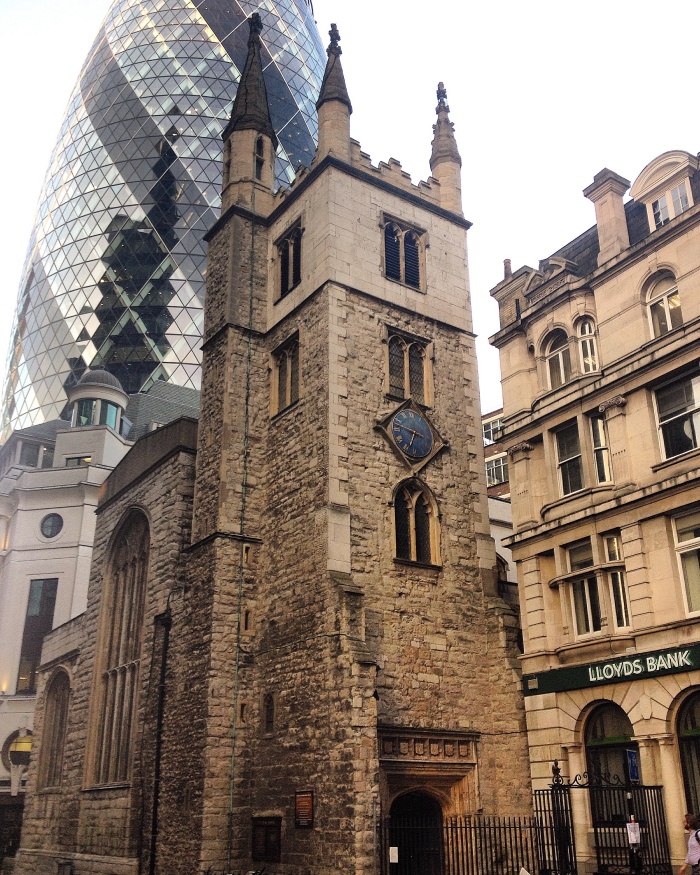
St Andrew Undershaft Church: this church was originally constructed in 1532. It survived the Great Fire of 1666 an drew World War Two, but was unfortunately damaged in an IRA attack in 1992


img_0297

St Helen’s Bishopsgate Church: this gem of a church was built in the 12th century. It has the distinction of being the largest surviving church in the City of London. This was also William Shakespeare’s church during his time in the city.


image

St Olave Hart Street Church: this church was constructed built in 1450. This church was saved by the Great Fire by Sir William Penn (who’s son also named William, founded the state of Pennsylvania) who instructed that the houses surrounding the church be destroyed to make a firebreak and thus save the church
 

image

The Tower of London and Tower Bridge in the background. The Tower of London castle was built in 1078.


image

All Hallows-by-the-Tower Church: Although the current facade of the church goes back to 1658, it is on the site of a church’s going back to 675. Samuel Pepys watched the city burn during the Great Fire from the church’s tower.


Text and photographs by Nicholas Peart

4th December 2016

(All rights reserved)