The End Of Free Content

There is seldom a day that passes when I trawl through the feeds of my social media accounts and stumble upon an article or post that laments the current state of affairs for many individuals in the creative/media industry. It is true, especially in the last 15 years, that many writers, journalists, musicians, songwriters etc have had a rough time. The internet, since it’s mainstream adoption almost 30 years ago, has had a colossal effect on this industry.

The emergence of the music file sharing site Napster at the end of the 90s was the first real taste of the seismic effects that the internet would have on the music industry in the coming years since this platform was first unleashed onto the world. Yet, even back then, very few people were able to foresee the long term effects. The internet and technology were moving at an exponential rate and much of the music industry was slow to adapt. In fact, some of the large record labels decided to fight those early disruptive file sharing platforms rather than to evolve and try to stay ahead of the curve.

In the past, bands and artists were able to make a comfortable living on their physical record sales alone. The most successful bands and artists sold records in the millions. Today, the internet has completely taken a sledge hammer to this business model. It is now very easy to listen to most music for free. In the past 10-15 years, streaming platforms such as Spotify have emerged where for a monthly subscription fee one has access to vast libraries of music both old and new. Unfortunately, for the musicians, even a substantial amount of listens does not generate anywhere near the same income like back when people actually bought records. There is the option to purchase or download a song or album, but against options like Spotify and You Tube, nowhere near enough people consume music via this route making it very hard for musicians to make a decent living just via their songs alone.

The internet and digitisation of the printing presses have also had a corrosive effect on the incomes of many writers and journalists. Now many people can create a website and start a blog to share their own articles and written content. Print sales of newspapers have been in decline and the revenues from digital subscription sales falls short of revenue numbers for physical sales from years gone by.

However, I don’t think the current status quo of oceans of free content will continue. In the coming years we will see artificial intelligence (AI) play an increasing role in the way we live our lives. I have been fascinated by the development of AI for over ten years now, yet it’s only been in the last few years that it has really entered the public consciousness and everyone seems to be talking about it. Yet, despite this, most people are understandably very worried about the development of AI and see an almost dystopian future ahead.

I am going to throw my hat in the ring here and say that AI will benefit humanity and lead to a much better world. In the context of the creative industries, I think AI will be on the side of the creators. In my view, I think that as AI continues to improve it will get to the stage where it will be able to do most tasks better than humans can. As the internet further evolves, I can see the net also being policed around the clock by increasingly sophisticated AI. This will be a very good thing as it will lead to a crackdown on all the toxic and nefarious forces of the net. Currently, the internet is a very messy place, but AI will do a remarkable job of cleaning it up and protecting users from the dangerous aspects of it, making it very hard for unsuspecting users to fall victim to fraud, deception, undesirable entities etc.

Ever since the internet first became mainstream, it has, for the most part, been a free wheeling and wild west place and many government bodies and authorities have been slow to keep up with it. However, with AI, I expect in the coming years that the internet will be much more regulated and less of an uncontrolled wild west space. The implications of this will be lots of new legislation created and passed and also applications put into place, which protect internet users.

I think when all this is finally realised, it will have a huge effect on the way we consume content. Suddenly, almost all content will not be free any more. It will not be possible to listen to a song for free or read an article for free like we currently do. To listen to just one song or read just one article, you will have to make a payment in advance. The super strong and sophisticated AI that now controls the internet will mean that there is no other way around those rules. It will be impossible to fight these AI safeguards. Today, free content is taken for granted, but it won’t always be like this and people will eventually have no other choice, but to accept this new reality. I would go as far as saying that people will and with it their values will change. They will begin to fully appreciate what they are consuming and they will be happy to pay for it.

Musicians and writers will be able to make a decent living again through their art. Popular streaming services like Spotify will be doomed if they don’t change their business model. I envisage that if they want to survive they will have to go down the same route as Apple and offer music as a download service where the consumer pays for each downloaded song and album rather than a flat monthly fee for an unlimited tap of music. Furthermore, AI will provide much of the traditional print media with a new financial bonanza. Many news sites have been struggling with the decline of print sales and falling ad revenues. Subscription revenues have been meagre by comparison. However, when people start paying per article I think that there is a good chance that revenues will cease to decline.

Contrary to much of the prevailing narrative that AI will only further increase the hardships of musicians and writers, I think AI will financially enrich them. Back in the beginning of 2022, I wrote an article entitled, ‘The Future Could Be Very Bright For Song Rights’. At the time that the article was written, many musicians were selling the rights to their songs. Some, like Bob Dylan and Bruce Springsteen, for vast sums of money. However, despite all this, I was stressing the importance for musicians to think twice before parting with their song rights – even with lots of money involved. You see, it is very likely that AI will open up many new income streams for song rights. The big labels also foresee this, which is why they have been very active buying up all the song rights they can get their hands on. They see these huge new potential money fountains that AI will give birth to for song rights and they are acting now before it becomes a reality.

It is increasingly likely that at some point over the coming years, many musicians will deeply regret that they sold the rights to their songs. At the time they probably thought that they were making the right decision, especially given the precarious and fragile state of the music industry and their natural concern that it will continue to get worse. Recently, Queen sold it’s entire music catalogue to Sony for over $1 billion. A monumental sum of money. However, there is a good chance that over the next ten years, the value of Queen’s back catalogue swells to $5-10 billion. If this were to happen it would become prohibitively expensive for any of the surviving members of the band or members of their family to buy back those rights. This is something to consider for those tempted to sell their song rights at this stage in their career.

By Nicholas Peart

(c)All Rights Reserved

8th August 2024

Image: Larisa Koshkina

The Next Fifteen Years

When I look back on the last 15 years going back all the way to the beginning of 2009 and the aftermath of the 2007-8 Global Financial Crisis, it is clear that this has been a difficult and rocky period for humanity as a whole. In some ways it feels like many people have still not fully recovered from this crisis. There are so many people who are still struggling and with that there’s a palpable sense of tension and discontent. 

In the UK, for example, the early years since the financial crisis were marked by government funding cuts and austerity. Most notably, university tuition fees were tripled. The last fifteen years for young people, especially, have been very tough. As the years progressed we saw the emergence of politicians from the more extreme ends of the spectrum come more to the fore; reflecting this discontent. 

Economically, the last 15 years have been a disaster for many people. For over a decade, from 2009-21, the main central banks such as the Federal Reserve, the Bank of England, the ECB, etc, kept interest rates at near zero percent. The effect of this has been very real. When interest rates are at rock bottom levels, prudence is thrown to the wind. There is no incentive to save money (as it yields no interest) and only encourages rampant speculation and risk taking. And this is what happened during this period. Asset prices for property and many stocks and securities went to the moon. Also, due to interest rates being so low for such a long time, debt levels exploded. During this time frame, total US government debt went from just over $11 trillion at the beginning of 2009 to almost $30 trillion at the end of 2021. As I write this US government debt is now over $33 trillion. Furthermore, average US house prices doubled and the S&P 500 index increased more than 5 times in value. Meanwhile, during this time average wage growth was relatively flat. 

Keeping interest rates at such low levels for over a decade has been very damaging for society as a whole. The huge inflation in asset prices, far eclipsing income growth, has not been a good thing. This is certainly true for most of the younger generation where the possibility of owning a home is now very remote. But it isn’t just younger people who are hurting. This prolonged period of Zero Interest Rate Policy (ZIRP) has resulted in a level of inequality not seen since 1929 just before the great stock market boom of the Roaring Twenties collapsed and led to the 1930s Depression and a lengthy period of unrest and stagnation. 

Globally, it feels like the recent 2020-21 COVID pandemic was this monumental event to manifest during this difficult 15 year period pushing an already hurting population even further into the abyss. It was almost like the punishing final act.

In my view, I believe that we are now at a stage where we have reached a major turning point in economic history. Looking beyond the last 15 years, I think we are now at a moment in time where the wheels of this era of neoliberalism that has prevailed since Ronald Reagan and Margaret Thatcher were in power are slowly coming off. This epoch is coming to an end. 

What Will The Next 15 Years Bring?

I envisage that the next 15 years is going to be a period of enormous societal and economic changes. The current status quo and core orthodox beliefs of today are going to be turned upside down. This will be an incredibly disruptive time, but ultimately I truly think that it will be beneficial for all of humanity. If I had to compare this forthcoming period to a period in history, I believe that what we are about to experience will be similar to what happened during the French Revolution and the beginning of the Industrial Revolution as well as the Reformation more than 200 years before those two events. 

The Industrial Revolution was a time of unprecedented change through game changing innovations that radically transformed the lives of society. Yet in the beginning, at least, some of these inventions were met with fierce resistance from a population worried that such inventions were destroying their livelihoods. However, these inventions created new opportunities and new types of work. Before the Industrial Revolution, large swathes of society, especially those not born into aristocracy, worked gruelling and extremely long hours without the aid of any industrial production units that today are taken for granted. 

The French Revolution occurred around the same time as the Industrial Revolution was already getting going. It was a seismic period in history that completely altered the status quo in French society that prevailed for too long. Before the French Revolution, France had a feudal estate based system where society was divided into three estates; the First Estate (made up of the clergy), the Second Estate (made up of the French nobility), and the Third Estate (made up of “commoners”). The Third Estate comprised over 98% of French society that were not part of the clergy or nobility with next to no chance of improving their lot. Basically, if you were not born into money or privilege you were trapped. The Revolution was a violent and bloody event in world history, but it ultimately transformed French society for the better creating a much fairer and more progressive society. 

On that same note, I think that during the next 15 years we are going to experience something similar to those years towards the end of the 18th century. We will see many groundbreaking innovations just like during the Industrial Revolution. There will be new and emerging technologies and inventions that will be met with resistance and in some cases with violence by some sections of the global population. However, ultimately, this will all be hugely beneficial for all of society. As a specific example, let’s focus on Artificial Intelligence (AI). This technology has been around for some time, but recently it is being increasingly discussed and there is now a lot of hype around it. Yet there is no denying that this is a powerful technology that doesn’t stand still. People are right to be fearful and concerned by this technology, but I find that a lot of people are looking at it all too myopically. The very real possibility that it will eventually have the power and skills to do any kind of job that a human can do should be embraced. I actually think that AI will make the world a much better place. It will vastly reduce or even eliminate global poverty and will also negate the need for people to work. By this point I don’t even think that we will have an economic model based on Capitalism any more. In an earlier article I wrote back in 2019 entitled, THE TRUE SINGULARITY: A Universe Of Unlimited Abundance And Eternal Harmony, I stated how there would eventually be a “Post-Scarcity” economy of unlimited abundance facilitated by the exponential growth and development of new and emerging technologies like AI, 3D/4D Printing, nanotechnology, etc. Such a “Post-Scarcity” economy of abundance would negate the need for and nullify all the previous economic and ideological models of the past. 

I also believe that the political leaders of the next 15 years, compared with the last 15 years, will be of a much more enlightened breed who have more empathy and more of a human touch. They will be less self-serving and less career driven. They will encourage and support new and emerging technologies whilst making sure that everyone benefits. This culture of greed, Silicon Valley mega riches and extreme wealth inequality that has prevailed for far too long will become a thing of the past within the next 15 years. 

In the last 8 years, we have already had a taste of the discontent that many feel. Of those who feel neglected, marginalised and struggling economically amidst an unprecedented level of wealth inequality vote for more radical leaders. There is a sense that the current system and status quo is just not working any more for increasing swathes of the population. As long as the can of the current system continues to be kicked down the road, the more unrest and distrust there will continue to be. This is why I foresee in the coming years an event similar to the French Revolution. It will be an ugly, violent and potentially dangerous and unstable time, but it will also result in much needed changes that will lead to a better and more stable world. It will also create a society with a completely new set of values and core beliefs. And I would even go as far as saying that we will all be much more enlightened and more caring and altruistic as a society. I very much believe, as unrealistic as it may currently seem, that this is the new kind of world that will exist in the next 15 years and it will be a much better world than this existing one. 

Nicholas Peart

16th January 2024

©All Rights Reserved 

Image: Pexels

Virtual Reality: Further From The Source

A hundred years ago people had much more time than choice (and even only 20 years ago just before the rapid rise of the Internet). Radio was a new thing. TV wasn’t invented yet and video and the Internet were still some time off. What ‘entertainment’ distractions were there? The theatre (yes people used to go to the theatre in droves), books, newspapers, various sport and outdoor activities, musical instruments, poker, chess, backgammon, to name but a few.

With the invention of TV eventually video emerged as a major medium and would kill the radio star – or at least significantly reduce the major market share it had in the market for all global mass media communications outlets. Then it was the Internet which would upstage and threaten the video star.

With Virtual Reality one can potentially travel without moving and leaving their fixed space. Travelling Without Moving, to quote the title of an album by the pop star Jamiroquai which was released 20 years ago (what foresight Jay!). Taking into account the level of instant gratification which VR could bring combined with the Internet and the increasing sophistication of Artificial Intelligence, one could potentially satisfy all their wildest sensual wants, needs and desires without ever leaving their bedroom.


Jamiroquai – Virtual Insanity


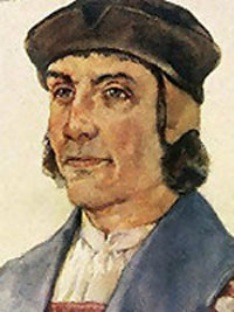
Of course the virtual world is nothing new. Any time spent surfing the Internet especially through social interaction via the many social media sites available is time spent in the virtual world (and as is any fantasy experience such as getting lost in a good book). Yet this is still a 2D virtual experience. You are fixed to it but not completely immersed in it. VR has the potential to change all that. The 3D experience it offers is still very limited but with time the potential for further development is enormous. Yet perhaps it will never be a viable substitute to real life experiences? At least I hope not. I for one would rather still travel around different parts of the world the hard way, preferably overload via clapped out public transportation. But what if sometime in the future when every nook and cranny of the world becomes connected to the Internet, travelling virtually becomes a real possibility? Google Maps has already done a sterling job in shrinking the world and making it easier to navigate than ever before. Two of the original pioneers of globalisation, the Portuguese explorers Bartholomeu Dias and Vasco Da Gama, would be astonished with this progress.

image

The 15th century Portuguese explorer Bartholomeu Dias


But if VR could provide even higher degrees of sensations than those experienced through real life experiences than it has a serious future. One area of pleasure that springs to mind is sex. I can with complete certainty see the growth of the virtual sex industry growing exponentially via VR as its main vehicle. And with synchronisation from additional growing technologies like haptic technology (which enables one to feel something virtually without actually physically touching it) than the potential for experiences and sensations even more intense than the real thing is very high. Yet this idea both scares and disconcerts me. This is one of the ugly sides of VR which seems unavoidable. Sex sells and there will be some people becoming obscenely wealthy through this.


The Digital Love Industry documentary


But what disconcerts me the most with VR technology is the further separation and isolation it will bring on its users. It will become so addictive and immersive, that there is a real possibility people will be living almost 100% of their days awake (un-awake spiritually) virtually. I would guess that currently many people spend at least 50% of their days awake virtually via the internet and social media sites.

What the Internet has achieved is an increased fragmentation and separation of global society (even though it has, ironically, provided the tools for greater connectivity with one another than ever before). VR has the potential to speed up this fragmentation. In spite of the rise of the net, there are still ‘hubs’ where people meet. And cities, towns and villages where people live. Communities (although decreasing) still exist. Yet if everybody were to live all of their daily lives (including their professional lives) via 3D virtual reality (and have all their provisions delivered by super fast drones), one could live anywhere in the world with an internet connection. The very concept of cities, towns and villages could blur (a wild and demented prediction but what if this occurred?).

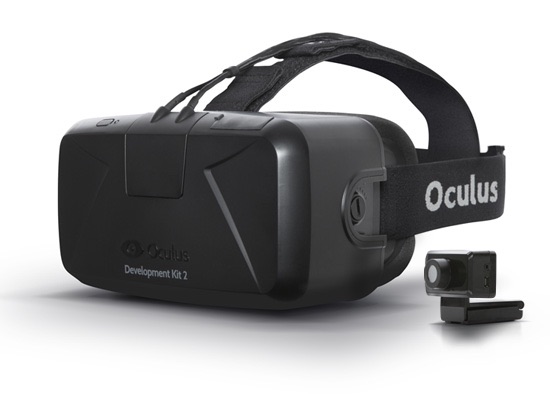
VR could mean a future where people almost only communicate and socialise virtually. I think Facebook knows this hence their purchase of the VR company Oculus VR two years ago, which may prove to be a very shrewd move. Communicating via Facebook is still a 2D virtual experience but with the additional VR vehicle of the Oculus Rift device, this 2D experience is transformed into a 3D one. And how many Facebook users currently are there?

image


Oculus Rift VR device


What implications would this increased disconnection from the real world have? Could there come a time when real life socialising dramatically decreases? People meeting one another face to face less? People not having real and meaningful relationships anymore? People not going to cafes, bars, pubs or clubs anymore like they used to? The rise and development of the Internet has already had a catastrophic impact on physical high street retail outlets (through the rise of e-commerce giants like Amazon), that could VR be the final (or penultimate) nail in the coffin for the high street? Could most leisure activities like nights out to pubs and clubs, social meet-ups in coffee shops, holidays abroad and travelling to exotic places, going to gigs and festivals, day trips to theme parks etc, almost disappear if VR really takes off? Such a scenario depresses me. I hope I am talking rubbish and none of these situations occur.


image

Back to nature


Yet the real world is always there. No one is forcing me to be deeply sucked into VR. I can take it or leave it. The Internet and the fast pace of globalisation has already succeeded in making the world a smaller place but the world becomes a larger place again if one is prepared to free themselves from these digital shackles for just a moment.

by Nicholas Peart

13th May 2016

(All rights reserved)