CRATE DIGGING IN MOROCCO: On The Hunt For Vintage Moroccan Vinyl Records

My time spent in Morocco during the months of November and December last year proved to be quite fruitful overall in my search for old vinyl records in this country. This was my sixth trip to Morocco. I have travelled extensively across the country in the past yet I knew very little about the country’s music and musical history. 

In the months before I embarked on this trip I tried to look for old Moroccan music on the internet and even created a YouTube playlist of old Moroccan songs I discovered and found interesting. Via the online vinyl records database site Discogs, I also stumbled upon an interesting and esoteric compilation entitled Kassidat: Raw 45s From Morocco released in 2013 on a small label called Parlortone. I loved the songs on that compilation and began to find out more information on the old major Moroccan record labels such as Boussiphone, Casaphone, Koutoubiaphone, etc, and all the many releases on those kinds of labels. I also discovered some very helpful blog posts written a number of years before my trip by travellers who documented their digging adventures and stories across the country. These blog posts were very helpful and gave me in advance a taste of some of the music and artists to look out for, including some unique Moroccan singers and musicians. 

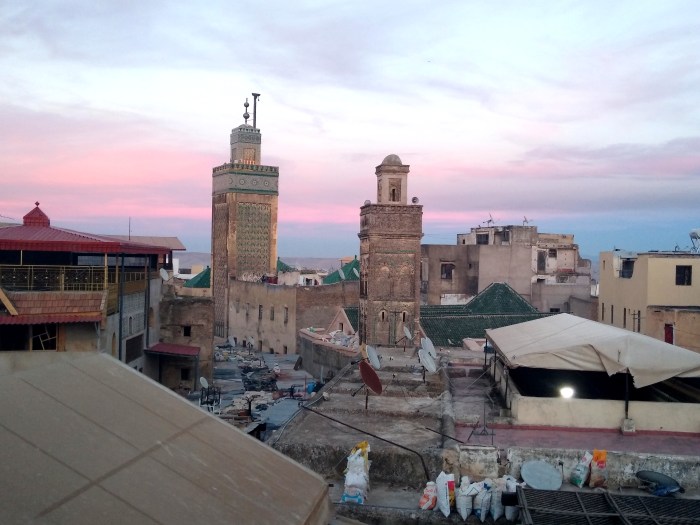
My Moroccan crate digging (mis)adventures begin in the old walled medina of the imperial city of Fez. The medina is a veritable never ending labyrinth of narrow and winding passages. It is an awesome and fascinating place yet it’s equally at times an overwhelming, high pressure and high octane experience. Some of the souk sellers are hardcore in their persistence of persuading you to buy stuff from their shops even if you only project a mild glance. 

Deep in the medina I find a small bric-a-brac type shop selling miscellaneous junk shop bits. In the corner of the shop, I spot a small pile of 7 inch records (or 7s as I like to refer to them). The records look exactly like the kind of discs I am looking for and superficially tick all the boxes. Alas, on closer inspection some of the records are in very poor condition. I discover cracks and heavy scratches on the surface of some of the records. Also, I notice that many of the records are not in their correct sleeves. I have no intention of buying any of these records even though the shop owner is insistent on giving me a ‘good price’. I reply with a calm but firm ‘La shukran’ and continue down the endless maze of the medina. 

The medina of Fez

In a quiet and more sedate part of the medina, I find a nondescript hole-in-the-wall cafe where I pause for a strong pot of pick-me-up the a la menthe with enough sugar to give me some serious dental decay. If I were a careers advisor in Morocco, I would recommend a career in dentistry as you will always find work! But I digress. This is just what I need right now at this moment in time. This brew sustains me in this can’t-stand-the-heat kitchen of Fez’s medina. 

On the way back to my riad accommodation, I stumbled upon a small and cosy antiques shop exuding a laid back old bohemian vibe. An old John Lee Hooker song hums from the back of the shop. Situated amongst the pillars and stacks of trinkets smoking on a pipe is the shop’s owner, Omar, who could be a throwback from 1950s Tangier when the city’s residents included the Beat writers William S Burroughs and Allen Ginsberg. Omar is a dude and refreshingly bereft of the characteristics of many of the grade A hustlers in the medina. In his humble little emporium he has a sizable pile of vintage Moroccan 7 inch records unstably resting upon each other like jagged mini Babel towers. Next to the 7s is a stack of dusty LPs, but it is the 7s that interest me. A lot of the records are in tired condition, but there are a number of records that are not too bad and with some thorough cleaning I could probably restore them to a much better condition. My fundamental rule here is to avoid the records that are severely trashed – regardless of how rare they may be. Any records that are cracked or heavily scratched are a no-no for me. Omar has the records I am looking for. On my initial visit to his shop I purchase two old Moroccan 7s that look interesting and are in good condition. The first record is on the Koutoubiaphone label by Rais Hmad Amentag, a traditional Berber singer and musician. And the other 7 is on the Atlassiphone label by Chaab Mohamad Hilali. I have no idea who either of them are but they look intriguing. Omar wants 40 Dirhams for each record, but we agree on 50 for the two. 

For the remainder of my stay in Fez, I make a few more visits to Omar’s shop where I purchase more records. I would say that in total I purchased 10 records from him. I found some crackers in his shop including a couple of 7s on the Boussiphone label by Mohamed El Aroussi, who is a jbala style composer and singer from the Taounata Province, as well as a rare 7 by Albert Suissa, a Moroccan Jewish musician from Casablanca. The Suissa 7 was released on the label, Editions N. Sabbah, which was an old label from Casablanca dating back to the 1950s that released many records by Moroccan Jewish musicians. I know very little about the music of Jewish Morocco, but it was thanks to a blogger called Chris Silver and his excellent and revelatory post, Record Digging, Cassette Collecting and Musical Memory In Jewish Morocco, published in 2012, that I was able to learn a bit about it and it was through this post that I first became aware of Albert Suissa and other notable Moroccan Jewish musicians and singers. 


Most people who come to Fez will visit the famous medina, but very few venture to the Mellah, the old Jewish quarter of Fez. Morocco used to have a large Jewish community. Before the state of Israel was established in 1948, around 265,000 Jews lived in Morocco making it the country with the biggest Jewish population in the Muslim world. By 2017, that number had been significantly reduced to only a couple of thousand. When Morocco had a sizable Jewish population, the mellahs in the large cities were thriving. Sadly, as the Jewish population diminished over the years, the mellahs fell into a state of neglect. But the mellah of Fez is not a sleepy part of the city. There are some amazing old buildings, albeit in a crumbling and worn state.

The mellah of Fez

There is an energy here, but thankfully it isn’t of the intense and high stress variety that one finds in the medina. Here nobody bothers you or tries to sell you anything. My random mellah wonderings lead me to a small block of antique shops. The first of these shops that I visit has a small pile of vinyl LPs on the floor near the entrance. I have a hurried flick through them. Sadly none of the LPs are of much interest to me and are mostly European landfill records from the 1970s and 1980s. However, in the next shop I visit I spot a stack of vintage Moroccan 7s on a table at the back. They look promising and I dig out two 7s including a rare 7 by Fatima Zehafa, an old aita singer from the town of Settat, on the Ifriquiaphone label. The shop owner wanted 100 Dirhams for both 7s, but we eventually agreed on 60. 

Fez crate digging fruits

From Fez, I take the train to the nearby city of Meknes, only an hour away. I stay at the faded French colonial style Hotel Majestic in the pleasant and rather modern nouvelle ville. In the morning of my second day in Meknes, I have breakfast and then take a petit-taxi to the old walled medina part of the city. The medina of Meknes is big with lots of souks, but it is free of the almost constant hassle of the medina of Fez. Walking deeper into the heart of the medina I soon enter a marche brocante area with lots of stalls selling antiques and other miscellaneous items. One stall displaying a dazzling kaleidoscope-like array of old trinkets and bits catches my eye. The elderly owner has a modest stash of old dusty 7s that I dig through. Unfortunately, many of the records are in a sorry state and when I do find a record in reasonable condition it is not in its correct sleeve. 
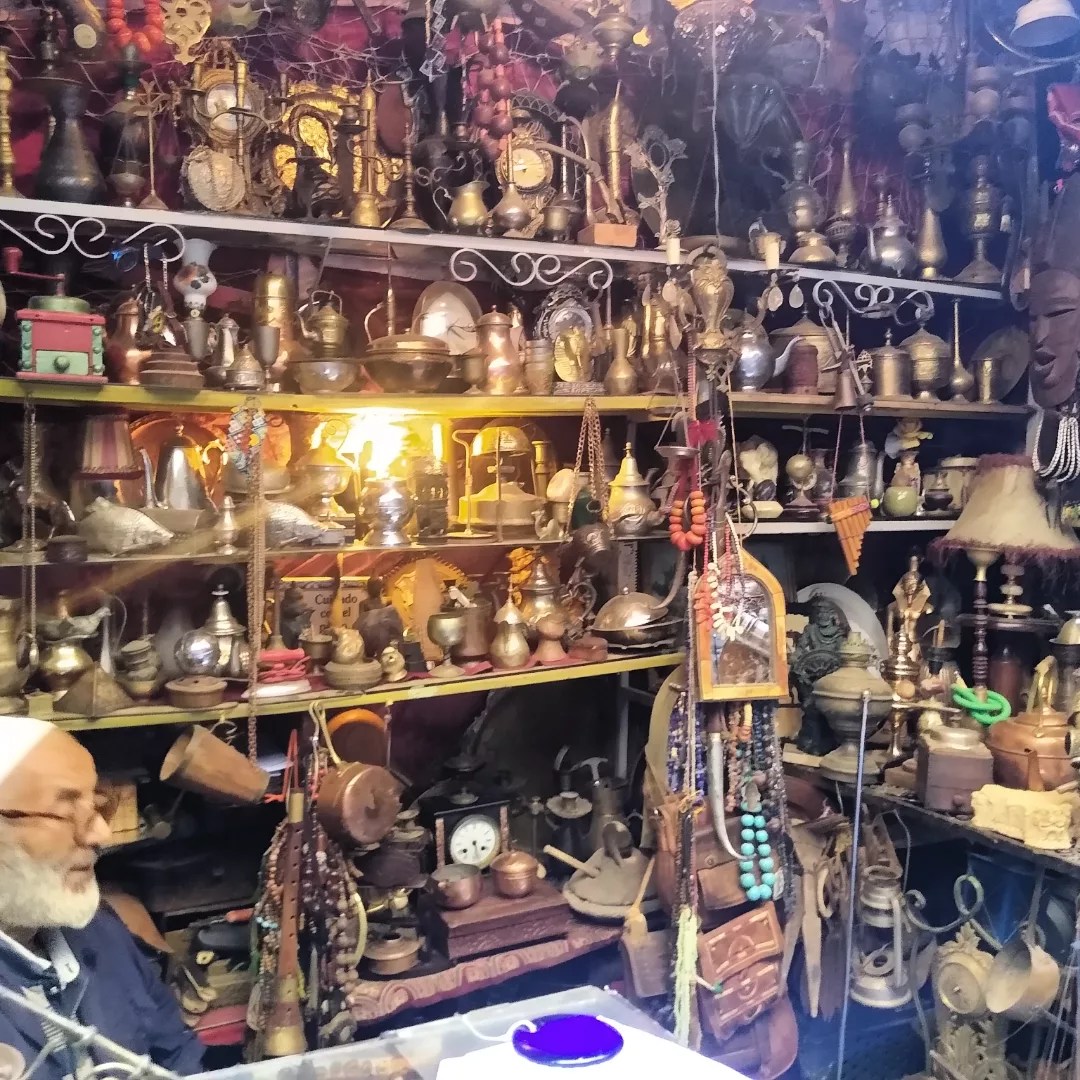
The medina of Meknes

Meknes doesn’t yield much in my digging searches. Fortunately, I have more luck in Rabat, the capital of Morocco and the next city I visit. In the eastern part of the medina of Rabat towards the end of Rue Souika is the old market of Rabat. Here I discover a number of antique and bric-a-brac shops. The first one I visit is run by a bona fide curmudgeon. He brings over a pile of old 7s. It is not a bad stack at all. It’s a mix of vintage Moroccan records with a smattering of records from Egypt and Lebanon. I pick out a nice looking 7 by the Lebanese singer Fairuz. It is however not a Lebanese pressing but a French pressing. The owner wants 100 Dirhams for the record. When I offer 30 for it, the owner snatches the Fairuz record from my hand and slams it down on a nearby table. I never witnessed Omar behaving like this, but to be honest Omar was likely so stoned most of the time that losing his temper must have been too much effort. Omar is a cool dude. This guy, on the other hand, has some serious unchecked aggression.  I think about duly getting the fuck out of his shop. But in no time the shop owner cools down, relaxes his composure and points me to a small tray of records on the ground. On first impressions the records don’t excite me, but the owner tells me that they are 25 Dirhams each. Most of the records in the tray are charity shop 70s Euro Pop fodder destined for the bonfire. I do however get lucky and unearth a vintage Moroccan 7 on the Casaphone label in great condition and an immaculate old Egyptian 7 on the Sono Cairo label in its original company sleeve. 25 Dirhams for each of those records is an excellent price and I don’t even haggle with the owner. 

The medina of Rabat

I visit a couple more shops in the old market. Both shops have records, but I don’t find any that interest me. The next day, I return to the old market of Rabat and randomly check out a small bookshop. I ask the owner whether he has any records? ‘Arabic?’ he replies. I nod my head and he brings over a modest stack of 7s in varying degrees of condition. I select six of the better records from the pile. The ones I pick are all in playable condition with their original picture sleeves. Initially, the owner asks for 300 Dirhams for the records. I put my hustle muscle to work and we eventually agree on 130 Dirhams. These finds include a record by the Egyptian musician Abdel Halim Hafez on the Lebanese Voix Du Liban label as well as a record by the Moroccan singer Fathallah Lamghari on the Ifriquiaphone label and another record by an old Moroccan singer and songwriter called Brahim El Alami on the Koutoubiaphone label. 

From Rabat I continue on the train along the Atlantic coast to nearby Casablanca. Casablanca is huge and a grittier city than Rabat. In contrast to Casablanca, I found Rabat a more relaxed and accessible city. Fortunately, Casablanca has a modern tram system and I am able to reach my hotel without too much bother from Casa Voyageurs train station. From reading the aforementioned Record Digging, Cassette Collecting and Musical Memory In Jewish Morocco blog post by Chris Silver, I learn about two record shops located in Casablanca, which I am excited to visit. The first record shop, Le Comptoir Marocain de Distribution de Disques, looks encouraging. It is located only a few streets away from the Hotel Astrid where I am staying. When I finally reach the shop it looks permanently defunct. I later learn the sad news from the owner of a nearby shop that the shop closed down during the COVID pandemic. And much to my dismay again, the second record shop, Disques Gam, also appears to have ceased trading. 
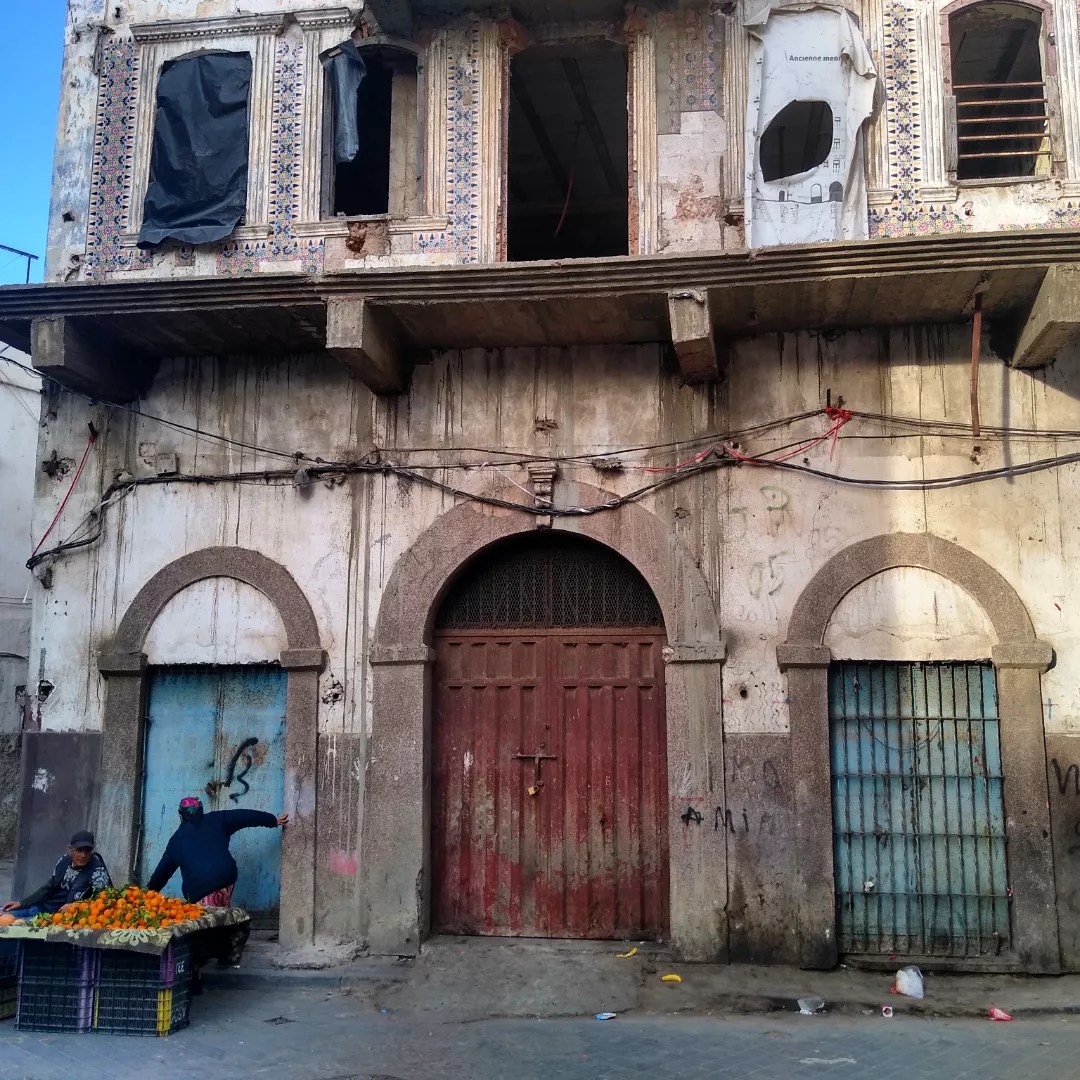
Downtown Casablanca

Casablanca is a spicy city. It is the commerce capital of Morocco and for that reason it is not so reliant on tourism like Marrakech is, for example. I love exploring the streets of Casablanca. There are some amazing old faded French colonial era buildings in the centre of the city. When I walk along the streets close to my hotel I feel as if I could be in Marsaille or the Riquier district of Nice. Yet on the fringes of the city’s enormous old medina I know very well that I am in Africa. The old medina surprisingly disappoints in my search for old records. Casablanca hasn’t delivered the goods. However, one day when I am walking along one of the Parisian style arcade streets close to the Place Mohammed V, I spot a stall selling old records. There is a large pile of LPs on the round along with a few 7s. Most of the LPs are no great shakes, but I do find an original UK edition of the second album by Terry Reid – an English musician from the 1960s-70s, also known for turning down an offer by Jimmy Page to be the singer for his new band Led Zeppelin. The vinyl is in respectable condition, but the sleeve is completely destroyed. The 7s are a different story. I find three 7s that interest me. One of the 7s is a rare Algerian pressing. Sadly, on closer inspection of the vinyl I detect a crack on the surface of the vinyl and end up passing on it. The second record is by an old Moroccan Jewish musician called Haim Botbol released on the Boussiphone label. I later discover that the Botbol record is also quite rare. The third record is by an old Berber musician on the La Voix Du Maghreb label. The record seller is very pleasant and is happy to accept 60 Dirhams for both the Botbol record and the record released on the La Voix Du Maghreb label. 

Place Mohammed V in Casablanca

On my penultimate day in Casablanca I visit the Derb Ghallef market en route to the Museum Of Moroccan Judaism. Derb Ghallef is raw. Located south of the centre of the city, it isn’t for the faint of heart but I recommend a visit for those who want to experience a taste of rough and tumble Casablanca. The markets sells lots of electronic goods as well as furniture and building parts. When I visit I find a couple of antique shops, but alas no luck in finding any old Moroccan records. 

From Casablanca, I take the train further south down to Marrakech. Marrakech, one would think, with its abundance of souks in the old medina would be a mecca for crate diggers. Unfortunately, during my stay here this has not proven to be the case at all. That is not to say that there is an absence of places to find records. There are, but I encounter hurdles. The first shop I visit, close to the large Jemaa El Fna square in the medina of Marrakech, sells an assortment of traditional musical instruments. When I discover a small stash of 7s, I have a brisk plough through them and select a few that interest me. The young owner of the shop is a stubborn and temperamental sod and refuses to accept less than 100 Dirhams a record. This is madness as the records are not uber rare and I personally wouldn’t pay more than 30 Dirhams for each one. 
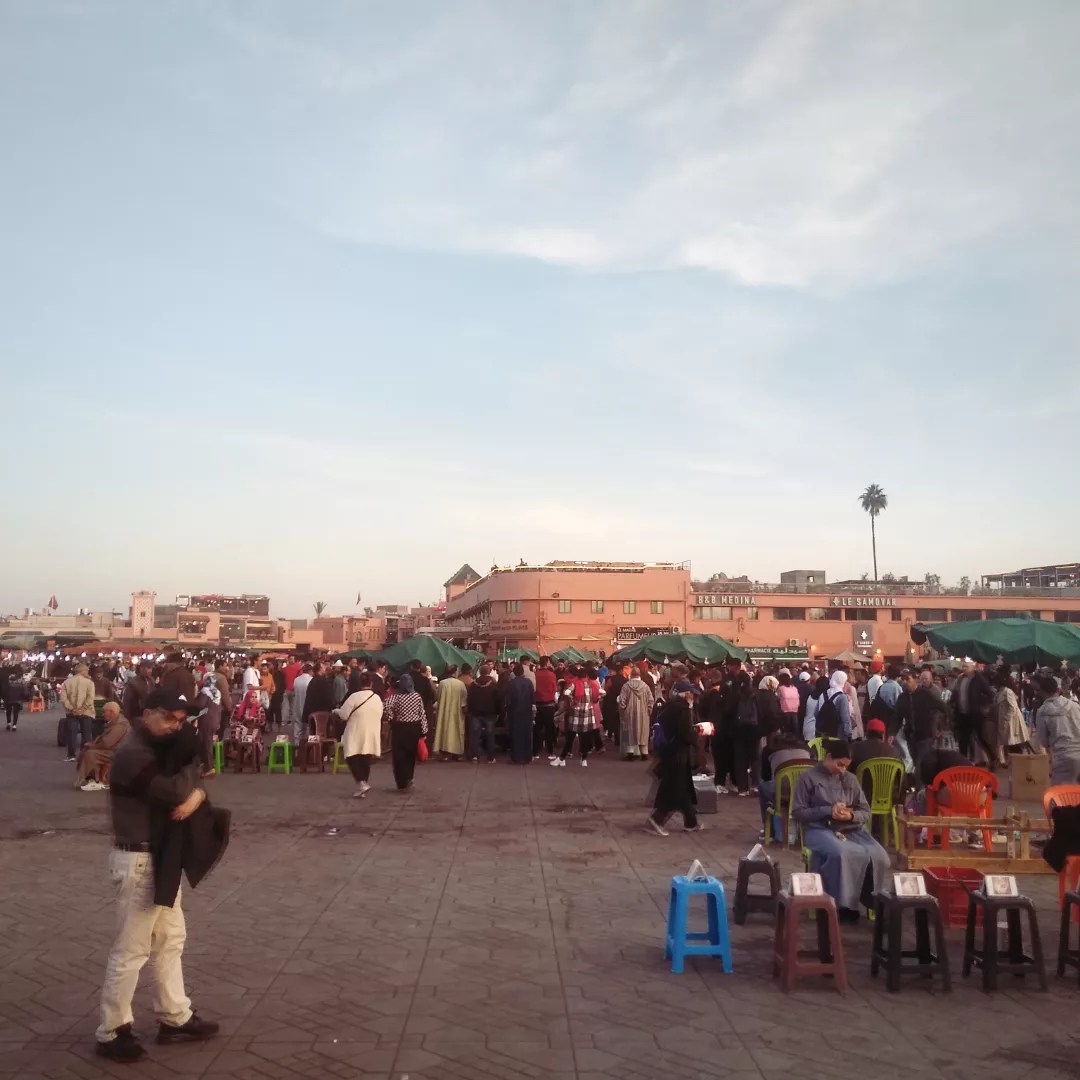
The Jemaa El Fna in Marrakech

At another shop I visit in the medina, I ask the owner whether he has any magic Moroccan 7s? He tells me that there is a record shop only a few shops away and that he will take me there. We end up walking for close to ten minutes and, being rather asleep at the wheel here, it dawns on me that I will have to give this guy some form of baksheesh. When we arrive at the record shop he becomes grumpy and predictably demands payment. I hand him a few coins and thankfully he leaves. I have to admit I am underwhelmed by this record shop. Many of the records are in an irrevocably fucked state. He has an original LP by the Egyptian singer Umm Kulthum. Both sides of the vinyl look like the surface of the moon. The owner wants 300 Dirhams for the record, which is a preposterous price. When I put the vinyl on the shop’s record player, it skips all over the place and fails to play properly. The owner remarks that the reason for this is nothing to do with the fact that the record is totally mutilated, but rather because ‘the record player is no good’. After this incident, I come to the conclusion that the main Marrakech medina around the Jemaa El Fna square is not the place for crate digging. And this suits me fine as I find the whole experience of being in this place for too long like being in a medieval free-for-all open prison. I can’t breathe. 

But I don’t give up entirely on Marrakech. At a small shop by a rank of grand taxis outside of the medina, the kind owner recommended that I visit a market on the northern outskirts of the medina called Souk El Khemis. A small local bus departing from close to the Jemaa El Fna takes me to this part of the old town in around 20 minutes. The market here is different to the souks around the Jemaa El Fna. Here, there are no other tourists and nobody bothers me. The souks here sell mostly household goods. There is a souk selling large ornate old wooden doors. Another souk sells bed frames and mattresses and others sell mechanical parts and a variety of secondhand home products. The bit of the market that interests me is the souk full of bric-a-brac shops. The first of these shops I enter sells lots of old books and miscellaneous antiques. In the back corner of the shop I find a cardboard box containing a stack of LPs. Most of the LPs are not what I am looking for and I sadly don’t find any old Moroccan LPs. However, I do unearth an original LP from the 70s on the EMI Egypt label by the Egyptian singer and composer Mohamed Abdel Wahab. The sleeve is slightly worn around the edges, but the vinyl is in stunningly pristine condition. I can’t detect a single blemish on either side of the record. What’s more, the owner lets me have the record for only 50 Dirhams. In an adjacent shop I found a 7 in respectable condition with its original picture sleeve by the Syrian-Egyptian singer Farid Al-Atrash released on the Moroccan Casaphone label. The pleasant and easy going owner is happy to accept 30 Dirhams for it. 

From El Khemis, I walk a few kilometres on the road leading to Bab Doukkala at the edge of the medina. There are lots of informal sellers selling all kinds of random items and bits of junk. At one point I see a landslide of miscellaneous crap strewn across the side of the road – like a kind of odd homage to Kurt Schwitters. 
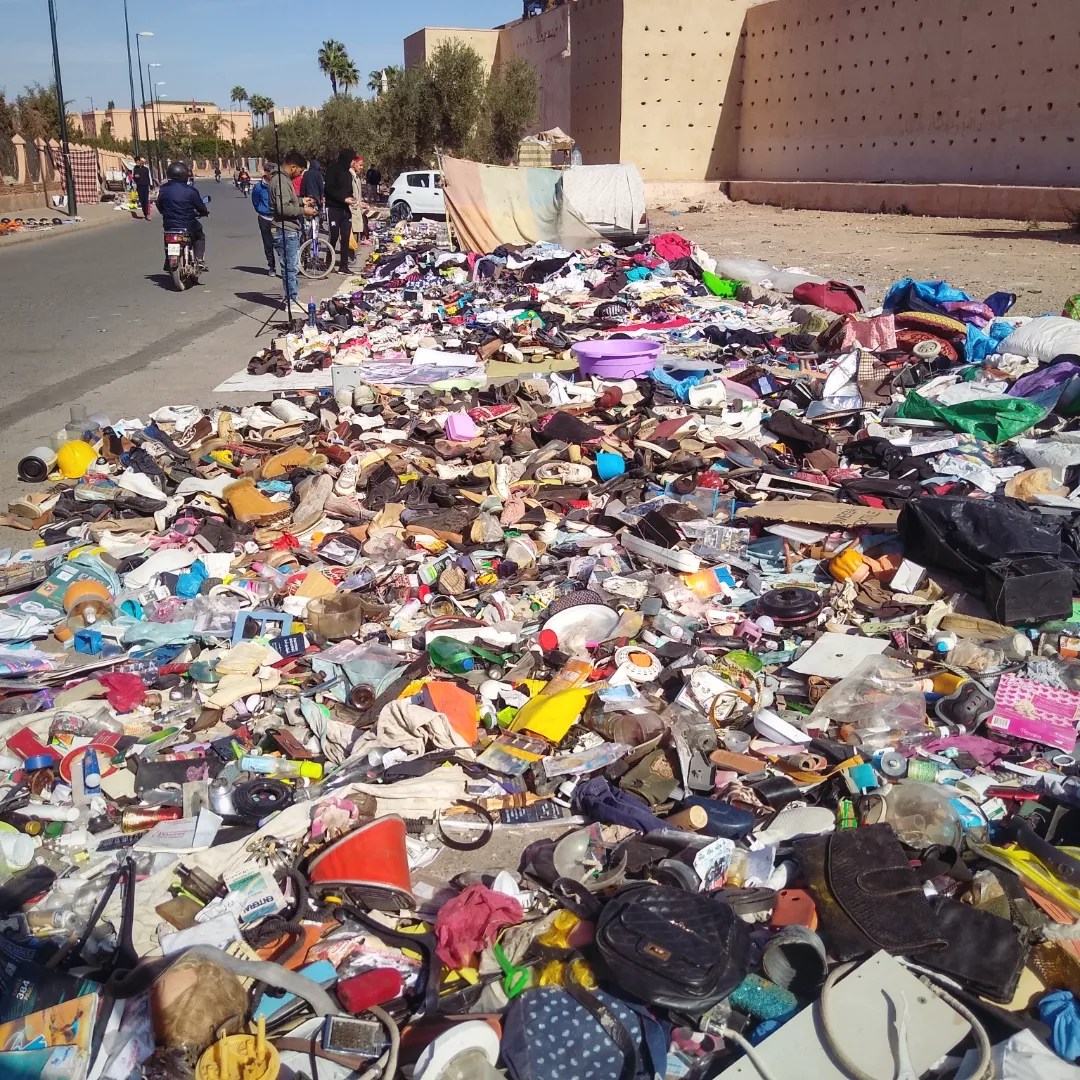
Outskirts of the medina of Marrakech

After Marrakech, my Moroccan travels take me to Essaouira, Agadir, Tiznit, Sidi Ifni and Taroudant. I find a few more vinyl bits in these places, but all in all I would say that the cities of Fez and Rabat have been the most rewarding for digging. In the attractive coastal town of Essaouira, I visited a shop close to the main square that appeared to be owned by an elderly French chap. The shop sold many old books and a few racks of old records. He had a fantastic collection of old Moroccan records – one of the best I’ve seen on this trip. Unfortunately, as wonderful as the records were, I found the prices a bit too high for my liking. 

I find a smattering of old Moroccan records in the souks of the medinas of Taroudant and Tiznit. In the coastal city of Agadir, I visited the Souk El Had – one of the largest souks in Morocco. Sadly, records are quite thin on the ground here, but I do find a small shop with a modest collection of 7s. From this pile I dug out two interesting old Moroccan records on the Casaphone label. I managed to get them both for 50 Dirhams. The record digging highlight of Agadir for me though is a cool little record shop located not too far away from the market called Records Zaman run by a pleasant young man called Amine. It was founded back in 1967. The shop may be small, but there are quite a number of records to dig through. There are a few rare original Moroccan LPs on the display racks on the walls, but alas they are out of my price range. I dig through a crate of LPs that are mainly western Rock and Pop albums. The crate that does interest me contains a couple of rows of old Moroccan 7s. Whilst digging through them I pull out an old record on the Editions N. Sabbah label by the Jewish Moroccan singer Feliz El Maghrebi. Save for a slight edge warp, the record and picture sleeve are in near perfect condition and Amine lets me have it for a good price. I must have spent a good hour chatting with Amine. He is great company. His English is very good and he shows me his own personal collection of LPs containing some very rare and obscure records across the Arabic world. Amine has a deep love of music and I feel that with him at the helm, Records Zaman will become an increasingly popular record shop to visit. I wish him all the best. 

Text and photos by Nicholas Peart 

8th February 2024

© All Rights Reserved   

LINKS/FURTHER READING:

https://jewishmorocco.blogspot.com/2012/11/record-digging-cassette-collecting-and.html

https://terminal313.net/2016/04/feature-dusty-vinyl-from-rabat.html

The Anti-Tourist

According to the writer Daniel Kalder;

‘As the world has become smaller so its wonders have diminished. There is nothing amazing about the Great Wall of China, the Taj Mahal, or the Pyramids of Egypt. They are as banal and familiar as the face of a Cornflakes Packet.’

He further embellished on this via the following decrees originally established at the Shymkent Hotel in Shymkent, Kazakhstan on October 1999 as part of the so-called ‘first international congress of Anti- Tourists’;

The duty of the traveller therefore is to open up new zones of experience. In our over
explored world these must of necessity be wastelands, black holes, and grim urban
blackspots: all the places which, ordinarily, people choose to avoid.

The only true voyagers, therefore, are anti- tourists. Following this logic we declare that:

The anti-tourist does not visit places that are in any way desirable.

The anti-tourist eschews comfort.

The anti-tourist embraces hunger and hallucinations and shit hotels.

The anti-tourist seeks locked doors and demolished buildings.

The anti-tourist scorns the bluster and bravado of the daredevil, who attempts to penetrate danger zones such as Afghanistan. The only thing that lies behind this is vanity and a desire to brag.

The anti-tourist travels at the wrong time of year.

The anti-tourist prefers dead things to living ones.

The anti-tourist is humble and seeks invisibility.

The anti-tourist is interested only in hidden histories, in delightful obscurities, in bad art.

The anti-tourist believes beauty is in the street.

The anti-tourist holds that whatever travel does, it rarely broadens the mind.

The anti-tourist values disorientation over enlightenment.

The anti-tourist loves truth, but he is also partial to lies. Especially his own.

Considering these resolutions were written a little more than 20 years ago, I wonder what Kalder would make of travelling today? In 1999, the internet was barely a few years old. Back then, households that had an internet connection had a slow dail-up connection. There was no broadband and neither were there smartphones. 1999 seems rather ancient compared to the world today in the context of the exponential growth of global digital connectivity.

The world today is much more globalised than the world of 1999. A consequence of this has been even more demand to visit the worlds ‘wonders’ be it the Taj Mahal or the Great Wall of China or cities such as Venice and Florence. The ‘very desirable’ places that the so called anti-tourist snubs.

Then again, on the other hand, such wonders are an important part of the history of a country regardless of whether they are popular or not. Most visitors to India visit the Taj Mahal yet the Taj Mahal is an important part of the history of the Mughal Empire. Indian history is fascinating and one of the best documenters and narrators of this history is the writer and historian William Dalrymple. Dalrymple is a black belt regarding the history of the Indian subcontinent and has a deep passion and interest for that part of the world. So much so that he has lived in India for over 35 years. What this means is that this goes beyond any labels or identity. Dalrymple is neither a tourist nor an anti-tourist. Traveller or dilettante. He is simply someone who loves the subcontinent and dedicates a substantial chunk of their time to writing, educating, reading and learning about it.

When I think of my very first trip to India, I did a lot of the typical tourist things. I visited the Taj Mahal in Agra, I visited all the well trodden places in Goa and went on popular tours. Yet I also, unwittingly, did a lot of anti-tourist activities. I stayed in some of the cheapest and most unsavoury guesthouses I could find. I ate street food at rock bottom prices. I developed a habit of roaming the streets of the more down and out parts of the cities I visited. I didn’t document any of this neither did I really brag about them. I had no digital social media accounts at the time and I never kept a physical journal. Friends and family would ask me if I was writing about my trip, but I had no desire to. It wasn’t indolence. I suppose I was adrift in multiple intangible fleeting experiences and frequent moments of disorientation and I had no inclination to hole myself in my threadbare guesthouse room to put it all down to paper. People often talk about ‘finding one-self’ or ‘becoming enlightened’, but I wanted to get away from myself. In at least a semi-masochistic way, I revelled in my anonymity and frequent discomfort.

Every time I spoke to a tourist who expressed an interest to visit Brazil they would invariably say that they wanted to visit Brazil during Carnaval and specifically visit the city of Rio De Janeiro. In my mind I would say to myself, ‘I would like to visit Brazil anytime except during Carnaval.’  During this period, especially in Rio, accommodation prices go through the roof, many parts of the cities become unbearably overcrowded and the levels of crime spiral out of control. Rio is already a dangerous enough city at night, do I really want to visit it when it becomes even more dangerous? Nao obrigado!

Staying on the subject of Brazil, one popular activity many backpackers undertake when they visit Rio is a ‘favela tour’. Favelas are slums located on the the outskirts of cities in Brazil. Rio has a much higher proportion of them compared with other cities in Brazil owing both to the layout of the city and the extreme inequalities of wealth. Even the richest neighbourhoods in Rio seem to be just a stone’s throw away from one. I think the popularity of such tours is down to the belief that backpackers think they are doing something ‘edgy’ and ‘non-touristy’. Yet the irony is, considering the relatively recent popularity of such tours, they are anything but. It may be considered ‘anti-tourism’ on the surface and such activities do conform to Kalder’s resolution; ‘The anti-tourist does not visit places that are in any way desirable’. There is nothing desirable about these favelas. Yet neither is it clever or cool to visit such places which are downright dangerous. Also most of the people that go on such tours do so to brag and get a so-called one-upmanship over other travellers. The anti-tourist would never brag or boast about such things. Furthermore, there’s no danger during these tours since you are always accompanied with protection just in case anything does flare up. My Brazilian friend Carlos finds it comical that such tours exist; ‘Why would any tourist want to pay to visit a favela? Anyone who lives in a favela wants to pay to get out!’

There are other tours with anti-tourist themes. They could be ‘street tours’, tours to visit abandoned buildings or tours to visit derelict and defunct places destroyed by war. When I visited Bosnia a few years ago I went on a tour in the capital, Sarajevo. The city was under siege for three years from 1992-95. It was a fascinating tour and I dont regret doing it. Our guide lived through this terrible period and almost died at one point during the conflict. It would be pathetic and poor form of me to categorise it as a tourist or anti-tourist experience. I don’t wish to plunge to such low depths.

I guess the bottom line is that the anti-tourist does not purposefully try to be an anti-tourist. The anti-tourist is not aware that they are an anti-tourist. It is almost like a hardwired way of life with no underlying agenda or anything to prove. We seldom ever hear about such people, because they have no desire for notoriety. They prefer to remain invisible and anonymous.

Calling oneself an ‘anti-tourist’ is missing the point completely.


By Nicholas Peart

(c)All Rights Reserved  


Image: something-interesting.com

REFERENCES:

http://www.danielkalder.com/antitourism.html

What Makes A Country Poor Is Her Wealth

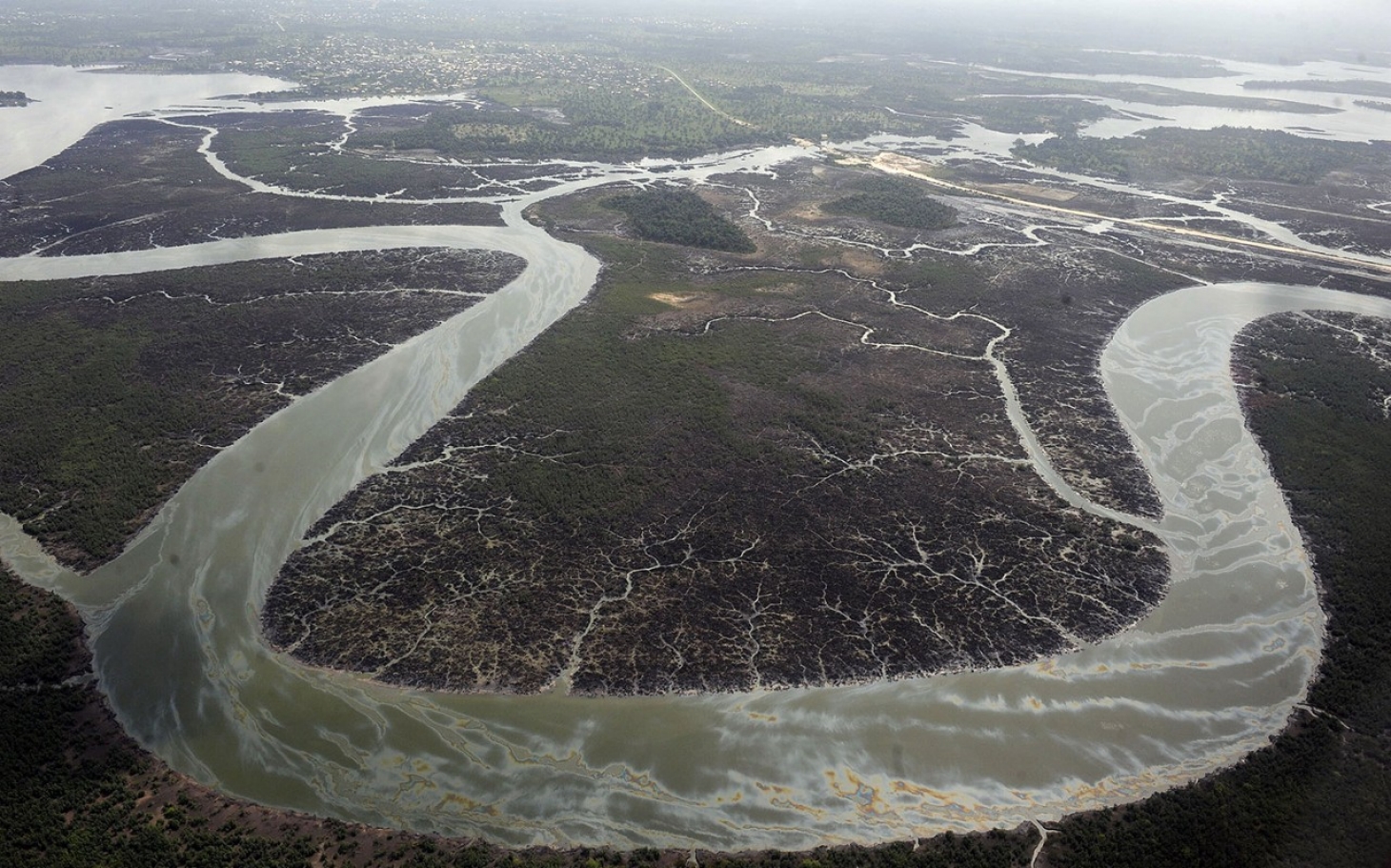
headlineImage.adapt.1460.high.nigeria_oil_theft_0901.1441162684190

‘What makes a country poor is her wealth’. Those are the words of a 16th century Spanish economist commenting on his homeland. One time many moons ago when I was having breakfast at a tourist café in southern Mexico, I overhead an American telling his friends, ‘Mexico is so rich in natural resources yet it is a poor country’. At the time I pondered over these words. Yet it was not until I reached Venezuela later on during my extensive trip of Latin America that those words began to have more weight with me.

Venezuela has one of the largest deposits of oil on the planet yet its history since it first gained independence from Spain has been rocky. As of today the country is in chaos with most of the population barely able to regularly access basic quotidian necessities. One story that famously did the rounds for some time was the one involving a shortage of toilet paper. Stories like these are inconceivable to outside spectators like myself. How could a country with such levels of natural wealth, fall so low? Venezuela is a breathtakingly beautiful country and I am fortunate to have some great and generous friends from this part of the world. In addition to its abundant natural resources, it has some of the most beautiful beaches on the continent (its entire coastline faces the Caribbean), rich and fertile land, pretty mountain towns and Spanish style colonial towns, a vast and diverse geographical topography etc – I could go on. But lets go back to those immortal words; ‘What makes a country poor is her wealth’. In 1973 and more than two decades before Hugo Chavez came to power, Venezuela experienced an unprecedented boom owing to a freak surge in the price of oil. The country’s oil revenues for that year alone were greater than all the previous years combined. Yet the former Venezuelan oil minister and co-founder of OPEC, Juan Pablo Perez Alfonso, refused to party denouncing oil as, ‘el excremento del diablo’ or ‘the devil’s excrement’. Furthermore he chillingly prophesized, ‘Ten years from now, twenty years from now oil will bring us ruin’.

With the exception of a small handful of nations, who had the foresight to diversify their economies away from natural resources, many natural resource rich nations are not as fortunate. Africa is loaded with natural resource rich nations that today still remain poor and underdeveloped. Angola and Nigeria’s vast oil and gas deposits have created more misery than prosperity for most of the population. Today Nigeria has one of the fasting growing economies in the world yet much of its future prosperity will depend less on oil and more on diversifying its economy and stamping out corruption. Norway and Qatar are two oil rich countries. Yet both countries also have a substantial sovereign wealth fund. This means that when the price of oil is depressed, they have a cushion to land on during the lean times.  Saudi Arabia, arguably the most oil rich country on the planet, for too long was overly reliant on its number one export yet in recent times it has followed in Norway and Qatar’s footsteps by establishing its own sovereign wealth fund to diversify away from the black stuff. Hopefully Venezuela, once it is finally able to free itself from the destructive Nicolas Maduro regime, will follow suit.

It is a blessing in disguise that the UK (barring the North sea offshore oil and gas deposits in Scotland) is not a natural resource rich country. This means that in order to maintain financial prosperity, it has to retain a dynamic and business friendly economy.


By Nicholas Peart

(c)All Rights Reserved


Sources/Reading material:

‘The Devil’s Excrement’ by Jerry Useem (2003)


Image: Aljazeera.com


Wonderings In The Northwest Bulgarian Town Of Vidin

The Bulgarian town of Vidin is located in the northwest corner of the country on the border with Romania. Separating the two countries is the river Danube and a modern bridge. Vidin is an overlooked town, which not many people visit. In fact, during my stay I didn’t encounter a single tourist. Entering the town from the train station one is not immediately taken by the town. But spend a day on foot exploring what this town has to offer and one starts to view it in a whole new light. It’s jewels don’t immediately reveal themselves and require a dose of curiosity.

Arriving in Vidin was my first taste of Bulgaria. Unlike Romanian, Bulgarian is not a roman language, but a Slavic one using the Cyrillic alphabet. Fortunately I can decode most of the alphabet even if I can’t speak a word of Bulgarian. I also learn that the Cyrillic alphabet is a derivative of the Glagolitic alphabet founded in the AD 850s by the Saints Cyril and Methodius and then later introduced in AD 886 by the Bulgarian Empire. Today the Cyrillic alphabet is used in many Slavic countries including Russia, Serbia, the Ukraine, Macedonia and even in Mongolia, which is a non Slavic country.

After locating a place in the town to change my remaining Romanian Lei into Bulgarian Lev, I focus on finding the address of my accommodation with the help of the Google Maps app on my phone. I am glad I didn’t take a taxi. Not only is my accommodation located not so far away, through walking the distance to it, I develop a feel for where I am.

My accommodation is situated in an old grey Communist-era low rise building. Inside the building, it’s less austere. On the level where the flat is located there are several plants on the balcony. Plants never fail to lift one’s spirits. The hosts, a middle age Bulgarian couple, are very warm with big hearts. Their flat is homely and aesthetically tasteful. Its light and warm. My bedroom I discover is very spacious and I have a double bed. It is perfect. I am offered Bulgarian tea. Ten minutes later Krasi one of my hosts returns carrying a vintage traditional blue tray containing a cup of tea, a pot of sugar and a separate plate with a generous wedge of homemade milk cake. It is awfully good and I feel very touched to be at the receiving end of such generous hospitality.

IMG_20181105_124110620-1560x2080

Bulgarian hospitality

I’ve been up since 5.45am this morning and the temptation is very strong to go back to bed. But I want to seize the remainder of the day. After an interval of time spent in my room having my tea and trying too warm myself up, I leave my room to hit the streets of Vidin. Most of my neighbourhood is full of brutal boxy communist era flats. One could maybe be in a non descript middle Russia suburb. Yet with a smattering of more vintage architecture with an Ottoman tinge. Some of those older buildings look neglected. Vidin is not a wealthy town and is one of the poorer parts of the country yet it also has one of the richest and oldest histories.

IMG_20181106_115327499-1560x2080

Residential housing block on the outskirts of town


img_20181105_121404540-1560x2080.jpg

Crumbling Ottoman style architecture 

Back in the centre of town close to the train station, I aimlessly wonder the streets not venturing further than  and find a place to have some late lunch. I spot a canteen type diner with several different trays of local savoury and sweet dishes. I opt for the moussaka with a side of fried potatoes and another milk based cake for desert. After eating my food, I leave the restaurant and wonder some more before calling it a day and returning to my accommodation.

IMG_20181105_153321093-1560x2080

St. Dimitar monastery in the centre of town


IMG_20181106_125252317_HDR-1560x2080

In the centre of town with the Vidin Radio tower in the background

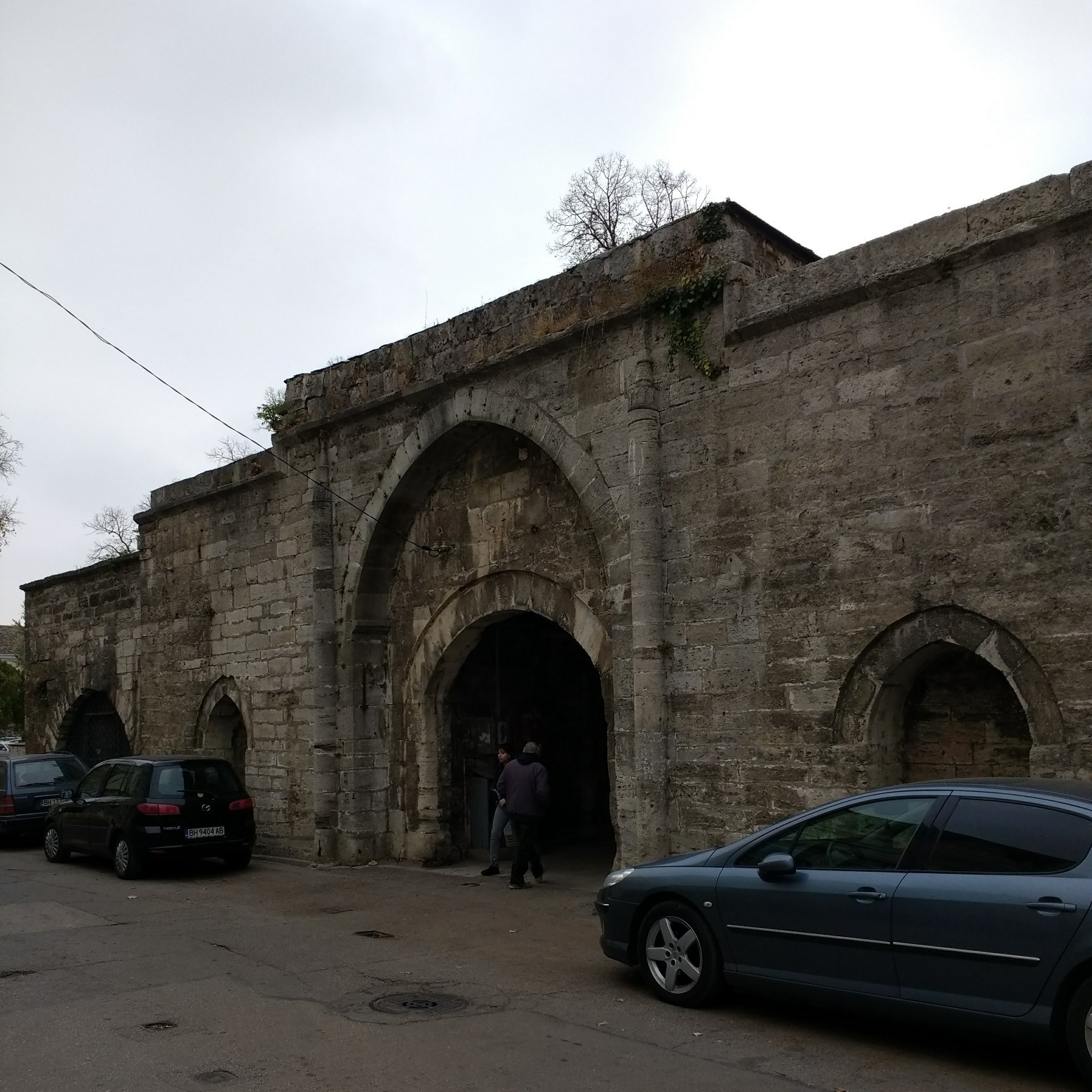
The next day is when things start to get cooking for me in this town. I walk back to the town centre and head for the old town district of Kaleto where the medieval Baba Vida fortress is located. Its the best preserved medieval fortress in Bulgaria. I approach the old town from an old walled entrance dating back to the times of the Ottoman Empire.

IMG_20181106_125110295-1560x2080

The entrance to the old town 

One of the most distinct and unusual landmarks in the old town is a derelict and abandoned synagogue. The synagogue was built in 1894 and for a time was Bulgaria’s second largest synagogue. Vidin had a thriving Jewish community for five decades since the 15th century with the arrival of the first Jews from Spain. Most of the town’s Jewish population emigrated to Israel after the Second World War. There were plans to restore the synagogue back to its former glory during the 1970s and a decade later work was in fact carried out, but it was abruptly cut short with the fall of the Communist regime at the end of that decade.

IMG_20181106_131557658_HDR-2080x1560

The abandoned Vidin synagogue 

Nearby the synagogue is a tall monument overlooking the river Danube. The so called ‘Monument of Freedom’ was built during the Communist regime. It is a structure in the Brutalist architecture genre and a relic from the Communist era of Bulgaria’s history.

IMG_20181106_145719860-1560x2080

‘Monument Of Freedom’

What is amazing though is the view of the river Danube, the second longest river in Europe after the river Volga in Russia. The river covers most of the border between Bulgaria and Romania, before discharging itself into the Black Sea in northern Romania close to the Ukrainian border. On a clearer day one can fully see the bridge in the distance connecting Bulgaria and Romania.

IMG_20181106_135449282-2080x1560

The river Danube separating Bulgaria and Romania

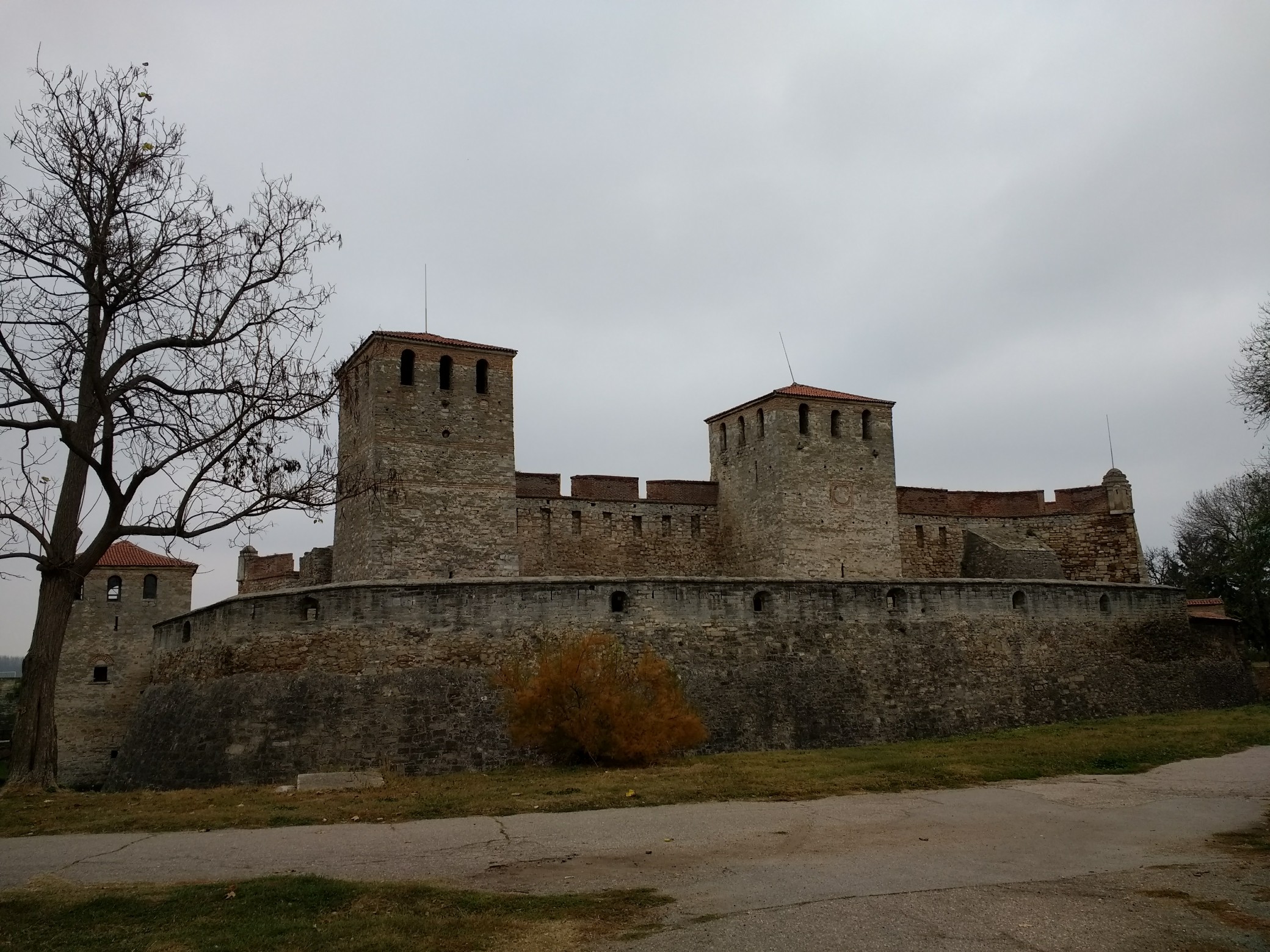
Only a short walk away is the town’s main landmark, the Baba Vida fortress, which literally translates to ‘Grandmother Vida’. The fortress dates back to the 10th century and was contracted on top of the site of an old Roman landmark called Bononia. The origins of the castle is based on a legend focused on a Bulgarian King and ruler of Vidin who had three daughters; Vida, Kula and Gamza. Before he died he divided his kingdom between his three daughters. His eldest daughter, Vida, was given the town of Vidin of whom the town is named after. And it is in this town that she built this fortress, where she lived unmarried and insolation. The fortress, Grandmother Vida, is named after her.

IMG_20181106_143952710-2080x1560

Baba Vida fortress

Throughout the town’s history the fortress has served as an important strategic base. During the 500 year long Ottoman rule of Bulgaria, the fortress was used as a prison and a base to store weapons. It is an impressive structure and little changed since its foundation. I spend some time walking around the complex and climbing one of the narrow stone staircases to reach the top level. At one point I almost lost my balance on the steps. There are not many protection railings as it isn’t designed for mass tourism. As a result one needs to be on their guard when inside.

IMG_20181106_135359551-2080x1560

At the top of the fortress

Other sites in the old town include the Krastata Kazarma museum, built in the classic Ottoman style. It was a military barrack during the Ottoman rule. Today it is the town’s ethnographic museum.

IMG_20181106_152528115-2080x1560

Krastata Kazarma museum 

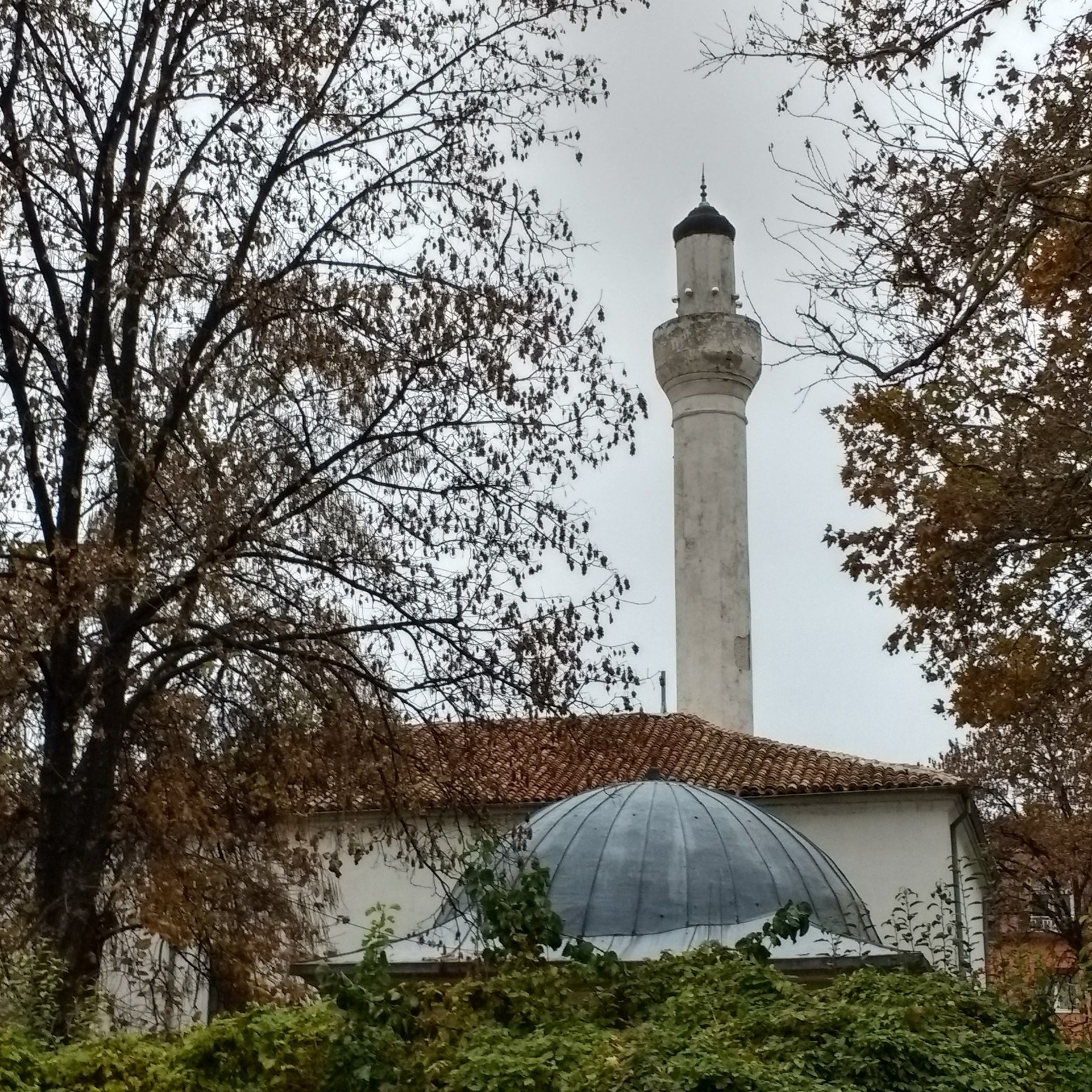
Else where in the old town is a mosque named after Osman Pazvantoğlu. Osman was an Ottoman soldier who was the governor of Vidin in the late 18th century. There is also a library in town named after him. Very near the mosque is an orthodox church named after St Panteleymon.

IMG_20181106_161051502_HDR-1560x2080

The Osman Pazvantoğlu Mosque


img_20181106_160655497-1560x2080.jpg

St Panteleymon orthodox church

On the edge of the old town by the Danube, is the Nikola Petrov art gallery. Petrov was a Bulgarian painter born in Vidin in 1881. Sadly his life was cut short by tuberculosis and he died at the age of just 35. The gallery has many of his works in its collection. However when I visited only a few paintings in one room were on display.  One small painting by Petrov on display is his painting of the Baba Vida fortress.

IMG_20181106_154337895-1248x1087

Nikola Petrov painting of Baba Vida fortress

Two other paintings on display that catch my eye are a painting by Ivan Ivanov of the mosque in the old town of Vidin from 1938 and another painting by Stoyan Venev from 1960 featuring a mother and her child at the shore of the Danube by the entrance to the Baba Vida fortress

IMG_20181106_153959805-1560x1256

Ivan Ivanov’s painting of the Osman Pazvantoğlu Mosque from 1938


IMG_20181106_154243625-1560x1451

Painting from 1960 by Stoyan Venev located by the entrance to the Baba Vida fortress

After visiting the art gallery, I take a walk along the banks of the river Danube. During my walk I cross paths with two young men. One of them is very drunk and proceeds to give me a slurred a rambled discourse of the history of Vidin in broken English. His friends asks me, ‘What the fuck are you doing in Vidin, man?’. He then adds that he spent three years living in Derby. He looks at his friend already halfway through his drunken impromptu history lesson and says, ‘Just ignore my friend. He’s crazy. He doesn’t know what the fuck he’s talking about’. I wish them both goodbye and good luck and I head back to my accommodation on the outskirts of Vidin.


By Nicholas Peart

(c)All Rights Reserved 


On The Brancusi Trail In The Romanian Towns Of Targu Jiu and Craiova

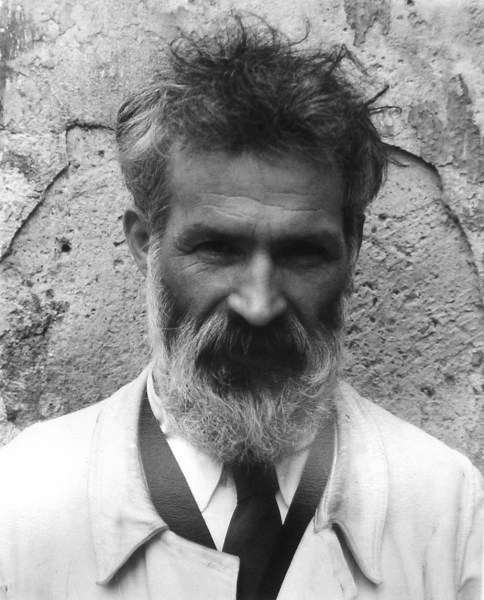
The Romanian born Constantin Brancusi was a leading sculptor of the 20th century and a pioneer of modern art. My first encounter with the great man was in Paris, the city where he lived for many years and where he met and became friends with many of the great artists, writers and poets of the 20th century such as Pablo Picasso, Amedeo Modigliani, Marcel Duchamp, Guillaume Apollinaire and Ezra Pound. His Parisian studio still stands today on the same site where the Pompidou Centre of Modern and Contemporary Art is located and he is buried in Montparnasse Cemetery along with other greats like Charles Baudelaire, Serge Gainsbourg and Jean Paul Satre.
OLYMPUS DIGITAL CAMERA                                                               Constantin Brancusi

From the city of Timisoara, located in the west of Romania, I embarked on a bus ride lasting nearly six hours to reach the country town of Targu Jiu. I was the only tourist on the bus and most of the journey comprised of driving through rural and provincial Romania. The Romanian countryside is wild, raw and authentic. I notice this especially on the road approaching Targu Jiu. Watching all this scenery from the bus window I already develop a mental picture of the land Brancusi grew up in as a young boy. Brancusi came from very humble beginnings. He was born in 1876 in a small village called Hobita about 20 kilometres outside of Targu Jiu. Both his parents were poor traditional hard working mountain people. His development as an artist began in this rural part of the country where he would frequently carve objects from pieces of wood. Today one can visit the wooden house in Hobita where he grew up although it’s a replica of the original construction.

Targu Jiu is a town with several points of interest. Yet my principle reason for visiting was to see the large outdoor sculptures created by Brancusi in the 1930s as a homage to the Romanian soldiers who fought during the First World War. Beginning at the Constantin Brancusi Memorial Park by the Targu Jiu river is his work, The Table Of Silence. The work comprises of a circular table and twelve hour glass objects made of stone positioned in such a way to resemble a clock with each of the hour glass objects representing the numbers on a clock.

IMG_20181102_134250983-2080x1560

The Table Of Silence 

Directly facing this work is a path leading towards another work by Brancusi entitled The Gate Of Kiss made of travertine marble. One each side of the two columns of the work is a circular emblem representing lips. This work is of the socialist realism style, which was the main genre of sculptures made during the time of the Soviet Union until its collapse in 1991.
IMG_20181102_135355312-1560x2080

The Gate Of Kiss

From the park, I walk along Calea Eroilor or Heroes Street – named after the Romanians who fought during WW1 and to whom the sculptures are dedicated to, until I reach another park where the final and arguably most epic work of Brancusi’s Targu Jiu works is located. The Endless Column is an almost 30 metre tall sculpture consisting of 17 rhomboidal modules. It is an iconic work of outdoor sculpture and is occasionally cited as one of the greatest works of modern outdoor sculpture.  The work is a symbol of ‘the infinite’ and in the context of the Romanian soldiers who lost their lives in World War One, a tribute to their ‘infinite’ sacrifice. For me it is a very spiritual work. It goes beyond the concepts of time and space. It is timeless and eternal, defying any representations or labels of any specific period in time. The sculptor, art writer and Brancusi historian Sydnei Geist called the work the high point of modern art.
IMG_20181102_145401613_HDR-1560x2080

The Endless Column


IMG_20181102_145257425_HDR-1560x2080

By The Endless Column 

During the 1950s there were plans by the Communist government of Romania to destroy the column but thankfully those plans were never realised. In fact, after the fall of communism in the country, there was a lot of renewed interest in the column and plans were carried out to restore it after years of neglect.

Other sites that are worthy of attention in Targu Jiu include the city’s small art museum located at the top of the Brancusi Memorial park. When I visited I encountered several paintings and sculptures by local and well known Romanian artists. Some of the sculptures were created by lesser known contemporaries of Brancusi and there is one work in the museum created in collaboration with the great man himself. I particularly recommend the room containing a collection of beautiful religious icon paintings some dating back all the way to the 17th century.

IMG_20181102_162036791-1560x2080

Targu Jiu art museum

A lesser known site in the town is the Iosif Keber Memorial House located in an architectural masterpiece of an old house featuring a collection of his paintings and an art library.

IMG_20181102_114541191_HDR-1560x2080

Iosif Keber Memorial House

About 100km south of Targu Jiu is the town of Craiova. It was in this town where Brancusi attended the Craiova School of Arts and Crafts from 1894 until 1898 and produced some of his earliest sculptures here. The Craiova Art Museum is located in the Constantin Mihail Palace. It is an opulent building with an almost Versailles like interior, which was built between 1898 and 1907 by the French architect Paul Gottereau. The palace was named after Michael Constantine, who was a member of one Romania’s richest families.

IMG_20181104_145213682_HDR-1560x2080

Craiova Art Museum 

The Craiova art museum contains a wealth of paintings by Romanian artists yet it is the room containing a collection of Brancusi works, which is my reason for visiting. One of the most important of these works is his sculpture from his series of sculptures entitled The Kiss, his take on Rodin’s work of the same name. After Brancusi first arrived in Paris in 1903, he spent some time in Rodin’s studio but left after two months stating, ‘Nothing can grow under big trees‘. Brancusi held the great master Rodin in high regard yet at the same time he didn’t want to be stuck in the past and in his shadow. One can be too enfolded and trapped in the realms of a great artist. Brancusi though was an innovator and a visionary, and in order to grow, challenge and change the face of something one cannot be for too long in the presence of a master. This was the same with the Venetian painter Tintoretto who only spent a very short amount of time in the studio of the master painter Titian. As brilliant as Titian was, Tintoretto was also, like Brancusi, a visionary artist, and found being in the shadow of a master artist for too long stifling. He wanted to break free and develop his own style.
IMG_20181104_134006972-1560x2080

The original Kiss sculpture at the Craiova Art Museum 

The Kiss is a ground breaking work of modern art. What makes the sculpture in the Craiova art museum so special and unique is that it is the original sculpture Brancusi created, which would later manifest into a full series of sculptures of the same name. When you look at Rodin’s Kiss sculpture and then at Brancusi’s sculpture of the same name it is clear what Brancusi wanted to do. Rodin’s sculpture is a masterpiece of classical art, in the style of the greatest sculptures from the Classical Greek period. But Brancusi’s objective was to create something new. In his sculpture he breaks down Rodin’s sculpture to its most basic and essential essence. It’s almost like he’s on a mission to chisel something and remove all its components leaving behind just its most essential and primordial core – that which is eternal and exists beyond the straightjacket of physical structures. And this is the reason why it is of such importance in the history of modern art.

The rest of the Brancusi collection in this part of the museum is made up of miscellaneous works by him created from as early as 1894 at the age of 18 when he was studying at the Craiova Art School until 1913 when he was already an established artist living in Paris. The earliest of these works is a wooden chair he made whilst a student at the local Craiova Art School. He was clearly a precociously talented artist judging by the skill and details of the chair and the age he was when he made it. Furthermore, just before he enrolled at the school he created from scratch a violin. His technical skill could never be faulted yet what makes The Kiss such a ground-breaking work was in its re-definition of sculpture as an art form itself.

                                 Other Brancusi works in the Craiova Art Museum 

The sculpture he made of the Roman emperor Vitellius from 1898 during the first months of his time at the Academy of Fine Arts in Bucharest is a perfectly fine work in the classical tradition. His sculpture of a young boy he made in Paris in 1906 is an emotive, sensitive and skilful work with the influence of Rodin being rather strong. Both these works demonstrate tremendous skill and talent yet Brancusi was still finding his way. Where The Kiss stands out is in its originality and as a work of art with no connections to any great sculptors or art movements of the past. With this work Brancusi developed an art form that was not only entirely his own, but also a work which changed the face of sculpture during its time.


By Nicholas Peart

(c)All Rights Reserved 

Visiting The 1989 Revolution Museum In Timisoara

The Romanian city of Timisoara located in the western part of the country close to the Hungarian and Serbian borders is a pleasant place to spend a few days. The centre of town is filled with a wealth of beautiful ornate architecture dating back to its Habsburg past. Some of those buildings are semi-dilapidated yet a lot of this beautiful architecture and much of the city is undergoing a large regeneration project in time for 2021; the year when Timisoara will be the official European City Of Culture.

IMG_20181031_113054772-1560x2080

Piata Victoriei

Piata Victoriei is one of the highlights of the city. Its a beautiful long rectangular square with a wealth of ornate, diverse and unusual multi-coloured buildings and rows of pleasant restaurants, cafes and shops. It’s an ideal place to watch the world go by as they say. The most unmissable feature of this part of town is the prominent Metropolitan Cathedral; an imposing Byzantine-influenced orthodox cathedral constructed between 1936 and 1946.

IMG_20181030_163442327_HDR-1560x2080

The prominent orthodox Metropolitan Cathedral

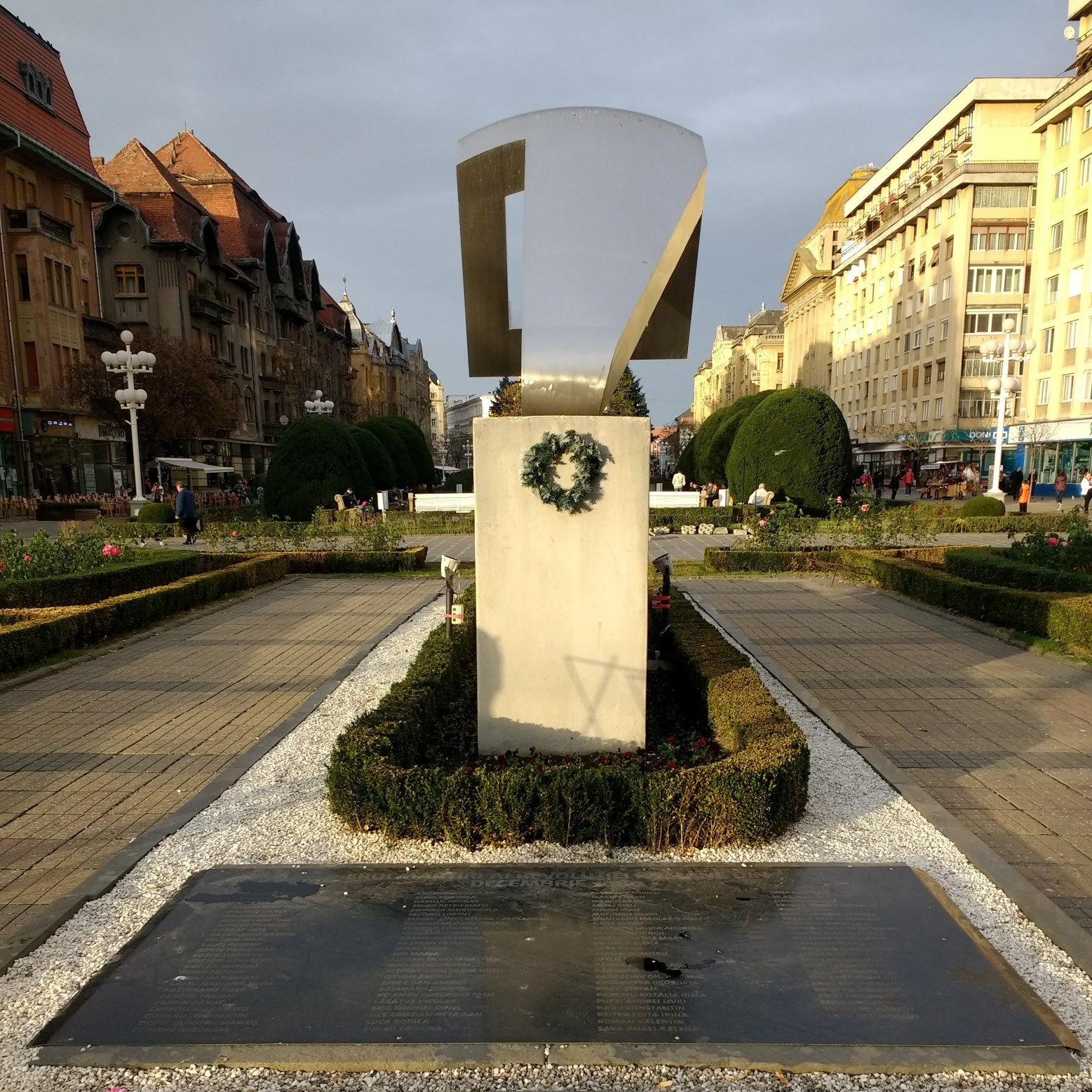
Directly facing the monastery on the other side of the road, back on the Piata Victoriei is a memorial to the revolution of December 1989 against the repressive Communist regime of Nicolae Ceausescu. It is this event in the country’s history that gives the plaza its name. This revolution, which began here in Timisoara, is a very important event in Romania’s history since it eventually led to the crumbling of this regime and the end of Communism in the country.

IMG_20181030_163223477-1560x2080

Memorial on Piata Victoriei to the 1989 Revolution

The initial protests in the city took place on December 15th 1989 with a few hundred people protesting against the harassment of the Romanian born Hungarian pastor Laszlo Tokes by the Communist regime. Laszlo was a notable and outspoken figure representing Romania’s Hungarian community. For many years he was a target of the communist regime for his exposing of human rights abuses by the regime towards the Hungarian minority population of Romania.

In March 1989, Tokes was forced by the religious authorities of the time to move from Timisoara to another parish in a remote part of the country. Tokes didn’t budge. The authorities issued him with an eviction notice from his home in Timisoara stating that he had until December 15th 1989 to leave. It was on this date that members of his congregation protested his eviction on the streets of Timisoara. Eventually passers-by joined in and what originally began as a protest against the eviction of Tokes manifested into an even bigger protest against the repressive communist regime of Nicolae Ceausescu. Very quickly similar protests spread like wildfire across other Romanian cities including the capital, Bucharest. Despite Ceausescu’s efforts to supress the protests by ordering the military to fire bullets into the crowds, his efforts were in vain as he was up against the vast majority of the population of his country who wanted change and an end to his oppressive regime.

IMG_20181031_133136778-1560x2080

IMG_20181031_133158823-1560x2080

By the 1989 Revolution Museum

The 1989 Revolution Museum is a permanent exhibition dedicated to these events. When I first entered the museum located in an old and crumbling building, I was escorted by an elderly man from the museum to a room with a TV screen. On the screen he played a 20 minute documentary featuring visual recordings of the events between the beginning of the revolution until the fall of the Ceausescu regime. It is a dazzling sight to see what looks like almost the entire population of Timisoara out in the city protesting.

IMG_20181031_141739045-2080x1560

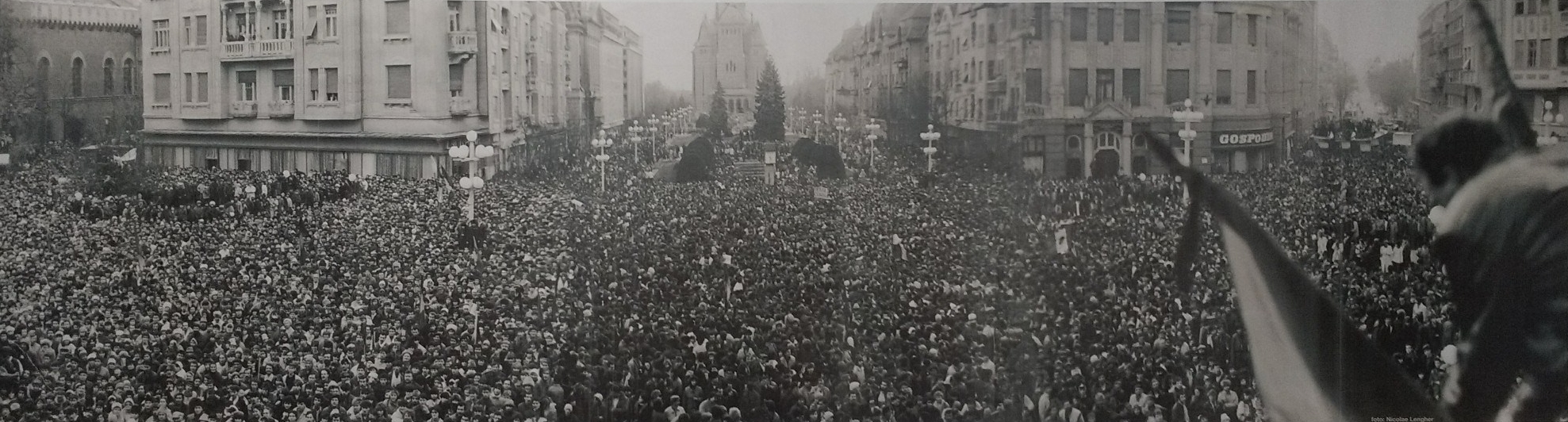
The city of Timisoara at the apex of the December 1989 revolution 


IMG_20181031_140708346-1560x2080

Pictures of the Communist ruler Nicolae Ceausescu in the museum 


img_20181031_140914731-1560x2080.jpg

A pre Revolution Ceausescu parade in Timisoara’s main square (today named Piata Victoriei)

Ceausescu had initially misjudged the potential magnitude of the protests in Timisoara. On 18th December he left Romania for a state visit to Iran putting his wife and subordinates in charge of trying to diffuse the protests in Timisoara. When he returned to Romania just a couple of days later the protests had become larger and more intense.  During a speech he gave in today’s Revolution Square in Bucharest on December 21st, some people in the crowd began to chant ‘Timisoara!’. Slowly more people joined in. Ceausescu, unable to suppress the chants, pledged to raise the national minimum wage but the crowd wasn’t having any of it. For the remainder of his speech he was constantly heckled until realising that he was powerless to engage the crowd, he left the stage and ran for cover. On December 22nd the protests had spread to all the major cities in Romania. Ceausescu and his wife embarked on an epic escape from the braying mob until they were captured by the army and tried on Christmas Day. After their capture they were duly executed by a firing squad.

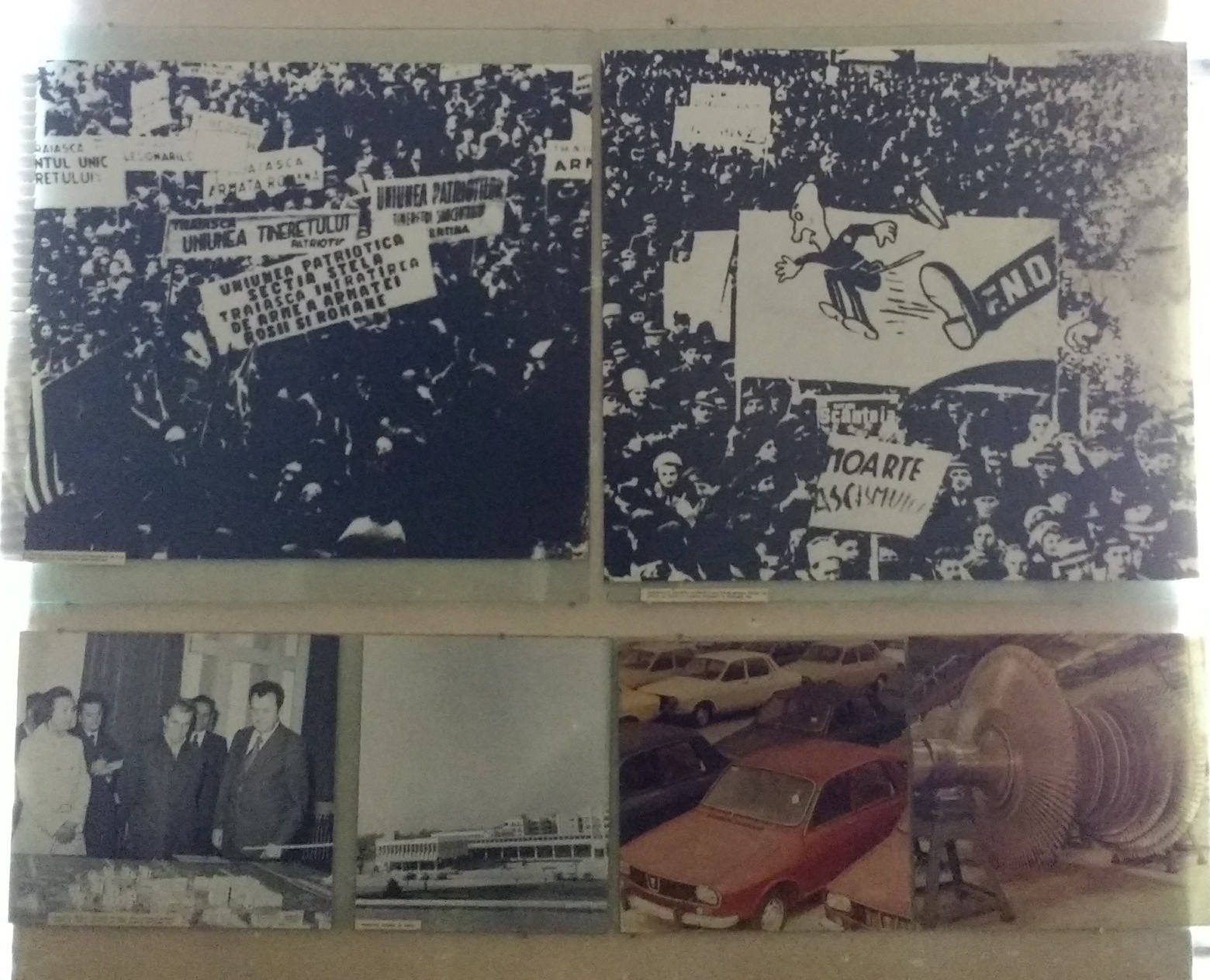
The museum is full of ephemera related to the Revolution including photographs and newspaper articles as well as art works by contemporary Romanian artists related to this time period.  After watching the video I spend some time visiting all the rooms inside the museum and learning more about this period in Romania’s history.

IMG_20181031_142244595-1560x2080

img_20181031_140548546-1560x2080-e1541016780721.jpg

img_20181031_140522501-1560x2080.jpg

img_20181031_140459013-1560x2080.jpg

Photographs from the museum 

Visiting the museum is most definitely worth the visit if you ever happen to be in Timisoara. It is a raw and authentic experience regarding a very important time period in Romania’s history.


by Nicholas Peart

(c)All Rights Reserved


SOURCES

http://20years.tol.org/2009/10/26/laszlo-tokes/

A Day Trip To Felcsút

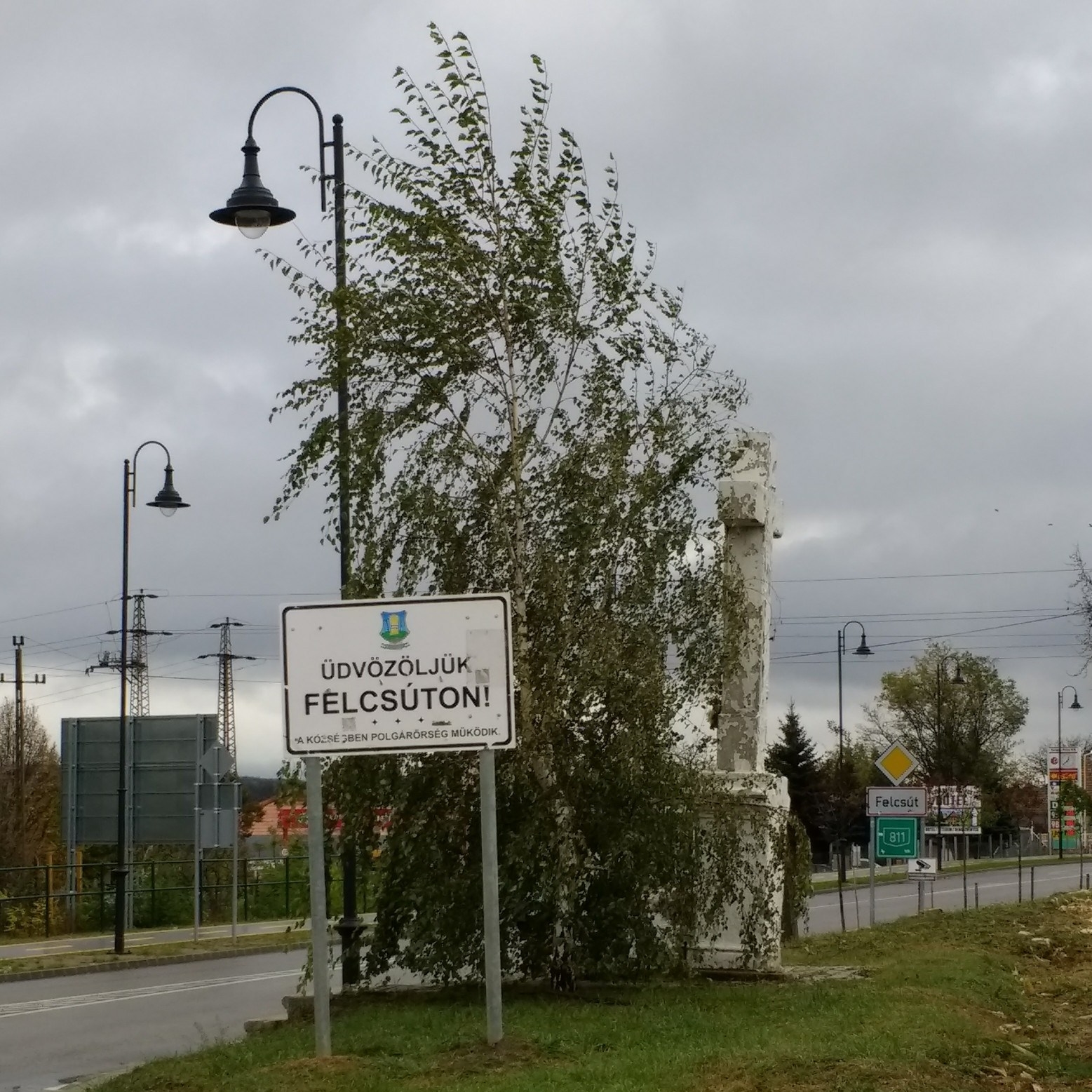
The Hungarian village of Felcsút is located 50km outside of Budapest and a 1 hour bus ride from the capital. It isn’t featured in any guide books and besides, with the abundance of things that Hungary’s seductive capital has to offer, why would anyone want to sacrifice a day in some one horse village in the middle of nowhere? But Felcsút isn’t just any other village. It is where the current Hungarian Prime Minister Viktor Orbán grew up. Since he became prime minister in 2010, a lot of money has been pumped into this sleepy settlement, mainly in the shape of a football stadium and a 6km long railway line.

Orbán is a controversial figure both at home and abroad. Opinion in Hungary on him is intensely polarized where people either love him or hate him. The latter accuse him of being a dangerous demagogue and a threat to the country’s democracy and free speech. Even though Hungary is a member of the European Union he has been very critical of it and has often come to blows with Brussels for not abiding by the rules as a member country. One example is his refusal to take in more migrants during the 2015 Refugee Crisis. Instead he constructed a razor fence around parts of the country’s borders much to the ire of Brussels. His supporters though see Orbán as a no-nonsense leader who isn’t afraid to speak his mind regardless of the consequences and also as someone who isn’t a pushover and is willing to put their country first. He is viewed by some as Europe’s answer to Donald Trump.

orban-2016

Hungarian Prime Minister Viktor Orbán 

From Nepligot bus station in Budapest, I board a knackered white bus destined for this village. As the bus leaves behind the final surrounding districts of the city we are in rural Hungary proper. Lots of open fields and not much else. Nobody on the bus or even at the ticket desk of the bus station in the capital spoke any English. Without the internet data on my phone and the Google Maps app, I would have most likely missed my destination and probably would have resorted to scrambling for a way to desperately return back to Budapest. Once out of Hungary’s cosmopolitan capital or any of the country’s major towns, the chances of finding someone who speaks English drops dramatically. For the record I don’t know a word of Hungarian. Its an impenetrable language which doesn’t stick easily to my poor little brain. I even find it a challenge to remember the word for ‘thank you’. This is not a country you would want to get arrested in.

I know we are approaching Felcsut the minute I see the blue dot on Google Maps edge closer to the name of the village on the digital map. We stop at a small roadside bus stop, but in my ignorance I assume this is not THE bus stop for my destination. The bus carries on and turns onto a road moving away from the location of the village on my map. Its going now at some speed and the blue dot on the map is moving away from Felcsut at an alarming rate. I have no choice but to interrupt the driver. I walk down the bus ailse and as I approach the driver I blurt out the name of my destination. He slams the brakes and the bus screeches to a halt. Thankfully I latch myself to a nearby railing to avoid being catapulted towards the driver’s window. With haste I grab my bag and jump out of the bus.

IMG_20181025_123851141-1560x2080

Arriving in Felcsút 

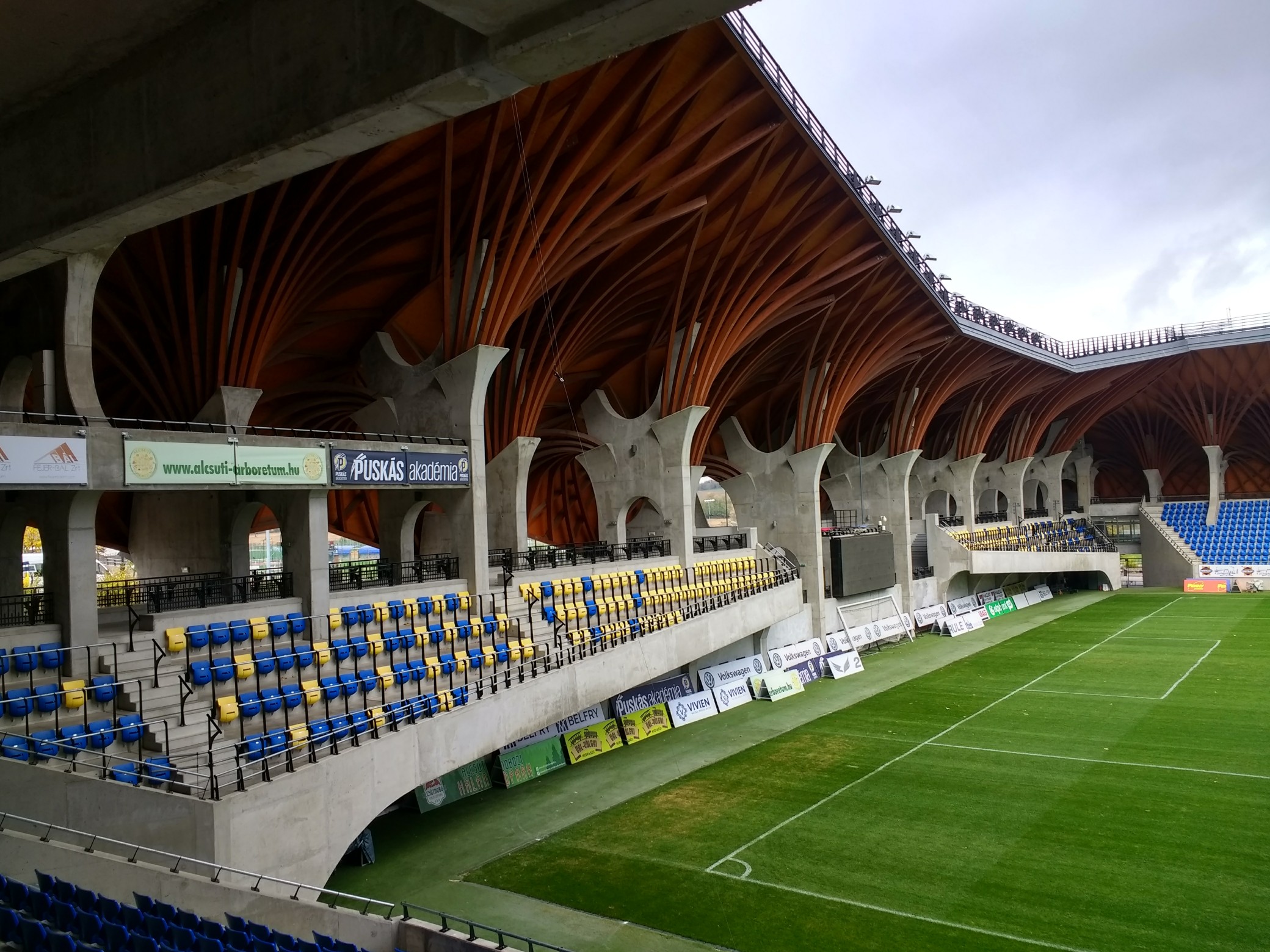
As I walk closer to the village I see a sign indicating the infamous Pancho Arena football stadium being only a kilometre away. The stadium is big with a seating capacity of 3,500. That is more than double the population of the village itself which has a population of just 1,200. For this reason it is seen by many Hungarians as a sensitive subject often dismissing the stadium as an Orbán vanity project. Many argue that the money should have been allocated instead towards the healthcare or education system of the country and not a football stadium. Orbán is a football fanatic and often tries to watch as many important matches as he can in between his busy schedule. In fact it is not an uncommon sight to see him at some games at the local stadium during weekend matches.

When I approach the stadium it is empty with the next game scheduled until the weekend. Yet the entrance to the stadium is open and so I enter. In the enclosure of the stadium there are photographs, trophies and other assorted bits of football related memorabilia. As I walk into the seating area the most striking feature of the stadium is not the football pitch but the wooden beams around the stadium. They are truly a work of art and give the arena the air of a religious place of worship and not solely a place to watch football. The beams and general design of the stadium were taken from designs by the noted local Hungarian architect Imre Makovecz.

IMG_20181025_130125636-2080x1560

Pancho Arena football stadium 


IMG_20181025_130120696_HDR-2080x1560

The unique wooden beams of the stadium 

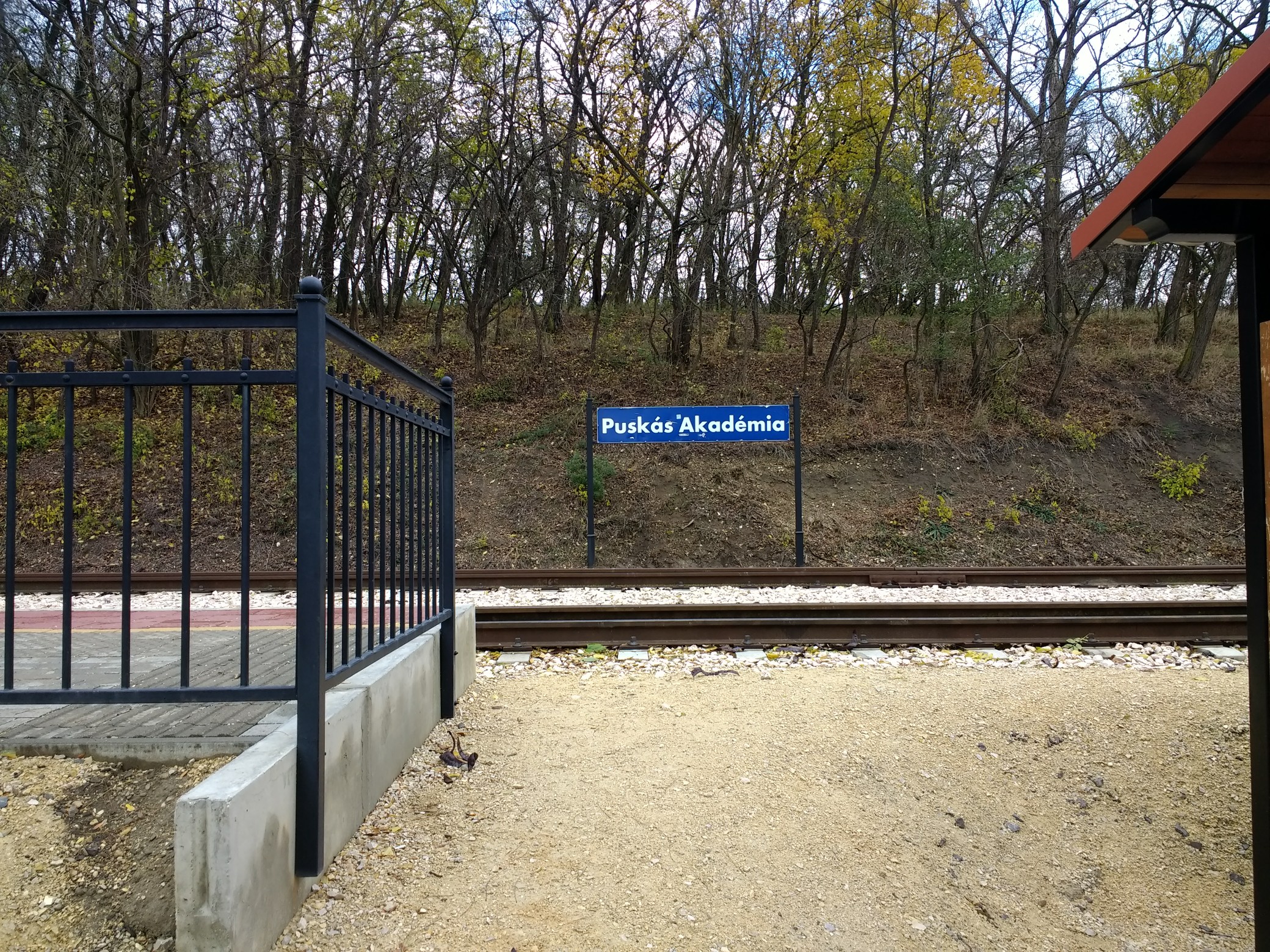
A long path by the stadium leads all the way to small railway station, Puskas Akademia, named after the local football team. This station is part of the 6km long Val-Valley railway line. This project is more controversial than the football stadium since it has been stated that 80% of the investment towards it came from EU funds. I am the only person on the platform. There is no ticket office at this station just a small wooden hut with a time table of the daily train times on the side of the hut. All the information is in Hungarian yet I soon make out via a combination of Google Translate and raw guesswork that the next train should arrive in half an hour.

IMG_20181025_135345347-2080x1560

Puskas Akademia station stop as part of the Val-Valley 6km long light railway line

Twenty minutes later I am joined by two elderly ladies. I timidly ask them whether they speak English? To my amazement one of the ladies, Zsuzsi, speaks perfect English. She lived in London for one year in 1976 and reminisces fondly about her time in the city. A vintage style train soon approaches. When we board the train we are the only people in the carriage. I do wonder sometimes, unlike the football stadium, what really is the point of this railway line especially if so few people on average use it? Yet the hot potato aspect of this project aside, I am reminded of the countryside tourist railway train I once took last year in the breath-taking region of Mokra Gora in the neighbouring country of Serbia. That was a truly unforgettable memory.

IMG_20181025_141945306_HDR-2080x1560

One of the trains

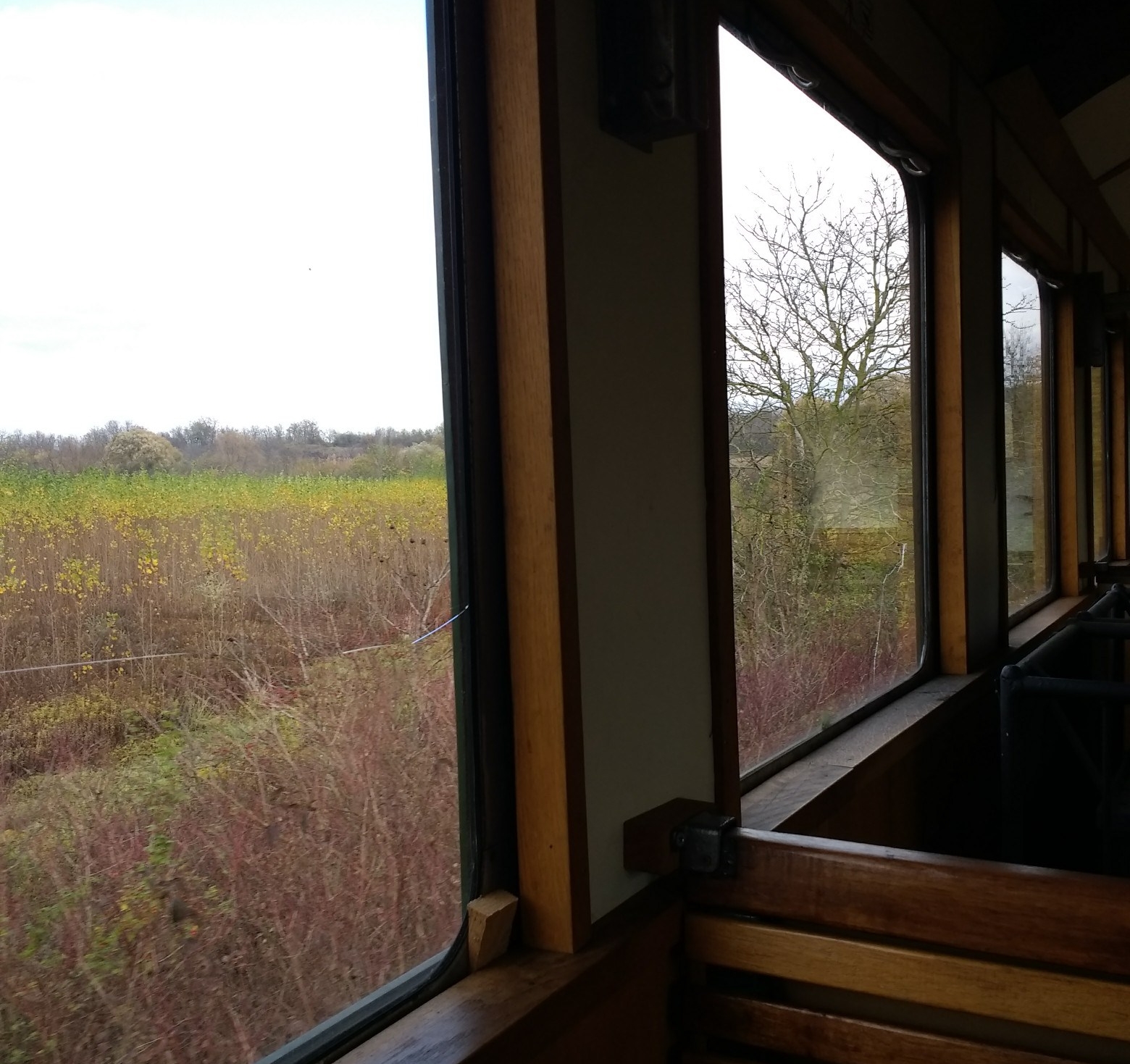
Once inside the deserted carriage we all pose for photos. There is also a stove-like heater inside. A lady conductor enters our carriage to issue our tickets. I soon learn that there are about four stops in total on this line. However since my time is limited I buy a ticket for just until the next stop. I stay on the train for 25 minutes as it slowly chugs until the next stop. During this time we pass through the wild autumnal fields of the surrounding countryside. It is a beautiful sight with a rich kaleidoscope of colours. These are the kind of fields Vincent Van Gogh would have painted in all their glory.

IMG_20181025_140413059_HDR-1560x2080

Inside the train carriage with its own stove heater


IMG_20181025_140020286-1560x1642

Yours truly inside the train


IMG_20181025_140924790-1560x2080

The surrounding countryside

At the next stop, Felscut station, I disembark and say goodbye to the ladies. I have 40 minutes until the next bus to Budapest leaves from the northern end of the village. I briskly walk the few kilometres on the side of the main village road. Most of the places I pass along the way, save for the football stadium, are private residences and the odd church, school and grocery shop. Thankfully I make it to the bus stop on time. The bus arrives five minutes later to take me back to Nepligot bus station.


By Nicholas Peart

(c)All Rights Reserved

Contemporary Art From The Uralic World At The Ludwig Museum In Budapest

The Ludwig Museum is one of Budapest’s primary cultural institutions. When I visited the museum during my time in Budapest, there were three different art exhibitions on display. Two of those were purely focused on contemporary art from the Uralic world. The language, Hungarian, is part of the Uralic family of languages.  The three primary languages from that family are Hungarian, Finnish and Estonian.


SALLA TYKKA : Short Titles

The first exhibition was a display of short films by the Finnish video artist Salla Tykka. Her films focus on the inner core of existence. The first of her short films I encounter, Giant, is set in the gym of a Romanian all girls school. Here the girls undergo strict, stultifying and repressed exercise routines with faultless precision; as if they are robots or algorithms and not human beings. Watching the film makes me nauseous. The gym is also like one great soulless and sterile modern day concentration camp. Its an intensely depressing video and I only watch a few minutes of it before moving on yet out of all Tykka’s short films, it is also one of her most memorable.

IMG_20181026_123309890-2080x1107

Still from the short film Giant by the Finnish artist Salla Tykka

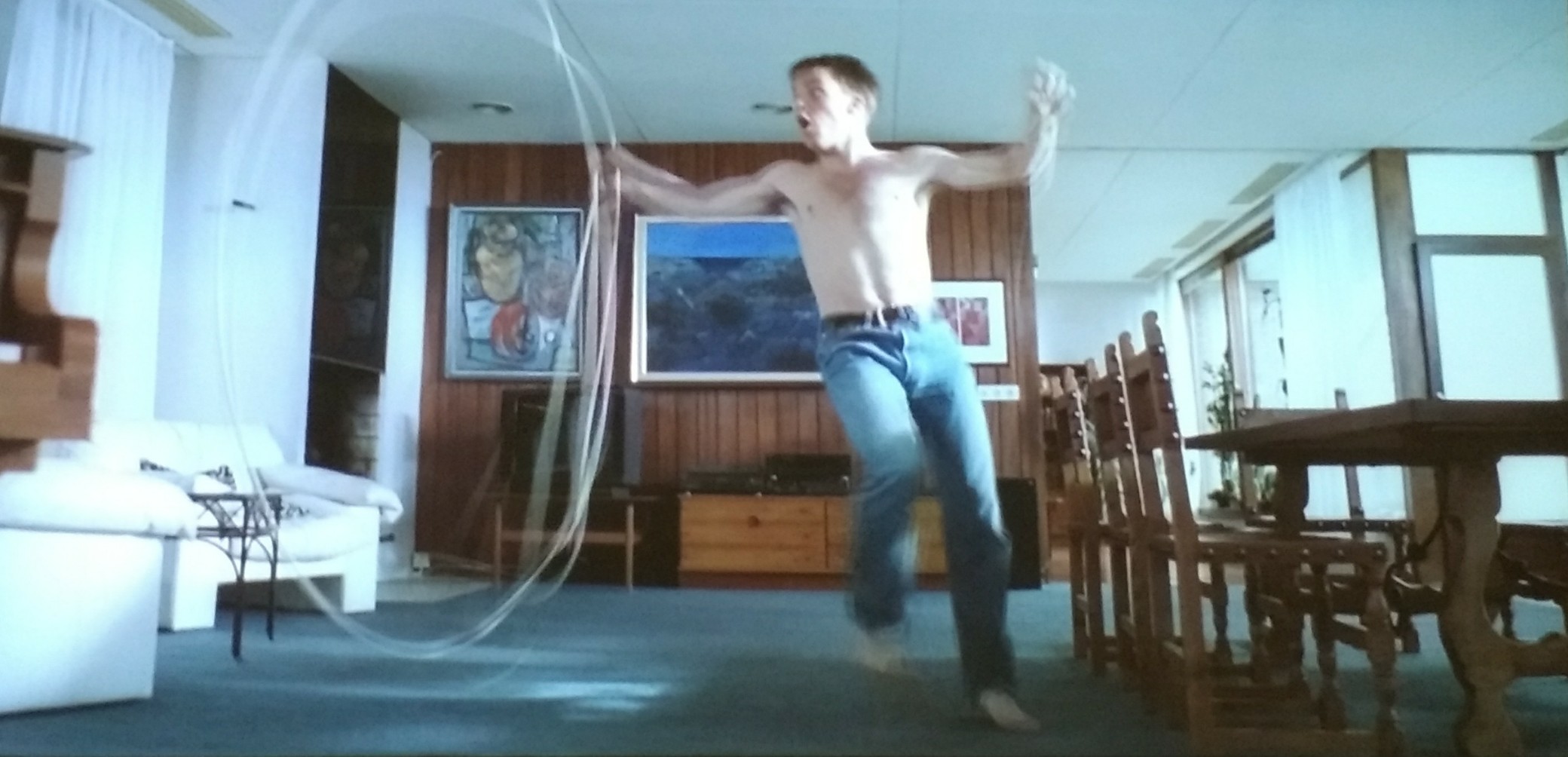
Another film by Tykka, Lasso, is set in suburban Finland. It features a young man in his home gyrating in a dynamic and primal way with a lasso. During this moment, a young girl outside watches him transfixed through the slits of the closed blinds. She develops strong feelings towards him, difficult to articulate in words. But when the ritual with the lasso ends, so do those feelings and she is brought back down to earth. The film beautifully encapsulates this moment so many of us experience yet struggle to verbally convey.

IMG_20181026_125412022-2080x1004

Still from the short film Lasso by the Finnish artist Salla Tykka

My Hate Is Useless is an early short film by Salla Tykka from 1996 documenting her struggle with anorexia. It is a raw and visceral film further documenting the pain and suffering she experiences. At one intervals she violently screams in Finnish ‘I hate myself’. Elsewhere in the film we see various bits of paraphernalia such as the medication she is taking.

IMG_20181026_125943682-2080x1263

Still from the short film My Hate Is Useless by the Finnish artist Salla Tykka


RELATED BY SISTER LANGUAGES : Estonian-Hungarian Contemporary Art Exhibition

The second exhibition in another part of the museum is an exhibition of Estonian and Hungarian contemporary art curated by Krisztina Szipocs, the chief curator of the museum.

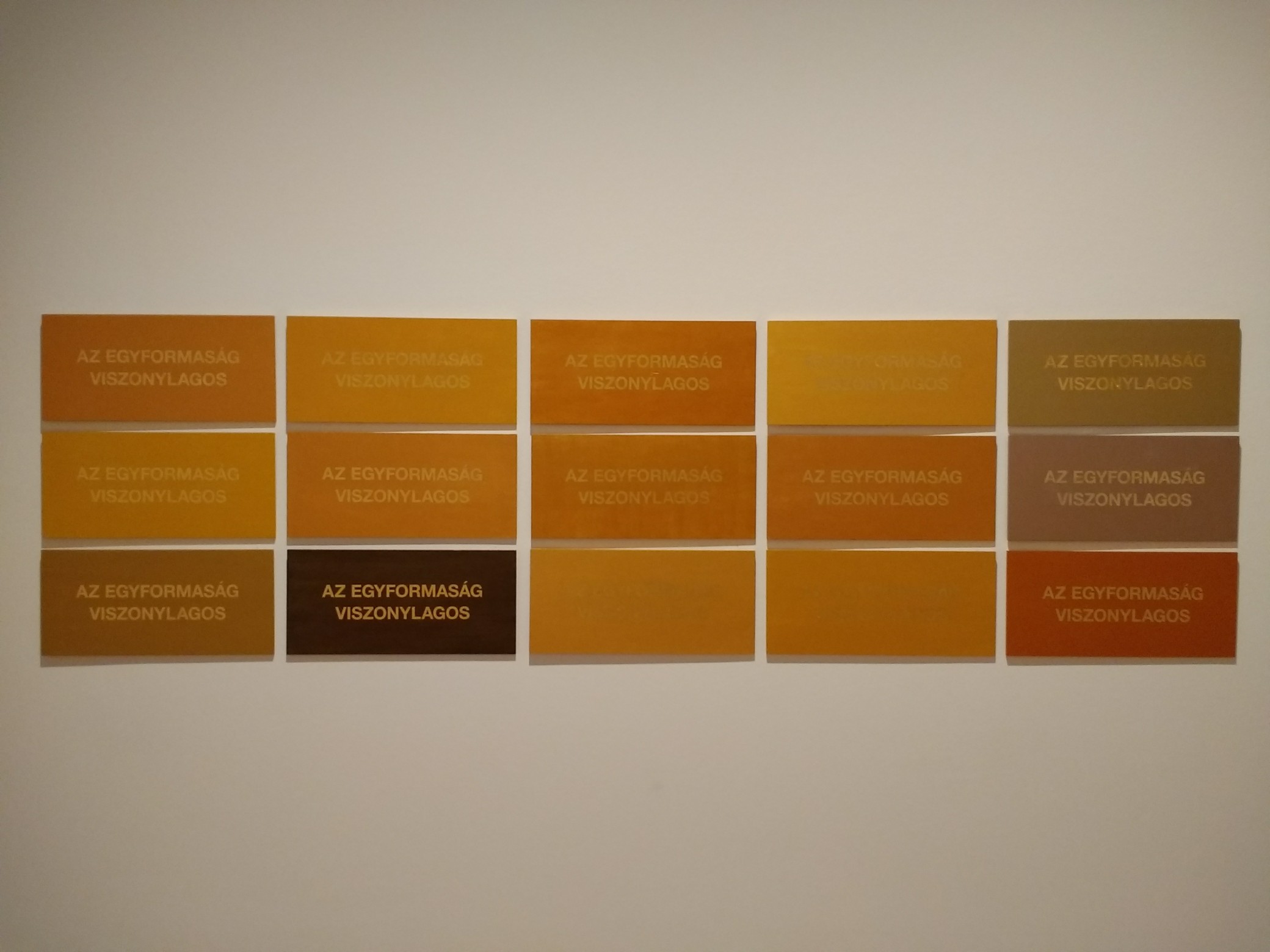
The first works are encounter are a small series of canvases by the Estonian artist Kaido Ole. Yet close by the canvases are two large painted mural like installations by the same artist depicting both the beginning and end of Estonia. The installation showing the beginning theme contains a sepia image of a coastline and the sea encased within a square sequence of different hues of blue. The end theme of the installation is more abstract featuring fading brown hues and the letters ‘Eeeeehhhh’ in the middle. It is difficult enough to envisage when the beginning may have been even if one where to use such primordial elements such as the sea and the colour blue. The end however is unwritten.


IMG_20181026_131817751-2080x1560

Kaido Ole : The Beginning Of Estonia (2016/18)


IMG_20181026_131834820-2080x1560

Kaido Ole : The End Of Estonia (2016)

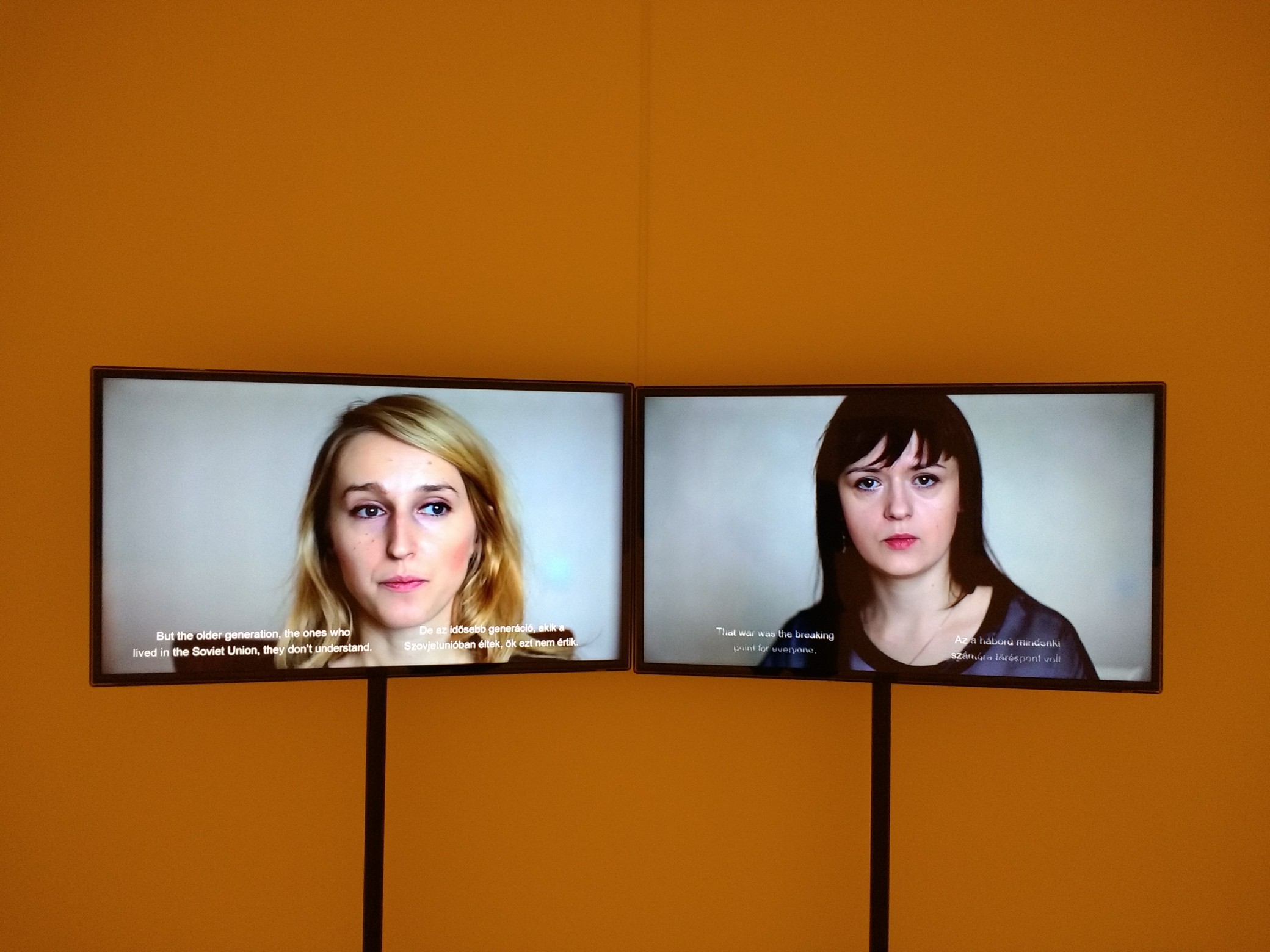
Close by, a video by the Estonian artist Tanja Muravskaja, Three Sisters, featuring two girls who are both cousins reflecting on the war in Ukraine from their own personal experiences. One of the girls in the video lives in the Ukrainian capital of Kiev and the other in the small Russian town of Belgorad, located 40kms from the Ukrainian border. The two videos play simultaneously as the girls talk at the same time. What is immediately clear is that both have very different views and experiences. From what I can decipher the girl from Belgorad comes across as if she got the rougher end of the deal. You can just see it in her stern facial expressions never mind what she is saying. The brief blurb states she is 27. In body maybe, but spiritually she has the heaviness of someone more than twice her age who has already been through every rough mill of life. The girl from Kiev, on the other hand, appears more open and lighter in spirit without any of the baggage of her cousin from Belgorad. The third sister is the artist herself who acts as the mediator; the sister who attempts to heal the rift. Her invisible role is the trickiest.

IMG_20181026_133549901_HDR-2080x1560

Tanja Muravskaja : Three Sisters (2015)

The Hungarian artist Hajnal Nemeth has a video work entitled Crash – Passive Interview (2011) an experimental operatic video in 12 acts. I witness two acts of this video. The first features a clip in a BMW factory featuring two men in workers clothes in a kind of comic operatic dialogue, whilst the second shows one of the two men again this time dressed like some playboy from Milan in an open top white BMW in another operatic dialogue with a woman. The dialogues are police reports made after a series of non fatal car crashes. How something so ordinarily prosaic, anxiety ridden and traumatic is turned into some kind of absurd Eurotrash Aldi like visual opera has me in fits of laughter. Its a tragic-comedy masterpiece and one of the highlights of the show.

IMG_20181026_134757966-2080x1560

Hajnal Nemeth : Crash – Passive Interview (2011) – still one


IMG_20181026_135039588-2080x1560

Hajnal Nemeth : Crash – Passive Interview (2011) – still two

The Estonian art duo Johnson and Johnson, who’s name is taken from the global big pharma behemoth of the same name, has a work in the form of an illustrative chart on display entitled Top 5 State Employees. I can’t read a word of any Uralic language but visually the chart metaphorically echoes how this world at large defines ‘progress’ or ‘success’. What today’s measure of success of progress may be won’t be the same 100 years from now. What does it matter? What does it mean? Employees work for someone else and do what they are told and do their best to please to be rewarded. They have no skin in the game despite their best and most conscientious efforts. On the other hand, the Steve Jobs and Elon Musks of this world would make the Bottom 5 State Employees. They are too disruptive and visionary.

IMG_20181026_135739068-2080x1560

Johnson and Johnson : Top 5 State Employees (2009/18)


A Selection From The Museum’s Permanent Collection Of Hungarian Contemporary Art 

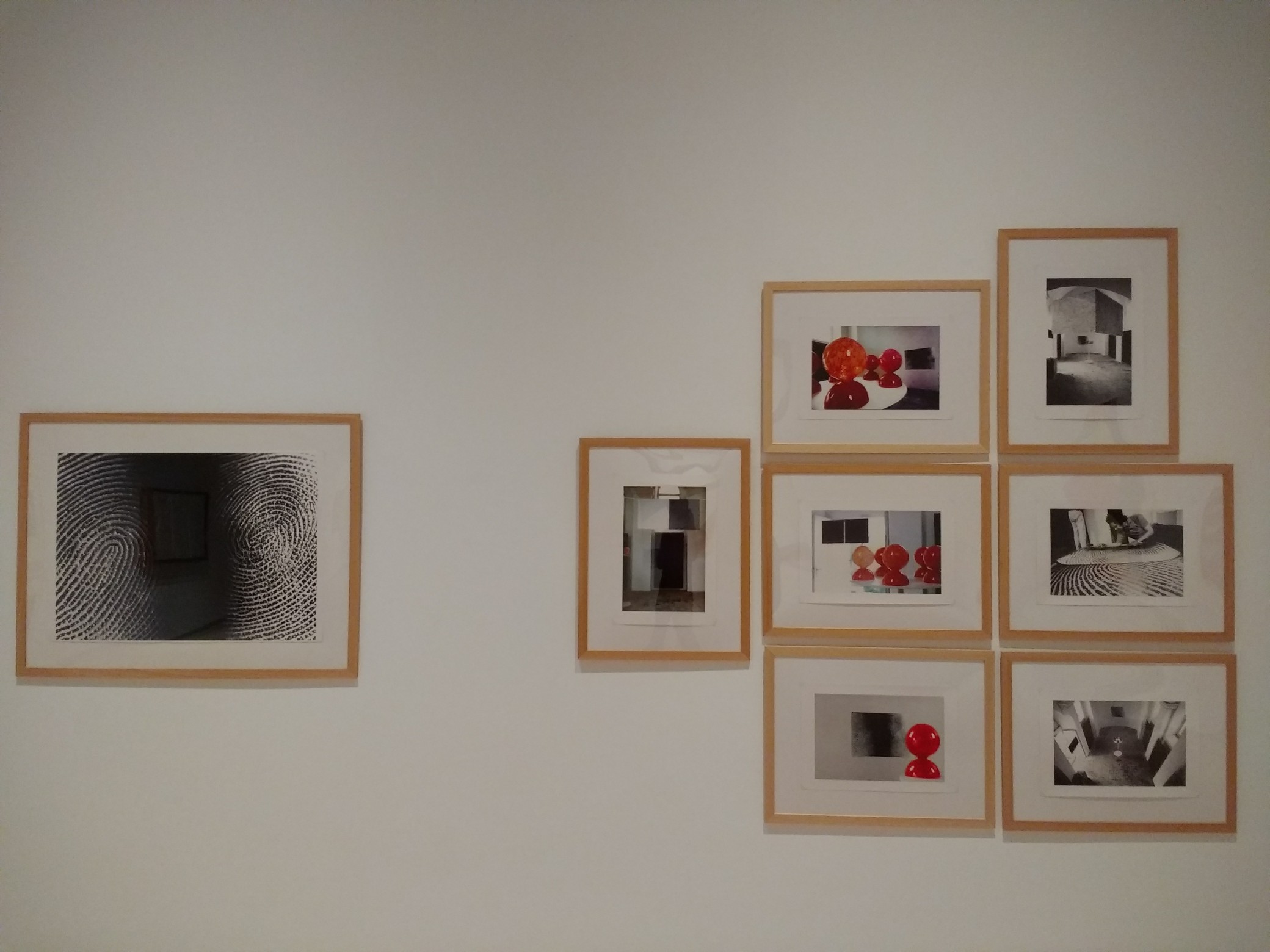
The final exhibition in the museum featured a selection from the museum’s permanent collection. The work on display was global with works by big names such as Picasso, Andy Warhol, Chuck Close and Georg Basalitz. However, with the limited time I had left in the museum before the departure of my train to the Hungarian town of Szeged later in the day, I purposefully decided to focus on works by Hungarian artists in the collection. Below I am featuring some these…


IMG_20181026_141841508-2080x1560

Emese Benczur : Not All Is Gold That Glitters (2016)


IMG_20181026_142055305-2080x1560

Laszlo Lakner : Danae (1968)


IMG_20181026_142159820-2080x1560

Laszlo Haris: Confrontation-Action: Double Portrait (1973-2012)


IMG_20181026_142955689-2080x1560

Gabor Koos : Budapest Diary XIII (2015)


IMG_20181026_142318175-1560x2080

Peter Turk: Treadmill I-II (1975-81)


IMG_20181026_142721096-1560x2080

Peter Gemes : Hourglass (1995)


IMG_20181026_142805158-1560x2080

Zsuzsi Ujj : With Ocsi (1988)


By Nicholas Peart

(c)All Rights Reserved 

The Pimped Up Bar Mleczny

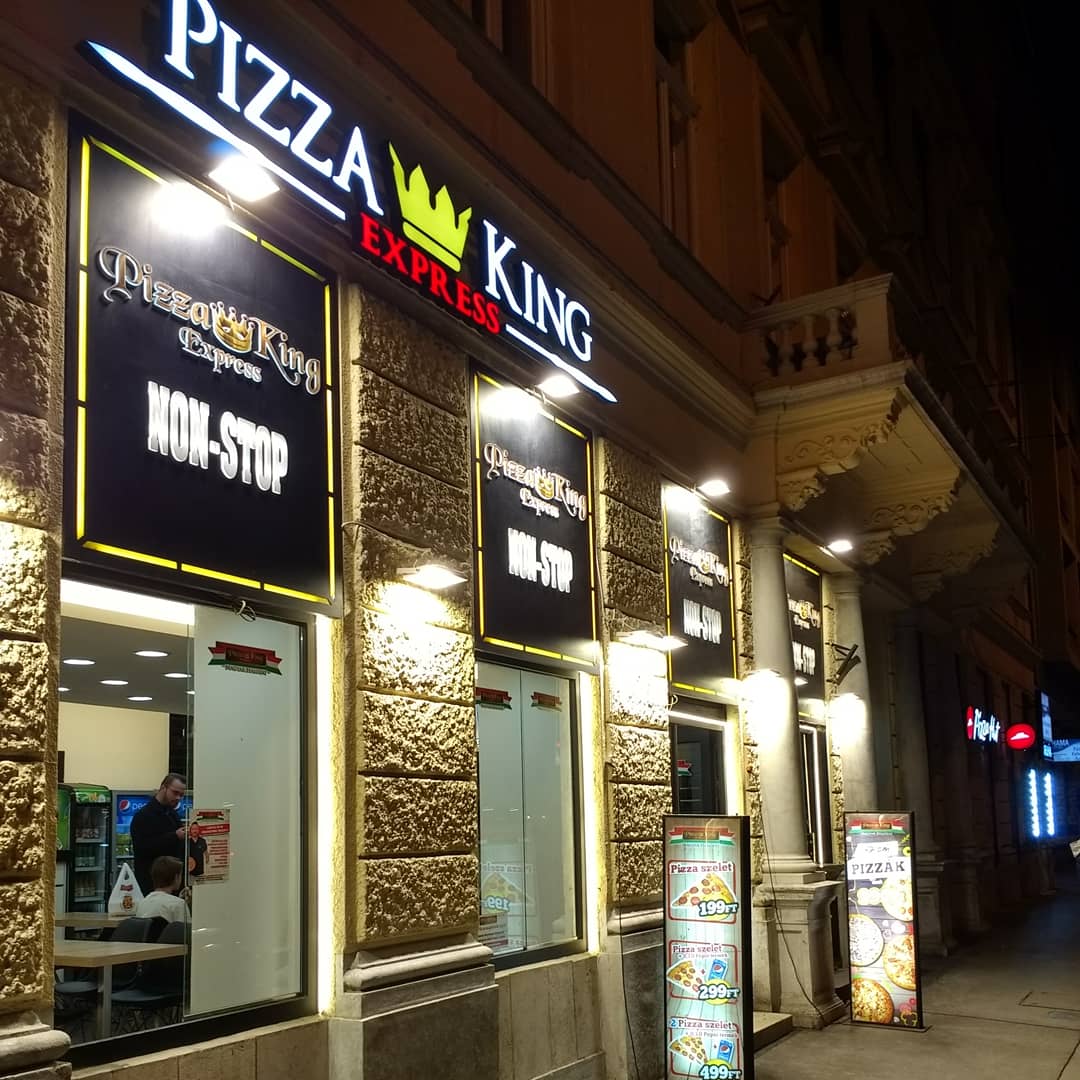
IMG_20181026_085748_496

Pizza King Express is maybe the best place to eat in Budapest. I will probably get shot down in flames for saying this. At the ‘traditional’ restaurants serving Hungarian cuisine you will likely hear more English than Hungarian and will pay more money. You may also encounter surely staff if the place is popular. But not here. The staff here are a bunch of jokers and the food is ridiculously cheap even with a lousy pound sterling. A slice of pizza is 200 Forints (less than 60p). A tiramisu (enough for two) – yes, you better believe it – is 300 Forints (a little north of 80p).

During Communist times in many Eastern European countries you had these places called bar mlecznys, which in Polish literally translates to ‘milk bars’ – dirt cheap restaurants serving pretty basic food, but perfectly good. They used to be very popular with students or anyone without much money. Most of these places are a thing of the past now. There are a few still kicking around. For me Pizza King Express represents a new kind of ‘pimped up’ bar mleczny. That is, it may not be as threadbare as a traditional bar mleczny. Maybe I am stretching it using the words ‘pimped up’. But you get my drift. It has the same prices as the traditional bar mlecznys of yore filled by the same type of people who used to visit the originals. The only difference is that the menu is more global. Dare I say more ‘Westernised’. You can get pizza, kebabs, baklava (delicious sweat cake), tiramisu and rice pudding and all for just a few coins. Its a fraction of the price of Pizza Hut, which is next door, and a better and more delicious experience.

Hungary is not a rich country and wages are feeble. Budapest can be an expensive city if you are a local in menial employment. For that reason places like Pizza King Express are a godsend for locals. Its funny that most congregate here for a slice of cheap pizza and less at the ‘traditional’ Hungarian establishments no matter how good or tasty the food may be at those places.

The original bar mzlecznys were not only a product of Communism. They were a feature of when that part of the world was a much less connected place and people had limited access to information. In today’s post-communist globalised world with this tool called the internet, that has all changed. Younger generations from former communist countries are more aware, savvy and knowledgeable about the world, other cultures and how other people around the world live and their tastes. Pizza King Express caters for this younger generation as well as others who don’t want to spend too much money. In a paradoxical way, it is more ‘authentic’ to eat here than at the traditional restaurants, which promote themselves as ‘authentic’. It may be a pedantic and trivial observation, but there is a kernel of truth to it.


By Nicholas Peart

(c)All Rights Reserved

Architecture Through The Ages In Budapest

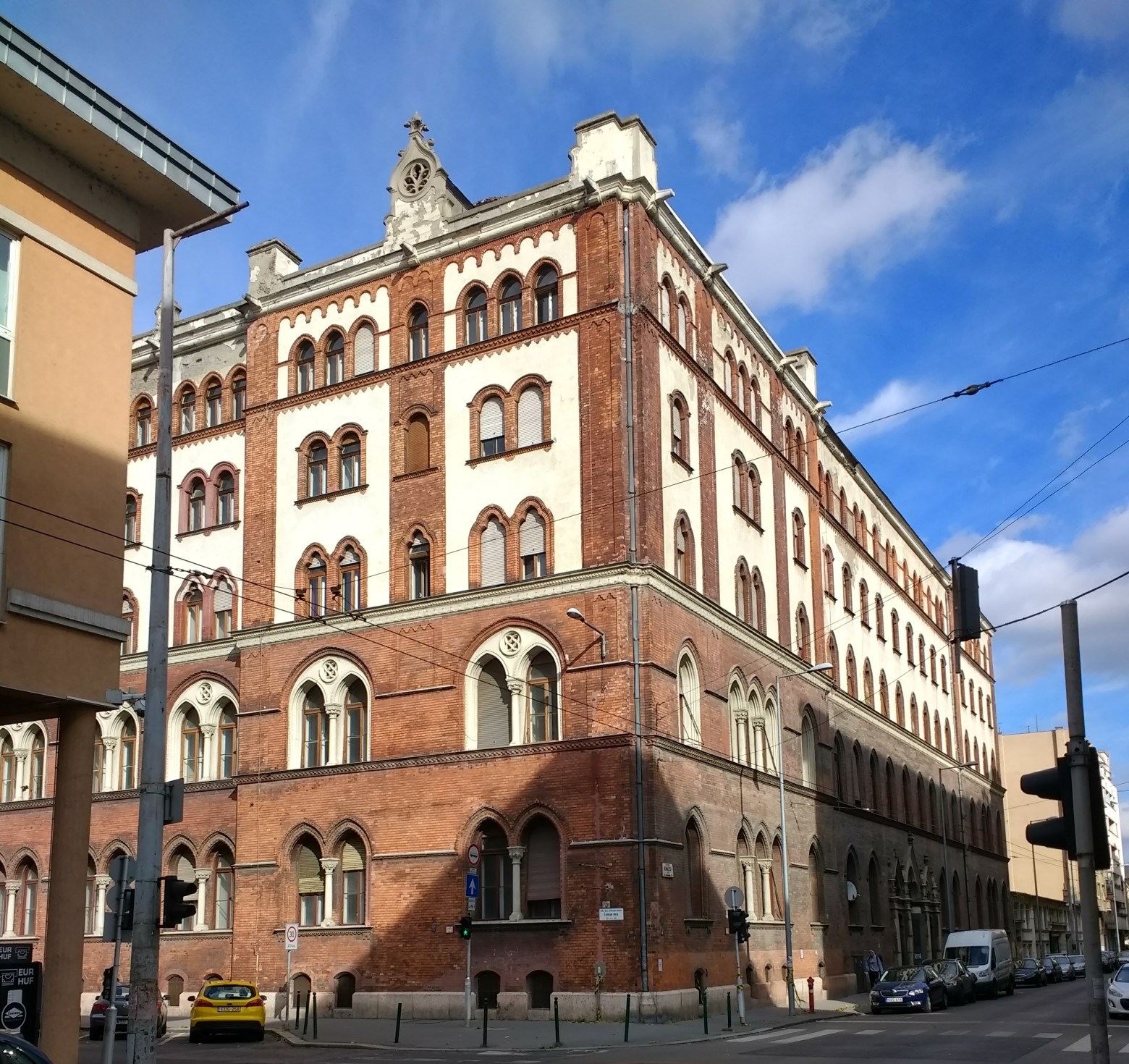
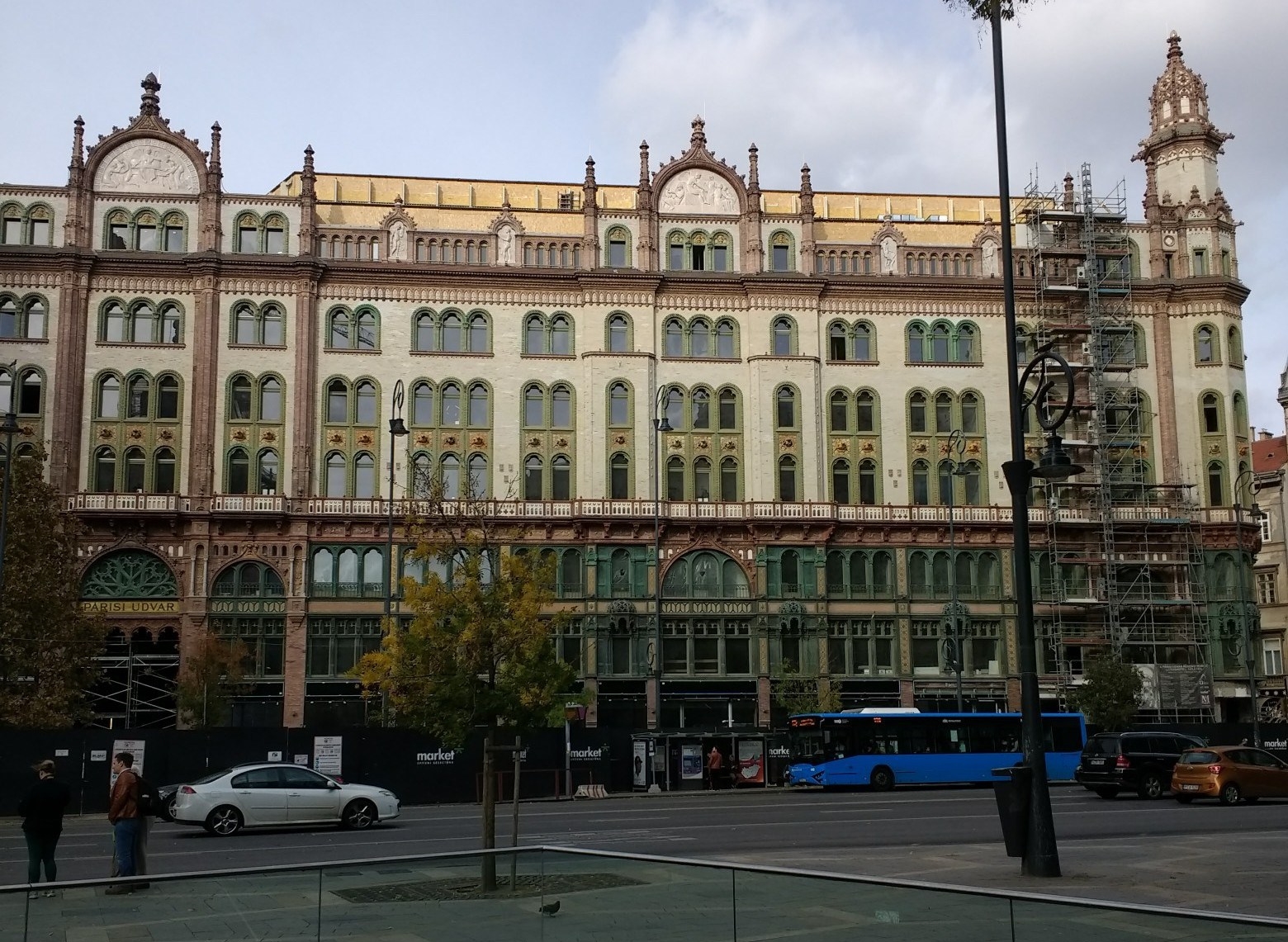
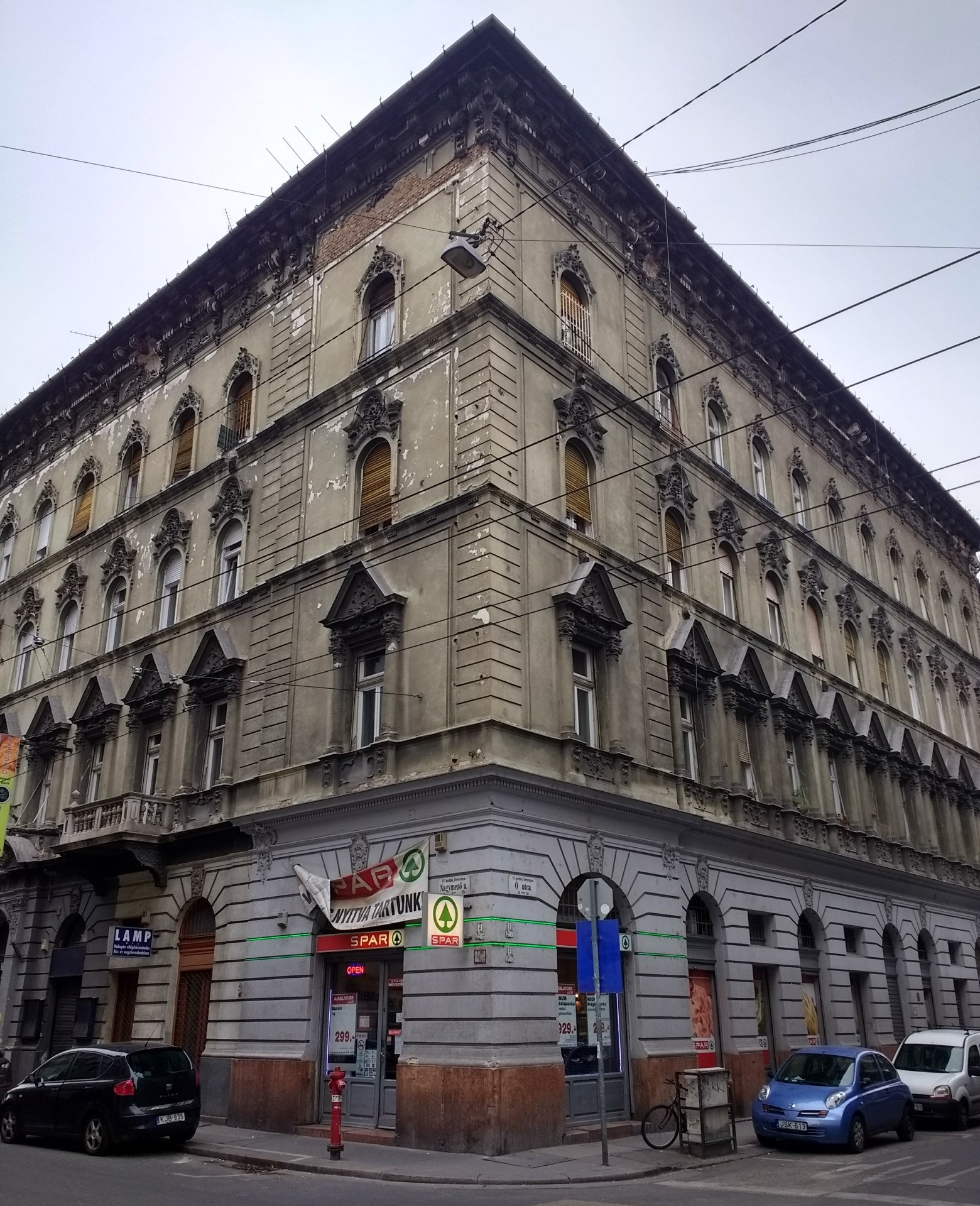
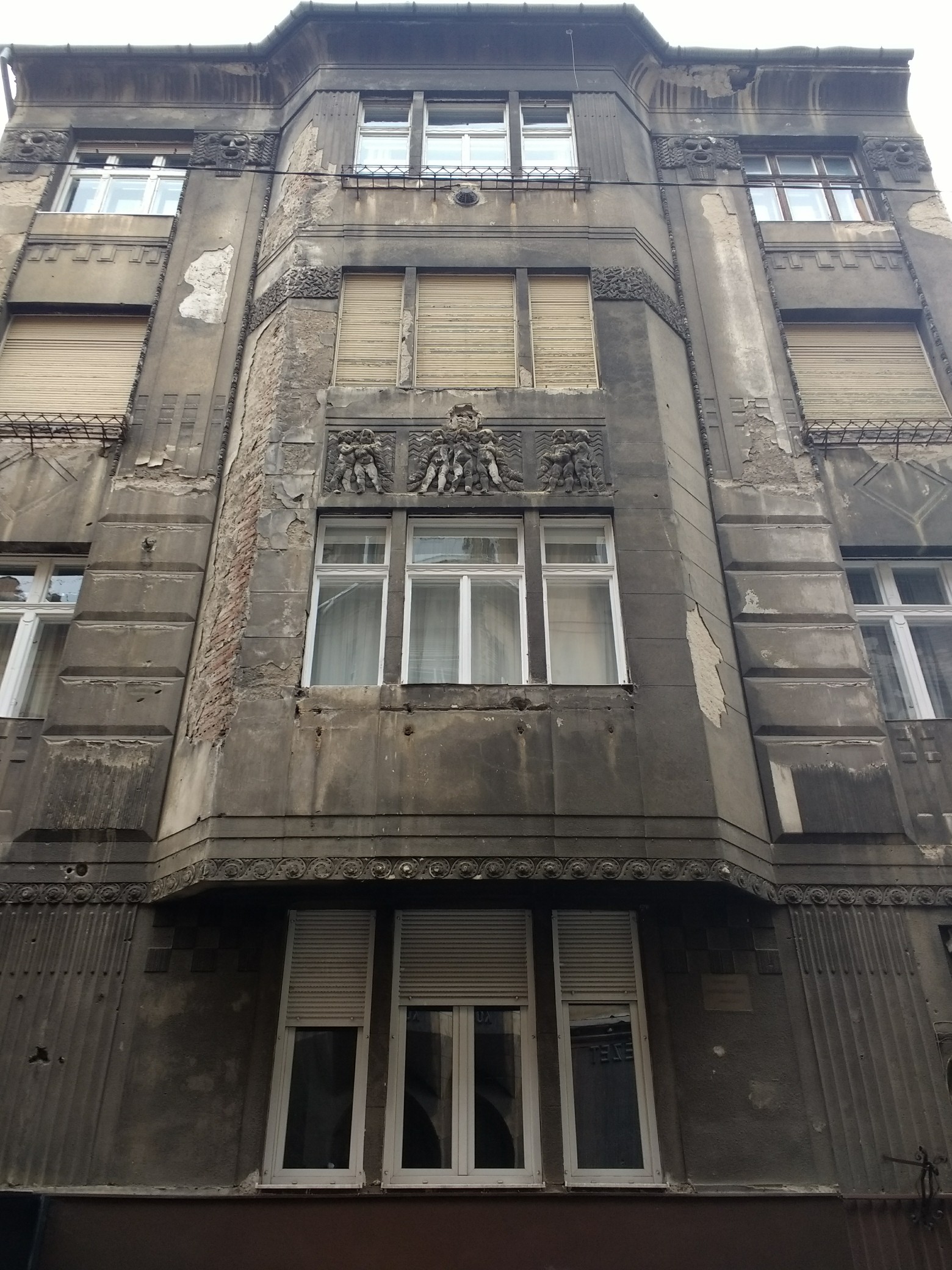
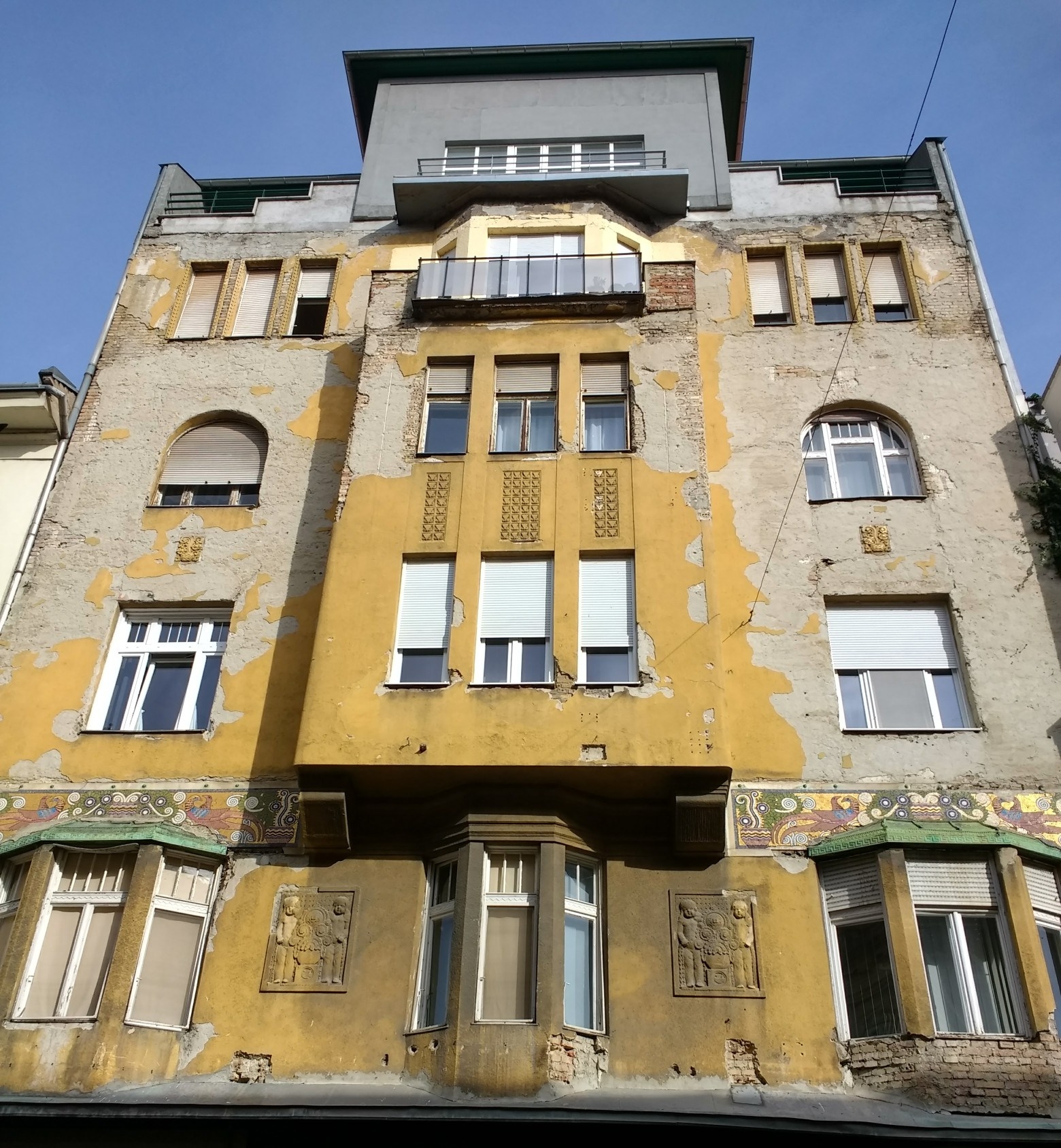
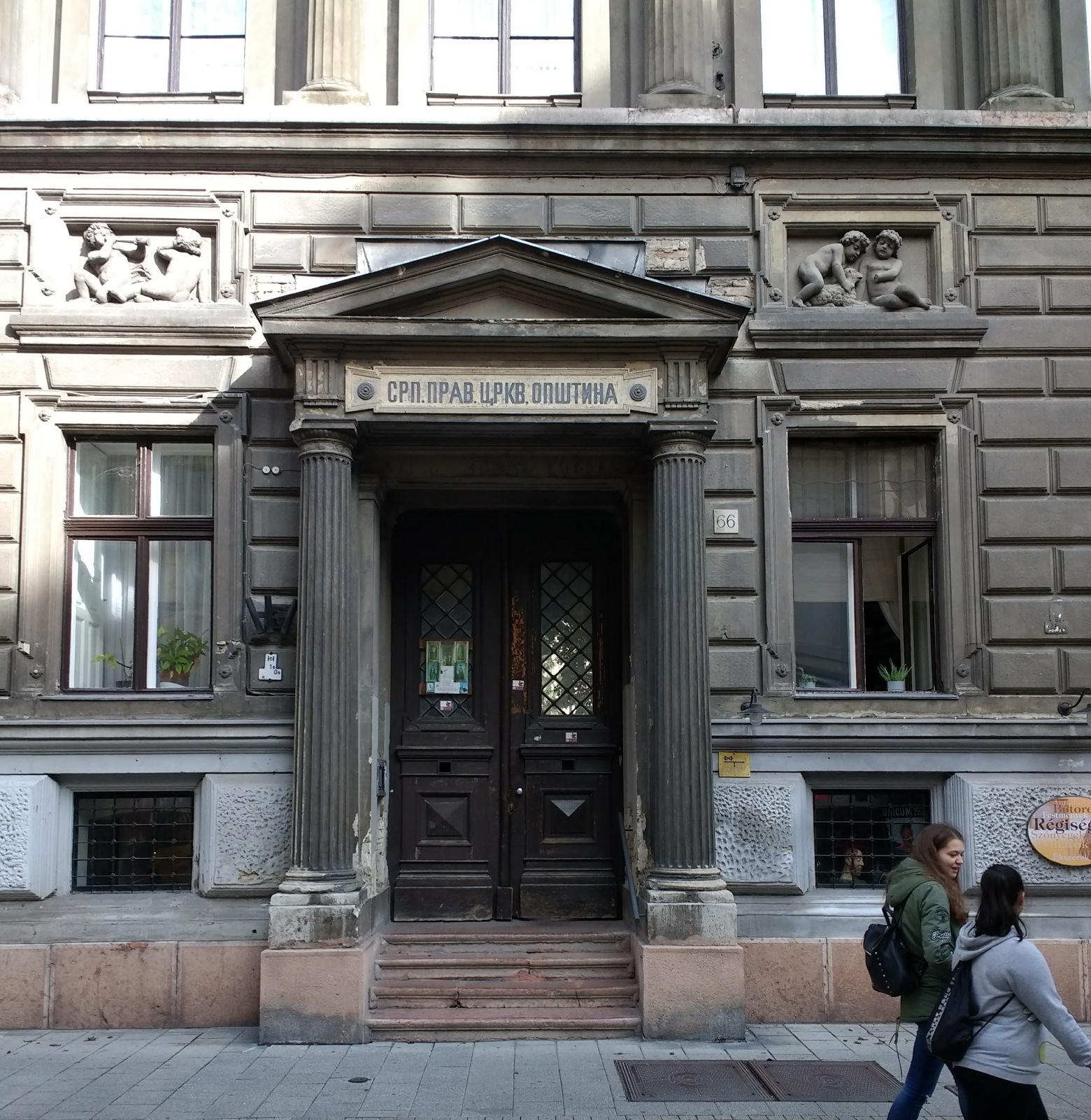
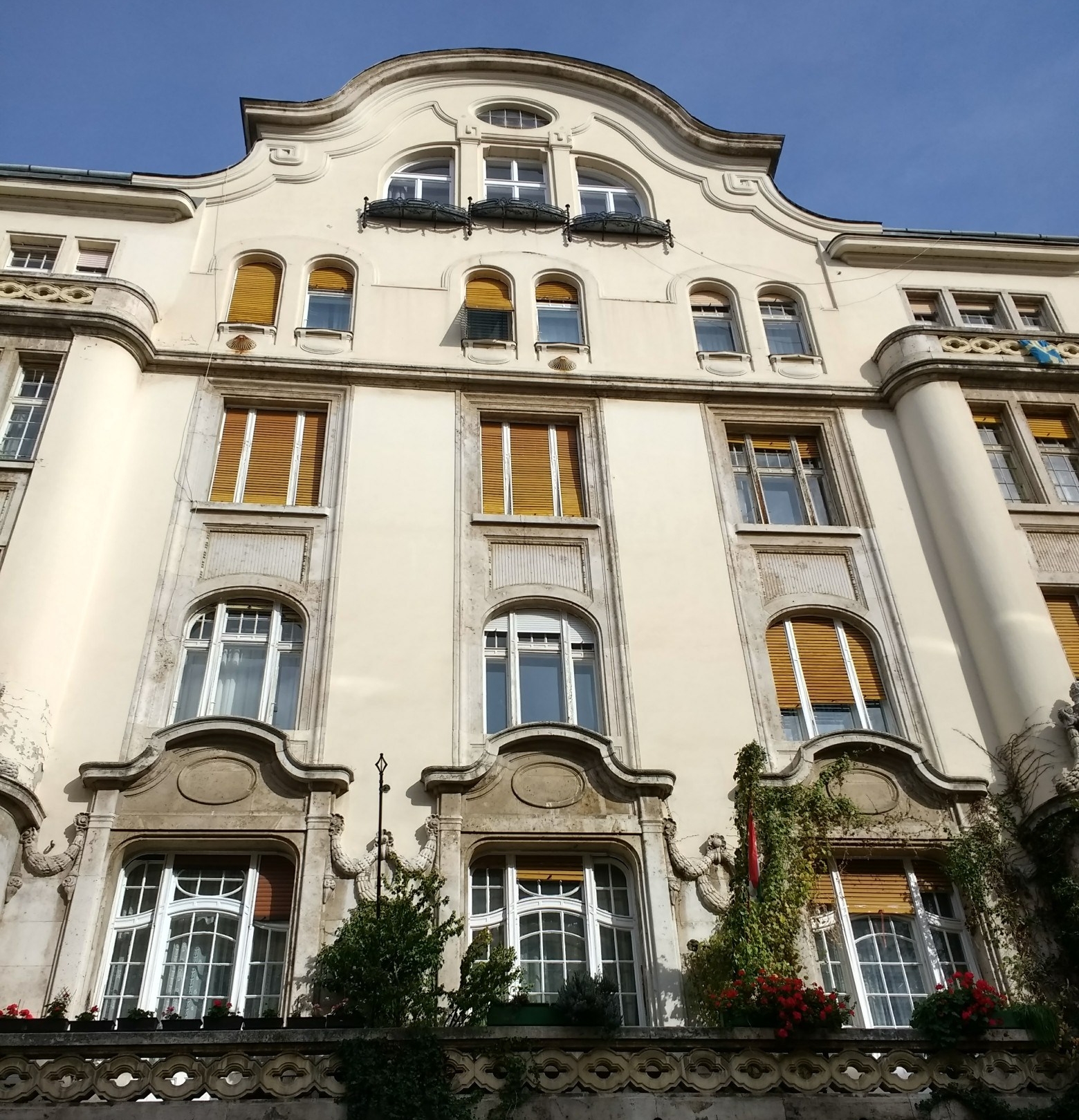
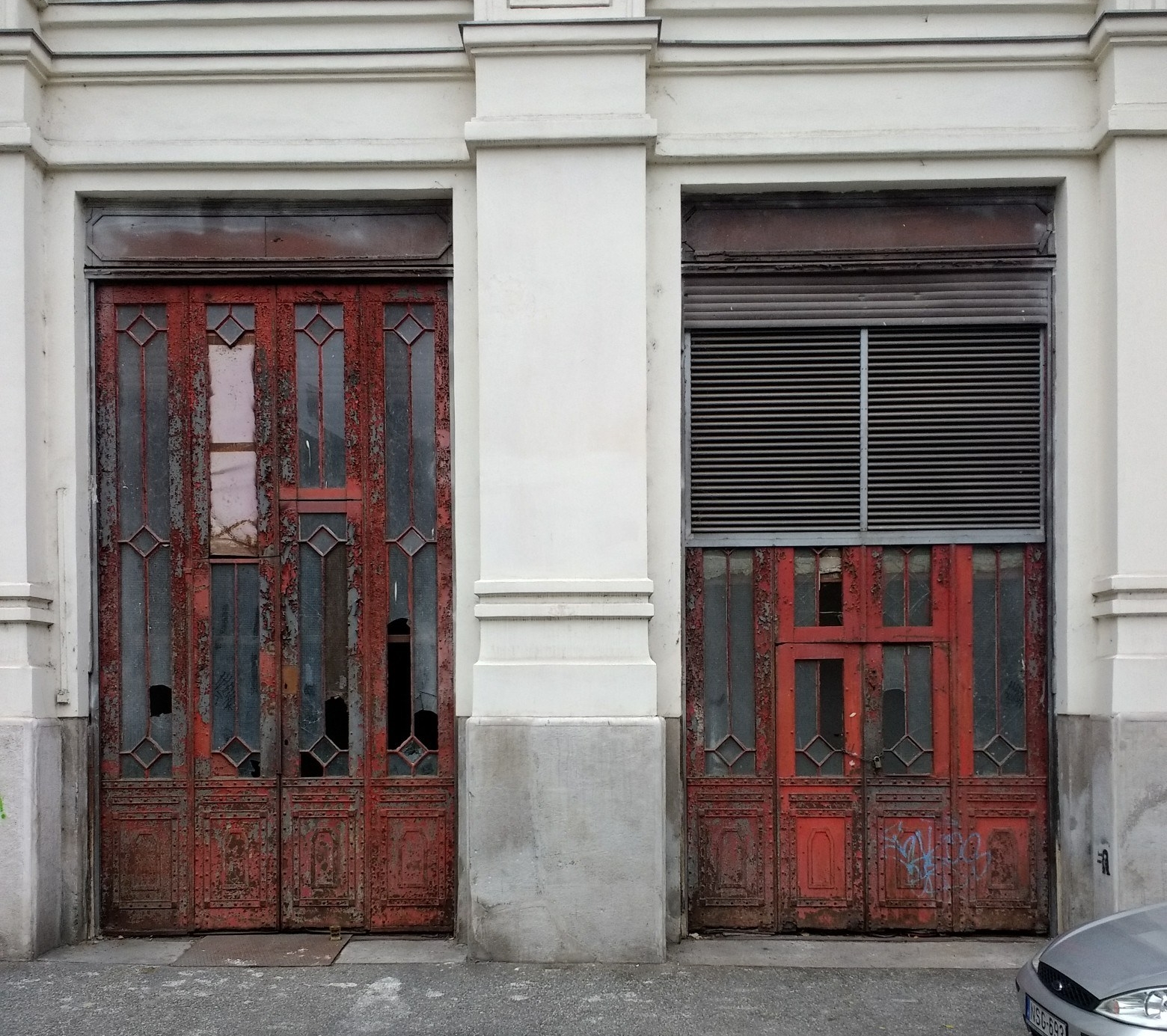
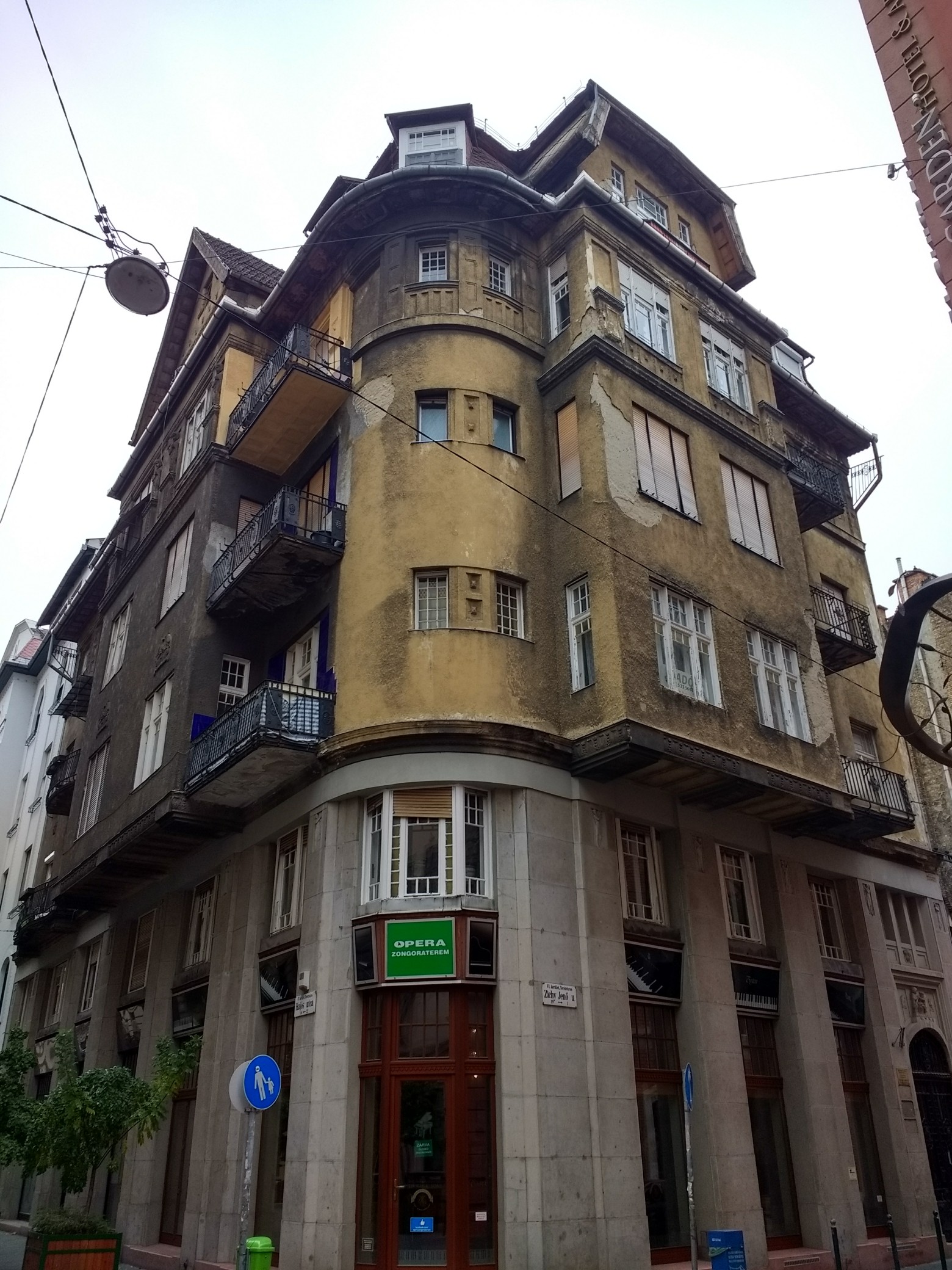
The capital city of Hungary is a delightful city to wonder around. As with my wonderings around the capital cities of various Balkan capitals such as Zagreb, Sarajevo and Belgrade last year, in Budapest there are a wealth of buildings of different architectural styles. Most prominent though are the buildings dating back to the times of the Austrian-Hungarian Empire. Those are grand old buildings with fabulously opulent adornments. It’s even more satisfying to discover some of those buildings in splendid dilapidation. That’s the difference between Budapest and its nearby cousin Vienna. Vienna has an abundance of lovely buildings, but almost all are periodically maintained and saved from slipping into ruin. In Budapest its not an uncommon site to see many buildings from that time period fallen on hard times; like a beautiful woman (or man) succumbing to ferocious ageing and too broke to afford a face lift. What money there used to be squandered long ago.

The buildings featured are magnificent Habsburg Empire era structures sometimes abruptly juxtaposed next to brutal and more austere Communist era buildings. Even some Ottoman/Eastern styled buildings. After all Hungary was ruled for 150 years by the Ottoman Empire. A lot of Neo Classical architecture can also be found. Sometimes these Ancient Greece influences are blended into more severe Art Deco architecture. Most of the time I know nothing about the buildings I come into contact with. I am simply just curious about their aesthetic qualities. Its all a fascinating melting pot of different styles. The pictures below, which I took on my wonderings, are evidence of this.


IMG_20181023_130425556_HDR-1560x2080IMG_20181023_155447682-1560x2080IMG_20181023_133756602-1560x2080IMG_20181023_130510824-1560x2080IMG_20181023_160150262_HDR-1560x2080IMG_20181023_153303283-1560x2080IMG_20181023_160816011_HDR-1560x2080IMG_20181023_153506184-1560x2080IMG_20181023_155604211-1560x2080IMG_20181023_155818937_HDR-1560x2080IMG_20181023_161647791-1560x2080IMG_20181023_132831633_HDR-1560x2080IMG_20181023_161400815-1560x2080IMG_20181023_162317228-1560x2080IMG_20181023_132523602-1560x2080IMG_20181023_155238603-1560x2080IMG_20181023_155542814_HDR-1560x2080IMG_20181023_155946754-1560x2080IMG_20181023_132859598-1560x2080IMG_20181023_133252968_HDR-1560x2080IMG_20181023_154958241-1560x2080IMG_20181023_173841338-1560x2080IMG_20181023_132751756_HDR-1560x2080IMG_20181023_155411568-1560x2080IMG_20181023_153214176_BURST001-1560x2080IMG_20181023_154319778-1560x2080IMG_20181023_160016349_HDR-1560x2080


Photographs and text by Nicholas Peart

(c)All Rights Reserved