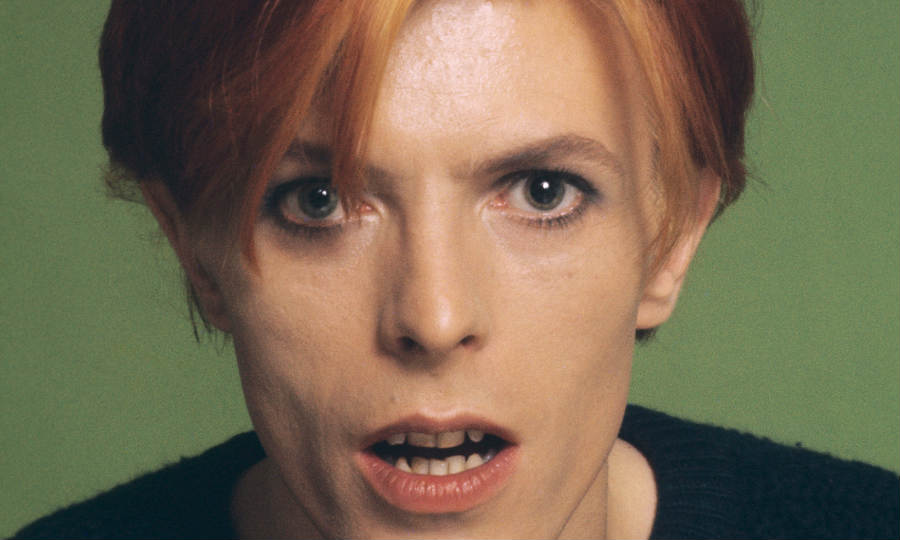
Today marks the 10th anniversary since David Bowie passed away. I still remember that day clearly. I was in South Africa watching the news on the TV and seeing the wealth of tributes. It was a shock. He kept everything very private. In fact, I was thinking of him just a few months before he died and I was wondering when he would, if ever, decide to go on tour again? His last world tour was more than a decade before that point and I foolishly turned down the chance to see him play at Wembley Arena back in 2003. 2003-4 would be the last time he properly toured and save for a few sporadic and brief live appearances, he would never tour again.
Just a couple of days after he died on January 12th 2016, I wrote a piece entitled, “The Death Of David Bowie, The Future And 3D Printing”. This would also be my very first blog post for my newly established blog website that was originally called The Slider. In this post I not only reflect just on David himself, but also the wider context of the future and new and emerging technological developments. For example, I talk about the concept of The Singularity and the inventor and futurist Ray Kurzweil’s prediction that in 2045 artificial intelligence will surpass human intelligence. Back then the topic of AI was not on everybody’s lips like it is today.
And what has all this got to do with David Bowie, you may ask? For me, it is all very relevant when I think of him. Aside from being a great artist who changed the face of pop music and expanded the parameters regarding the possibilities of what being a mainstream pop artist can be, he also had remarkable prescience. As well as embracing and harassing change (as opposed to fighting it), he had a unique ability to see far into the future and had a pioneering spirit. A great example of this is his interview with Jeremy Paxman from 1999. Back then we were still in its early days of the evolution of the internet. There was a lot of excitement and hype over the internet. Naturally, there were believers and sceptics. The doubting Thomases saw the internet as just a fad whereas the believers saw the net’s huge potential. Bowie was definitely in the latter camp, but he wasn’t a blind and blinkered believer. He was one of the first artists to release his own music online and he saw the great possibilities of the internet and how it would shape our lives. Yet he could also foresee the negative impacts it would have on humanity. In the interview, Paxman remarks that the internet is “just a tool”, although I suspect he may have been playing devil’s advocate and trying to gauge Bowie’s response.
It is a popular theory to say that Bowie planned his death all along and that he checked out at the perfect time before the whole world turned to custard. It is a compelling theory, but I don’t buy it. I don’t buy it, because I firmly believe that Bowie loved life for all its ups and downs. Yes, he may have been highly secretive about his illness and meticulously planned his final album, but if he had the chance he would have given anything to live longer on this planet. In fact, I recall reading somewhere after he died that one of the things that made him the most sad about knowing that he was going to go so soon was knowing that he wouldn’t be around to see his young daughter grow. Moreover, I also seem to remember reading a tweet by his son Duncan, a few years after his death, where he said that if only David had not smoked so much throughout most of his life there would have been a good chance he would still be around. So no, I am not one of those folk who thinks that he “died at the right time”.
On the day he passed away and the days after his death, I watched people who grew up with Bowie as far back as those Ziggy Stardust days being absolutely heartbroken; as if they had lost a beloved soulmate. I was very shocked and saddened when he died. I love his music and spent a lot of time listening to his records. However, I did not grow up with his music from the early days of his career. It was the Ziggy Stardust period that was the tipping point and that finally turned him into a star after several years of struggling and false dawns. Those veteran fans remember when Bowie appeared on Top Of The Pops in the early 70s playing his song Starman with a blue guitar. For them, it was like witnessing some exotic and androgynous extra-terrestrial being. In those days long before the internet, social media and hyperconnectivity, witnessing this on the TV was exciting and a blast of colour in a colourless world. Throughout most of the 70s Bowie was firing on all cylinders creatively and almost every album he released during this period was excellent. He took risks and never rested on his laurels like some of his glam rock contemporaries and he knew when the time was right to wrap up the Ziggy phase of his music career.
Sometimes I ask myself, if Bowie were starting out today would he strive to make it as a pop star or even go into the arts full stop? Personally, I feel that he was more than just a pop star and he didn’t have all his huevos in one basket. I think one of the most important things to deduce about him, as I already explained earlier, is that he had a pioneering spirit. He embraced change and new and emerging landscapes. He was terminally curious and open minded. When Bowie’s career first really took off in the early 70s, the music industry was still growing and there was still a lot of low hanging fruit in terms of creative musical experimentation and what could be achieved. Even though there were wild and unconventional musicians that existed before Bowie first emerged, one could argue that Bowie was the first mainstream pop star who created the template for all future popstars regarding what they could be. Thus in the same way that The Beatles were probably the most influential band of all time, it would not be unreasonable to argue that David Bowie was the most influential pop star of all time.
There is seldom a day that passes when I trawl through the feeds of my social media accounts and stumble upon an article or post that laments the current state of affairs for many individuals in the creative/media industry. It is true, especially in the last 15 years, that many writers, journalists, musicians, songwriters etc have had a rough time. The internet, since it’s mainstream adoption almost 30 years ago, has had a colossal effect on this industry.
The emergence of the music file sharing site Napster at the end of the 90s was the first real taste of the seismic effects that the internet would have on the music industry in the coming years since this platform was first unleashed onto the world. Yet, even back then, very few people were able to foresee the long term effects. The internet and technology were moving at an exponential rate and much of the music industry was slow to adapt. In fact, some of the large record labels decided to fight those early disruptive file sharing platforms rather than to evolve and try to stay ahead of the curve.
In the past, bands and artists were able to make a comfortable living on their physical record sales alone. The most successful bands and artists sold records in the millions. Today, the internet has completely taken a sledge hammer to this business model. It is now very easy to listen to most music for free. In the past 10-15 years, streaming platforms such as Spotify have emerged where for a monthly subscription fee one has access to vast libraries of music both old and new. Unfortunately, for the musicians, even a substantial amount of listens does not generate anywhere near the same income like back when people actually bought records. There is the option to purchase or download a song or album, but against options like Spotify and You Tube, nowhere near enough people consume music via this route making it very hard for musicians to make a decent living just via their songs alone.
The internet and digitisation of the printing presses have also had a corrosive effect on the incomes of many writers and journalists. Now many people can create a website and start a blog to share their own articles and written content. Print sales of newspapers have been in decline and the revenues from digital subscription sales falls short of revenue numbers for physical sales from years gone by.
However, I don’t think the current status quo of oceans of free content will continue. In the coming years we will see artificial intelligence (AI) play an increasing role in the way we live our lives. I have been fascinated by the development of AI for over ten years now, yet it’s only been in the last few years that it has really entered the public consciousness and everyone seems to be talking about it. Yet, despite this, most people are understandably very worried about the development of AI and see an almost dystopian future ahead.
I am going to throw my hat in the ring here and say that AI will benefit humanity and lead to a much better world. In the context of the creative industries, I think AI will be on the side of the creators. In my view, I think that as AI continues to improve it will get to the stage where it will be able to do most tasks better than humans can. As the internet further evolves, I can see the net also being policed around the clock by increasingly sophisticated AI. This will be a very good thing as it will lead to a crackdown on all the toxic and nefarious forces of the net. Currently, the internet is a very messy place, but AI will do a remarkable job of cleaning it up and protecting users from the dangerous aspects of it, making it very hard for unsuspecting users to fall victim to fraud, deception, undesirable entities etc.
Ever since the internet first became mainstream, it has, for the most part, been a free wheeling and wild west place and many government bodies and authorities have been slow to keep up with it. However, with AI, I expect in the coming years that the internet will be much more regulated and less of an uncontrolled wild west space. The implications of this will be lots of new legislation created and passed and also applications put into place, which protect internet users.
I think when all this is finally realised, it will have a huge effect on the way we consume content. Suddenly, almost all content will not be free any more. It will not be possible to listen to a song for free or read an article for free like we currently do. To listen to just one song or read just one article, you will have to make a payment in advance. The super strong and sophisticated AI that now controls the internet will mean that there is no other way around those rules. It will be impossible to fight these AI safeguards. Today, free content is taken for granted, but it won’t always be like this and people will eventually have no other choice, but to accept this new reality. I would go as far as saying that people will and with it their values will change. They will begin to fully appreciate what they are consuming and they will be happy to pay for it.
Musicians and writers will be able to make a decent living again through their art. Popular streaming services like Spotify will be doomed if they don’t change their business model. I envisage that if they want to survive they will have to go down the same route as Apple and offer music as a download service where the consumer pays for each downloaded song and album rather than a flat monthly fee for an unlimited tap of music. Furthermore, AI will provide much of the traditional print media with a new financial bonanza. Many news sites have been struggling with the decline of print sales and falling ad revenues. Subscription revenues have been meagre by comparison. However, when people start paying per article I think that there is a good chance that revenues will cease to decline.
Contrary to much of the prevailing narrative that AI will only further increase the hardships of musicians and writers, I think AI will financially enrich them. Back in the beginning of 2022, I wrote an article entitled, ‘The Future Could Be Very Bright For Song Rights’. At the time that the article was written, many musicians were selling the rights to their songs. Some, like Bob Dylan and Bruce Springsteen, for vast sums of money. However, despite all this, I was stressing the importance for musicians to think twice before parting with their song rights – even with lots of money involved. You see, it is very likely that AI will open up many new income streams for song rights. The big labels also foresee this, which is why they have been very active buying up all the song rights they can get their hands on. They see these huge new potential money fountains that AI will give birth to for song rights and they are acting now before it becomes a reality.
It is increasingly likely that at some point over the coming years, many musicians will deeply regret that they sold the rights to their songs. At the time they probably thought that they were making the right decision, especially given the precarious and fragile state of the music industry and their natural concern that it will continue to get worse. Recently, Queen sold it’s entire music catalogue to Sony for over $1 billion. A monumental sum of money. However, there is a good chance that over the next ten years, the value of Queen’s back catalogue swells to $5-10 billion. If this were to happen it would become prohibitively expensive for any of the surviving members of the band or members of their family to buy back those rights. This is something to consider for those tempted to sell their song rights at this stage in their career.
The stock price of the much hyped American technology company Nvidia has been on a truly staggering rise since September 2022 that doesn’t seem to be slowing down anytime soon. In fact, since the company posted its latest financial results yesterday, the company’s stock price is currently trading at close to it’s all time high up nearly 10% during current after hours market trading.
On 1st September 2022, the share price of Nvidia was trading at around $121 a share. A little earlier this month, the share price hit an all time high of $746 a share representing more than 6 times increase in the share price of Nvidia in less than 18 months. When the company stock hit it’s all time high it had a market capitalization of more than $1.8tn. With a current after hours market trading share price of $736, the current market cap is very close to that figure.
The latest results were on the surface very impressive. For the year ending on January 28th 2024, total revenue was $60.922bn. This is more than double the total revenue of $26.974bn for the previous year ending on January 29th 2023. Digging a bit deeper into the breakdown of its latest reported total revenue figure of $60.922bn, $47.525bn of this amount was generated from its Data Center business. This figure represents a more than 200% increase compared with the previous year figure of $15.005bn for this segment of Nvidia. A spectacular increase indeed.
What is interesting though when comparing the revenue breakdown figures for both the year ending on January 28th 2024 and the year ending on January 29th 2023 is how relatively flat the other business segments of Nvidia have been. For example, the revenue generated from its Gaming business grew from $9.067bn to $10.447bn representing a more sober increase of just 15%. In fact, for the year ending January 30th 2022, the revenue from its Gaming business was $12.426bn meaning that the revenue from its Gaming business for the year ending on January 29th 2023 actually decreased by 27%.
Revenue from its Professional Visualisation business increased by just 0.58% from $1.544bn on January 29th 2023 to $1.553bn on January 28th 2024. Interestingly, for the year ending January 30th 2022, revenue from this segment was higher at $2.111bn meaning that the current revenue from this segment is down by more than 25% from two years ago.
Pretty much the vast majority of Nvidia’s revenue growth has come from its Data Centre business. However, the important question is whether the current share price and market cap of Nvidia is justified?
Here is the problem I have. Although it is impressive for any company to more than double revenues in the space of a year, the current total revenue figure of $60.922bn is peanuts next to a market cap of $1.8tn. The share price is trading at close to 30 times total revenue. I used to think that a company trading at 10 times revenues was madness, but this company surely wins Olympic Gold for the utter insanity of its current market cap. And what is even more mind blowing here is that this is a company with a market cap of more than half of the UK’s GDP. This is not some cheeky small cap stock.
Of course, there will be some who push back on my analysis with words along the lines of Nvidia being at ‘the forefront of the AI Revolution’, etc. But none of this matters. We’ve been here before. Bubbles of this scale never end well. In fact, I will leave you with the words of Scott McNealy, the former CEO of Sun Microsystems that was one of the hot stocks during the dotcom boom and bust of the late 1990s and early 2000s…
At 10 times revenues, to give you a 10-year payback, I have to pay you 100% of revenues for 10 straight years in dividends. That assumes I can get that by my shareholders. That assumes I have zero cost of goods sold, which is very hard for a computer company. That assumes zero expenses, which is really hard with 39,000 employees. That assumes I pay no taxes, which is very hard. And that assumes you pay no taxes on your dividends, which is kind of illegal. And that assumes with zero R&D for the next 10 years, I can maintain the current revenue run rate. Now, having done that, would any of you like to buy my stock at $64? Do you realize how ridiculous those basic assumptions are? You don’t need any transparency. You don’t need any footnotes. What were you thinking?
So much has been written about gold. Over the last decade it has been a frustrating asset to own. My own view on gold is that it is currently an unfashionable and misunderstood commodity. I also find that a lot of what is written about gold to be cliched and the truth is more nuanced.
Many say that gold is a hedge against inflation, but this is far too simplistic. It is also not enough to say that gold is a hedge against the US dollar. Although, generally speaking I find the latter point to have more truth in it than the former.
I also find it interesting when people compare gold with prominent cryptocurrencies like Bitcoin; the main argument being that Bitcoin has the same scarcity properties as gold. In the case of Bitcoin, it has a supply cap of 21 million coins – thus it can act as a store of value; a kind of ‘digital gold’.
I think this digital gold comparison is flawed. Although gold can be volatile, it has nowhere near the same levels of volatility as Bitcoin. During the last decade Bitcoin as an asset has performed extremely well. If you had purchased some Bitcoin in 2012, today you would still be sitting on an eye watering return. The period from around 2009 to 2021 has seen assets, notably many technology and growth stocks, increase exponentially in value. It is also no coincidence that during this same period interest rates have been at mostly rock bottom levels. This period of loose monetary policy and cheap and easy money has resulted in a dazzling stock market boom in the USA. If you look at the chart of the NASDAQ index, which is full of tech and growth stocks, you will see that in 2009 it was trading at less than 1500 points. Towards the end of 2021 it had reached an all time high in excess of 16000 points. That is some unbelievable asset inflation in a period of just over a decade.
Although many staunch Bitcoin supporters will deny this, it also seems to do very well when interest rates are low and money is cheap and abundant. Rather than being a safe haven against financial meltdowns, it behaves like a speculative technology stock that goes to the moon with interest rates at 0%. A vast proportion of Bitcoin supporters are young people whose only real experience of the financial markets is the landscape over the last 12-13 years since the Financial Crisis. They have never experienced high interest rates or any long lasting bear market. I think this point is very significant; many Bitcoin holders have never experienced a prolonged bear market and high interest rates. They have never been in the eye of a catastrophic financial meltdown.
Although the returns of gold and other precious metals like silver have been poor compared to Bitcoin and many high profile growth stocks over the last decade, it should also come as no surprise. When markets are performing well and there is abundant liquidity in the financial system, gold is not one of the primary assets that tops investors lists of assets to invest in. It is more enticing to invest in speculative high risk assets that are going gangbusters. When Bitcoin and some flavour of the month tech stocks are on a tear in this loose financial environment, positive feedback loops are created as more and more investors pile in. Investors see the returns being made on these assets or they see some of their friends making a fortune and they want in too – thus the FOMO (Fear Of Missing Out) bug enfolds them.
So when does gold shine? Gold will begin to shine when feelings of total despair and hopelessness are at it’s zenith. Since the beginning of this year, the more speculative areas of the market that have been performing very well for many years until 2021 have now been experiencing dramatic falls in their market values. Inflation has roared towards double digits in the US, the UK and the Eurozone and central banks have had to increase interest rates. Yet, interest rates are still nowhere near current inflation rates. If central banks were to dramatically hike interest rates to match inflation rates I believe this would cause a financial meltdown like no other – it would far eclipse the carnage of the Great Financial Crisis of 2008-9. Although markets have fallen, they are far from this stage. There is still lots of speculation going on and inexperienced investors still playing foolish games. Inflation may have reached 40 year highs, but because interest rates are still low lots of speculation continues. The price of gold has actually been drifting downwards over the last few months and this has resulted in some commentators stating that it is a poor hedge against inflation. Yet, these commentators are missing the point. Although inflation is at high levels, there is still a lot of liquidity in the markets. There is no real urgent reason to hold gold. However, there may just come a time when interest rates increase to unforeseen levels and liquidity begins to totally dry up as money becomes more expensive. Investors panic and thus begins an amplification of negative feedback loops and FUD (Fear, Uncertainty and Doubt) kicks in. It is the moment when investors swear that they will never invest in the stock market again and that they will never ever again touch cryptocurrencies that I believe gold and by extension other precious metals like silver and platinum etc will begin to perform very well.
Some big names in the music world in the last few years have sold the rights to their songs for mega bucks. In 2020, Bob Dylan sold his back catalogue to Universal Music Publishing Group for a reported $400m. Then more recently last month, Bruce Springsteen sold the rights to his songs to Sony for half a billion dollars. Other names like Neil Young and the estate of David Bowie have also sold their song rights or at least a percentage of their rights for big money.
I’ve thought a lot about all this. On one hand, these may be shrewd moves especially with that kind of money offered. Yet alternatively, one could argue that song rights/publishing may over time end up being an increasingly desirable asset class. The last decade has been very rough on artists and the music industry in general. The growth of the internet and streaming platforms has had a huge dent on physical record sales. Even though there has been a revival in vinyl sales it is a small market and gone are the days one could make a comfortable living on CD sales or any physical record sales alone. To exacerbate this, the disruption created by COVID-19 over the last couple of years, has dealt a huge blow to arguably the most crucial source of income for music artists, which is playing live. All in all, the last few years have been pretty rough for music artists.
Yet I believe that the future is bright for music artists and the music world in general. I think the last decade was the nadir point, but I am optimistic that things will get better. And this all comes back to my point about the value of song rights. When the music industry was really growing in the 70s, 80s and 90s, record sales made up a huge part of the total revenue of this industry. So much so, that it would not be uncommon for the record label of a major artist (or sometimes even a new artist) to spend hundreds of thousands of dollars on a new album.
When upstart streaming sites like Napster started to appear and be increasingly adopted in the late 90s with the then recent rise of the internet, it was already a sign that in the future consumers would turn increasingly more to digitally downloading and streaming their music over buying physical records. By the early 2010s, it was clear that this trend had already had a huge effect on physical record sales.
Yet what the internet may have taken away, it may also give back generously. I believe that the full potential of song rights as a serious source of money generation has only barely been scraped. There will be so many new ways for songs via the internet to generate money. It is well known that streaming platforms such as Spotify pay artists very little every time a song of theirs’ is played on their site. And there may eventually be growing pressures or new laws passed to ensure that these platforms pay artists more fairly. However, music streaming sites will just be one way out of many other new ways for artists to make money from their songs.
Whenever a song is played on the radio or in a film/TV programme or advert, the songwriter receives royalties. With the growth of film and TV series streaming sites like Netflix and Amazon Prime Video, there are new opportunities for songs to be licensed to shows and films on those platforms.
I think for new and up and coming music artists, sites with oceans of video content by all kinds of people and entities (known and unknown) like Alphabet owned YouTube offer lots of opportunities for songwriters to earn additional royalties on their songs when content creators on those platforms use their songs in their videos. In the case of YouTube, some of the statistics are off the charts; 720,000 hours of content is uploaded to YouTube daily of which 500 hours of content is uploaded every minute. This simply phenomenal and abundant growth and with that immense opportunities for songwriters to earn income from their songs if their are used in any of these videos.
It is also important to see where the internet may be going and how it will develop in the future. Currently, there is a lot of hype over something called the ‘Metaverse’. And I can see why. To put it simply, this is a kind of ‘Virtual Reality’ stage of the internet. We already spend a large portion of our lives on the internet, yet it is a 2D experience – via our smartphones and laptops. In the so called ‘Metaverse’ it is a more immersive 3D experience. Although there is a lot of noise about the Metaverse and it is generally impossible to make predictions, it is possible to spot trends and I think the next stage of the internet will be a much more immersive one were people will be living in more virtual worlds via Augmented Reality (AR) and Virtual Reality (VR) technologies. I think this could grow exponentially, especially once it experiences mass adoption.
This will again create lots of new opportunities for songwriters as well as music artists/performers in general. In the case of the latter, I can see a huge growth in revenues for so called ‘hologram’ concerts where the artists don’t have to be present but the viewers receive a fully realistic and immersive live music experience where they can even interact with the artists and others in the virtual audience. But I digress. To get back to the point of song rights, I see lots of new income streams from songs to be made in these new worlds every time a song is used. Plus there will be lots of new opportunities and demand for songs to be licensed.
This is why companies like Universal, Sony and Warner Brothers have been paying huge sums of money for the catalogues of these blue chip artists as well as lesser known artists too. They are playing a long term game. Even though the sums they paid may seem like a lot of money, when these new digital platforms and worlds develop and grow exponentially, these catalogues could be worth even more money. So much so that it may end up being much more expensive for those artists to buy back the rights to all those songs they sold in the future.
Uncut Gems is a high-octane anxiety ridden trip of a film. Yet, whenever my body tells me to turn off the film, I keep feeling compelled to watch it all the way through until by the time the film is over, I need the peace and tranquillity of a white room with no external objects or fast moving stimuli. A ten day Vipassana meditation course may be needed!
The main protagonist of the film, a Jewish New Yorker jeweller named Howard Ratner played by Adam Sandler, keeps unnecessarily falling into tricky and at times dangerous situations. On one hand, I want to sympathise with him and his misfortune, but on the other he ultimately creates his own problems. It’s like he wants to spend his life swimming in quicksand when it would be less painful just to take the smooth plain vanilla road.
What’s more he is a father with kids to support. If he were single, hell, get into any kind of hot mess you want. But if you have a family, that is beyond selfish. Ratner’s mind is like a fast flowing river. There are seldom any moments of peace in his frantic dome. It is a gamblers mind he possesses and the thrill of it all seems to be his raison d’etre. A pretty pathetic one. He’s like the quintessential stock market speculator who never does any thorough due diligence on a stock and gets excited simply by a hot tip or any kind of hype. He will be the first to catch the FOMO (fear of missing out) fever.
Even when he wins big, like towards the end of the film, there is no grace in his behaviour. His gamblers’ mind simply glows more red hot. And if his life weren’t abruptly cut short, you can bet your bottom dollar he would keep gambling with whatever money he has left until he’s back to a no money situation or worse, further deep in debt.
People close to him find him draining. Especially his long suffering wife who bears the bulk of his chaos. One night she tells him to his face; ‘I think you are the most annoying person I have ever met’. And she’s right. He’s an exhausting and draining motherfucker. An impulsive, low grade hustler bereft of wisdom. I think any woman in a relationship long enough with Howard would get so beaten down to the point where a boring but dependable relationship devoid of even a modicum of drama would seem very attractive.
As ghastly and shady as the people pursuing him may be, they ultimately do him a favour by gunning him down. Throughout the film he is a hazard to himself and those around him. He’s like some insufferable stray dog constantly barking. A broken record. In the end someone somewhere was bound to lose patience and say, ‘Somebody shoot the dog’.
Whenever someone asks me to choose between The Beatles or The Stones I will sometimes reply with ‘neither’. Instead I will say The Kinks. There is something special and close to my heart about that band. Throughout the 60s they had hit after hit and were certainly one of the leading British groups of that era. Yet many listeners of The Kinks I feel only penetrate the surface of this great band. They know the hits, but few venture beyond those songs as popular as they may be. I came to the band a little late. I first got into the group via a greatest hits compilation I purchased when I was 19. As much as I cherish all those well loved songs, what struck me as odd was that the compilation ended at the 1970 hit single Apeman; as if the group ceased to exist after that song. It seems to be the same with many other Kinks compilations.
Most of their well known hits are from the time when they were signed in the UK to the Pye record label from 1964 until 1970. The vast majority of their most well known songs such as You Really Got Me, Sunny Afternoon, Tired Of Waiting, Waterloo Sunset, Days and Lola fall within those years. Personally, my favourite years are from 1968 to 1975. I love those early songs and they will never get stale and always retain a timeless quality to them. For me though, the most exciting years are when the group’s chief songwriter Ray Davies began to compose these brilliant and ambitious concept albums starting with the 1968 album The Kinks Are The Village Green Preservation Society(TKATVGPS) and ending with the 1975 album Schoolboys In Disgrace. Those albums receive mixed reviews from fans. For example, the former is today frequently heralded as a classic landmark album and can be seen in many ‘greatest albums of all time’ polls. The latter album, on the other hand, gets invariably torn apart. Perhaps those journalists and listeners never even bothered to actually listen to Schoolboys? They probably saw the hideous front cover and decided that they didn’t need to investigate further; their prejudices already set in stone.
During the few remaining Pye years, The Kinks released some very strong albums. In 1968 they released the aforementioned TKATVGPS album. Then the following year they released the album Arthur, which is just as good as VGPS and is equally held in high esteem. The final two albums they released on Pye were the 1970 studio album Lola Vs Powerman And The Moneygoround and the 1971 soundtrack album Percy for the film of the same name. Lola Vs Powerman… produced the hit singles “Lola” and “Apeman”. The former is one of the band’s best known songs.
After the band left Pye, they signed a new deal with RCA records in 1971. Their tenure at RCA would last for four years and during this time the band continued on it’s trajectory of releasing concept albums. Just as they signed to RCA, they released the album Muswell Hillbillies. It’s a strong album with some fine songs on it. The next year they released the album Everybody’s In Showbiz. Personally, I have mixed views about this album. On one hand, I like Ray’s ideas and inspiration behind it as well as songs such as Celluloid Heroes and Sitting In My Hotel Room. Both these songs are excellent. Celluloid Heroes has gone on to be covered by multiple artists – most notably Bon Jovi. It contains some of Ray’s finest lyrics.
Then in 1973 and 1974, the band released two albums; Preservation: Act One followed by Preservation: Act Two. All in all, neither of these albums were particularly well received by music critics at the time; especially the Preservation: Act Two album. However, after listening to both those albums I have come to the conclusion that they are the two lost masterpieces of The Kinks’ cannon of albums. And it is those two albums that I want to make the centre of this article. Whilst it may be too controversial to say that they are the best albums by The Kinks, I think I can firmly say that they are Ray Davies’ most ambitious works. It doesn’t matter whether one thinks those albums are a success or a failure. I don’t personally think they are a failure. What I will say is that those albums took Ray down avenues he never, or at the minimum only casually, ventured down before. He had already explored subjects like greed, poverty, inequality and injustice in society earlier on via songs like ‘Dead End Street’,‘Brainwashed’ and ‘Powerman’. But on the Preservation Act albums he goes right into the heart of darkness. The Village Green Preservation Society(VGPS) album is almost soft liquor by comparison. Whilst the songs on VGPS are very strong and vivid, they are also accessible. They don’t rock the boat nor do they, at least superficially, take the listener to an ostentatiously dark and uncomfortable place. The Preservation Act albums, on the other hand, are much more polemic.
We’ll start with the Preservation: Act 1 album from 1973 before delving more deeply into Preservation: Act 2. One of the gems of this album is the song Sweet Lady Genevieve – a song that could fit quite comfortably with the cannon of better known Kinks hits. Of the two Preservation Act albums this one is lighter in tone and there are even echoes of the earlier VGPS album via songs like Sitting In The Midday Sun and Daylight. Another pearl on this album is the song ‘Where Are They Now?’…
I’ll sing a song about some people you might know They made front pages in the news not long ago But now they’re just part of a crowd And I wonder where they all are now.
For me this song is an affectionate tribute to all the mavericks. The individual and special people who were a blast of colour in a world that is becoming increasingly colourless and homogenous. In the context of the earlier VGPS album that would be characters like Johnny Thunder. Some strands of humanity are evident on Preservation: Act 1. But this is deceptive. The presence of the song Money And Corruption/I am Your Man poisons any idyllic and romantic notions…
Money and Corruption Are ruining the land Crooked politicians Betray the working man, Pocketing the profits And treating us like sheep, And we’re tired of hearing promises That we know they’ll never keep.
With this song Ray dives straight into the underbelly of the system – taking it on like a firebrand revolucionario a la Hugo Chavez. This continues and is reinforced in the end refrain part of the song with it’s Communist Manifesto overtones…
I visualize a day when people will be free And we’ll be living in a new society. No class distinction, no slums or poverty, So workers of the nation unite, Workers of the nation unite, People of the nation unite.
This song sets the tone for the follow up Preservation: Act 2 album. On the later released bonus edition of the Preservation: Act 1 album is the song ‘Preservation’, which wasn’t featured on the album when it was originally released. It’s lyrically not only a very strong song but totally encapsulates the spirit of both Preservation albums as a whole. It also, along with the song Here Comes Flash, introduces the character Flash, a central figure in the follow up album who represents everything that’s wrong in the world – a psychopathic, greedy, amoral, corrupt and duplicitous individual who lacks empathy and is only out for himself. He is the type of person that would make Gordan Gecko blush…
Once upon a time In a faraway land Lived a villain called Flash He was such a wicked man He terrorized the people He broke arms and crushed hands He ruled with a fist and he purchased all the land
Then he plowed up the fields and cut down the trees For property speculation And he did it all for a pot of gold And for his own preservation
Preservation: Act 2 is a dark unsexy beast of an album. Whatever light there was on Preservation: Act One has now been blocked out. If VGPS is all rural fields, church fetes, strong bonds of trust, tea and scones and strawberry jam, then Preservation Act Two is polluted rivers, eyesore landscapes, revolutions, and societal collapse where everyone just looks after number one. The VGPS album has a kind of innocence to it. Even the mildly dark characters in the album like in the song Wicked Anabella completely pale in comparison to Flash. The world of VGPS is a paradise compared with the world of Preservation: Act Two, which represents a paradise that is well and truly lost.
The life portrayed in Village Green is overall idyllic and peaceful. Yet it is a bubble shielded from the truly evil and disruptive forces of life. It is naïve to think such a life like that one can just go on forever. Flash hadn’t yet pitched up to turn things upside down.
The first song on Preservation: Act 2 to really get things going is the song When A Solution Comes…
When a solution comes, It’s gonna breathe right down on everyone. When a solution comes It’s gonna cover up the clouds And eclipse the sun And black out a pale blue sky, And everybody’s gonna be terrified, Because they’re all going to feel the bite And there’s going to be a revolution
‘Days’ this song is not; in that iconic song from 1968 there is sadness, loss and grief. But there is no bitterness. There is no hate nor is there fear. This is evident in the following lyrics;
You took my life, But then I knew that very soon you’d leave me, But it’s all right, Now I’m not frightened of this world, believe me.
Yet in When A Solution Comes there is a change in the weather. This is the beginning of a new period of fresh hell that will reign down on all of society. In the book The Fourth Turning, the authors William Strauss and Neil Howe look at the world over the last 500 years and locate a series of cycles each lasting a generation. Within each generational cycle are four turnings. The first turning represents a ‘high’: this is a period of stability. Trust in institutions is strong and individualism is weak. A new civic order is established the old values regime collapses The second turning represents an ‘awakening’ where the civic order established in the first turning begins to come under attack from a new values regime. The third turning represents an ‘unravelling’. During this era trust in institutions begins to weaken and individualism strengthens. The first turning civic order collapses at this point and eventually taken out by the new values regime. The forth and final turning represents a ‘crisis’. By this time the world is in chaos as the the new values regime replaces the original civic order created in the first turning with a new one.
In the context of the trilogy of all three Preservation albums, the song When A Solution Comes represents the ‘unravelling’ phase of society. It is not in the full ‘crisis’ phase yet, but it is already well on it’s way. On the other side of the coin, the opening title track of the VGPS album in some ways represents many attributes of the first turning….
We are the Village Green Preservation Society God save Donald Duck, Vaudeville and Variety We are the Desperate Dan Appreciation Society God save strawberry jam and all the different varieties Preserving the old ways from being abused Protecting the new ways for me and for you What more can we do
The lyrics of the title track of that album for me evokes a strong sense of unity. A sense of everyone looking after each other. Not allowing society to disintegrate. Keeping the peace. And that requires making an effort and caring. Once people stop caring, apathy begins to prevail and with that goes the ties that bind paving the way for disruptive forces to take over. The consequences of this are probed deeply in Preservation: Act 2.
The song Shepherds Of The Nations is one of the strongest songs on the album and in my view represents the new horror show of this dark turning….
Down with sex and sin, Down with pot, heroin. Down with pornography, Down with lust. Down with vice lechery and debauchery.
We are the new centurians. Shepherds of the Nations. We’ll keep on our guard For sin and degradation. We are the national guard Against filth and depravity, Perversion and vulgarity, Homosexuality. Keep it clean.
When all of a sudden all basic freedoms that were once taken for granted have now been eroded and a new cabal of neo-puritan Gestapo-like folk have taken over the asylum. Rather than the world taking a step forward and continuing to evolve and flourish, it has been abruptly thrown off its course and has taken a thousand steps backward towards some unfolding new sterile, lifeless and fearful Middle Ages era wasteland; where all the flowers start to wilt and die, and turn a new shade of grey. All the colours of the Village Green world now dulled to cigarette ash.
The song Nobody Gives is another dark slice of what it’s like to be in the living in the middle of a turbulent fourth turning style world…
I can’t understand why everybody’s quarreling, Nobody gives in case they lose face, And everybody’s guilty and everybody’s innocent, And the fact of it is nobody gives any more.
Once upon a time there was a period of peace, stability and trust amongst one another. The aforementioned VGPS title track nails that sense of societal harmony perfectly with the lyrical couplet, ‘Preserving the old ways from being abused / Protecting the new ways for me and for you‘. But in the song ‘Nobody Gives’ everyone has turned against one another. They have become fearful and full of mistrust. Any attempt at simply performing any altruistic acts of kindness is simply not worth the bother and in a climate of unanimous fear this could even backfire. Thus it is easier and safer to just not care anymore.
As the song gathers pace, it takes the listener on a vivid and sombre journey through the roots of this social breakdown leading to, in the example of this song, the rise of Hitler…
Back in nineteen hundred and twenty-five There were thousands of people struggling to survive. There was hunger, unemployment and poverty, Then in 1926 they decided to be free So they all went on strike and The workers told the unions, who blamed it on the government, The politicians blamed it on the strikers and the militants, Everybody’s guilty and everybody’s innocent, But the fact of it is nobody gives any more.
Back in nineteen hundred and thirty-nine There were scores of German military waiting in a line, And the Fatherland wanted what the world wouldn’t give, And then Hitler decided he could take what was his, So they all went to war and said Kill all the left-wing intellectuals, Annihilate the Jews and wipe out their race, Eliminate the weak because they’re ineffectual, And the fact of it is nobody gives any more.
In 1923, when Germany was then the Weimer Republic, the country experienced a period of devastating hyperinflation. This had the effect of throwing millions of citizens into acute poverty – especially those who didn’t own any hard assets that could protect them from this inflation. Any savings in the local currency that had been accumulated via hard work and over a long period of time had very quickly become worthless. The grinding poverty and desperation aside, one can also only imagine the extreme anger and injustice felt by those who had lost all their life savings. They wanted blood and someone to blame. Hitler emerged at a time when this anger and desperation was reaching boiling point. It is only when a society is in meltdown and in the eye of a fourth turning that a figure as evil Hitler can rise to the top. In a Village Green world of togetherness and mutual respect for one another, Adolf wouldn’t stand a chance.
Overall, I think both these Preservation Act albums should be essential listening and certainly deserve to be much more wildly known. They not only complement the earlier and more well known VGPS album, they also give the listener a glimpse into the more intricate and visionary workings of the mind of Ray Davies. I think this was perhaps lost on some of the music critics who were reviewing both albums at the time. The lyrics aside, I think some credit also needs to go to Ray’s brother Dave. Generally, I don’t think he gets another credit as a guitarist. His guitar work is a really important part of both albums and I feel it sets the tone very effectively on some of the songs.
Two further albums followed in 1975, Soap Opera and Schoolboys In Disgrace, before the group left the RCA record label. Like the earlier Preservation Act albums, neither album got overly favourable reviews. Yet I think they are both interesting in their own ways. Soap Opera is a flawed hit and miss album yet the concept behind it is strong and very relevant. I particularly like the songs Everybody’s A Star (Starmaker) and You Can’t Stop The Music. The former song quite simply describes how anyone can be a star; even the blandest and most personality and talent bereft of individuals. Ray created a character called Norman to personify such people.
Schoolboys In Disgrace also has it’s moments. Unfortunately, it suffers from a front cover that is quite frankly a veritable abomination. I feel it unfairly undermines the whole album. That is certainly one reason why many listeners do not give this album a proper chance. However, those who look beyond this monstrosity of an album cover will be rewarded for their curiosity. It is not a perfect album, but there are some gems on there like Schooldays, I am In Disgrace and The Hard Way . It is also conceptually a very interesting album as it is based around a disruptive and unruly schoolboy who would eventually develop into the vile and evil character Flash of the earlier PreservationAct albums. So, in a way, this album plays an notable role next to those albums. It is an important part of that complex puzzle.
Fame can be a dangerous thing. Some people seek it because in their minds it fills a void. If you are talented and have a lot to offer it presents the opportunity to be valued and respected by many people. Fame has always had it’s drawbacks yet I feel there are two different periods of time that one must be aware of. These are Before The Adoption Of The Internet (BTAOTI) and After The Adoption Of The Internet (ATAOTI). In The last 25 years, the growth and development of the internet has been staggering. We currently live in a world of instant hyper connectivity.
If I had to pick a time to be famous I would pick BTAOTI in a heartbeat. News travelled slower back then. The digital world was less developed. I have no nostalgia or desire to live in the past, but when I look at the growth and development of social media today I flinch at the concept of fame. I would even go as far as saying that eventually it may even lose it’s appeal. It would take real guts to go down that path so much so that anonymity would become increasingly attractive. Andy Warhol said that everyone would be famous for 15 minutes. The internet has provided a platform for everybody to publicly project themselves if they want to. There is so much content on the internet today. There is no way one would be able to absorb all the digital content out there in one lifetime. According to Statista, as of May 2019, more than 500 hours of video content was uploaded to YouTube alone every minute.
It is increasingly a rarity nowadays to not have any personal platform or content online. To be purely anonymous will be rarer and more cherished than fame itself.
A few years ago I wrote a post entitled ‘Talent Is Cheaper Than Table Salt’. In this post I outline how talent is actually not so rare and rather it is hard work that matters when it comes to finding success.
I’ve often thought about this post, especially as it is one of my most viewed posts. Yet since I first wrote it, I’ve increasingly began to question it, even though, at least at a logical and basic level, it may be correct. But what if, just what if, I may have got it completely wrong regarding talent? Maybe genuine talent is actually rather scarce. To be clear, when I say this, I mean a kind of talent that is just so special and very hard to replicate.
The quote in my original article by the writer Stephen King goes like this; “Talent is cheaper than table salt. What separates the talented individual from the successful one is a lot of hard work.”
King is correct, especially if one also takes into account the second sentence of his quote. It is all true. Yet talent and hard work are two different things. Anyone can develop a hard work ethic, but not everyone has real god given supernatural talent. I think we need to really reassess how we define talent. I also dispute this notion that if you work hard you will automatically be rewarded. We fall victim to something called ‘Survivorship Bias’ – only looking at success stories and overlooking all the failures.
There are countless stories of those who worked extremely hard and didn’t ‘make it’. Yet those stories seem to be lost on us. But that doesn’t mean that one should not work hard. Absolutely not. Hard work, unexpected challenges and multiple failures are an important part of one’s character building. Saying that hard work is a waste of time sets a bad example.
As a whole, we often neglect to take into account just how random the world can be. Please see my other post Fooled By Randomness. Life is not as linear as we think it is. There are some things that are simply beyond our control.
But getting back to the subject of talent. When I look at the people I admire throughout history one thing they all have in common was that they were special. They were not like everybody else. They had talent in spades and often there was hardly any chasm between their life and their art. Now THAT is rare.
Before you decide to invest in a company, start-up or venture that is highly risky, there is one very important rule that all investors should heed. We are all aware of the obvious rules such as doing sufficient due diligence and only investing what we can truly afford to lose. However, a less obvious rule, and the one which I am talking about in this article, is focused on having Skin In The Game.
The origin of this phrase is debatable although a quick Wikipedia search tells me that it originates from derby races whereby the owners of the horses taking part in these races have ‘skin’ in ‘the game’. More recently, it has been written about extensively in the works of Nassim Nicholas Taleb. Put simply, it refers to how much ‘skin’ a person has in something or how much personal risk they are willing to take on. For example, in the case of entrepreneurs or founders of businesses, an entrepreneur who has the vast majority of their net wealth tied up in their business has considerable Skin In The Game. Even though they will be handsomely rewarded if the company is successful, they will also go down with the ship and face financial ruin if the company goes belly up. This latter point is crucial.
When I analyse high risk ventures, one thing that is a huge red flag for me is a genuine absence of Skin In The Game. A founder or director of such a company needs to have the majority of their own capital invested. ‘Share options’ do not count. However, ‘director buys’ do.
Another red flag is when founders and directors draw huge salaries, especially if the company is not currently generating any revenues. If a company is not yet making money, a company will be raising money via debt or equity placings (issuing more shares) to keep it a going concern. This is precious cash and should not be eaten up in the form of generous remuneration packages. Alarm bells should be ringing if this is the case.
Founders and directors who have a considerable amount of Skin In The Game in a venture is an indication not only that they truly believe in what they are working on and executing, but also that they are motivated and kept under a considerable amount of pressure to ensure that the company succeeds. They believe in the company so much that they are more than willing to match their considerable belief via taking on a considerable amount of personal monetary risk. If the company doesn’t succeed they will be financially ruined. There will be no government or organisation ready to bail them out if they fail.
I have seen so many high risk ventures collapse where the founders and directors have come out of the wreckage mostly unharmed. They always drew big salaries and their equity stakes were mostly in the form of options rather than purchased with their own money. Founders and directors with little to no Skin In The Game are not under any acute pressure to contribute in the best ways they can. They don’t believe in the company they are working for nor is their heart really in it. It is merely a gravy train.
Thus, before deciding to invest in a company, start-up, venture or anything that is highly risky, one should always ask, ‘How much Skin In The Game do the founders and directors have?’



 Latitude Post