Photographs from Soweto

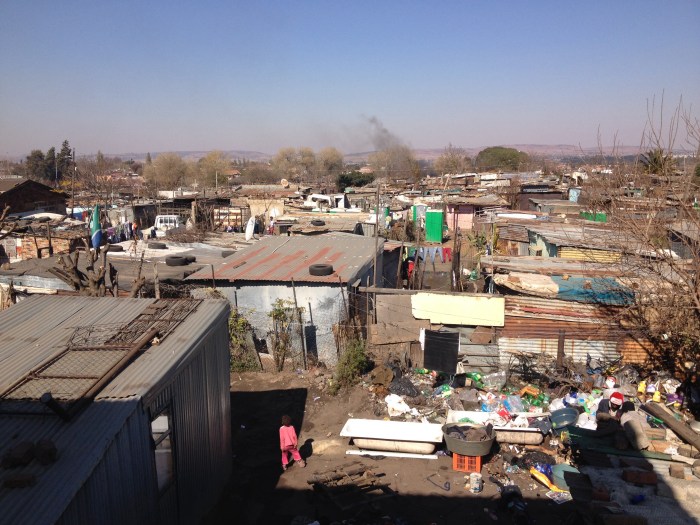
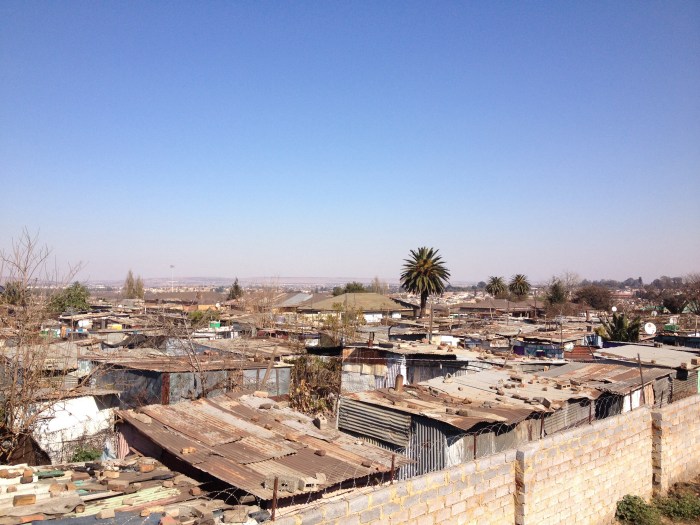
During my time in Johannesburg, I visited the vast township of Soweto on two occasions. Soweto is located south west of the centre of Johannesburg (Soweto is in fact an abbreviation of South Western Townships). Notable landmarks include Desmond Tutu’s house, Nelson Mandela’s house where he lived from 1946 – 62, and the Orlando Towers.

The famous Soweto Uprising of 16th June 1976 began as a result of the government trying to enforce education in Afrikaans as opposed to in the native langauge of the people of Soweto. The death of a 13 year old boy called Hector Pieterson, who was shot by police aiming fire at protesting students, is seen as a symbol of struggle against the brutality of the Apartheid Regime. In many ways the Soweto Uprising was the catalyst for the eventual dismantling of apartheid.

Soweto is also home to South Africa’s largest stadium, the FNB Stadium, which is the homeground of both South Africa’s national football team and one of South Africa’s top football teams, the Kaizer Chiefs.

Below I am featuring some photographs I took during my time there.


image

Visiting a Soweto learning centre


image

Soweto children 1


image

Soweto children 2


image

Soweto children 3


image

Soweto residencies photo 1


image

Soweto residences photo 2


image

At the Hector Pieterson memorial and museum


image

Political party posters


image

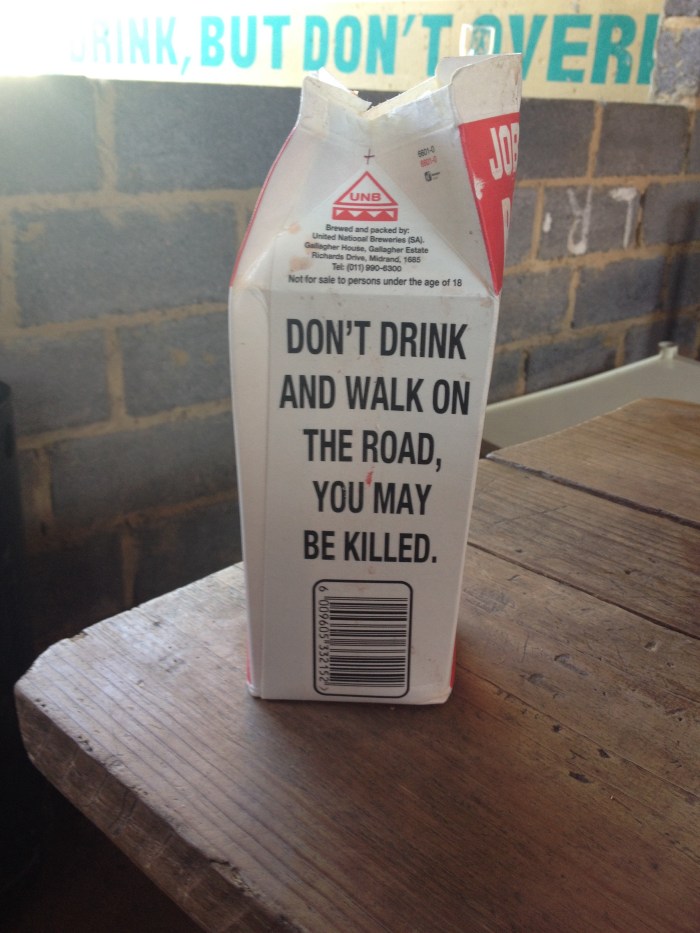
On the side of a carton of Joburg beer


image

Necking some of that Joburg Beer which is very similar in taste to the traditional Zulu beer sorghum 


image

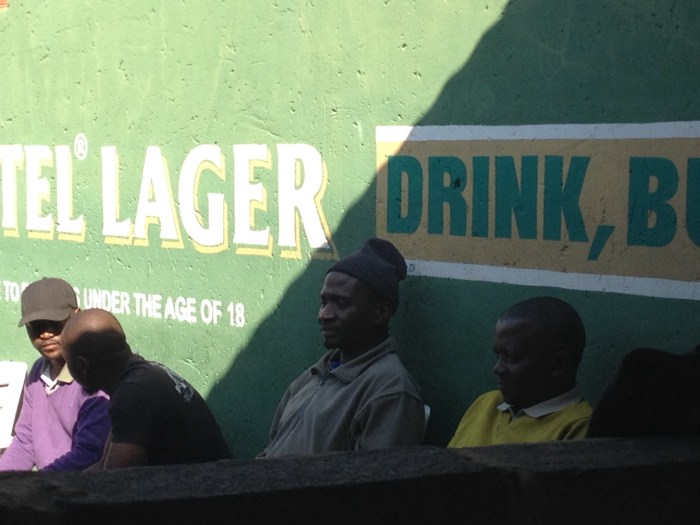
Shebeen scene


image

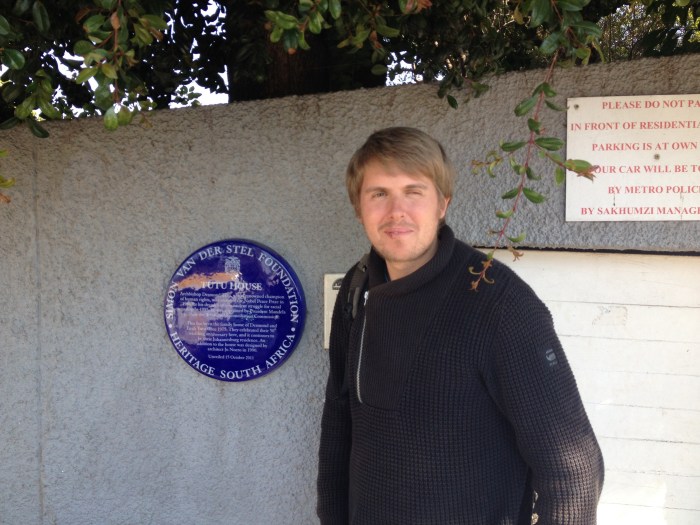
Outside Archbishop Desmond Tutu’s house


image

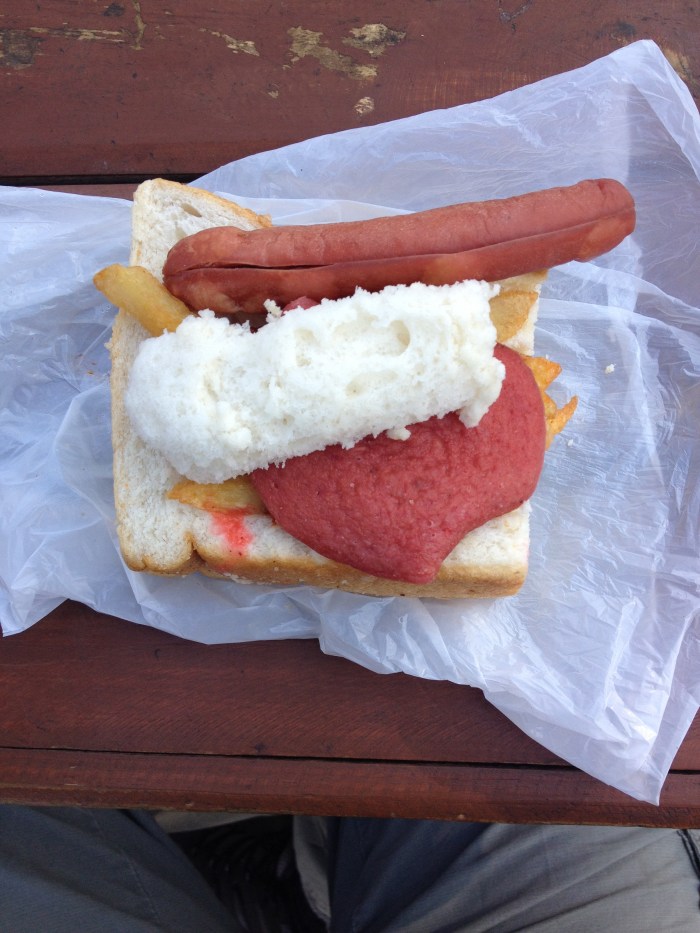
Fans of Deliciously Ella rejoice! This is the choice of snack of many people who live in the townships in the Gauteng area. A Kota is a quarter loaf of white bread hollowed out and filled with chips and cheap processed meats like salami slices and Vienna sausages. For R12 it is all yours.


image

One of the Orlando towers


image

Outside the Apartheid Museum


by Nicholas Peart

20th July 2016

(all rights reserved)

(Mis)Adventures In Zululand

image

Zululand


From the Hippo Hide Lodge in the Berea district of Durban, I take a cab to Ulundi station where I find the white mini van taxi to the Zululand town of Eshowe 150kms north of Durban. Every available bit of space is utilised. I am squashed right in the back and my backpack finds a home pressed somewhere in the front seats. An excessively rotund Zulu woman sat next to me is munching on slices of white bread in one hand and a large cheap supermarket sausage in the other which she occasionally takes generous bites from. In her lap is an enormous bottle of some discount brand Cola. The journey is two hours but feels like 20 and I am happy when we leave the main highway and I spot a sign saying ‘Eshowe 23kms’


image

Downtown Eshowe


Arriving in Eshowe I stumble out of the bursting minivan like I’ve been kept hostage inside a kitchen cupboard and find myself in a clothes shop run by a friendly South African Indian and shielded away from the hawkers and mess outside as I try to fully understand my bearings and where on earth I am in relation to my chosen accommodation. There are no taxi drivers in sight and I don’t trust many of the hawkers. I see a respectable looking elderly local walking towards his Toyota. I abruptly approach him and blurt out that I need to go to the George Hotel in exchange for a few rands. He obliges and I lump all my crap in the back seats and off we go. It’s barely a few blocks away and I suppose I could have walked there. I decide not to stay at the George and instead have a punt on the adjacent Bishops Guest House. There are no rooms available but the owner Hazel says that I can stay with her friend. It is almost mid afternoon and I head to Vals Takeaway on the edge of town for a delicious, ample and much needed mutton biriani. Afterwards I visit Shoprite to buy a few groceries before heading back to the Bishops. Hazel’s partner Terry kindly drives me in his 4×4 to Hazel’s friend’s house. The house is an enormous bungalow with a large handsome drive and garden with exotic trees and plants. My room is in a separate small block on the grounds of the house. It is immaculate with a Queen size bed, TV and private ensuite bathroom. A very good deal for the price.

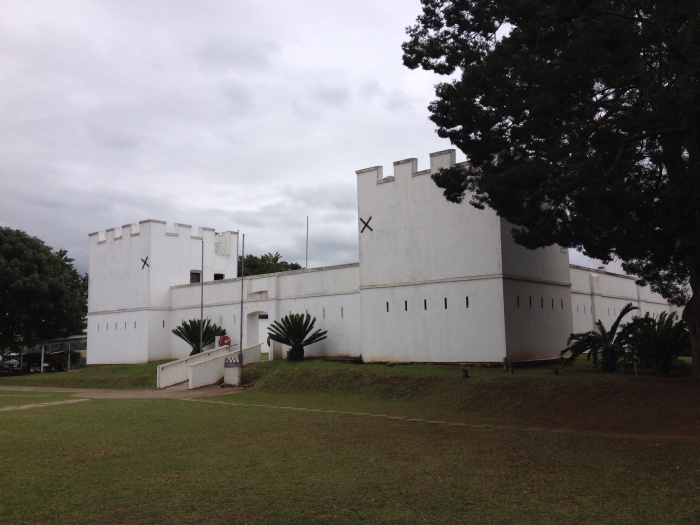
The next day I go for a walk around Eshowe. Outside of the city centre it really is a very pretty place in the heart of Zululand. I go for a walk to visit Fort Nongqayi. Inside the fort I am greeted by a young Zulu man named Zano. He is a very intelligent, articulate and entertaining guide. His English is excellent. We visit the white church founded by Norwegian missionaries before entering the fort. Inside the fort are Zulu related displays and artefacts. The section of the fort dedicated to John Dunn (a legendary 19th century white Zulu businessman and sex machine) piques my curiosity but history aside it was being with Zano which really made my day. When he mentioned that his favourite writer was Charles Bukowski I thought I was hallucinating. Very quickly my attention turned away from Zulu history and culture and straight to Bukowski and how in Zululand of all places with my Zulu compadre Zano we’d be discussing him! 20kms away from Nkandla and Jacob Zuma’s massive homestead. Zano told me that many of his friends were also into Bukowski – ‘that man speaks the truth!’ Zano would say.
 

image

Fort Nongqayi


When we parted ways I payed a visit to the Vukani Zulu Cultural Museum which has a wealth of notable and important Zulu arts and crafts. There are beautiful and elaborately patterned handwoven baskets and pottery artefacts including several pottery pieces by the noted Zulu artist Nesta Nala and her children.


image

Vukani Zulu Cultural Museum


image

Pottery works by the Zulu artist Nesta Nala


In the evening I relax in the library of the George Hotel which has an adequate Internet connection. I decide that I will visit Shakaland the following day. It’s a Disneyfied like adventure park reenacting traditional 19th century Zulu culture. It was originally created for the highly successful television series Shaka-Zulu. Unfortunately, I don’t have my own transportation and getting to Shakaland or almost any other place in Zululand without it is very difficult. Fortunately a lady named Leanne from the George Hotel kindly offers to drive me there and back the next day.


image

Inside the library of the George Hotel


For some irrational reason I decide to spend this evening at one of the cheaper outside rooms of the George Hotel in a stupid plan to save money. For the sake of a few rand I ditch Eden for some decrepit beatnik hotel in a seedy part of Tanger in the 1950s. My room has a perpetual pungent odour of fresh paint. I can see that my room is a former wreck which has been tarted up superficially to make it look neat and presentable. My room is the epitome of the phrase ‘polishing a turd’ and it sure as shit ain’t worth what I paid for it. Loud building work outside my room commences in earnest at 7am; not that any of this matters. I’ve been struggling to achieve a modicum of decent kip ever since 11pm. The last few days have been a mess of insomnia. I go to the mirror and my face from just a few days ago has morphed into Shane McGowen’s. Nevertheless I am all ready for Shakaland.


image

Shakaland


Shakaland is ridiculous. I am not exactly Wilfred Thiesger or Richard Burton and am very much the clumsy albeit curious Gringo with his two words of Zulu under his belt. When I arrive I am the only tourist there and so I get a private tour of the grounds. I drink the infamous sorghum Zulu beer from a big wooden spoon and fool around with a large King Shaka spear like I am in Falaraki on some last minute cheap package weekend bender – not exactly warrior material. I mean put me in a time machine and plop me in the Blood River battle of 1838 I would have more than let the team down. Andries Pretorius would have given me the whipping of my life for my incompetence and tomfoolery. Later I am joined by more visitors; a Belgian couple and a group of visitors from Pretoria. We watch an impeccable performance of Zulu dances. At one point I decide to join in and add some very un-Zulu moves; like a cross between between King Cetshewayo on PCP and Bez of the Happy Mondays. Then we all have some locally made food at the Shakaland restaurant.


image

Drinking traditional Zulu beer


image

Shakaland shenanegans 


image

Trying (pushing) my luck with traditional Zulu dancing


Back in Eshowe, I sensibly decide to return to Eden and my Queen size bed. I sleep well and wake up at 6.30am the next day feeling well rested. Yet my mood changes when I turn on the TV and the long awaited result of the EU referendum in the UK has already been announced. For two hours I flip between all the different news channels lost in confusion. Fortunately, a sane part of my brain does the right thing and propels me out of my room and away from the TV. Besides, I had booked a tour for today with a local guide to visit his village and home and perhaps visit his family and a local school. Sadly my original guide had fallen ill and the only option available was a guy named Walter. The lady at the George warned me that he could be ‘erratic’ and may hustle me for more money at the end of tour. But I was assured that he was completely harmless, just a very naughty boy.
 

image

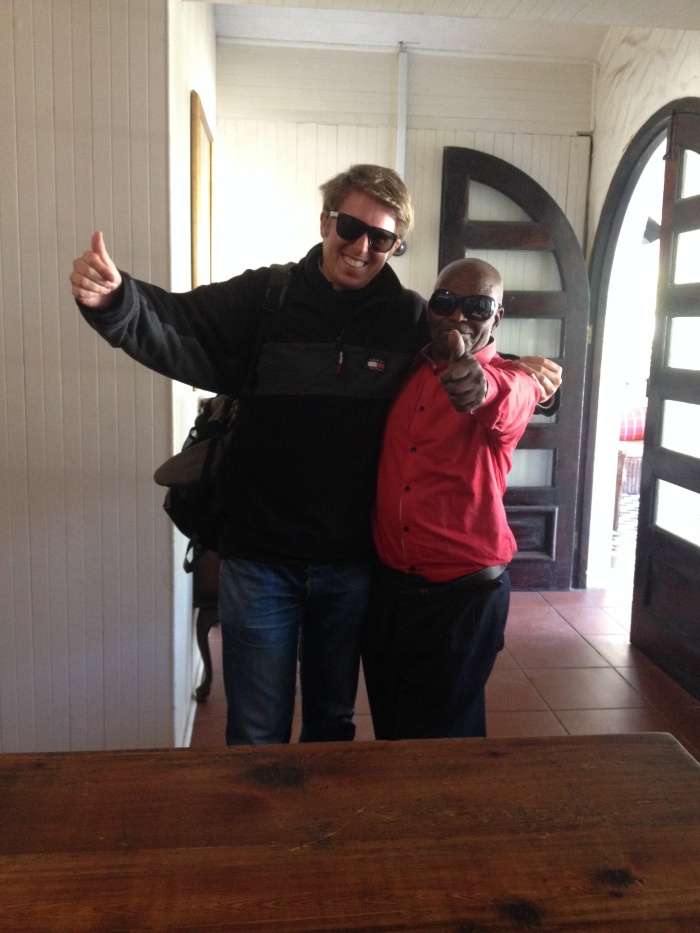
Big pimping; Walter and I


Seeing Walter for the first time I become hesitant, anxious and uncertain. My mind harks back to my Moroccan guide Mohammad who accompanied me and a few friends on a three day expedition in the Atlas Mountains ten years ago. He was a never ending liability and even had the temerity to ask for a 200 Dirham ‘customary’ tip at the end. Walter is wearing a silk red shirt and an ostentatious pair of pimping sun glasses. He’s dressed up more for a night out on the tiles on Florida road in Durban than a visit to a traditional Zulu village. He keeps insisting that he is 83 and has the energy of a bull. What remains unclear is how we are going to get to his village. I don’t have a car and after having told him about ten times he keeps asking me where my car is. The lady at the George who organised the tour says that we would be able to get to his village via public transport but I am forever doubtful. After much unnecessary stressing I realise that the best move is to simply go with the proverbial flow and just glide with the movements of Walter. Getting angry or upset is a fool’s game. In fact, in a perverse kind of way, I prefer to be with Walter than the other more reliable and trusted guide; it would have been all too predictable. Here there is no compass.
 

image

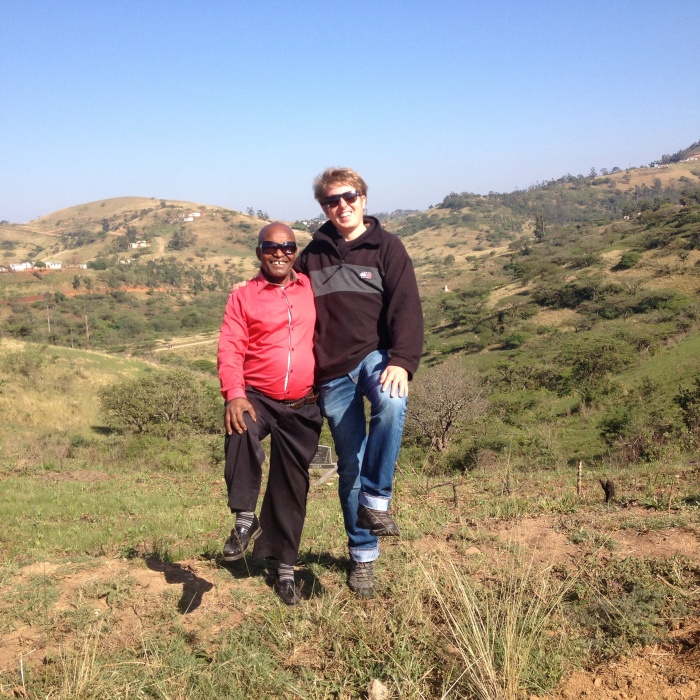
Rockin’ Zululand


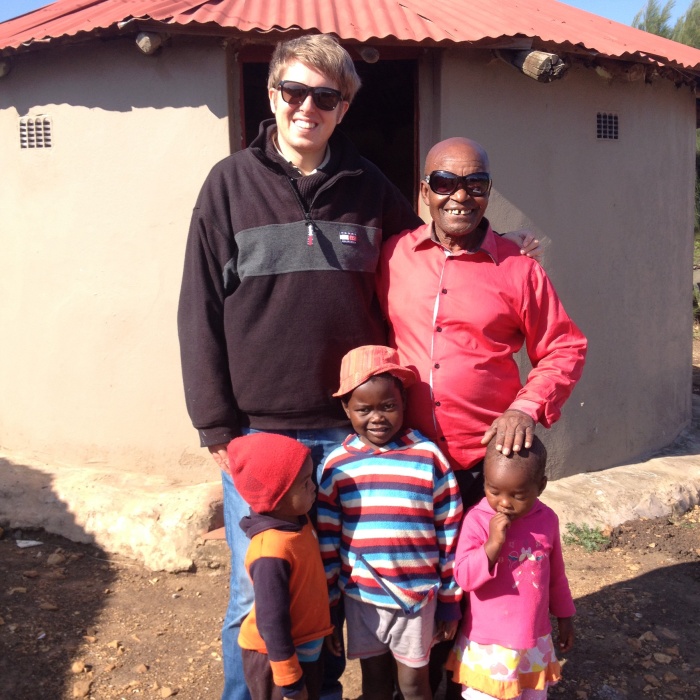
We walk towards Eshowe town and for all I know we may as well be heading to a few shebeens or gambling houses than sticking to our original plan of visiting his village. As we pass Shoprite, Walter raises his right hand and an old truck slows down. Walter motions for me to get in and off we drive to what I am guessing is his village. Soon we leave the main paved roads and drive on to a dirt road up a hill and towards his home. There are four semi modern huts at his place with red tin corrugated roofs. I am introduced to some of his family and I use my two words of Zulu; sawabona and injani (which mean ‘hello’ and ‘how are you?’ respectively).
 

image

At Walter’s abode


Leaving his home we walk towards a local school. The day is getting hot and I regret not bringing a bottle of water. When we approach the school it is closed. Walter suggests we keep on walking. During our walk we pass by numerous local village folk and Walter insists on photo opportunities every time we meet passing villagers. We bump into a young sangoma apprentice. Walter wants to take a photo of me with the boy using my iPhone. I don’t object. When he hands me back my phone I see that he has taken 22 photos. I will do all the editing when I return to Eshowe later. I don’t know where we are going. After a while I get so exhausted and feel like we’ve gallivanted throughout all of Zululand. At one interval he points to a hut in the distance on top of a hill. He tells me that’s where his friend lives and wants us to go there. I faint at the distance but Walter knows of a shortcut. We ditch the path and climb up the hill gripping onto rocks and miscellaneous roots and vegetation. Halfway up the hill I nearly loose my balance but claw my right fingers into the ground earth to prevent myself from falling back to the start. Walter on the other hand is going up the hill like a trooper; like a modern day King Shaka. When we enter his friend’s modest abode, which has a sparkling name brand fridge and plasma TV inside, we are both rewarded with a cup of clean water which he scoops into the cups from a large open blue tank of water in the corner of the living room. I am very grateful.
 

image

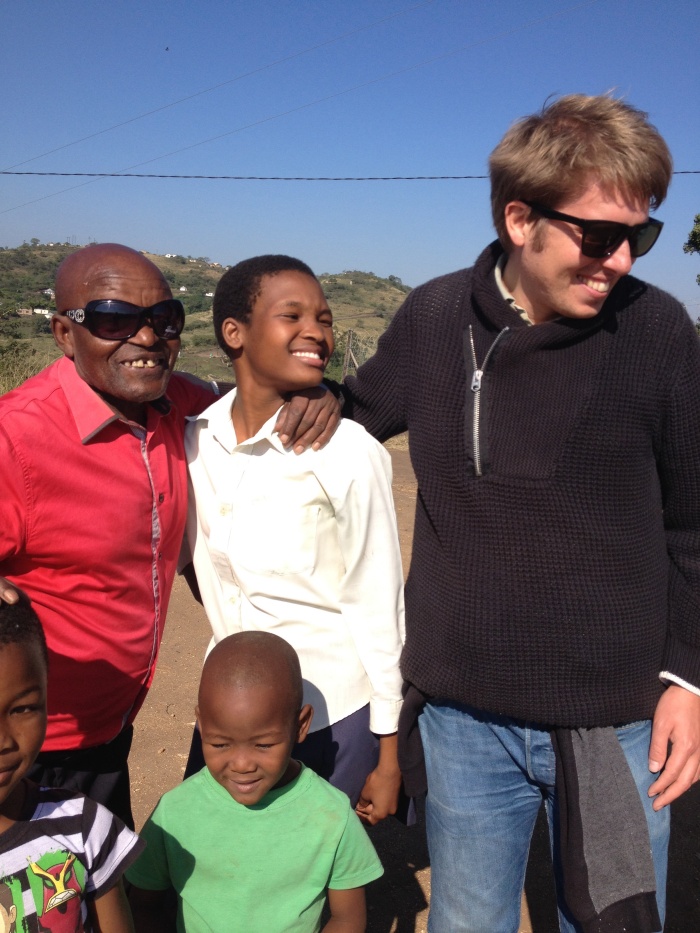
With some local Zulu village folk


Leaving his friend’s place we head back towards Walter’s house. All the time on the way there he keeps pointing to his house in the distance, like it’s one of the seven wonders of world. When we return to his house, a member of his family kindly prepares a meal for us of chicken and vegetable stew and a lifetime supply of pap. After our meal, Walter hands me a battered notebook which contains testimonials from travellers all around the world. There are also letters. One is from a French couple from Piotiers dating back to 1998 and the other from a Dutch lady from Delft. Clearly all the travellers who crossed paths with Walter were won over by his unique charisma, energy and spontaneity. And so was I. It was a blessing in disguise that the other guide was ill. Although there was still one last problem. How the hell was I going to get back  to Eshowe?

Walter offered to call me a cab or rather get one of his mates to pick me up and drive me back to my guesthouse. I accepted the R100 fare and so Walter and I walked from his house and to the side of the dirt road. On the way we pass by three gravestones. One is of his parents. By the edge of the road, Walter was joined by a friend brandishing a large bottle of Castle Chocolate Milk Stout. They share the bottle and offer me a swig. Then Walter’s friend lights up a prerolled doobie. My cab eventually arrives and I bid Walter farewell.

I stay one more day in Eshowe. The next day is a lazy and aimless day, although I do muster the energy to go for a walk to visit King Cetashowe’s memorial site further outside of town. At the end of the road just after the site I am rewarded with one of the most spectacular vistas of rural Zululand. It really was quite majestic.


imageCetshwayo memorial


Before returning to Durban I order a Durban curry for lunch from the restaurant of the George Hotel. Whilst I am waiting for my food, I visit an outside bar on the grounds of the hotel called Pablo Esco Bar, so called since the owner has an uncontrollable obsession with the famous Colombian Drug Lord. I order a pint of Zulu Blond, which is a local brew made by the owner and has even won a few awards. I like it. It’s a glorious day outside and despite a kind invitation from a local at the bar to go to a party at his house where a few local bands will be playing, I am all done with Zululand. My battered white collective mini van taxi awaits to take me back to Durban.


by Nicholas Peart

12th July 2016

(c)All Rights Reserved

The Markets Of Warwick Triangle


image

Warwick Triangle


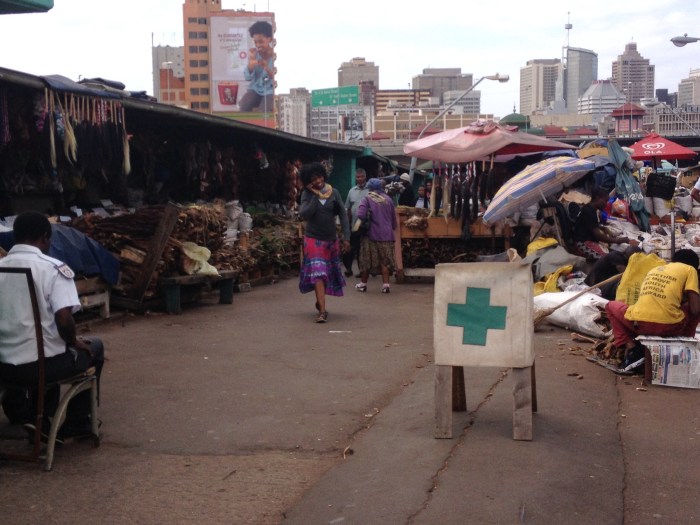
Around the Berea Road Station in central Durban and the flyover passes marking the beginning of the N3 highway is a fascinating dishelved mess of markets known as the Warwick Triangle. These markets are so raw and alive they make the infamous Tepito Mercado in Mexico City look like Portobello Road market in Notting Hill. One day I decided to go on a tour of this part of town with a local guide from the tour firm Markets Of Warwick.


The Bead Market

This market has been temporarily relocated onto the narrow sidewalk of one of the busy flyover passes. Walking here was a challenge and trying desperately to be on your guard – even with a guide!

image

The Bead Market


The Impepho Market

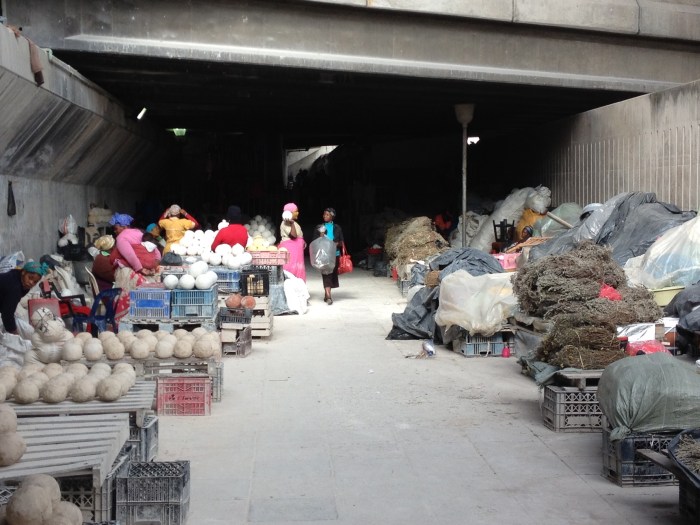
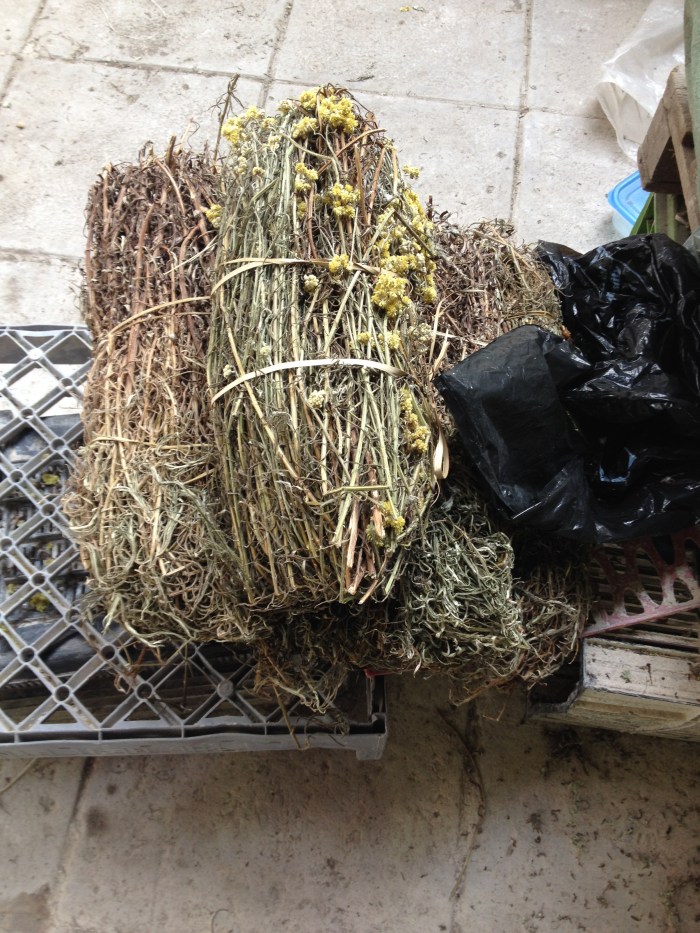
Entering this market was like walking through a post war bombed out Barbican or Westway. Here traditional Zulu women sell impepho and bowling size balls of red and white limes mined from iNdwedwe, north of the city.

image

The Impepho Market


image

Impepho


image

White lime


image

Red lime


The Brook Street Market

This market sells mainly textiles…

image

Brook Street Market


The Berea Station Market

This is the place to go for pirate DVDs, CDs, shoes and designer clobber at rock bottom prices as well as traditional Zulu King Shaka spears and shields…

image

Berea Station market


The Early Morning Market

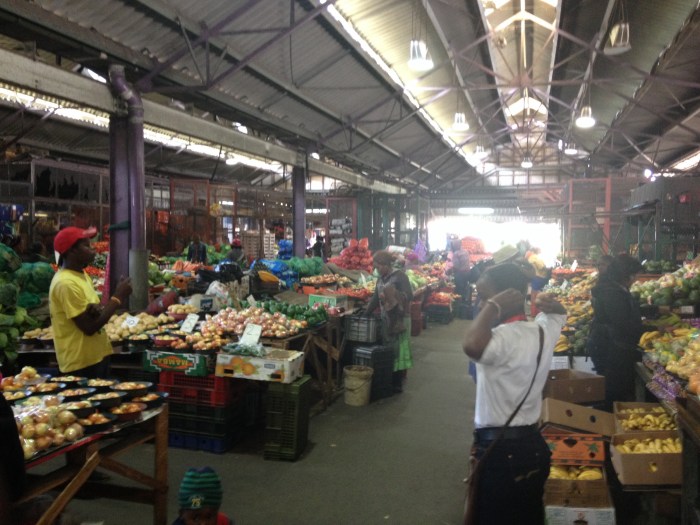
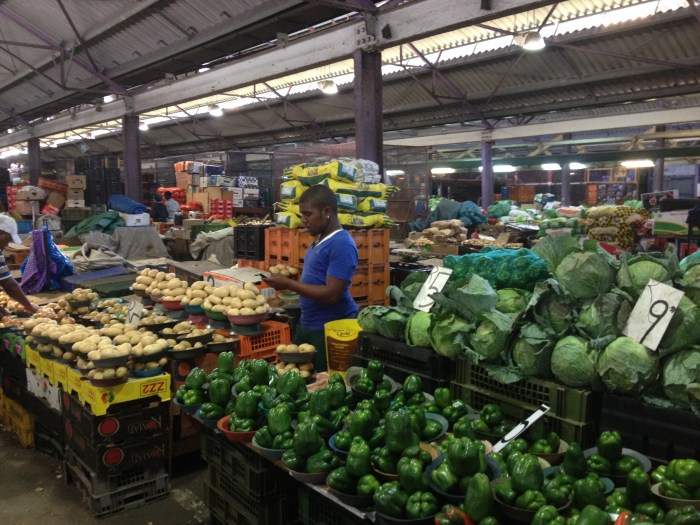
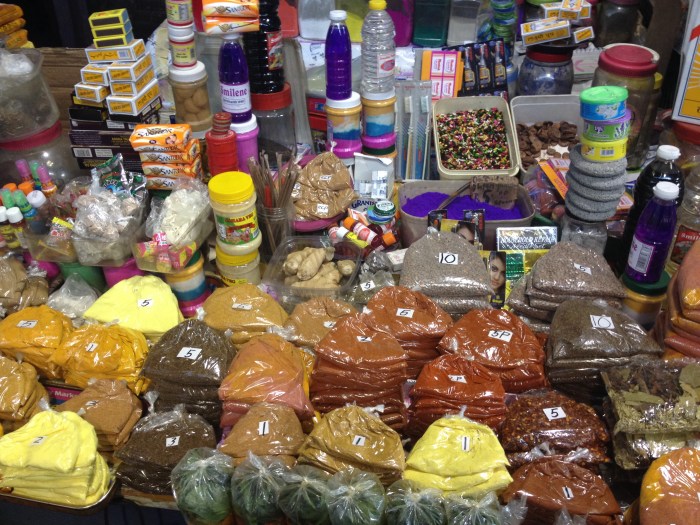
This market is known as the Mother Market and has now been going for 100 years. This is the place to go for fruit and vegetables as well as spices. The quality of the fruit and veg is better than what you’d find in Pick n Pay and Checkers and at a fraction of the price. The spices here are cheaper than those in nearby Victoria market…


image

Inside the Early Morning Market


image

Abundant veg 


image

Spices at rock bottom prices


image

Early Morning Market trader


Bovine Head Cooking Market

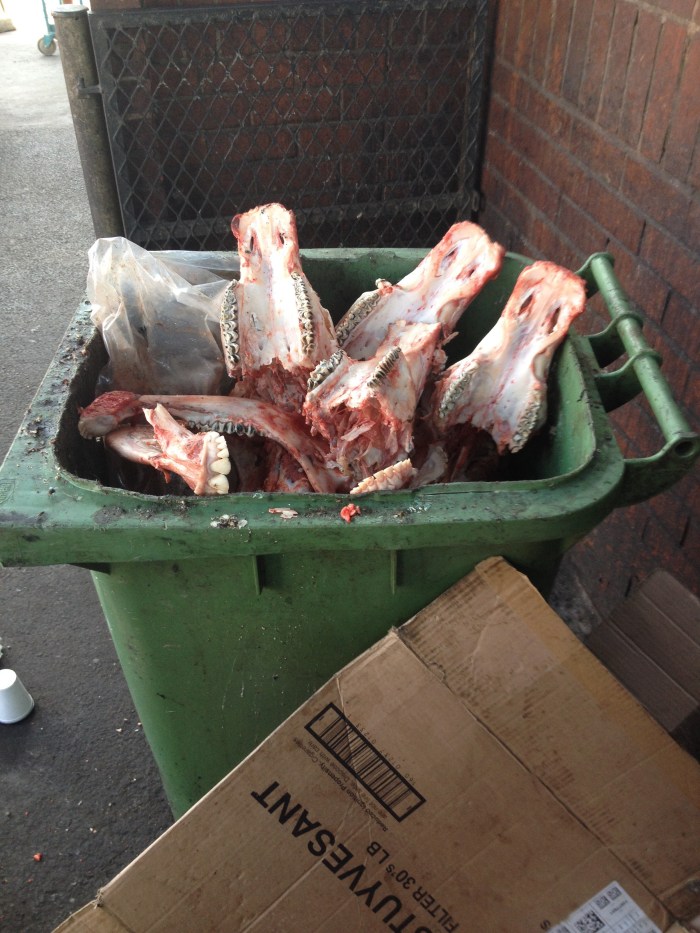
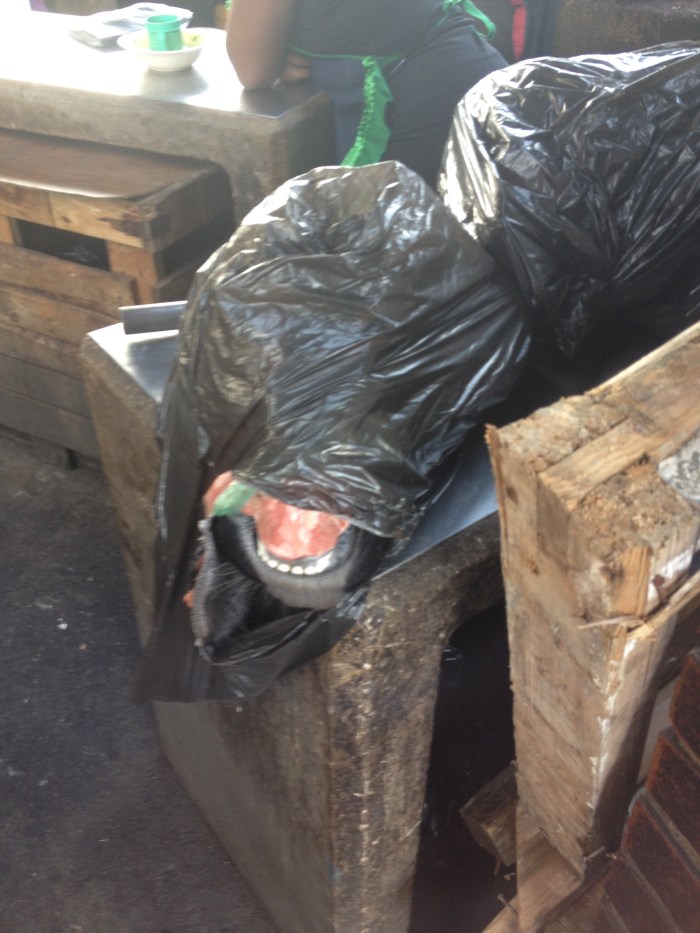
I think if I took Morrissey here he’d have a stroke. This is not a place for animal rights activists. Yet Francis Bacon would be captivated. This place is raw and visceral. The severed heads and other body parts of cows and goats lie openly in green rubbish bins and black rubbish sacks – life here is cheaper than table salt.


image

Inside the Bovine Head Cooking Market


image

Super gourmet food I just can’t wait to dive into


image

Too much


image

Look away


The Herb Market

My guide explicitly tells me not to take photos of the herbs as I’d be ‘diminishing their potency’ – the last thing I want to do is incur the wrath of the traditional Zulu people so I only manage one cheeky photo from the entrance. As well as traditional herbs and plant extracts, one can find small used whiskey bottles now experiencing a new lease of life carrying the contents of different animal fats including those extracted from the Big Five.


image

The entrance to the herb market


by Nicholas Peart

23rd June 2016

(all rights reserved)

Four Great Places For Indian Food In Durban

Indian restaurants in Durban are ten a penny, but here are four establishments in this city that serve up wonderful no nonsense Indian food…


MY DINERS

image

My Diners Indian restaurant chain


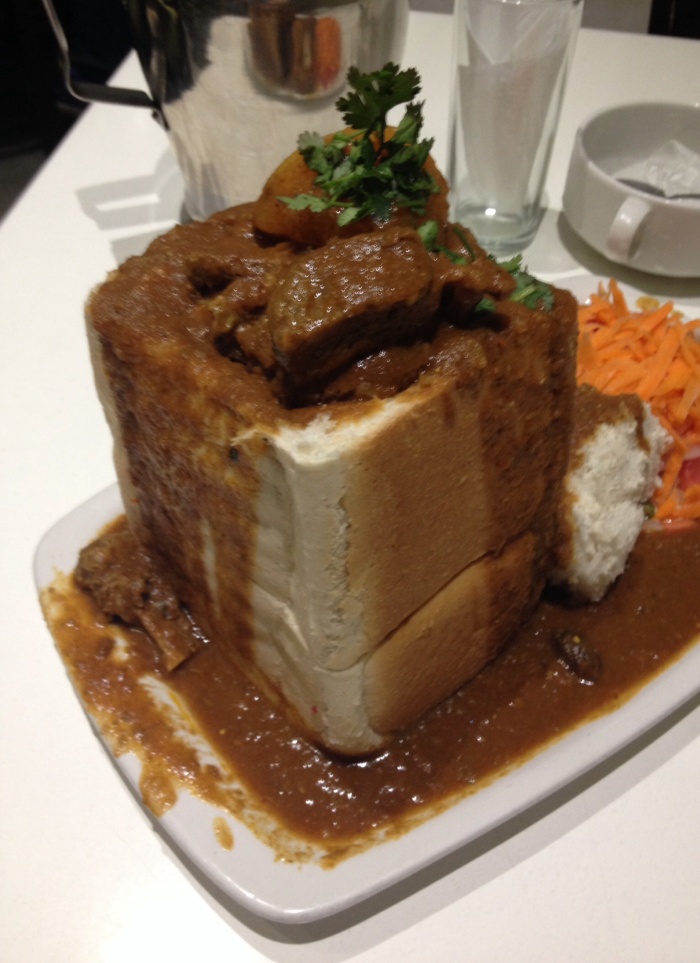
At the northern end of the suburb of Overport and in a lively part of town full of Indian supermarkets and grocery stores is the restaurant chain My Diners. There are others in town but the Overport branch is the one I frequented. At first glance this is a very ordinary eating establishment and you may be mistaken for thinking this is some kind of Eastern Steers but you’d be making a big mistake. This place does very brisk business and is often packed with local Indian families. I had a tremendous mutton bunny chow floating in a pool of curry gravy like some edible Tower Of Babel. I ordered a half loaf and just as well since I would have had to summon some locals to assist me if I ordered the full loaf.


image

A half loaf mutton bunny chow


image

Half time bunny carnage


HOUSE OF CURRIES

image

House of Curries on Florida road


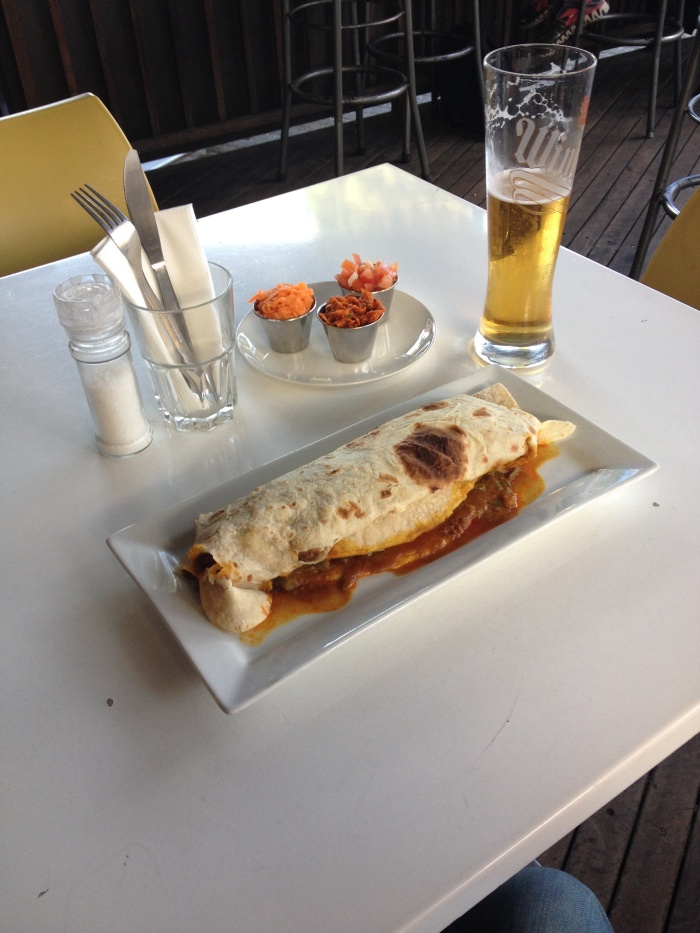
This establishment, located on Florida road in the suburb of Windermere, is noted for its rotis, which are very generous. The lamb rotis here are especially good. HOC is also a great place to idle an afternoon or night away with a cold beer or four. I washed my roti down with a cold pint of Windhoek beer.


image

Vegetable roti 


PATELS VEGETARIAN REFRESHMENT ROOM

image

Patels on Yusuf Dadoo street is one of the oldest restaurants in town


This eatery is perhaps the most special and legendary of my picks and is located slap bang in the heart of little India on Dr Yusuf Dadoo street. Patels was recommended to me by an elderly South African Indian gentleman whom I met at a local corner restaurant also off Dr Yusuf Dadoo street and not too far from this place. This is one of the oldest eateries in the city and has been serving the population for 85 years. Don’t be fooled by the rough hole in the wall exterior. This is the place to go for a quarter vegetable bunny chow. When I ordered mine I got a mixture of sugar beans, dhal, lentils and potato curry. It was delicious and very inexpensive. I followed this up with a R4 cup of chai and a small traditional Indian sweet treat for desert.


image

Classic original quarter veg bunny chow


image

Chai and an Indian sweet treat


MALI’S INDIAN RESTAURANT

image

Mali’s restaurant in Morningside


One night I decided to have dinner here in the suburb of Morningside after reading all the glowing reviews of the place on Trip Adviser. This is a more formal dining experience compared to the other three places (and I’ve got to admit I wasn’t taken by the internal decor which I found a little sterile – not that I came here for that!) but I was not disappointed by the food and the restaurant lives up to the hype.

I began my evening by ordering the infamous paper dosa. That thing is so big you could write the entire Mahabharata on it. I needed three separate plates to accommodate all the broken down fragments of this beast.


image

The legendary paper dosa


Next I ordered one of the restaurant’s signature Chettinad curries. I went for the lamb one accompanied with a side garlic naan, which was very good.


image

Chettinad lamb curry 


Then for dessert I ordered the restaurant’s homemade kulfi (Indian ice cream). I’ve had kulfi before but I was very impressed with the one I tasted here which was rich and full flavoured. Very nice to savour.


image

Homemade kulfi


OTHER INDIAN EATERIES IN THE CITY

ORIENTAL inside the Workshop mall in the centre of a town is a good place for cheap Indian food although I prefer My Diners. Nevertheless I had a decent mutton curry served with rice and salad. There are a couple of very cheap hole in the wall Indian food eateries both located on Yusuf Dadoo called AL-BARAKA and ALMASOOM TAKEAWAY & RESTAURANT; absolutely nothing to write home about but if you are watching the Rand they are two good choices. For thrill seekers the former has a rough and tumble Bukowski vibe to it and there is more chance of Jacob Zuma paying back that R250 million of taxpayers money he spent on his Nkandla homestead than bumping into another tourist.

The following places I haven’t sampled. I hear good things about LITTLE GUJERAT close to Victoria Market which does a variety of cheap vegetarian fare. For a more formal dining experience similar to Mali’s, LITTLE INDIA RESTAURANT ON MUSGRAVE gets almost equally dazzling reviews.


by Nicholas Peart

20th June 2016

(All rights reserved)

India In Durban

image

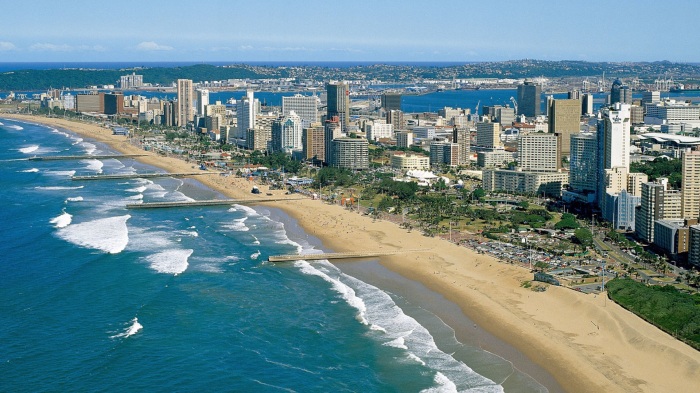
Durban


Durban is the city with the largest Indian population outside of India. Originally called Port Natal, the city was renamed Durban by the British after Sir Benjamin D’Urban, the governor of the Cape Colony. Originally a sleepy settlement of less than 1000 people, Durban’s expansion began in 1843 when Britain annexed the Colony of Natal. In the space of ten years, there was a large wave of immigration from the UK.
The city grew phenomenally throughout the latter half the nineteenth century. It was during this time that many indentured Indian labourers were brought over by the British Empire to work on the sugar cane plantations and railroads of the Colony of Natal and this is the source of the enormous Indian population in Durban.


image

On Yusuf Dadoo Street (or Little India)


Dr Yusuf Dadoo street (or Grey Street as it was formally known) is the heart of the Indian community full of bazaars, Indian shops and cheap hole in the wall eateries selling quarter bunny chows, curries, rotis and birianis at rock bottom prices. Ah yes, the legendary bunny chow which is unique to this neck of the woods. You can get bunny chows in other cities in South Africa but if you want the real thing this is the place to be. There are a few stories regarding the origin of the bunny chow but one goes that it was invented by a group of Indians immigrants known as Banias (an Indian caste) at an eatery called Kapitan’s in the city. The bunny chow is a hollowed out loaf of bread filled with curry. In Durban it comes in three different sizes; full loaf, half loaf or quarter loaf. The quarter loaf, the smallest version, is the classic or qota as its sometimes called.


image

A quarter veg bunny chow courtesy of Patels restaurant


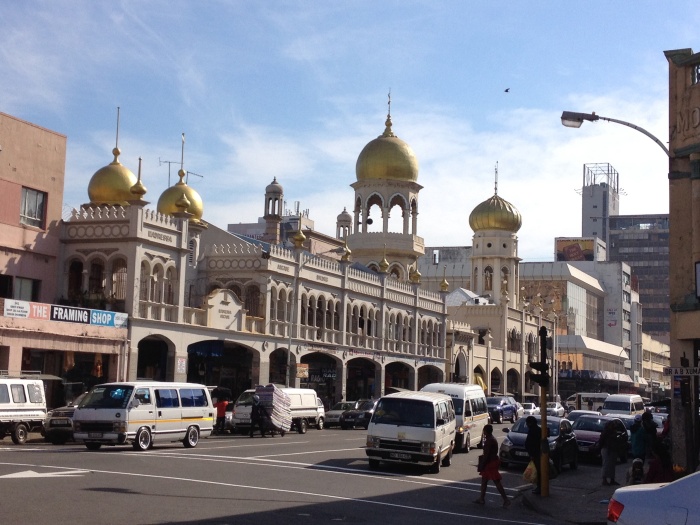
Dr Yusuf Dadoo street is also home to the largest mosque in the Southern Hemisphere, the Juma Masjid.


image

Juma Masjid mosque on Yusuf Dadoo street


Right by the mosque is the Madressa Arcade full of traders selling everything from blankets and old radios to secondhand shoes. For a brief moment I feel like I am wondering through a souk in downtown Meknes.


image

Inside the Madressa Arcade


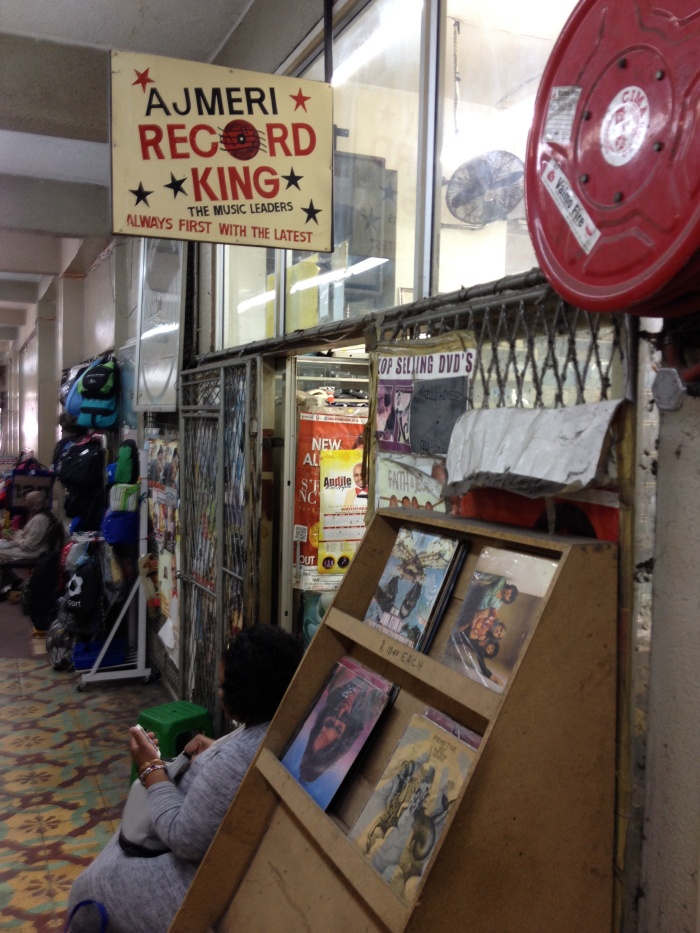
Adjacent to the Madressa Arcade is the Ajmeri Arcade featuring a very cool record shop, Ajmeri Record King, which has vast piles of battered vinyls which might not be much on the outside but if you persevere you may find the odd ruby in the sludge. I found a couple of rare Stax records. The shop also has a good and comprehensive selection of CDs of music from across Africa.


image

Ajmeri Record King record shop inside the Ajmeri Arcade


image

Inside Ajmeri Record King 


The nearby Victoria Street Market, first established in 1910, is an important market in the city.


image

Victoria Street Market


Inside the market there are a few Indian shops selling spices and other products. The first one I enter, RA Moodley has a decent selection of different spices. As well as traditional Indian spices there is a spice pile called Nando’s spice and another entitled KFC spice. RA Moodley is also a hovel of miscellaneous Indian trinkets and products. About four portraits of Sai Baba, the controversial Indian guru, including a photo of him on the weighing scale, adorn the interior of the shop.


image

RA Moodley spice shop


The next spice place I enter, Delhi Delight, is run by a kind and charismatic South African Indian gentleman who gives me and some Cape Townians a tour of his shop and all the spices on offer. I am intrigued by his own Delhi Delight brand spice concoctions which range from medium to very hot


image

Delhi Delight spice concoctions


The final spice shop I visit is a more modest affair than the other two yet I will never forget the Mother In Law Hell Fire spice pile. I love the name so much I think I will swing by here before I depart Durbs for a sample.


image

One spice it would be rude not to try


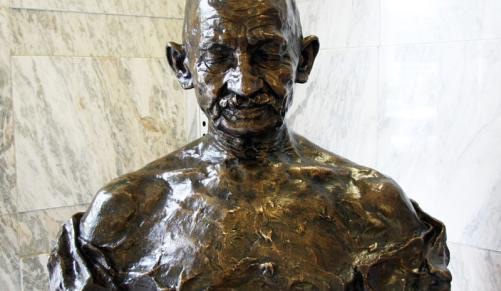
Durban is also the city where Mohandes Gandhi lived for sometime during his time in South Africa. When he first arrived in Durban he lived on Grey Street. Two important Gandhi related landmarks in the city are a bust of him at Tourist Junction (old Durban railway station) in the city centre and the Old Court House nearby, where he spent much time when he worked as a lawyer. There is also a street in his name close to the southern end of the city beach but watch your back in this part of town, especially around the junction with Anton Lembede street. I was mooching around there one afternoon and some miscellaneous black student with a surf board walked up to me and indignantly told me I was crazy to be walking around this part of town and insisted on hailing down a local mini van taxi to get me out.


image

Gandhi bust in the city centre


Outside of the city and off the N2 highway is the Phoenix settlement, close to the Inanda squatter camp, which Gandhi founded as a self sustainable community and to build on his philosophy of satyagraha or passive resistance.

In my next post I will be listing my favourite Indian eateries in this marvellous city.


by Nicholas Peart

20th June 2016

(All rights reserved)

Visiting Qunu, Nelson Mandela’s Home Village

Last week I embarked on a road trip from Plettenberg Bay to Durban. Along the way I covered all of the Eastern Cape breaking the journey in Grahamstown, the Transkei and Kokstad on the border between KwaZulu Natal and the Eastern Cape.

Driving through much of the Eastern Cape, especially the Transkei region, I am reminded of the vast sertão of northern Brazil; a very poor region, which many families leave and make the long journey south to São Paulo. Likewise, many Xhosa families leave their traditional homelands in the Eastern Cape for the big cities like Cape Town and Johannesburg. The Cape Flats in Cape Town are where many reside.


image

The Transkei


As I drive east of Grahamstown, I pass through King William Town. My preconceptions before arriving were of a town similar to Grahamstown with Victorian architecture. What I stumbled on was more like a slice of the wrong side of LA. There is nothing remotely ‘kingly’ about it. I lock all my car doors and keep driving. As I leave the N2 and head on the R63, there are directions for towns like Fort Beaufort and Alice. Those towns are historically significant since they are where Nelson Mandela received his further education. Driving on the stretch of the R63 between the towns of Bisho and Komga you drive through the heart of the Eastern Cape. Small houses of many different colours, like postage stamps from a distance, dot the landscape. Connecting back on the N2, I notice that the landscape has changed and I am now in the Wild Coast region. A long truck carrying big slabs of rectangular grey bricks is forever in my way and I can’t go more than 40km/h. At one point I seize my chance and rev my little Polo Vivo to kingdom come. I make it by a whisker and consider myself very lucky. I am now a mess of adrenaline. I also notice that the sun is going down and consider stopping somewhere to break the journey. My aim is to be close to Qunu, so in the morning I can go there early. I pass through the town of Butterworth; a mess of a place a la King William Town. I don’t feel very comfortable stopping here, but the directions to a hotel lift my spirits. When I arrive at the hotel I feel like I’ve just landed in the middle of the Bronx and duly resume my journey on the N2. The next town Dutywa is not much different but on a quiet side street I find a relatively appealing guesthouse called Kowethu B&B run by a kind elderly Xhosa lady. Alas I am too late for dinner (which must be requested in advance) and my only feasible option is KFC in town. My heart goes out to all the vegetarian and vegan travellers in my shoes.


image

Mveso – the place where Mandela was born


On the way to Qunu, I exit the highway and drive along a newly paved road towards Mveso. This is the place where Mandela was born on 18 July 1918. His father was appointed the chief of Mveso by the king of the Thembu tribe. However following a dispute with the local white magistrate, he lost his chieftainship status as well as the majority of his land, cattle and money. The family subsequently moved to the nearby village of Qunu. On the road to Mveso, I get my first real taste of the Transkei heartland away from the N2. This is real Xhosaland. Several traditional Xhosa huts populate the landscape. The dusty, semi-arid, windswept terrain here is the opposite of the fertile lush Garden Route. This is no Wilderness or Tsitsikamma. I keep on driving until the paved part of the road morphs into a jagged and uneven dirt one. I drive a little further before turning back towards the N2.


image

Outside the Nelson Mandela Museum in the village of Qunu where he grew up


At the Nelson Mandela museum in Qunu I am greeted by my tour guide, Zim, who guides me around. Within the complex there are a few rooms with info and photos chronicling his life. From the museum complex you have a spectacular vista over Qunu and the vast veld where Nelson played as a child. These abundant fields were an important part of his early development as he says in his own words;

In the fields I learnt how to knock birds out of the sky with a slingshot, to gather wild honey and fruits and edible roots, to drink warm, sweet milk straight from the udder of a cow, to swim in the clear cold streams and to catch fish with twine and sharpened bits of wire… I learned to stick-fight  –  essential knowledge for a rural African boy. From these days I date my love of the veld, of open spaces, the simple beauties of nature, the clean line of the horizon.

When I read those words I think of the San people; the original people of Southern Africa who had a very deep and special connection with nature.

His other name Madiba comes from the Madiba clan in Xhosa society, named after a Thembu chief who ruled over the Transkei region in the eighteenth century. Nelson is frequently referred to by his clan name, Madiba, as a sign of respect. His actual first name given to him at birth by his father is Rolihlahla which in Xhosa literally translates as ‘pulling the branch of a tree’ and colloquially means ‘troublemaker’.


image

The fields of Qunu in the background where Nelson played as a child


Right next to the museum is the first school he attended, the Qunu Junior Secondary School. It was here on his first day of school that his teacher Miss Mdingane gave him his more familiar Christian name Nelson. A crowd of children are gathered outside. Despite its historical significance, it is a very modest school and from the outside the classrooms seem quite basic.


image

His local school where he received his name Nelson on his first day


Afterwards I drive to his home, where he spent the remaining years of his life since being released from prison in 1990, located directly off the N2. At the gates I am greeted by a young man who works on the grounds of the estate. I am told that I cannot enter. Nelson’s grave is located within the grounds and that too is out of bounds to the general public. Sadly much of the surviving Mandela family is trapped in an ugly car crash like mess of never ending feuds; a very sad state of affairs and poor old Nelson must be spinning in his grave or maybe he just doesn’t care; his nature being of someone who avoids this toxicity.


image

The front gates to the house where Mandela lived the remaining years of his life since being released from prison in 1990


A group of Zulu visitors arrive at the estate just moments after me. They too get rebuffed. No luck then for any of us. The Nelson Mandela Museum in nearby Mthatha is currently closed for refurbishment. I have little to no desire to pause in Mthatha. After the non stop assault of King William Town, Komga, Butterworth and Dutywa, I just want to press on to Natal.


by Nicholas Peart

14th June 2016

(c)All Rights Reserved
The Cookbook Which Will Change Your Opinion On Vegan Food

image


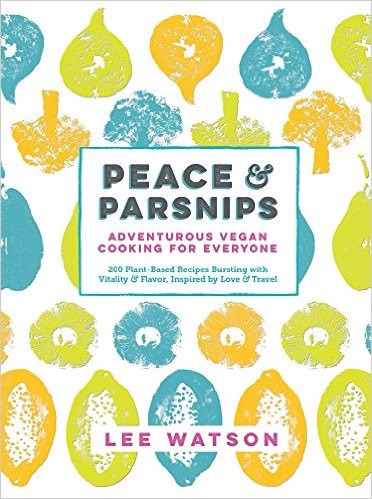
Peace and Parsnips by Lee Watson is an astonishing book bursting with delicious and highly innovative recipes. For me this is more than just a standard vegan cookbook. Vegan food is still quite misunderstood (although this has been changing dramatically in just the last few years), which is a shame and sadly there are still the same old tired cliches being thrown around. Unfortunately there still exists a contingent of people who give Veganism a bad name and so the stereotypes continue.

Peace and Parsnips smashes all these stereotypes and preconceived notions to smithereens. Where it really excels is in presenting vegan food in an exciting, adventurous and interesting way. And it is a cookbook with attitude, which is refreshing as most cookbooks can be a dull and bland experience. If you are a fan of Anthony Bourdain, then you will love this book. And like Bourdain, Watson has travelled extensively around the world and this can be seen clearly in the book. He also has a fantastic blog called the Beach House Kitchen, which contains hundreds of delicious vegan recipes as well as lots of great photos from his world travels.
This is a global cookbook with an extraordinary vegan twist on world dishes. It is a compendium of awesomely healthy and tasty recipes for everyone, not solely vegans. I am a non-vegan yet from time to time I like to have good and tasty no-nonsense food, which is meat and diary free. This book has been perfect for me in this respect.

Some of the recipes are truly off the wall. The veggie burger and falafel recipes are top notch. The Portobello Pecan Burger with Roasted Pumpkin Wedges recipe is a winner as is the Chickpea, Squash and Apricot Burgers with a Red Onion, Orange and Black Olive Salad recipe (takes falafels to another level).


image

                                    The Portobello Pecan Burger with Roasted Pumpkin Wedges


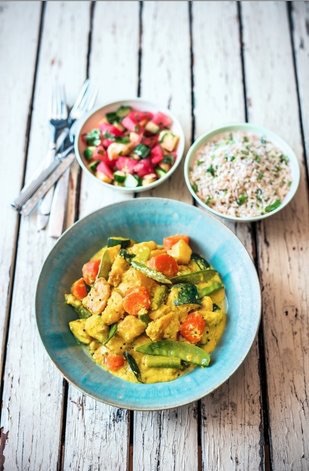
I am a huge fan of Indian/South Asian cuisine and this book doesn’t disappoint. The ‘Curries’ section contains some very exotic, hearty and delicious curry recipes. The Keralan Coconut and Vegetable Curry with Pineapple and Watermelon Salad is a truly exquisite and wonderfully tasty south Indian dish. I also highly rate the Kashmiri Turnip and Spinach Curry with Beetroot Raita and the Pakistani Pumpkin and Beetroot Bhuna with Banana and Lime Raita; just those names alone are enough to wet anyone’s appetite!


image

                Keralan Coconut and Vegetable Curry with Pineapple and Watermelon Salad


The dessert section (‘Sweet Treats’) of this book is a veritable delight. Particular favourites are the Raw Spiced Apple and Date Pie (an amazingly tasty and inventive raw dessert consisting of apples, dates and cashews and walnuts), the vegan Choc and Beet brownies (the richest and most delicious brownies I’ve ever tasted), and the Brazil Nut and Chocolate Spelt Cookies (delicious and very easy to make. Its also a brilliant recipe if you don’t have lots of free time to cook and would make a great and highly appreciated treats for friends and family members).


image

                                                                     Choc and Beet Brownies


This is an outstanding cookbook and a real labour of love. The writing, photographs and general layout of the book are first class and would make a wonderful companion for anyone with even just a passing interest in vegan cuisine. More importantly, I feel that once you have immersed yourself in this beautiful book and given some of the many exciting recipes a whirl, you will begin to look at vegan food in a completely different way. Indispensable.


by Nicholas Peart

3rd June 2016

(All rights reserved)


Who Moved My Cheese? Dealing With Change

image

Who Moved My Cheese? by Dr Spencer Johnson is a fantastic little book, originally released almost 20 years ago, about how one can successfully deal with change. The story features four characters; two mice called Sniff and Scurry and two little people named Hem and Haw. The mice represent the simple parts of ourselves and Hem and Haw the complex parts. Sniff ‘sniffs’ out changes early and Scurry ‘scurries’ into action. Hem blocks and fears change and as a result remains stagnant whereas Haw is more open and willing to adapt to change as he sees change leading to something better. Haw is prepared to ‘move with the cheese’ whilst Hem perpetually moans ‘who moved my cheese?’.

For Haw it’s not just about acquiring more cheese. He is just as excited by the journey, challenge and adventure of finding it. So even if he failed in his quest to find more cheese, the buzz of trying to find more is more satisfying than simply complaining about having no cheese left whilst feeling trapped and always remaining at the same station without ever moving.

Initially, I assumed the book to be more of a manual to achieve success professionally. A book for businesses. But it is much more than that. The story is timeless and up there with the greats like The Prophet and Aesop’s Fables.

In my life I have played the roles of all of these characters. Yet it has been the character of Hem who I’ve played the most. Those times of fear, procrastination, denial and sabotaging my happiness, which have affected my life. These emotions have always anchored me to the same station and very soon I become trapped. And even when there’s cheese remaining, it’s taste is different and it’s just not satisfying anymore. Clawing at this remaining cheese doesn’t pump my heart or nourish my soul or spice up my life.

Sometimes I want to ask ‘who put this brain inside of me?’ Some may sniff (no pun intended!) at the brain of a mouse and how it lacks the complexity of a human brain but precisely! It deals in simplicity and basic instincts and doesn’t have any of this crazy emotional baggage which wrecks havoc on our lives. Their skills to move on and adapt are more advanced than ours. They don’t waste time unnecessarily overanalysing things.

Expanding on this short story, is it enough to settle on finding just any cheese station? It is one thing setting off and finding more cheese, but more specifically, are you after a particular kind of cheese? Cheese is a metaphor for all kinds of things. This could be money, a certain possession, a fulfilling job, a certain type of partner, a new experience, excellent health, happiness, inner peace etc. – it can be anything you want.

What is my cheese? Perhaps for me the best type of cheese is the one called Self-Discovery or Self-Knowledge. The more I get to know myself the more of this cheese gets accumulated. Even if at times the journey is painful, as I navigate the maze to find more of this type of cheese, I invariably get hopelessly lost, demoralised and insecure that I will never find more of this Self-Knowledge cheese on the less travelled roads of the maze. It is much easier and less painful to search through the more accessible routes of the maze of life and look for more ordinary cheese. A station containing enormous slabs of mass produced mild bland cheddar may be enough for some and there is nothing wrong with that – each to their own. But what a thing it would be to find a cheese station containing some of the rarest, most exotic and tastiest cheeses. Rich and irresistibly creamy and tangy flavoured French and Italian cheeses for example.

Yet the paths of the maze to reach the stations containing these cheeses can be emotionally treacherous and many have lost their heads and their minds, and simply given up. The roads on this maze are not well paved and well lit 10 lane highways where one can idly cruise and be off their guard. Oh no sir! If only!! These roads are more like narrow hazardous Himalayan passes at least 5000 metres above sea level where just one minor slip could be fatal. It is challenging and demands full concentration but what a buzz to travel on those roads! Once you’ve travelled on those roads travelling on all other roads is a piece of old piss. In fact, after having successfully navigated those roads, travelling on those well lit 10 lane highways becomes an insufferably dull experience. You then almost become allergic to Hem!! Hem is fearful of change but you become fearful of ever ending up like Hem. You begin to embrace change like most people walk through their front door.

This is an indispensable book. Short, concise, to the point and it may even change your life and your ways of thinking for the better.


by Nicholas Peart

2nd June 2016

(All rights reserved)


Spiritual Coding and Self Discovery: An Exploration Of My Paintings

image

Magma Matter Execution (2012) by Nicholas Peart


I am often asked by people to explain my paintings. ‘What are they about?’ is a common question. For a long time I found it difficult to translate the meaning of my paintings into words since the process is very personal and involves deep introspection. When people did ask the question I invariably gave them the reply, ‘My feelings. I paint my feelings’. This is one of the most succinct and sincere ways of explaining the meaning of my paintings yet I often felt that such a response just didn’t wash with some people.

All of my inspiration comes from within; through journeys into the deep chambers of my eternal, spiritual and immortal being. This is the part of me that is really me. The truth. In Hinduism and Buddhism this part of the self is known as atman. Yet often I feel very separated from this as I am immersed in the external environment of this life; a player on a stage where much of the cast has been programmed to be increasingly separated from their true being.

When I am immersed in the deep meditative process of painting, I feel increasingly connected with my true eternal being. It almost feels like it’s not me painting but my spirit. In my most inspired and transcendental moments of the painting process it is my eternal spirit which guides me. In these moments there is no chasm between my conscious and my unconscious. Being in this state makes me think of some of the earliest prehistoric civilisations. Back then, the world was a much less complex and complicated place to the one it is today. Especially the time before words. I think of the San rock art paintings found across parts of Southern Africa and Aboriginal rock art paintings from Australia. The San people of Southern Africa and the Aboriginal people of Australia fascinate me greatly since their culture goes back tens of thousands of years. But what’s more, their culture is profoundly spiritual and this can be seen clearly in their art; their oneness with the world and nature, and their high levels of awareness. In many ways it’s their lives and methods of working which inspire me just as much as the work itself, because of their deep spirituality.


san-rock-art-cederberg-south-africa

San rock art – Cederberg, South Africa


One thing that the San and Aboriginal people have in common is that much of their land is vast desert. For many people such a terrain is inhospitable and lonely; especially if one is very separated from themselves. In this state of being such a person would very quickly find the desert intolerable and isolating. It’s almost like the desert richly rewards those who are spiritually connected (and by extension at one with it) and makes life a living hell for those who are detached from their eternal soul. With a higher state of consciousness the desert begins to truly reveal itself. In a sense my paintings are like deserts, which only become alive as one becomes more connected with themselves. And this is sometimes a great problem I encounter as to some people my paintings appear quite alien and foreign to them. I fully expect this and it does not offend me when people openly tell me that they don’t understand them. My paintings are interactions with the spiritual world and these interactions take place during the painting process. One could then argue that in order to get to the core of my work it would be essential to observe me as I paint. You can do this and you can even do this without me being aware of being observed. But to really understand the processes would involve fully connecting with all levels of my consciousness.


image

Wadjina Aboriginal rock art – Kimberly, Australia


I find that the paintings of the American artist Don Van Vleit (better known as Captain Beefheart) have much in common with the art of those early prehistoric civilisations. What’s also interesting is that when Van Vleit retired from making music and dedicated himself fully to painting in the early 1980s, he lived in a remote part of Northern California. And by immersing oneself in his work one can see the deep connection. Like the San and Aboriginal people, his true spiritual home was in nature. The place where his true being could glow white hot. Take him out of this environment and plop him in a studio in New York, London or Berlin, he would be like a flower without water.


image

                                        Crepe And Black Lamps (1986) by Don Van Vliet


I like to call my painting technique Spiritual Coding. In the digital world in which we currently live the word coding is used a lot. This of course refers to computer programming. A language for this age. And when I look at my paintings I am also using my own language. A language created through interacting with my ‘inner being’ and this I call Spiritual Coding. My paintings are in many ways remnants of this. Tangible photographs almost of my eternal spirit. Although they don’t capture the processes of my work they are residue formations of intense spiritual journeying and internal searching.


image

A Winter In Crowland (2008) by Nicholas Peart


Remaining on the subject of Spiritual Coding, symbols are important in my paintings. The American artist Philip Guston created his own unique symbols, language and world. Even if his world was very bleak and one of hardcore isolation. A dystopian spirituality. But through connecting with his paintings one can see that he embraced this insurmountable at-sea pain and isolation. Works offering no hope or salvation. For the majority of people (including myself) such a level of alienation would be intolerable and very difficult to embrace and accept. But it’s amazing how secure Guston seems to be in this vacuum. And that’s what makes his paintings very striking, visceral and distinct. They are pure undiluted archives of raw pain. I think of Van Gogh and how, even though he was often in the grip of profound sadness and anxiety, he produced some of the most beautiful paintings of all time. Yet Guston’s paintings are anything but beautiful. He was not looking to turn pain into beauty. He was more interested in turning pain into more pain. The painter Francis Bacon is the closest artist to Guston in this respect. Merciless insatiable masochists. Perhaps there is absolutely nothing of the spiritual in Guston’s work and he was always an enigma to himself but his comfort in the most acute thresholds of pain and loneliness is epic.


image

Painter’s Form II (1978) by Philip Guston


Luck and chance play enormous roles in my paintings. My soul brothers here are the painters Jackson Pollock and Francis Bacon. And like them I never make sketches or engage in preliminary studies. And why would I? After all this is completely against my way of working and, more significantly, my raison d’être. I can’t plan what I am going to paint. If luck and chance weren’t integral parts of the painting process, I don’t think I would ever paint. Uncertainty is extremely important.


image

                                                                           Jackson Pollock 


The work of both Jackson Pollock and Francis Bacon have their own unique and idiosyncratic qualities yet what unites them is their spontaneity. But there’s a more important quality which unites them and that is their energy. Wild, untamed, animal energy. Free of even the most minute inhibition. The primal way Pollock dripped paint and the ferocious and feral way Bacon attacked the canvas. Almost like a serial axe murderer taking a swing at his next victim. I can relate to this (not the axe murderer) since in much of my work when I first apply paint to the canvas either with a brush or a palate knife I literally lunge at it and let my inner self do the work. And sometimes I get so exhausted by the end of this process I need to rest.


image

                                                                            Francis Bacon


I am still on my journey of self discovery. And as explained earlier in the text, I am just as conditioned and influenced by my external environment as any other being yet when I am painting I am far away from this external environment since painting enables me to get closer to the truth; of myself and the world


by Nicholas Peart

23rd May 2016

(All rights reserved)


My work can be found by visiting my website; http://www.nicholaspeart.com

Clover Cafe: Like Being In A Monet Painting

image

Clover Cafe


Clover Cafe is a gem of a place set in pure nature. It is one of those places which feels very special and has a certain spiritual energy where words would be insufficient to describe it. It is situated by a beautiful lake with a small wooden bridge. Seeing this one could almost be mistaken for being in Giverny where Monet created many of his most significant and iconic paintings. I have had many happy times over there and it has enriched my time spent in Plettenberg Bay, South Africa.

It is run by Werner and his brother Christo who do an absolutely stellar job in making Clover the special and unique place that it is. What’s more they have a small team of very friendly and charismatic staff who make sure that everyone is happy and having a lekker (South African slang for good/cool) time.

Everyday they have a different menu of delicious and creative meals made from fresh organic ingredients. They have excellent meat and fish meals as well as a decent selection of healthy vegetarian options. Their pizzas are especially good. And the prices are very reasonable considering the quality of the food.

Sundays are a great time to head over to Clover where one can see and hear excellent and authentic local live music played with real heart and soul. And when it’s a glorious blue day than it becomes truly magical. Clover has so much potential to be not just a great restaurant and live music venue but an important hub where people come to be inspired and make great things happen.

by Nicholas Peart

May 15th 2016

(All rights reserved)